Artwork
Societate la curtea lui Iosif I
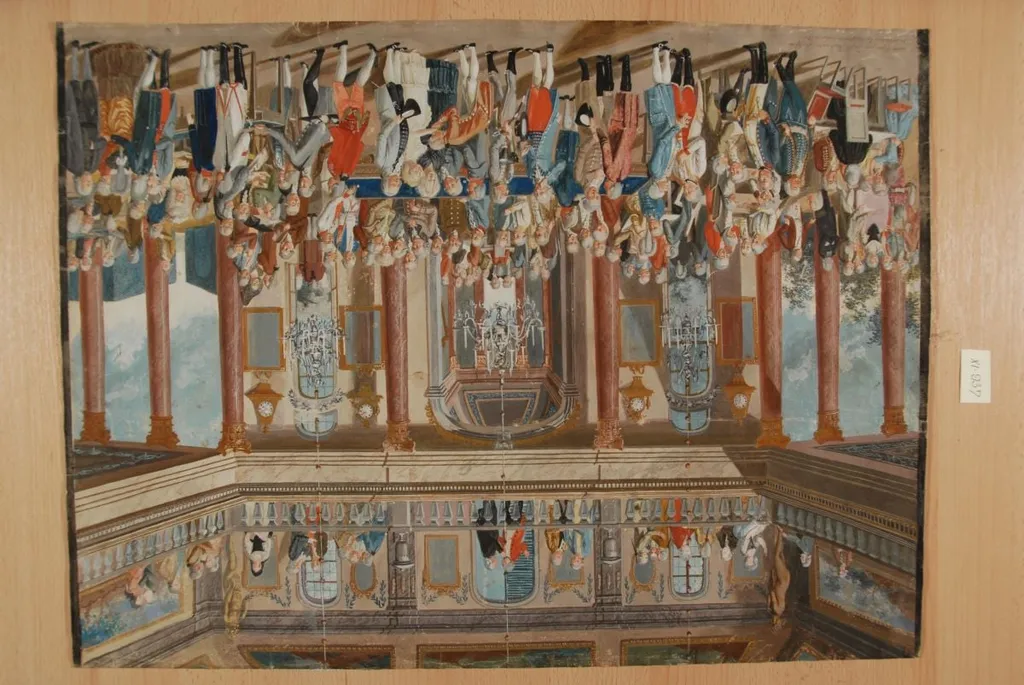
Societate la curtea lui Iosif I is a print by the Baroque artist Joseph Neuhauser. It is held in the collection of the Brukenthal National Museum.
About this work
Overview
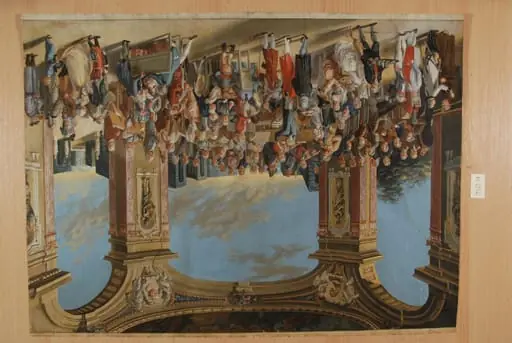
The work depicts an opulent interior divided into two levels, with a lofty upper hall illuminated through tall windows framed by heavy red and blue draperies.
The work depicts an opulent interior divided into two levels, with a lofty upper hall illuminated through tall windows framed by heavy red and blue draperies. A multitude of elegantly dressed figures—men sporting wigs and women in ornate gowns—populate the space, some holding fans or documents, while the walls are crowded with framed artworks, mirrors and shelves. Below, a balcony overlooks a lower chamber where additional attendants gather around a long table.
Subject & Meaning
The scene presents a formal courtly gathering, likely a royal or aristocratic assembly, arranged with theatrical precision. The careful placement of figures and the abundance of decorative objects convey the pomp and hierarchical order of the court, emphasizing status through costume, posture, and the spatial hierarchy between the upper and lower levels.
Technique & Style
Executed with a detailed, almost photographic approach, the composition employs bright yet slightly muted colours that have softened over time. The arrangement of light and shadow, together with the dense clustering of figures, suggests a staged tableau reminiscent of theatrical set design, while the meticulous rendering of fabrics and furnishings reflects a high level of draftsmanship.
History & Provenance
The piece is titled “Societate la curtea lui Iosif I,” indicating an association with the court of Joseph I. No further provenance details are provided, but the subject matter aligns with 18th‑century depictions of Central European royal courts.
Context
Set within the cultural milieu of the early modern Habsburg realm, the painting reflects contemporary interests in courtly ceremony and the visual documentation of regal environments. The inclusion of mirrors and framed artworks on the walls underscores the period’s fascination with self‑representation and the display of artistic patronage.
Legacy
While specific influence is not recorded, the work contributes to the visual record of courtly life in the era of Joseph I, offering scholars insight into the fashion, interior design, and social hierarchy of the time.
Artist & collection
Artist
Joseph Neuhauser made prints in the 1700s, showing groups of people at royal gatherings.

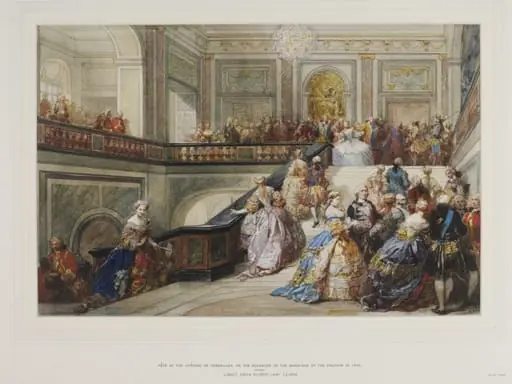 Fete at the Chateau de Versailles in 1745 on the occasion of the marriage of the Dauphin
 Untitled
 Untitled
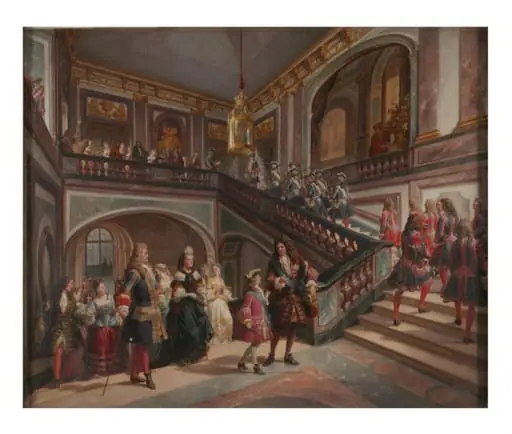 The Young Louis XV at Versailles
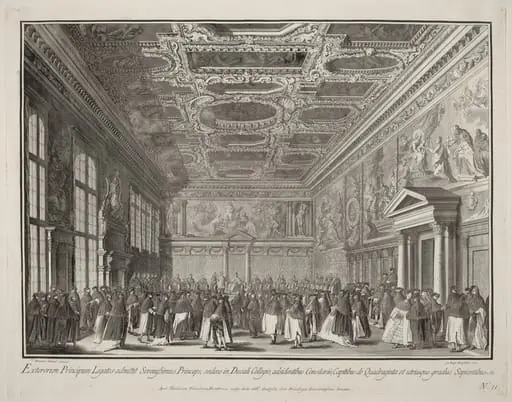 Reception by the Doge of Foreign Ambassadors in the Sala del Collegio
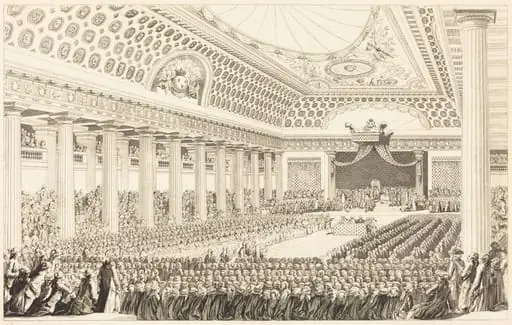 Ouverture des Etats-Généraux à Versailles, le 5 mars 1789
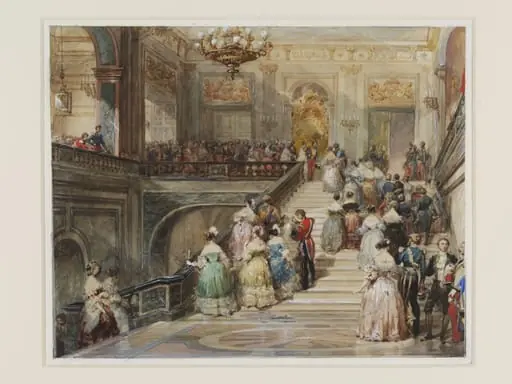 Fete at the Chateau de Versailles in 1837
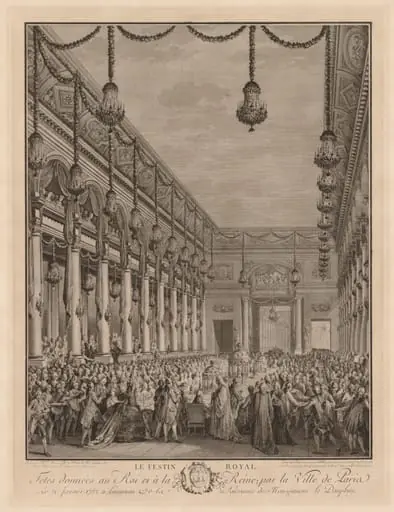 The Royal Banquet
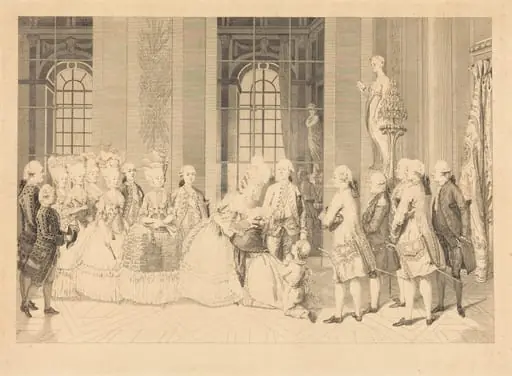 La Reine annonçant à Mme Bellegarde, des Juges, et la liberté de son mari en mai 1777
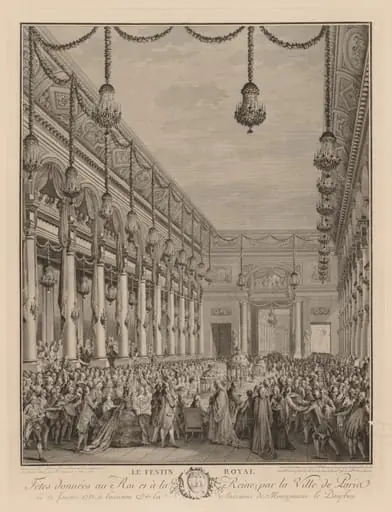 Royal Feast at the Hôtel de Ville, January 21, 1782
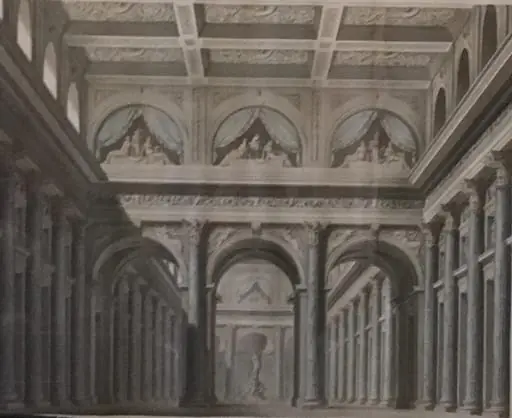 Teaterdekoration: Det indre af en Stor søjlehal.
 Societate la curtea lui Iosif II