Artwork
Societate la curtea lui Iosif II
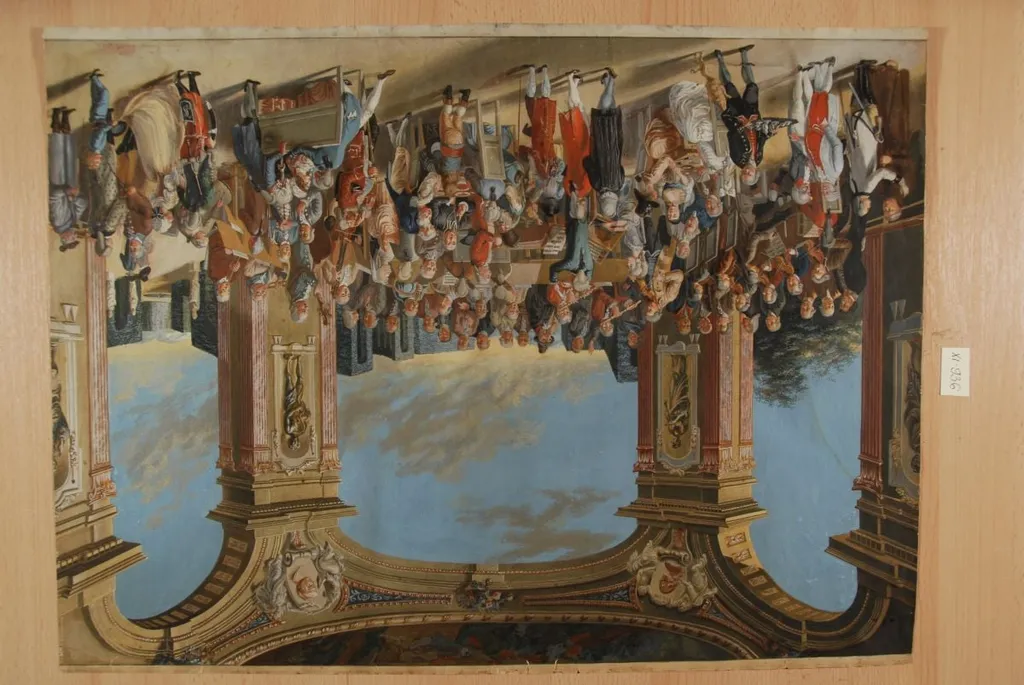
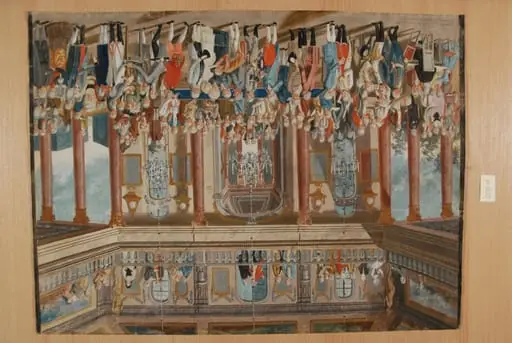
Societate la curtea lui Iosif II is a print by the Baroque artist Joseph Neuhauser. It is held in the collection of the Brukenthal National Museum.
About this work
Overview
This print by Joseph Neuhauser depicts an inverted assembly of figures suspended in a lavish interior, their bodies dangling from ropes as if caught in mid-air.
This print by Joseph Neuhauser depicts an inverted assembly of figures suspended in a lavish interior, their bodies dangling from ropes as if caught in mid-air. The architecture—tall columns, ornate moldings, and a celestial dome—contrasts sharply with the disorder below. Dressed in 18th-century attire, the figures form a chaotic, upside-down social gathering. The composition inverts expectations of gravity and hierarchy, suggesting a satirical commentary on societal norms.
Subject & Meaning
The scene presents a grotesque inversion of courtly life, where figures from different social strata are suspended without order or stability. Their varied costumes and expressions imply a mock celebration, possibly ridiculing the artificiality of aristocratic rituals. The upside-down posture may symbolize moral or political upheaval, reflecting Enlightenment-era critiques of power structures and the fragility of social order under Emperor Joseph II’s reforms.
Technique & Style
Neuhauser employs strong, linear contours and deep chiaroscuro to heighten the drama of the scene. The stark contrast between light and shadow defines the figures’ forms and the architectural details, lending the image a theatrical intensity. The precision of the lines and the clarity of the composition suggest an engraving or etching technique, typical of printmaking traditions in late 18th-century Central Europe.
History & Provenance
Created during the reign of Emperor Joseph II, the print likely circulated among educated circles in Vienna as a form of political satire. Though specific ownership records are sparse, its thematic alignment with Enlightenment critiques of courtly excess suggests it was produced in the context of imperial reforms that challenged traditional hierarchies. The work remains part of private and institutional collections focused on Viennese graphic art of the period.
Context
Joseph II’s rule (1765–1790) introduced sweeping secular and administrative reforms that disrupted aristocratic privilege and religious institutions. This print emerges from a cultural moment when satire became a tool for questioning authority. The inverted gathering mirrors contemporary pamphlets and caricatures that mocked the instability of inherited power, aligning the image with broader intellectual currents challenging absolutism and social pretense.
Legacy
Neuhauser’s print stands as a rare visual artifact of Viennese satirical printmaking during the Enlightenment. While not widely reproduced, it contributes to the understanding of how graphic arts conveyed political dissent in the Habsburg Empire. Its inversion motif influenced later satirical works in Central Europe, preserving its relevance as a visual metaphor for societal disorientation and reform.
Artist & collection
Artist
Joseph Neuhauser made prints in the 1700s, showing groups of people at royal gatherings.

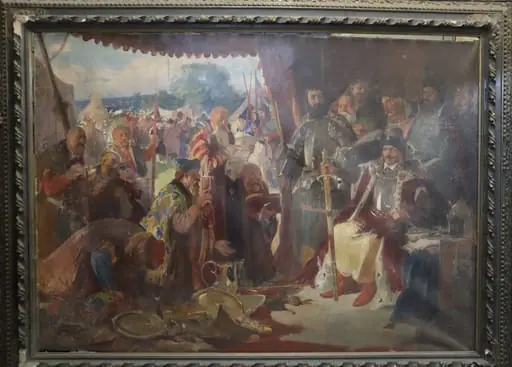 Ștefan cel Mare primind solii tătari
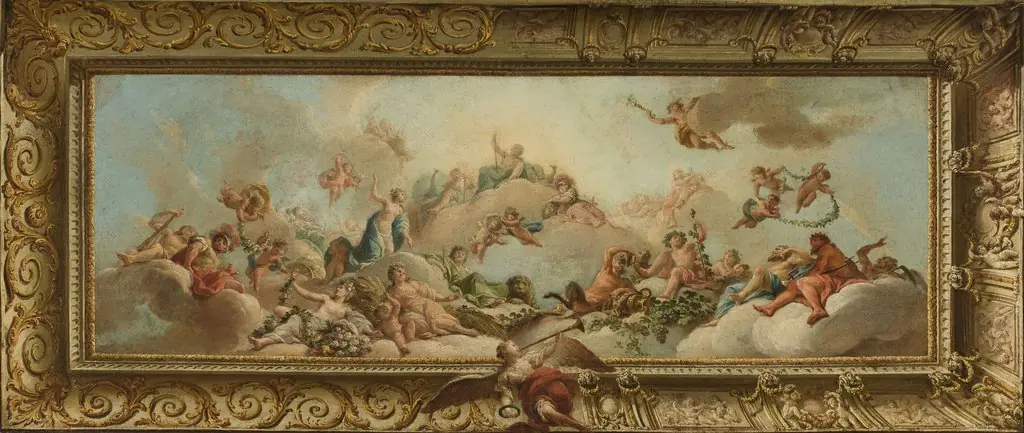 Greeting of Venus at Mount Olympus
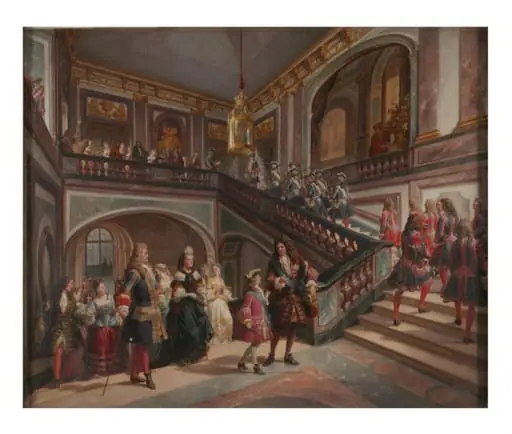 The Young Louis XV at Versailles
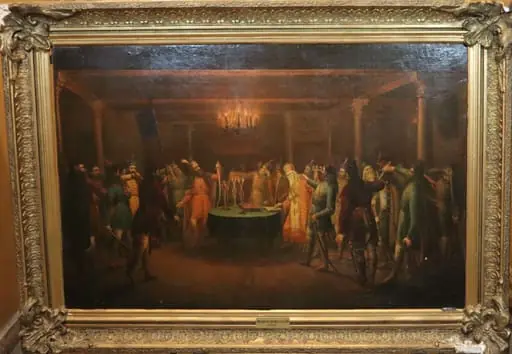 Jurământul lui Mihai Viteazul
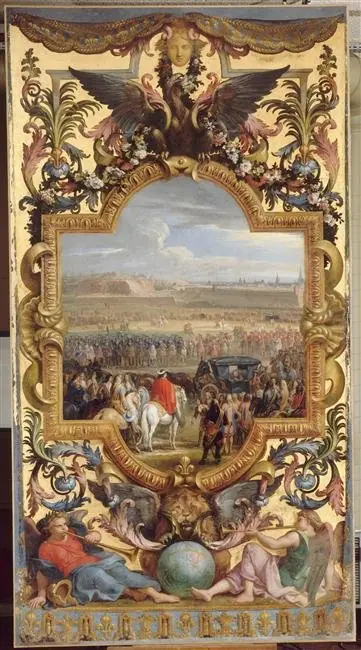 The surrender of Cambrai
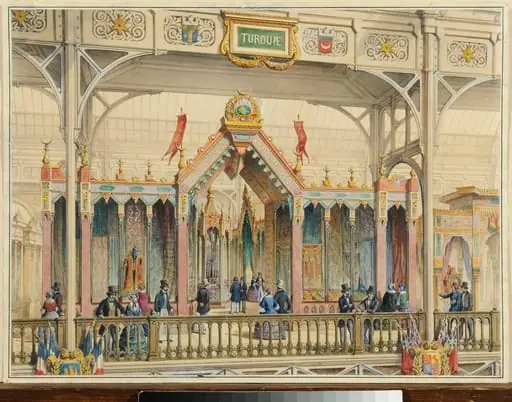 Pavilionul Turciei la o expoziție internațională
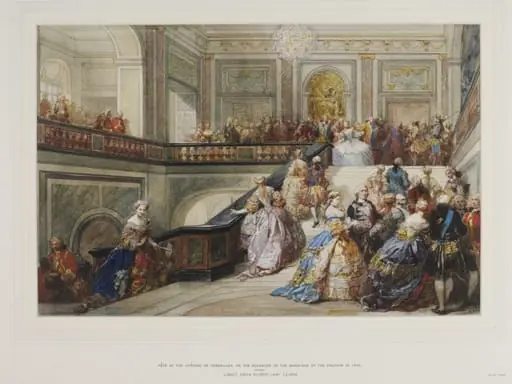 Fete at the Chateau de Versailles in 1745 on the occasion of the marriage of the Dauphin
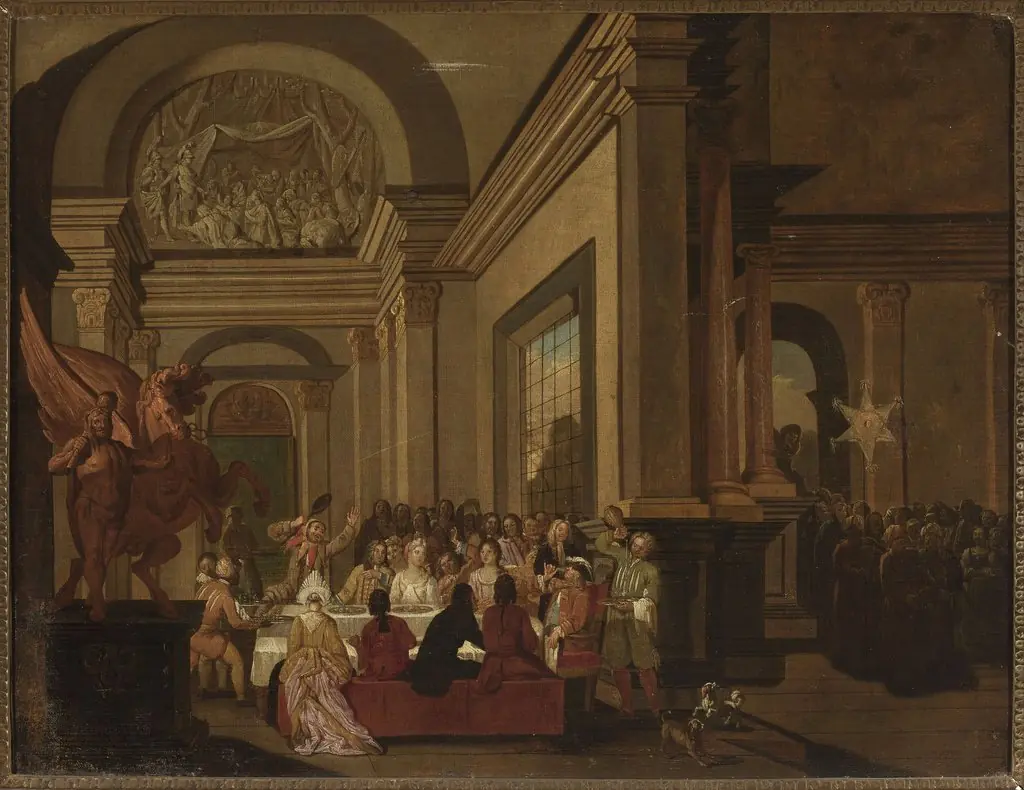 Banquet
 A Hunting Breakfast in England
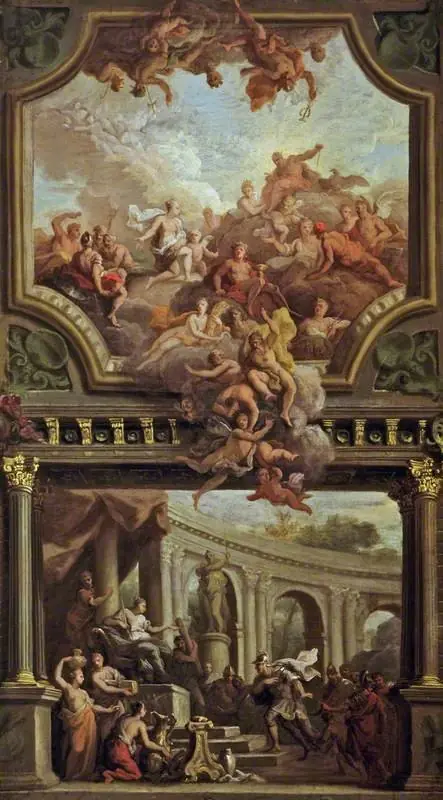 Aeneas before Dido, and Venus Supplicating Jupiter (sketch for a wall and ceiling decoration)
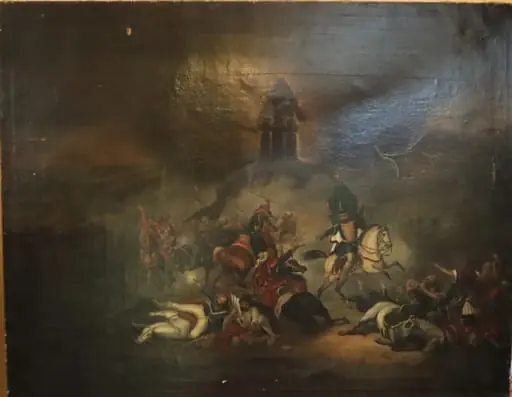 Bătălia de la Călugăreni
 Societate la curtea lui Iosif I