Artwork
Lakeside Village with Herdsmen
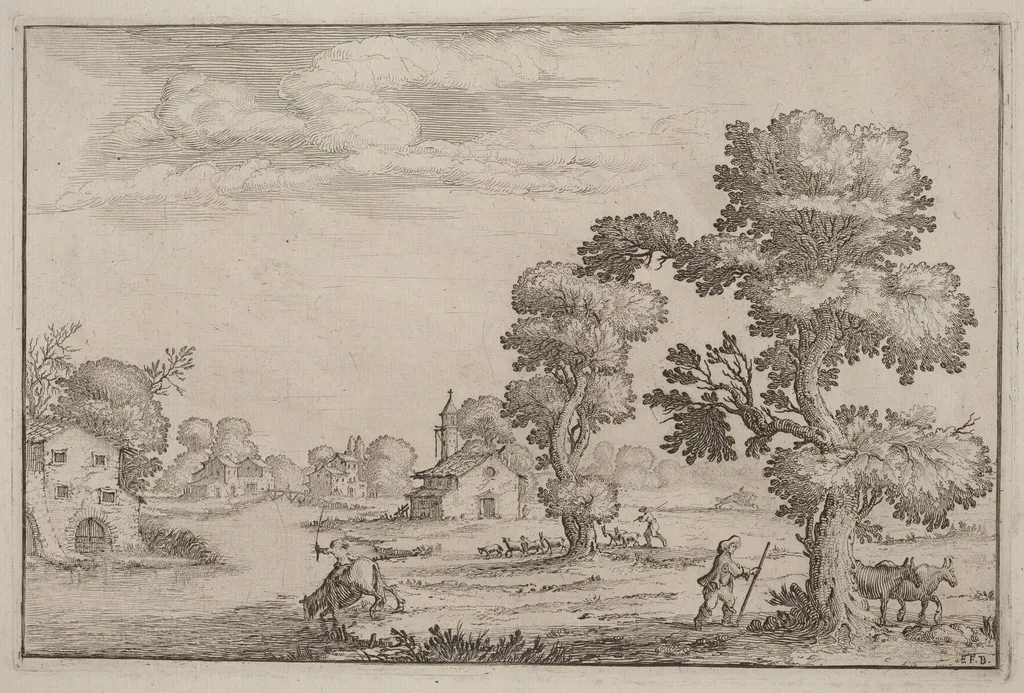
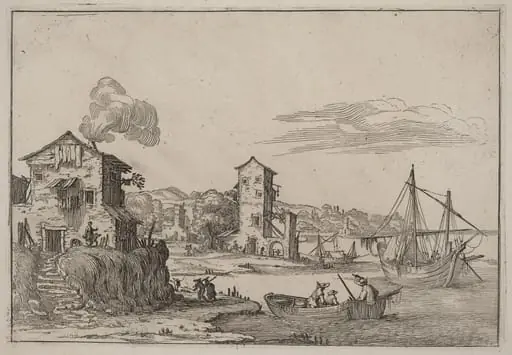
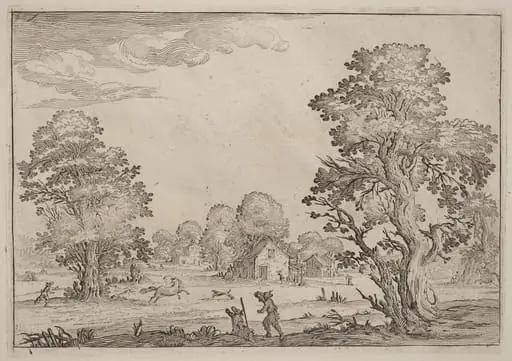
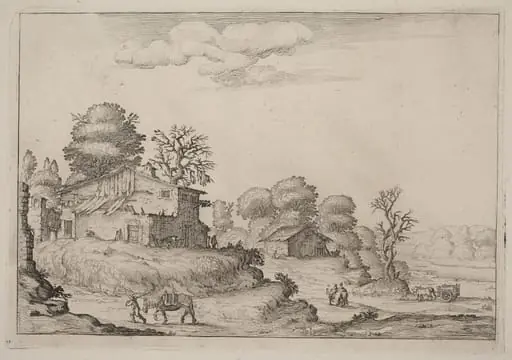
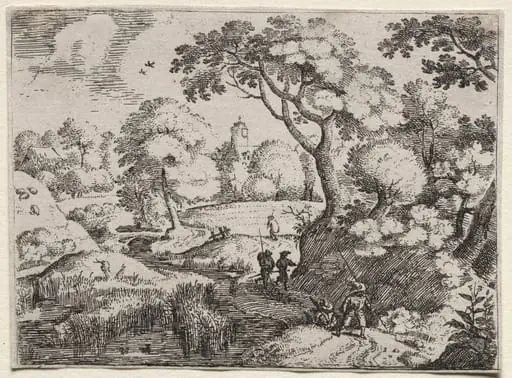
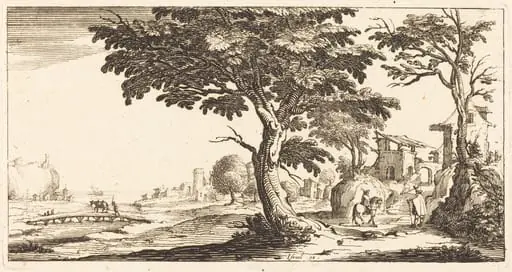
Lakeside Village with Herdsmen is an ink print by the Baroque artist Ercole Bazicaluva. It dates from 1638 and is held in the collection of the National Gallery of Art.
About this work
Overview
Created in 1638 by the Italian engraver Ercole Bazzicaluva, this etching on laid paper captures a tranquil lakeside hamlet during the Baroque era.
Created in 1638 by the Italian engraver Ercole Bazzicaluva, this etching on laid paper captures a tranquil lakeside hamlet during the Baroque era. The work belongs to a tradition of printmaking that emphasized detailed observation of rural life. Its quiet composition and precise line work reflect the technical discipline of etching, a method that allowed for subtle tonal variation and fine linear control.
Subject & Meaning
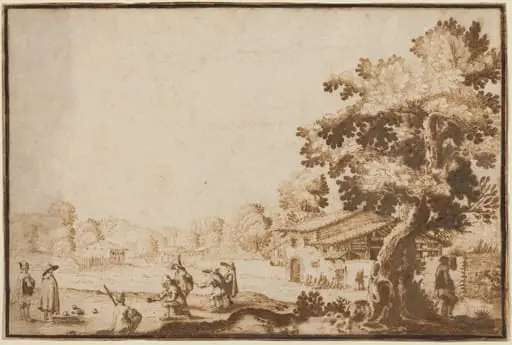
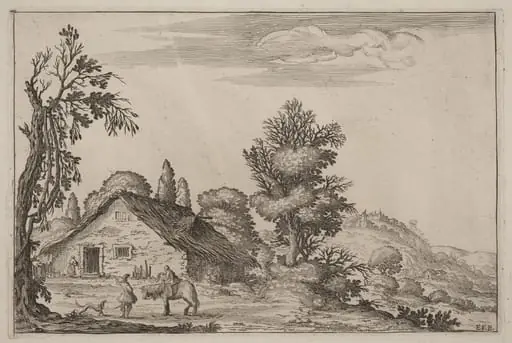
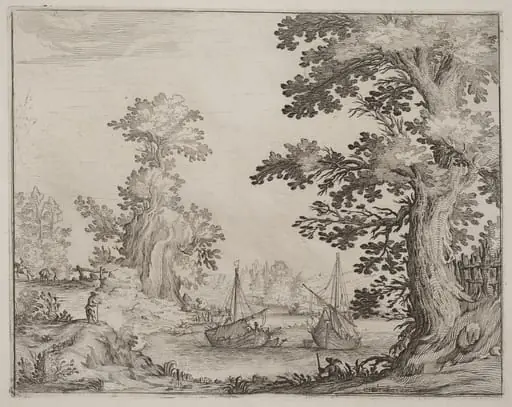
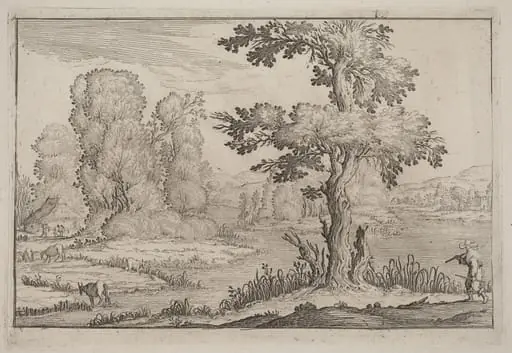
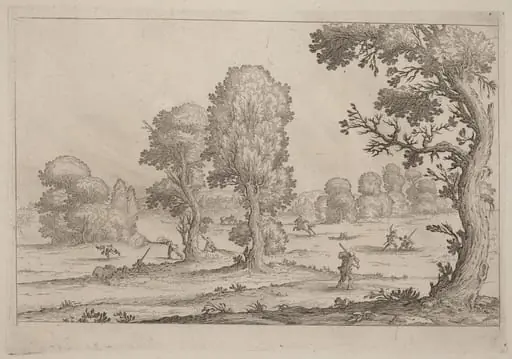
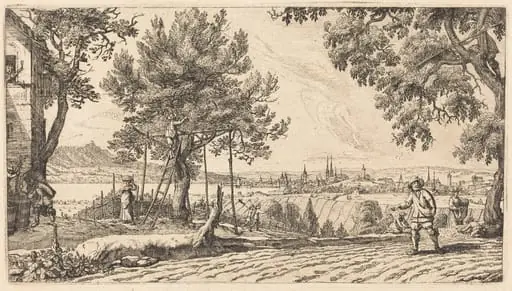
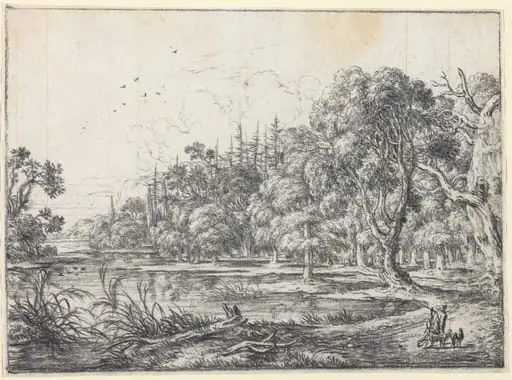
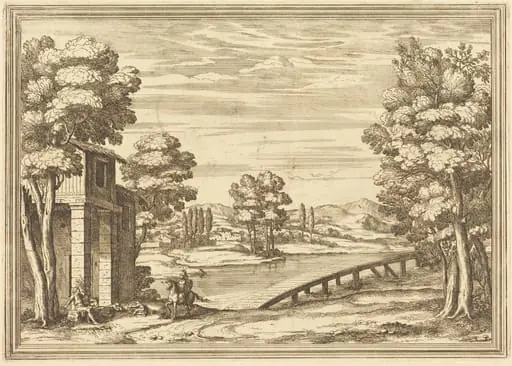
The scene portrays two herdsmen tending cattle near the water’s edge, one stooping, the other guiding with a staff. Behind them, modest dwellings and tall trees frame the landscape, suggesting a harmonious, uneventful rhythm of daily labor. There is no dramatic narrative—instead, the image conveys stillness and routine, valuing the quiet dignity of pastoral existence over theatricality.
Technique & Style
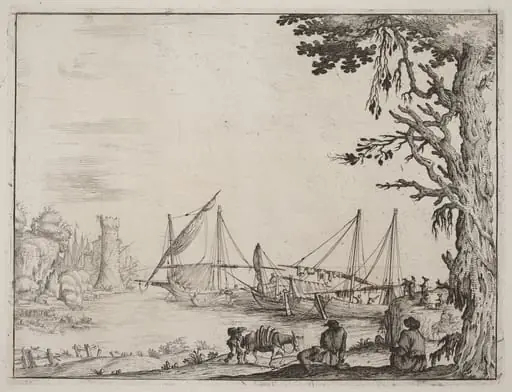
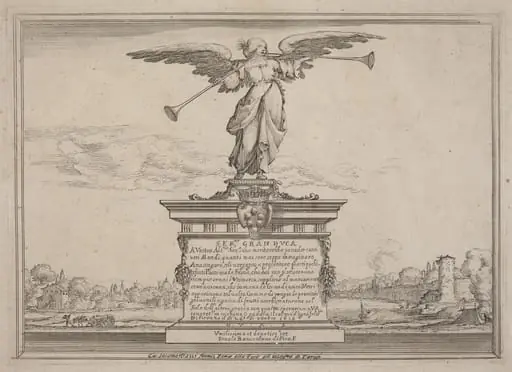
Bazzicaluva employed etching to incise fine lines into a metal plate, which were then inked and pressed onto paper. The resulting image features smooth, continuous contours that define forms with clarity and restraint. The sky is suggested through light, sparse hatching, while the figures and structures emerge in darker, deliberate strokes, demonstrating mastery over tonal gradation without relying on wash or shading.
History & Provenance
Little is documented about Bazzicaluva’s life beyond his activity in the 1630s, and few of his prints survive. This work is among the known examples of his output, likely produced for a limited audience of collectors interested in landscape and genre scenes. Its survival suggests it was valued for its craftsmanship, though its early ownership remains unrecorded.
Context
In mid-17th century Italy, etching was increasingly used to depict everyday rural life, diverging from religious or mythological subjects. Bazzicaluva’s scene aligns with a growing interest in naturalism and local topography, influenced by Northern European prints and the broader Baroque fascination with observable reality, even in modest settings.
Legacy
Though Bazzicaluva did not achieve widespread fame, his etching contributes to the understudied body of Italian landscape prints from the period. It stands as a quiet example of how printmakers translated observational detail into enduring images, preserving a glimpse of rural Italy before industrialization transformed such scenes.
Own this work as a print
Artist & collection

Artist
Ercole Bazzicaluva, also spelled Bezzicaluva or Bazzicaluve (active 1640), was an Italian engraver of the Baroque period.