Artwork
Untitled
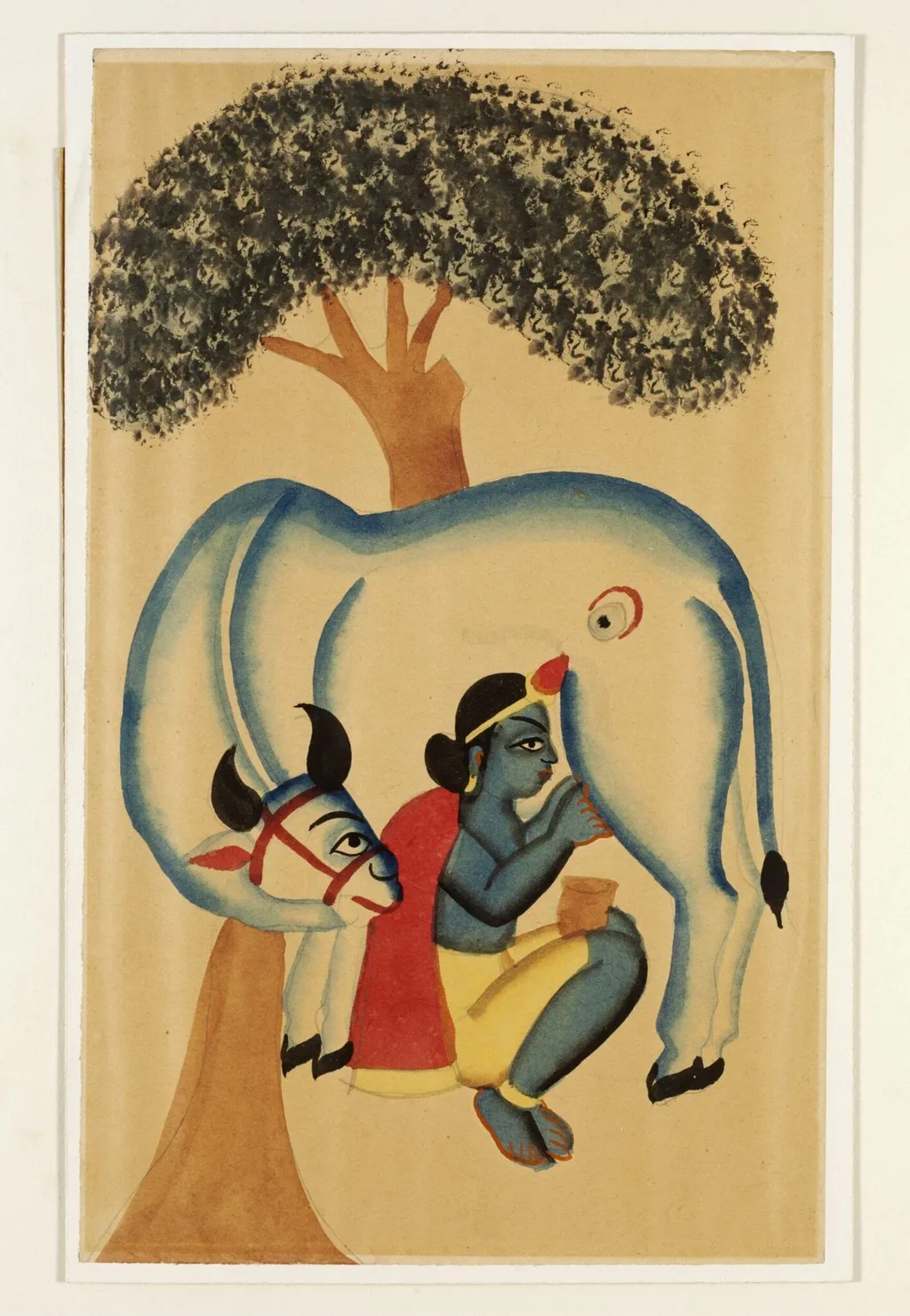
Untitled is a paint painting by the Impressionist artist Nibaran Chandra Ghosh. It dates from 1890 and is held in the collection of the Victoria and Albert Museum.
About this work
Overview
It was collected in the early 20th century and later entered the Victoria and Albert Museum’s collection through a documented provenance chain.
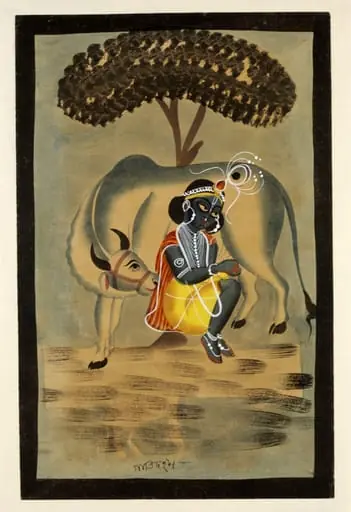
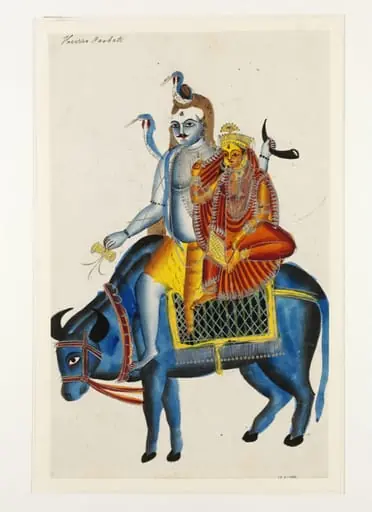
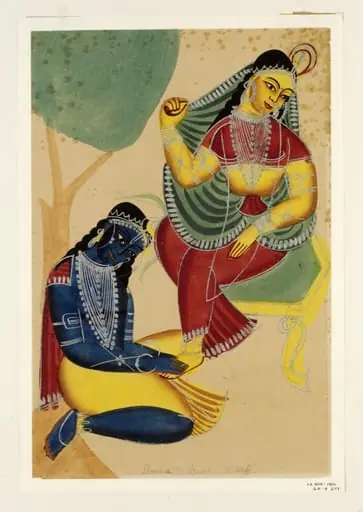
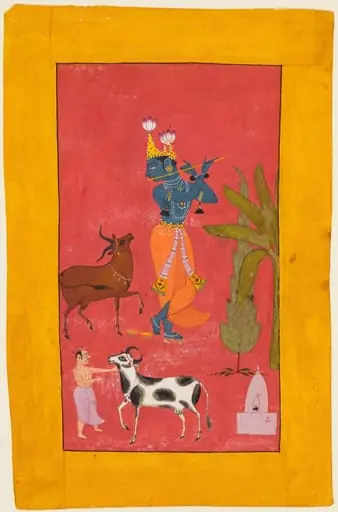
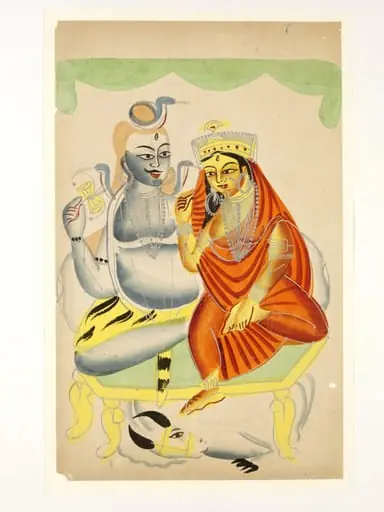
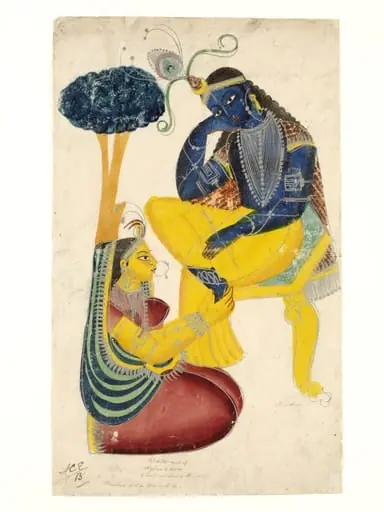
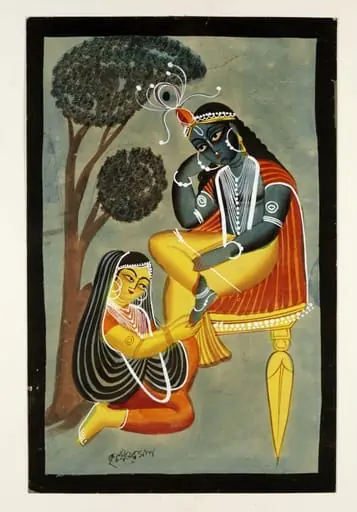
This opaque watercolour on paper, created around 1890 by Nibaran Chandra Ghosh, portrays a quiet scene of the Hindu deity Krishna as a young boy, milking a cow beneath a large tree. The work is part of a regional tradition of Kalighat-style painting, known for its bold outlines and vivid, flat colors. It was collected in the early 20th century and later entered the Victoria and Albert Museum’s collection through a documented provenance chain.
Subject & Meaning
The image depicts Krishna in his childhood form, engaged in the pastoral act of milking, a reference to his role as a cowherd in Vrindavan lore. The calm expression and stillness of both boy and cow suggest a meditative moment, aligning with devotional themes of divine simplicity. The flute, though not held, is implied through context, reinforcing Krishna’s association with music and nature.
Technique & Style
Rendered in opaque watercolour, the painting uses simplified forms and unmodulated hues—bright reds, yellows, and blues—to define figures and space. Details like the cow’s circular eye and the boy’s floral hairpiece are rendered with minimal strokes, evoking folk illustration. The composition is flattened, with the tree dominating the upper register, creating a sense of enclosure around the central figures.
History & Provenance
The painting was acquired in 1932 by W.G. Archer from the artist’s descendants in Kalighat, with attribution to Ghosh based on family knowledge. In 1939, Archer gifted it to A.B. Bartlett, who later sold it to the Victoria and Albert Museum in 1949. Its journey reflects early 20th-century interest in Indian vernacular art, collected by British scholars and institutions seeking to preserve regional traditions.
Context
Created during the late 19th century, this work belongs to the Kalighat school, which emerged near Kolkata as a response to urbanization and pilgrimage culture. Artists like Ghosh produced devotional imagery for local audiences, blending religious iconography with everyday visual language. Unlike formal temple art, these pieces were often sold as affordable souvenirs, yet retained spiritual resonance.
Legacy
The painting contributes to the documented corpus of Kalighat art, offering insight into how deities were rendered in domestic and commercial contexts. Its preservation in a major museum underscores its value as a cultural artifact rather than a religious object. It remains a reference point for understanding the transition of Indian folk traditions into institutional collections.
Artist & collection
Artist
Nibaran Chandra Ghosh painted in Calcutta around 1890. His single known work here is an Untitled painting from that decade. Little else is recorded about him, but the piece shows the loose brushwork and muted colors…