Artwork
Saint John the Evangelist and a Deacon Saint (right panel)
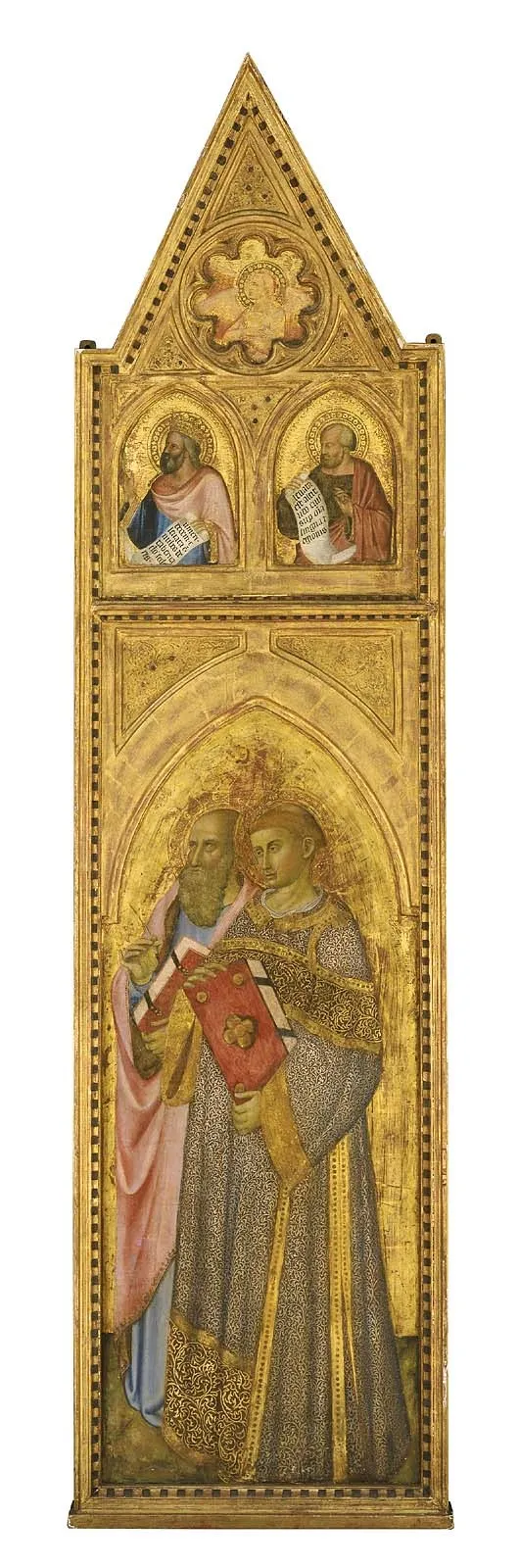
Saint John the Evangelist and a Deacon Saint (right panel) is an unspecified painting by Niccolò di Ser Sozzo Tegliaccio. It dates from 1358 and is held in the collection of the Museum of Fine Arts Boston.
About this work
Overview
This painting is the right panel of a diptych or polyptych created around 1358 by Niccolò di Ser Sozzo, a Sienese artist active between 1334 and 1363.
This painting is the right panel of a diptych or polyptych created around 1358 by Niccolò di Ser Sozzo, a Sienese artist active between 1334 and 1363. It features two standing holy figures and was originally part of a larger devotional altarpiece. The work is now held by the Museum of Fine Arts, Boston, and exemplifies the refined, decorative style characteristic of mid-14th-century Sienese panel painting, blending spiritual gravity with ornamental richness.
Subject & Meaning
The panel portrays Saint John the Evangelist, identifiable by his traditional attributes, alongside a deacon saint, likely chosen for liturgical relevance. Both figures stand in solemn, frontal poses, their presence intended to inspire veneration. The pairing reflects a common devotional structure in Sienese altarpieces, where apostles and clergy were displayed together to reinforce ecclesiastical authority and intercessory power within a sacred context.
Technique & Style
Niccolò employed fine brushwork and extensive gold leaf to highlight the figures’ elaborate vestments, emphasizing texture through intricate patterns and raised detailing. The use of tempera on wood, combined with subtle modeling of faces and drapery, reflects the influence of Simone Martini and the Lorenzetti brothers. Color is restrained yet luminous, with deep blues and reds enhancing the figures’ presence against a flat, gilded background typical of the period.
History & Provenance
The panel was likely commissioned for a private chapel or ecclesiastical setting in Siena during the 1350s. It remained in regional collections until entering the Museum of Fine Arts, Boston, in the early 20th century. Its survival as a single panel suggests the original altarpiece was dismantled, possibly during the 18th or 19th century, when multi-panel works were often broken up for sale or reconfiguration.
Context
Niccolò di Ser Sozzo worked within a Sienese artistic milieu shaped by the legacy of Duccio and the Lorenzetti, yet his style shows closer ties to contemporaries like Lippo Vanni and Luca di Tommè. His work bridges the transition from Byzantine formalism to a more naturalistic approach, retaining decorative elegance while introducing subtle spatial awareness. This panel reflects the continued demand for devotional imagery in a city still deeply committed to religious patronage despite economic and political shifts.
Legacy
Though less celebrated than his peers, Niccolò’s work contributes to the understanding of provincial Sienese painting in the mid-14th century. His attention to textile detail and liturgical iconography reveals how smaller workshops sustained artistic traditions amid changing tastes. This panel remains a key example of how devotional imagery was crafted for intimate worship, preserving the visual language of Siena’s religious culture beyond its most famous masters.
Artist & collection
Artist
Niccolò di Ser Sozzo Tegliaccio
Niccolò di Ser Sozzo (fl. 1334–63) was an Italian painter and manuscript illuminator. He generally has been identified as Niccolò di Ser Sozzo di Francesco Tegliacci, but recent research points instead to a Niccolò di…

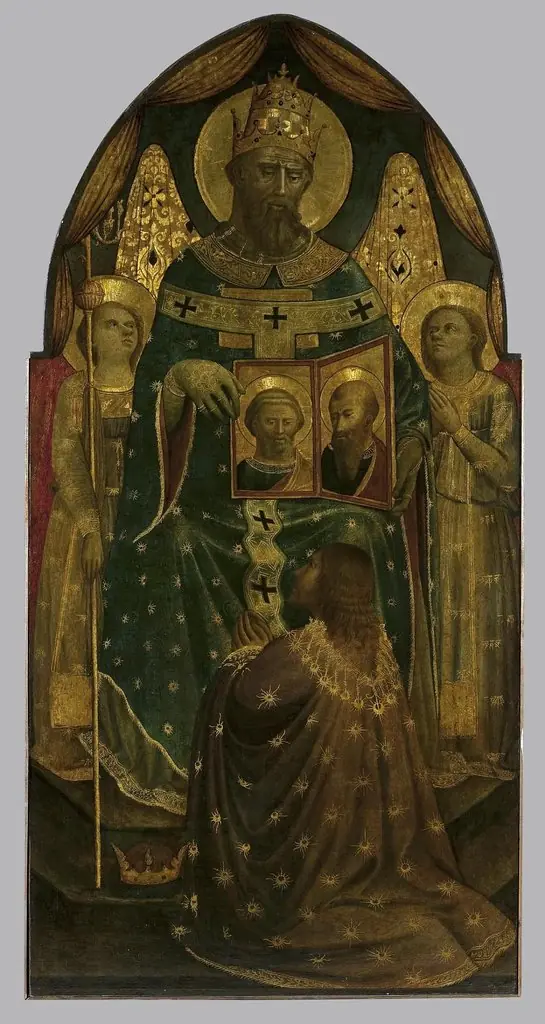 Emperor Constantine in front of Pope Sylvester I Showing Depictions of Sts Peter and Paul (central part of the triptych)
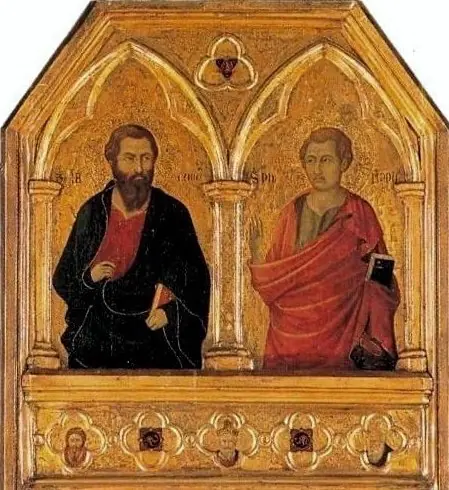 Apostle St. James the Elder and Philip the Apostle
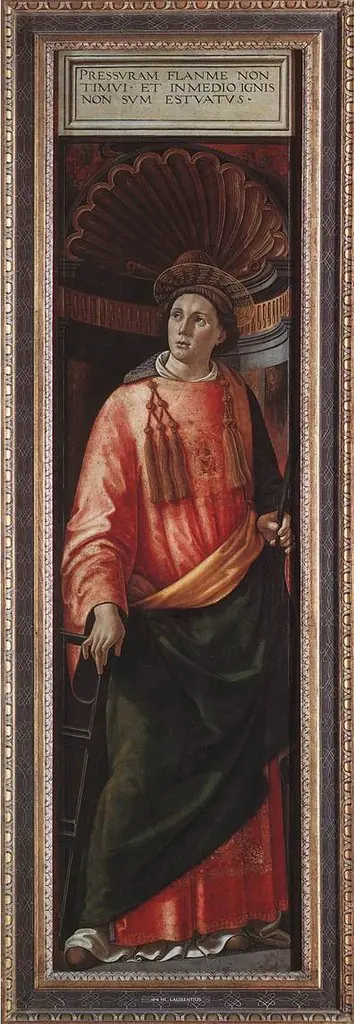 St Lawrence
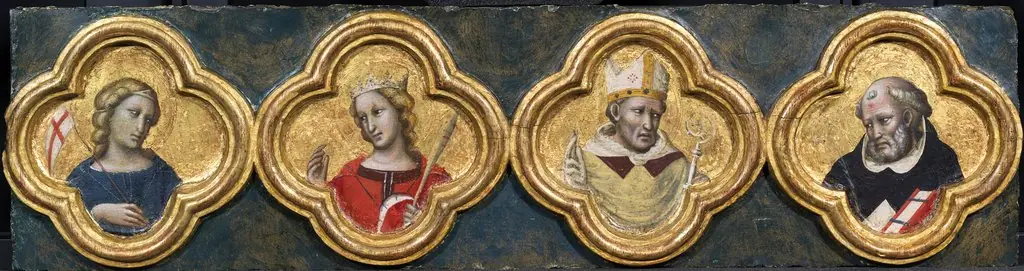 Four Saints: St Ursula, St Catherine, ?St Augustine and St Dominic
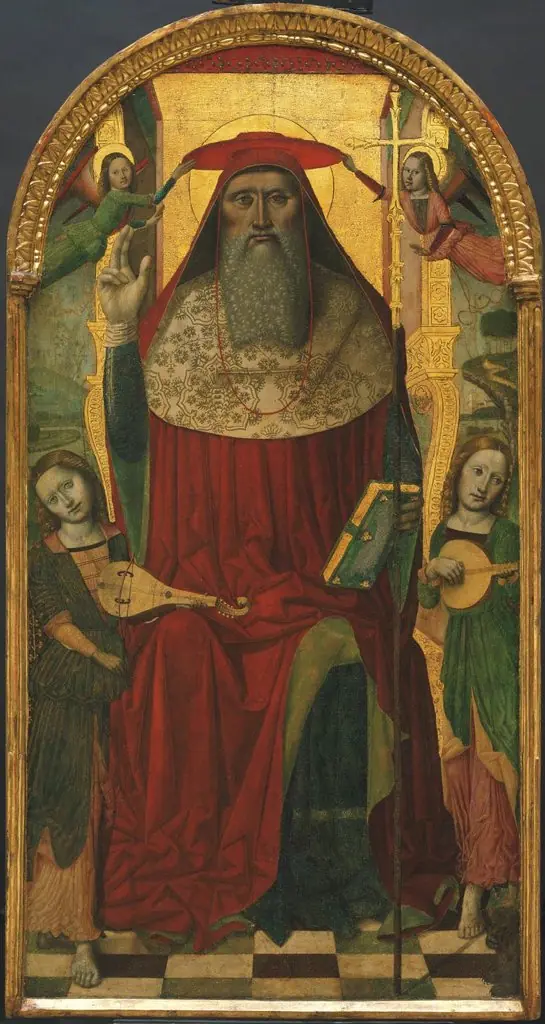 Enthroned Saint Jerome, with Angels
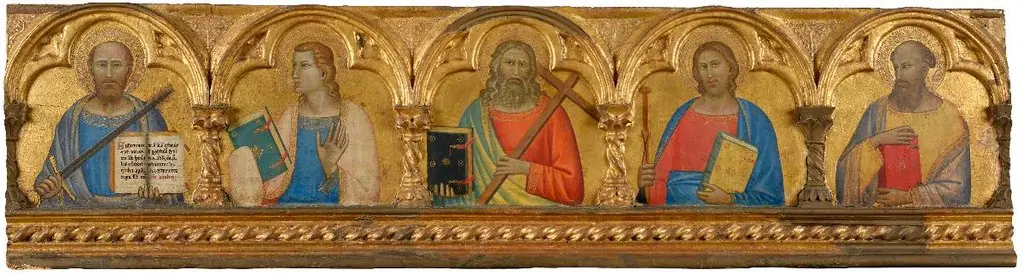 Five apostles
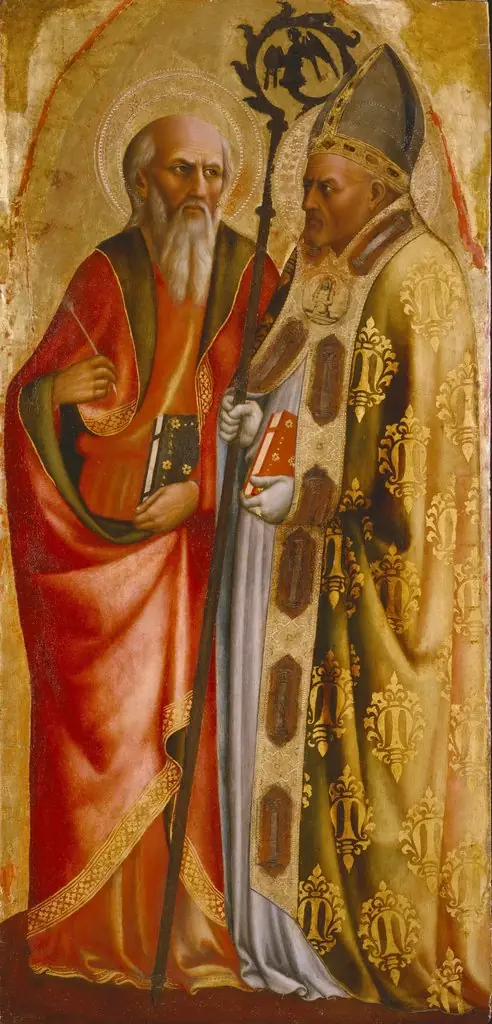 Saints John the Evangelist(?) and Martin of Tours
![Saint Andrew and Saint Benedict with the Archangel Gabriel [left panel], by Agnolo Gaddi](https://artifactworldgallery.com/img/agnolo-gaddi--saint-andrew-and-saint-benedict-with-the-archangel-gabriel-l--ddd94720dea7e794-w320.webp) Saint Andrew and Saint Benedict with the Archangel Gabriel [left panel]
Saint Andrew and Saint Benedict with the Archangel Gabriel [left panel]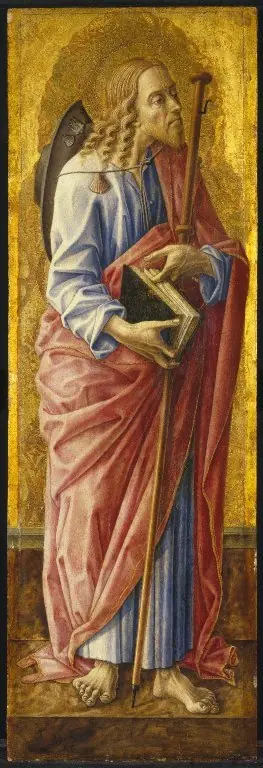 Saint James the Great
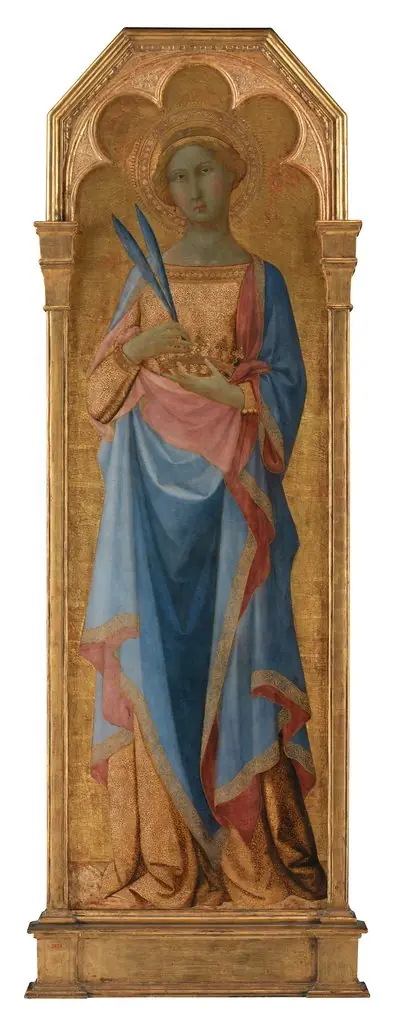 St. Corona
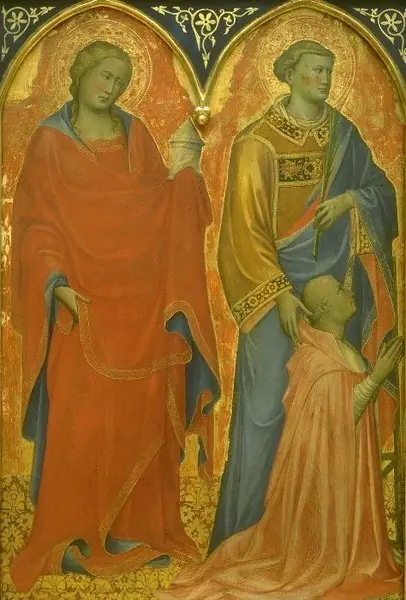 Saints Mary Magdalene, Lawrence and a donor/ Angelo Acciaiuolo