Artwork
The Anglo-Dutch Fleet under Lord Exmouth and Vice Admiral Jonkheer Theodorus Frederik van Capellen putting out the Algerian Strongholds, 27 August 1816
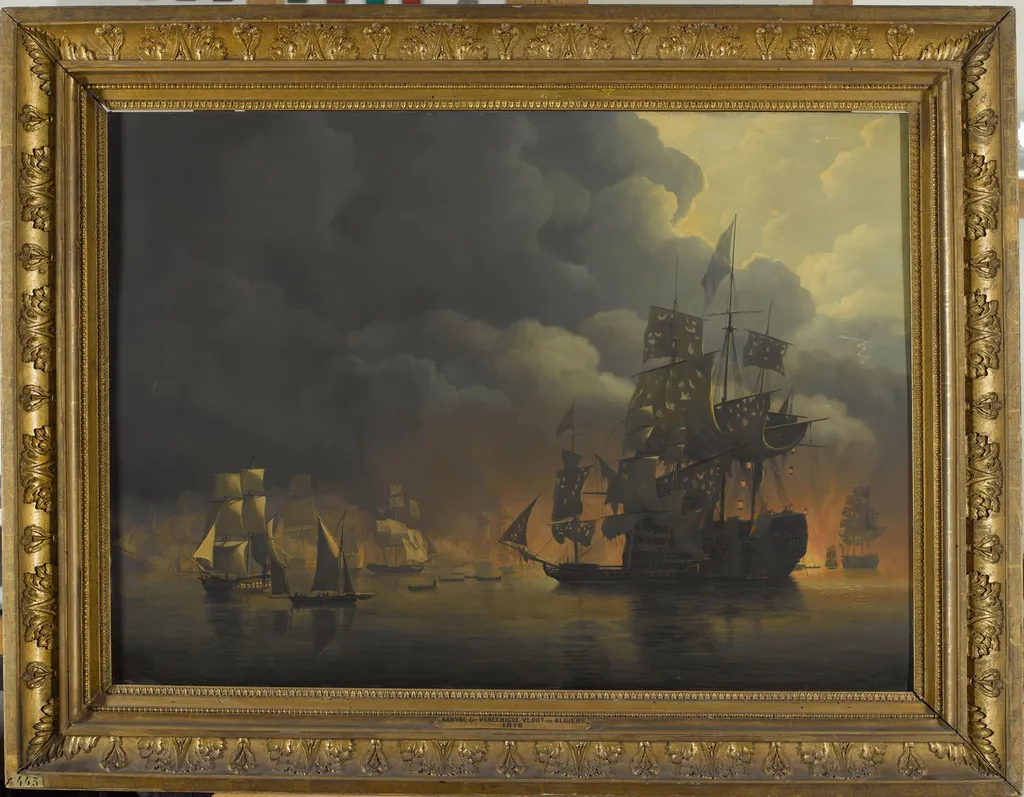
The Anglo-Dutch Fleet under Lord Exmouth and Vice Admiral Jonkheer Theodorus Frederik van Capellen putting out the Algerian Strongholds, 27 August 1816 is an unspecified painting by the Dutch Golden Age artist Nicolaas Baur. It dates from 1818 and is held in the collection of the Rijksmuseum.
About this work
You see a big sea battle: British and Dutch ships fire cannons at a fortress on the Algerian coast.
You see a big sea battle: British and Dutch ships fire cannons at a fortress on the Algerian coast. Smoke curls across the water. Flags flap in the wind.
This painting shows a real fight from 1816. The British and Dutch teamed up to stop pirates in Algiers. The artist painted it just two years later, so it’s like an old news photo.
If you like ships and history, look up more paintings in the Rijksmuseum.
Overview
This painting depicts a pivotal naval engagement on 27 August 1816, where the combined Anglo-Dutch fleet, led by Lord Exmouth and Vice Admiral Theodorus Frederik van Capellen, attacked Algerian strongholds to curb piracy.
Subject & Meaning
The scene captures the climax of the expedition to suppress piracy in Algiers, highlighting the military alliance between Britain and the Netherlands. The artwork commemorates a significant event in the history of naval warfare and international cooperation.
Technique & Style
Executed just two years after the event, the painting adopts a realistic approach, akin to a contemporary news report. Dynamic elements like billowing smoke, cannon fire, and fluttering flags convey the intensity of the battle, suggesting an emphasis on historical accuracy and immediacy.
History & Provenance
Created in 1818, the painting is a near-contemporary representation of the battle, indicating its purpose as a historical record. Its presence in the Rijksmuseum suggests it was likely commissioned or acquired for its historical significance and the involvement of Dutch naval leadership.
Context
The painting reflects the early 19th-century European efforts to combat Barbary piracy, which threatened maritime trade. The Anglo-Dutch cooperation depicted was part of broader international actions against North African pirate states.
Legacy
While not widely known beyond maritime art circles, the painting serves as a valuable visual document of a crucial moment in naval history and the fight against piracy, offering insights into 19th-century military tactics and international alliances.
Artist & collection


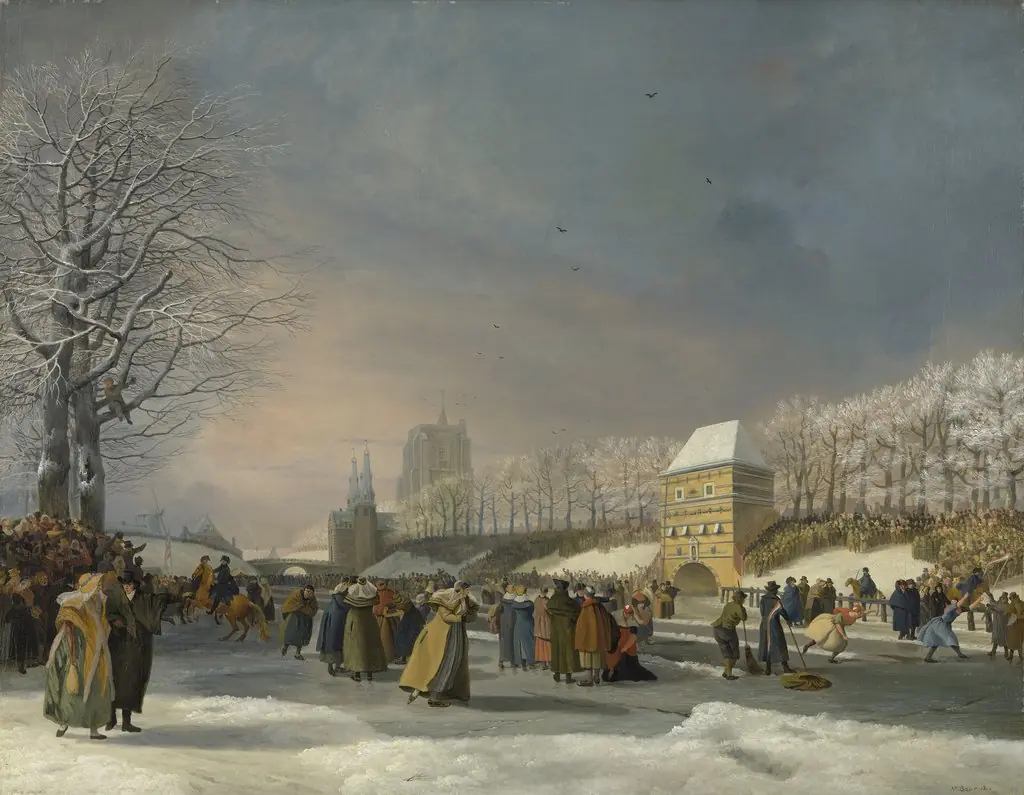 Women’s Skating Competition on the Stadsgracht in Leeuwarden, 21 January 1809
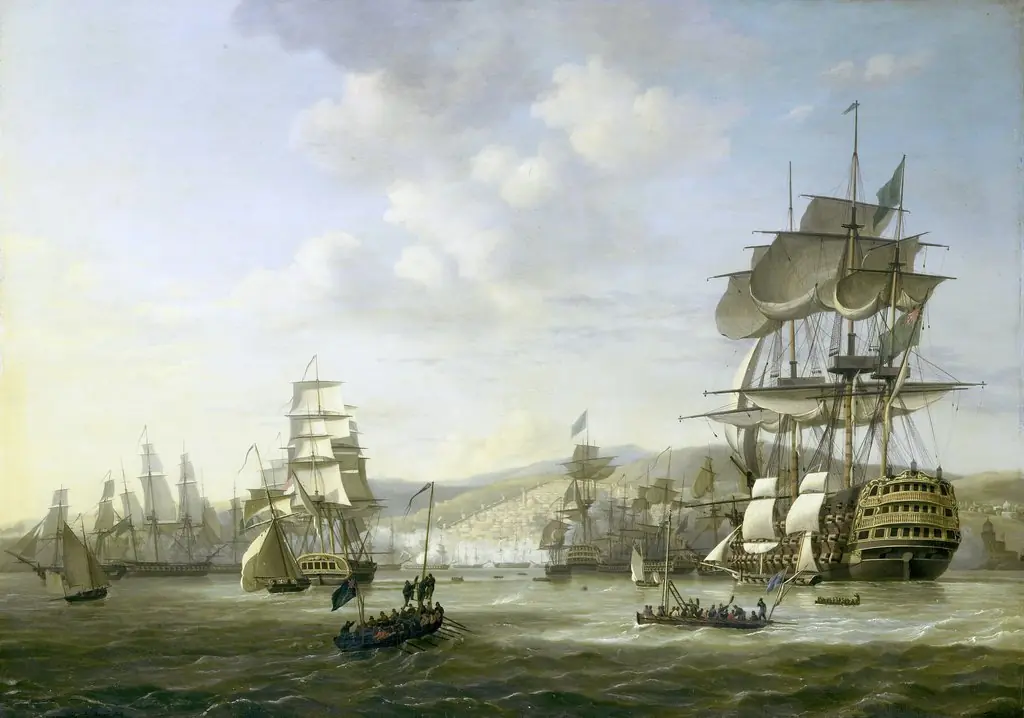 The Anglo-Dutch Fleet in the Bay of Algiers Backing up the Ultimatum to Release the Christian Slaves, 26 August 1816
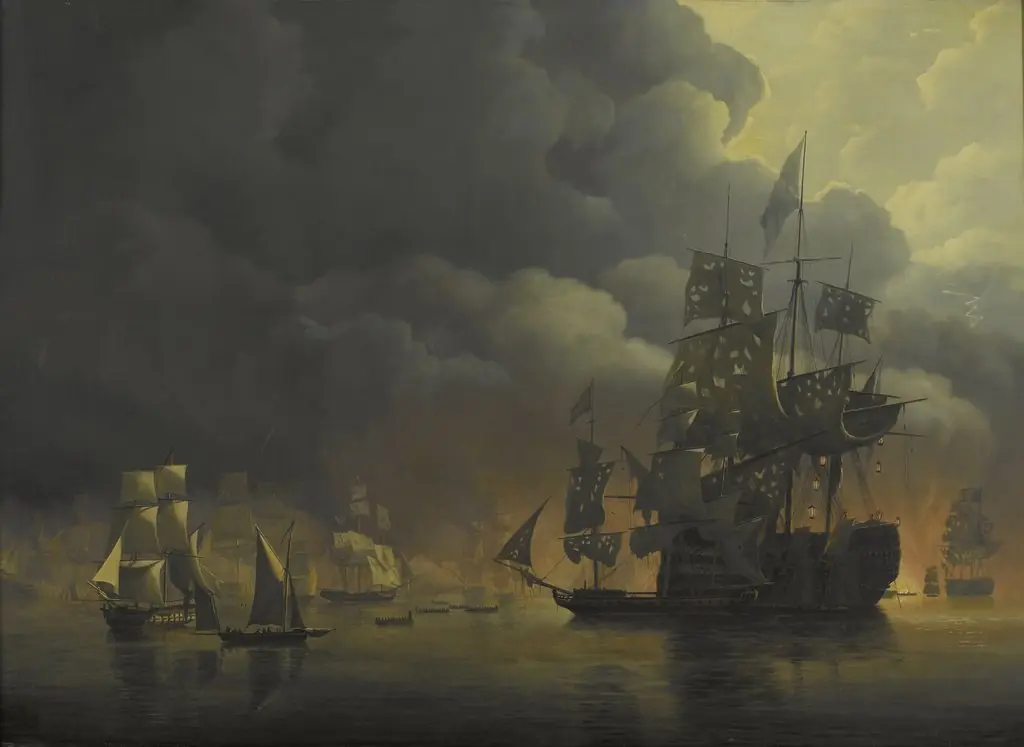 The Anglo-Dutch Fleet under Lord Exmouth and Vice Admiral Jonkheer Theodorus Frederik van Capellen putting out the Algerian Strongholds, 27 August 1816
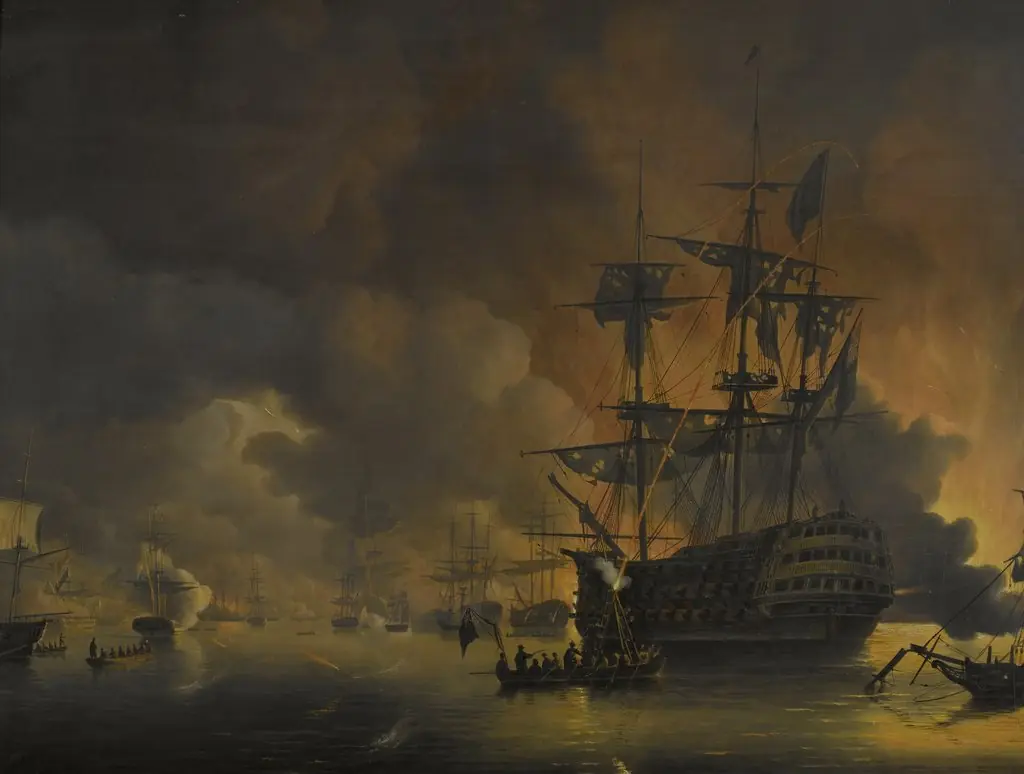 The fire on the Wharves of Algiers, shortly after the commencement of the Bombardment by the Anglo-Dutch Fleet, 27 August 1816
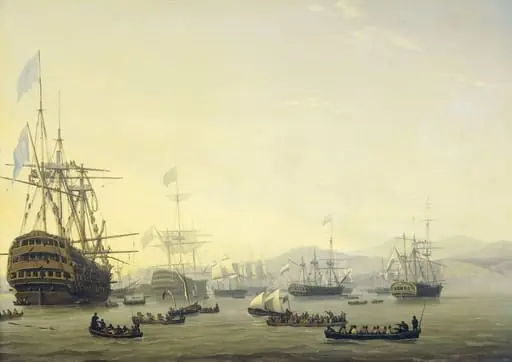 Council of War on board the 'Queen Charlotte', commanded by Lord Exmouth, prior to the Bombardment of Algiers, 26 August 1816
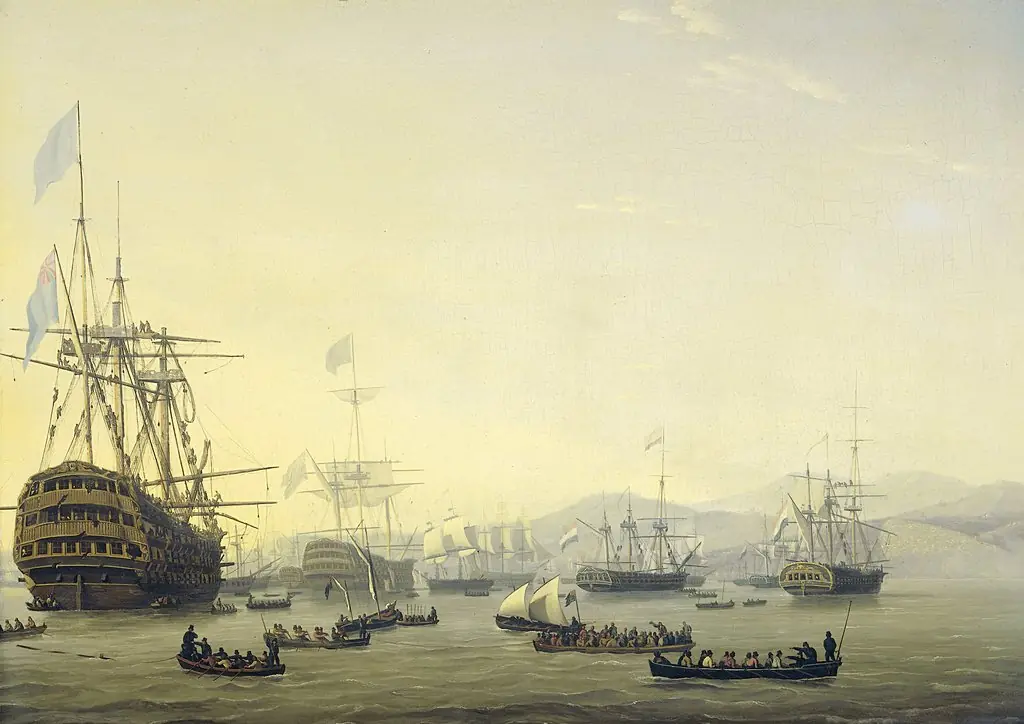 Council of War on board the 'Queen Charlotte', commanded by Lord Exmouth, prior to the Bombardment of Algiers, 26 August 1816