Artwork
Sfântul Ioan Botezătorul
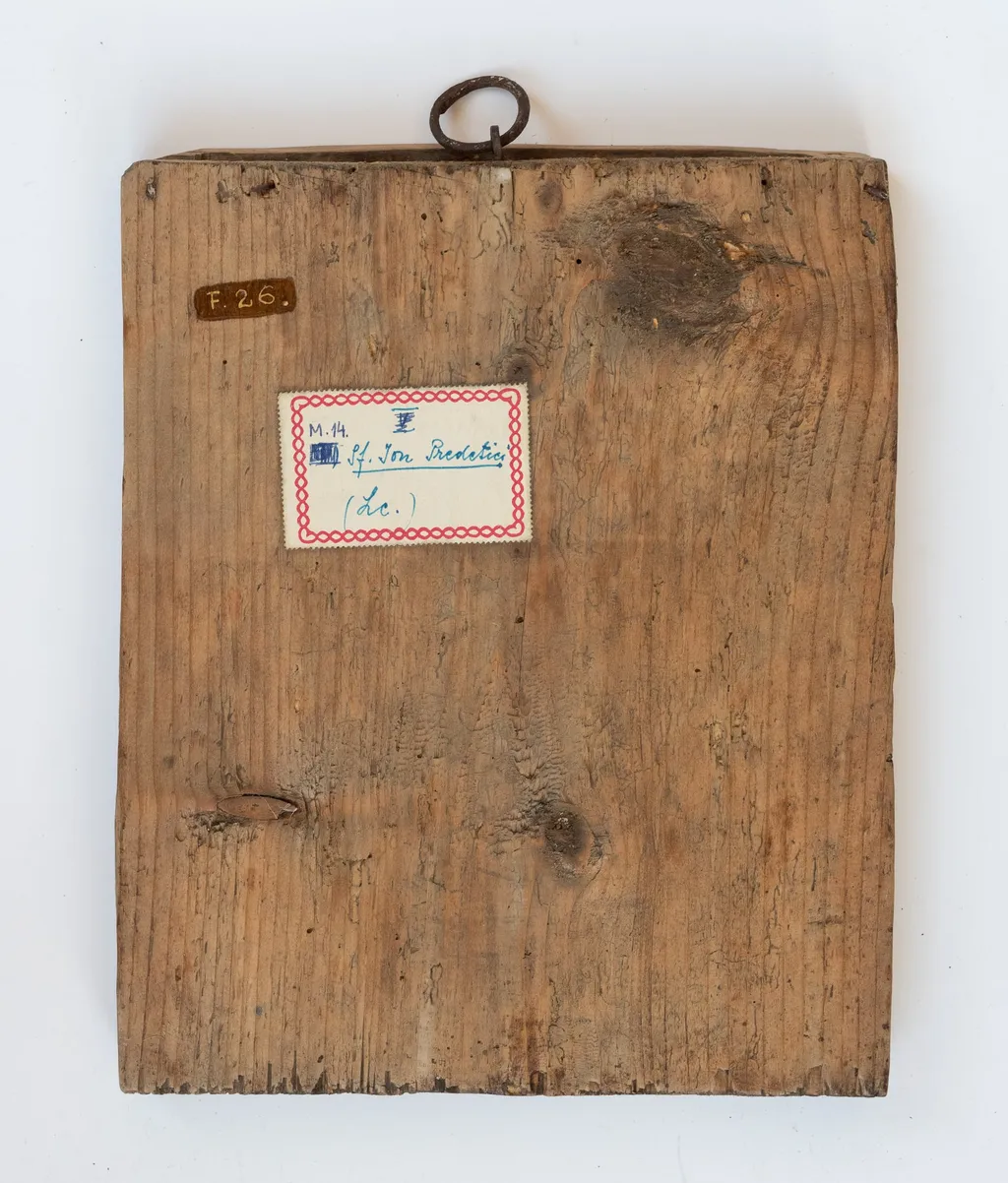
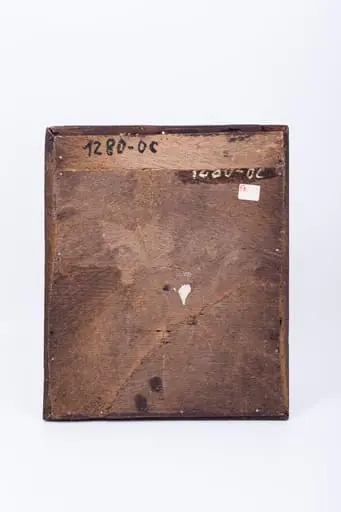
Sfântul Ioan Botezătorul is a drawing by Nicolae Zugrav. It is held in the collection of the National Museum of Transylvanian History. A worn wooden panel, its surface heavily degraded, once carried a religious image now nearly vanished.
About this work
Overview
The panel’s rough texture and minimal surviving traces indicate it was never a lavishly produced object, but rather a humble devotional item.
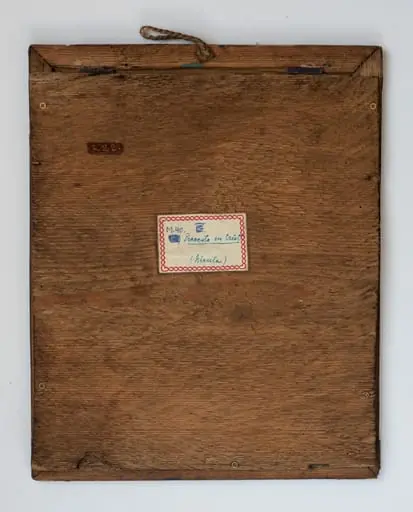
A worn wooden panel, its surface heavily degraded, once carried a religious image now nearly vanished. Cracks, dark stains, and fading mark decades—possibly centuries—of exposure. A small, faded paper label with red borders, partially illegible, suggests the original subject was Saint John the Baptist. The panel’s rough texture and minimal surviving traces indicate it was never a lavishly produced object, but rather a humble devotional item.
Subject & Meaning
Though the image is largely lost, the label implies the depiction was of Saint John the Baptist, a figure central to Christian devotion as the forerunner of Christ. Such panels were often used in private prayer or small chapels, meant to focus contemplation. The absence of detail does not diminish its purpose; its endurance as a physical object reflects its role in quiet, personal faith rather than public display.
Technique & Style
The panel likely once bore a simple drawing or painting, possibly executed with ink or tempera, using techniques like cross-hatching to suggest form and shadow. The lack of surviving pigment indicates the medium was fragile or applied thinly. The artist’s hand is barely traceable now, but the presence of linear shading hints at a methodical, if modest, approach to rendering the human figure.
History & Provenance
Its age and condition suggest the panel originated in a region with a strong Orthodox or Byzantine tradition, possibly the Balkans or Eastern Europe. It may have been used in a domestic setting or a rural church, surviving through periods of neglect or conflict. The label, added later, reflects an attempt to identify its origin, though its handwriting and placement offer no clear record of maker or date.
Context
In medieval and early modern religious culture, small wooden panels like this were common among those who could not afford elaborate altarpieces. They served as portable aids to devotion, carried or hung in homes. Their fragility meant few survived intact; this one’s survival, though damaged, speaks to the persistence of private piety amid material scarcity and historical upheaval.
Legacy
Today, the panel stands as a testament to the quiet endurance of devotional objects. Its decay underscores how much religious art was made not for posterity, but for immediate spiritual use. What remains—faded lines, worn wood, a cryptic label—invites reflection on the transience of images and the tenacity of belief.
Artist & collection
Artist
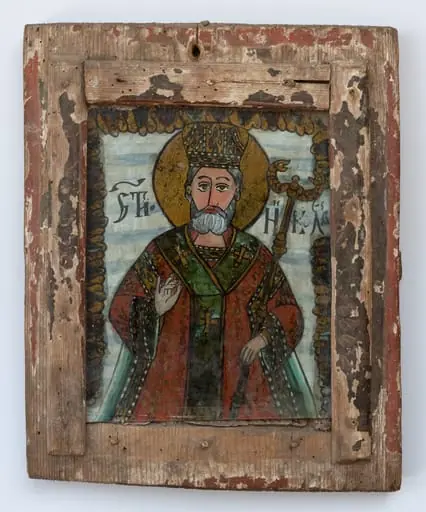
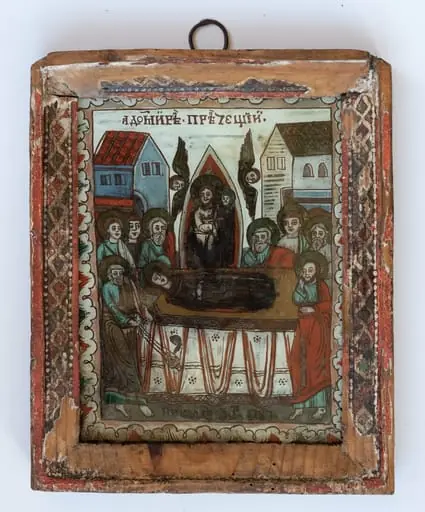
Nicolae Zugrav painted religious scenes, mostly on wood, in the late 1700s. His works in this set include Sfântul Nicolae, Adormirea Maicii Domnului from 1787, and Sfântul Ioan Botezătorul. The figures wear draped…

Museum
National Museum of Transylvanian History
Continue through works from the same source collection.
 Maica Domnului ține în brațe Pruncul Iisus Hristos care are în mâna stângă un hrisov înfășurat și Binecuvântează cu mâna dreaptă. Maica Domnului arată calea cu mâna dreaptă, deci este Hodighitria. Maica Domnului este înveșmântată în mantie cu maforion roșu vermillon cu interiorul verde și sacos galben, are aureolă. Pruncul Iisus Hristos este înveșmântat în galben-bronziu și alb crem-ivoriu, are aureolă. Întreaga icoană este încadrată de un chenar decorativ geometrizant vișiniu-acajou-sracojiu cu linia albă șerpuită, specifică centrului de la Nicula. Fondul icoanei este cerul albastru ultramarin bleumarin. Cromatica este armonioasă, luminoasă, bizantină și foarte picturală: roșu vermillon, verde spanac-avocado, kaki, galben chihlimbar, albastru ultramarin bleumarin, vișiniu, stacojiu-acajou, bronziu, alb, negru. Icoana este de Nicula. Inscripția din româno-chirilică se traduce MP IC XC Maica Domnului Iisus Hristos.
 Sfântul Mare Mucenic Gheorghe este așezat călare pe un cal alb, cu șaua și elementele de harnașament albastre, omorând balaurul albastru-gri cu lancea, pe care o ține cu amândouă mâinile. Balaurul este pictat cu albastru-gri, având corpul de reptilă. Fondul este albastru bleu-ciel, în registrul superior și roșu-galben-albastru, în cel inferior, în centrul icoanei ușor întrepătrundu-se toate culorile. Se remarcă un câmp deosebit galben, cu tușe subțiri albastre paralel-oblice. Tunica Sfântului Mucenic Purtător de Biruință este roșie cu verde, având pantalonii albaștri și cămașă de cavaler roșie. Mantia fluturândă a Sfântului Mucenic este albastră-regal. În registrul superior, pe cer, sunt 9 elemente florale roșii cu frunze lungi verzi, echilibrând întreaga compoziție. Rujele din ghirlanda decorativ-ancadratoare au motivul zăluței albe în interior. Fiind o icoană de Nicula, imaginea picturală este armonioasă, cu un desen simplu, curat. Cromatica este armonioasă; roșu vermillon-roz, albastru bleu-ciel și cobalt, verde brad, ocru, brun, gri, alb și negru. Inscripția din româno-chirilică se traduce Sf Gheorghe. Icoana este de Nicula-Gherla.
 La împlinirea a trei ani de la Nașterea Preacuratei Fecioare Maria, Drepții Părinți Ioachim și Ana, aducându-și aminte de făgăduința făcută, ca să dea în dar Lui Dumnezeu pe cea născută, cheamă toate rudeniile de neam împărătesc și arhieresc, și cete de fecioare, cu făclii aprinse, pentru a o conduce pe Pruncă la Templu. Icoana este bogată în narațiune, numărul personajelor este foarte mare, realizându-se trei cortegii unduitoare: oamenii, îngerii și Împărăția Cerurilor. Aducerea la Templu, în Biserică, este deja o ridicare la Ceruri, prin creșterea duhovnicească. Mandorlele de nouri, se întrepătrund armonios cu elementele de arhitectură ale cetații și Bisericii, creându-se drumuri spațiale, dar și ideatice. Personajele sunt pictate mai mult din profil și semiprofil, o caracteristică a zugravului iconar Ioan Pop de Făgăraș. Cromatica este vie, luminoasă, bucuroasă: roșu, galben chihlimbar, albastru ceruleum, albastru bleuciel, verde, brun, bej, gri, alb, negru. Inscripția din româno-chirilică se traduce: Intrarea în Biserică a PreaSfintei noastre Născătoare de Dumnezeu 1865. Icoana are semnătura zugravului iconar, ascunsă și dezvăluită totodată, pe chenarul decorativ geometrizant auriu-bronziu: Ioan Pop Zugrav la Făgăraș la anul 1865. Icoana este deosebită, o bijuterie a colecției de icoane a Muzeului ASTRA.
 Fecioara cu Pruncul (Hodighitria)
 Cei Sfinți Trei Ierarhi Vasile cel Mare, Grigorie de Dumnezeu Cuvântătorul și Ioan Gură-de-Aur slujesc și săvârșesc Sfânta Liturghie împreună. Sunt înveșmântați în veșminte liturgice: sacos, felon și epitrahil mithră și aureolă. Cromatica veșmintelor este vie și luminoasă: roșu vermillon, galben-ocru și albastru regal, verde. Sfinții Vasile cel Mare și Sfântul Grigorie, așezați în laterale, au Sfânta Evanghelie și crucile de mână, cu care binecuvântează. Între cei doi sfinți ierarhi, în miezul icoanei este Sfântul Ierarh Ioan Gură-de-Aur, mai tânăr, care binecuvântează cu ambele mâini. Fondul întregii tematici iconografice este format din 3 câmpuri paralele: alb, albastru și roz, cu elemente decorative circulare. Cromatica este luminoasă și armonioasă: roșu vermillon, roz, orange, verde spanac-avocado, galben-ocru, albastru regal și bleu-ciel, alb și negru. Întreaga compoziție iconografică este încadrată de un chenar decorativ fitomorf, format dintr-o ghirlandă de flori albe, roșii și verzi. Inscripiția din româno-chirilică se traduce: Sf Vasile cel Mare Sf Ioan Gură-de-Aur Sf Grigorie Bagoslovu (Cuvântătorul). Icoana este pictată de Matei Țimforea, din Cârțișoara, Țara Făgărașului, fiind datată 1887.
 Maica Domnului este înveșmântată în maforiom roșu vermillon, cu interiorul gri-antracit, cu aureolă aurie împodobită cu coroniță galbenă. Pruncul Iisus Hristos este înveșmântat în alb-ivoriu-galben-gri și are, de asemenea, aureolă aurie. Pruncul Iisus Binecuvântează cu mâna stângă, arătând înspre Maica Domnului și ține cu mâna dreaptă Sfânta Evanghelie închisă pe genunchi. În registrul superior, de-a dreapta și de-a stânga, sunt două flori mari roșii de trandafir, care înlocuiesc metaforic prezența obișnuită a Sfinților Arhangheli Mihail și Gavriil. Fondul icoanei este alb-ivoriu, în registrul superior și galben-ocru, în registrul inferior. Cromatica este armonioasă: roșu vermillon, roz-trandafiriu, galben-ocru, crem, bej, verde văratic, alb, negru. Inscripția din româno-chirilică se traduce MP Maica Domnului. Icoana este de Nicula-Gherla.
 Sfânta Mare Cuvioasă Parascheva de la Iași are crucea în mâna dreaptă și un mănunchi de finic în mâna stângă. Este îmbrăcată în veșmânt roșu, cu interiorul căptușit cu verde absint și elemente decorative albe, cu manșete pictate cu verde și galben. Veșmântul roșu este acoperit de floricele micuțe albe și este prins la gât cu o fibulă rotundă. Peste maforionul roșu, sfânta cuvioasă are coroniță și aureolă. Fondul icoanei este împărțit în registrul superior cer albastru ultramarin foarte închis, cu stele albe, luminoase. În registrul mediu și inferior, icoana este segmentată pe fâșii paralele, de niveluri de spiritualitate, pornindu-se de jos, din nuanțe de roșu, verde și galben: jertfă, înduhovnicire, luminare. Chipul Sfintei Parascheva este lipsit de culoare și trăsături, fiind deteriorată. Cromatica este senină și vie: roșu vermillon, stacojiu, albastru ultramarin, verde absint, galben chihlimbar, gri, alb, brun, negru. Inscripția din româno-chirilică se traduce Parascheva.
 Sfânta Mare Cuvioasă Parascheva de la Iași are crucea albă-orange în mâna stângă, binecuvântând, și o ramură de finic verde, nuanța verde smarald în mâna dreaptă. Este îmbrăcată în veșmânt roșu vermillon-orange cu interiorul căptușit cu verde-smarald, cu marginea-bordură galbenă și franjuri verzi. Sacosul este alb-crem cu danteluță, guleraș și dungi albastre-orange. Sfânta Cuvioasă are părul negru lung, lăsat pe umeri, coroană roșie cu verde-brad și aureolă brun-bronzie. Fondul icoanei este cerul albastru bleu-ciel în registrul superior-mijloc și un câmp galben-chihlimbar, ancadrator întregii compoziții. Întreaga compoziție iconografică este încadrată de un chenar decorativ fitomorf, format dintr-o ghirlandă de 9 ruje mari orange-cărămizii cu frunze verzi. Inscripția din româno-chirilică se traduce Paraschiva. Cromatica este armonioasă: roșu vermillon-orange, albastru cobalt-ceruleum, verde smarald, mușchi de pădure, bej-crem, bronziu, galben-chihlimbar, negru, ocru, alb zinc. Icoana este din Nordul Transilvaniei, Nicula.
 Icoana cu tematica iconografică Botezul Domnului Iisus Hristos este realizată pe registre: în registrul central, Domnul Iisus Hristos primește Botezul, în râul Iordanului, din partea Sfântului Mare Prooroc și Înaintemergător Ioan Botezătorul, care se află în stânga Mântuitorului. Mântuitorul este înfășurat cu o pânză de culoare gri-cenușiu împrejurul șoldurilor și a coapselor, și are mâinile împreunate pe piept, în semn de supunere, ascultare, smerenie, de bună-voie venind la Botez. În dreapta Lui, este un înger evlavios, în picioare, care Îl așteaptă pe mal, cu un ștergar cenușiu-antracit gata să înveșmânteze Trupul Domnului. Sfântul Ioan Botezătorul este îmbrăcat cu o mantie roșie vermillon și un himation alb gri-punctiform sau o haină din păr. Cerurile albastre sunt deschise și din mijlocul unei mandorle izvorăște o rază de lumină, pe care se pogoară porumbelul, simbolul Sfântului Duh, pe creștetul Mântuitorului. Cromatica este specifică Nordului Transilvaniei: albastru ceruleum, roșu vermillon, galben-ocru, gri, antracit, alb, negru. Arcada sau aureola de ruje roșii încadrează armonios întreaga compoziție iconografică.