Artwork
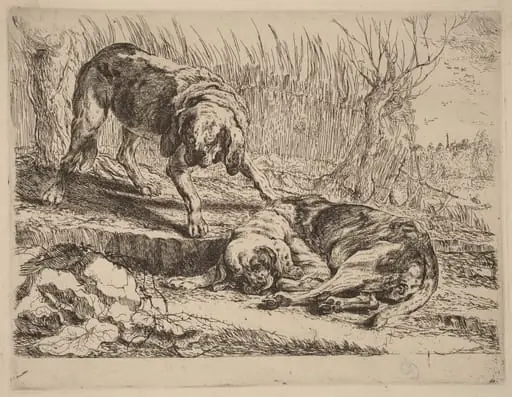
Animalia: Three Hunting Dogs
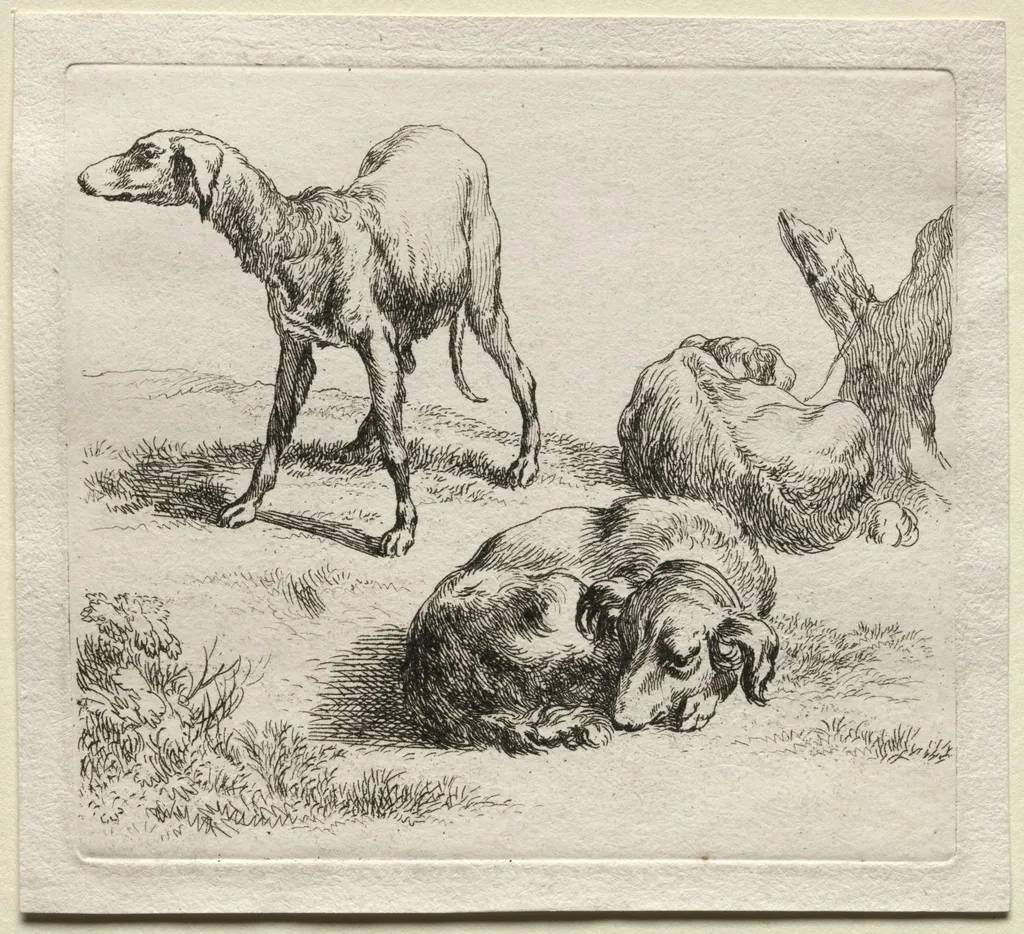
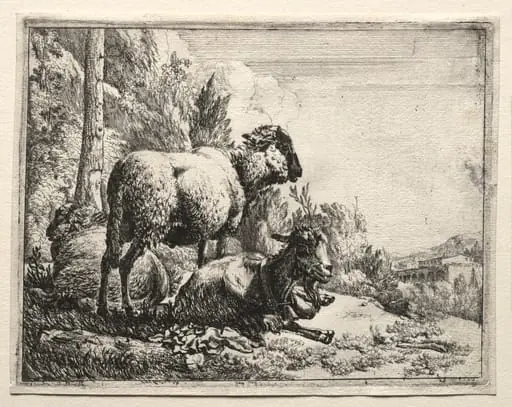
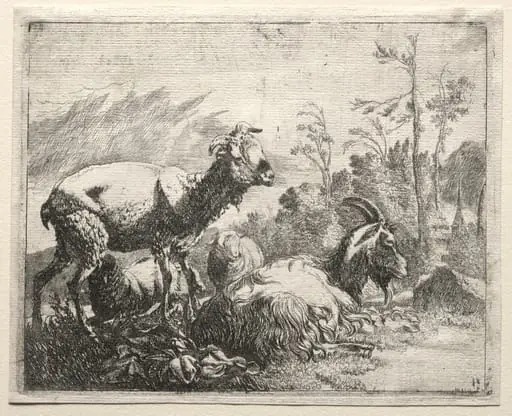
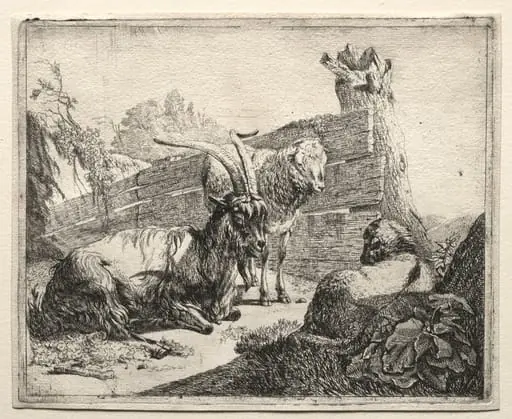
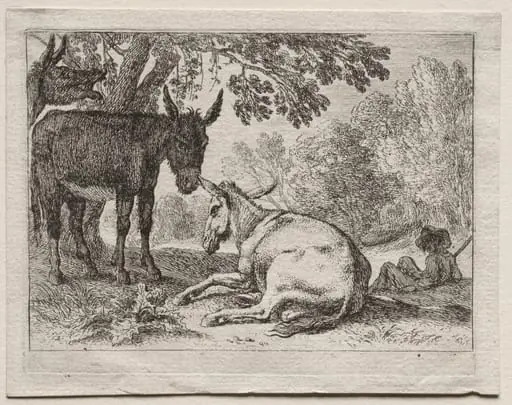
Animalia: Three Hunting Dogs is a print by the Baroque artist Nicolaes Pieterszoon Berchem. It dates from 1659 and is held in the collection of the Cleveland Museum of Art.
About this work
Overview
The piece reflects a broader 17th-century practice among Dutch artists of documenting animal behavior with precision, often as studies for larger compositions.
Created in 1659 by Nicolaes Berchem, *Animalia: Three Hunting Dogs* is a preparatory drawing from a series focused on animals in natural settings. Though Berchem is best known for idealized Italianate landscapes, this work shifts attention to observational study, capturing domesticated hounds in a quiet, unidealized moment. The piece reflects a broader 17th-century practice among Dutch artists of documenting animal behavior with precision, often as studies for larger compositions.
Subject & Meaning
The drawing depicts three hunting dogs in varying states of rest and alertness—one standing with ears perked, another sitting with forelegs extended, and the third reclining in relaxation. There is no narrative or allegory; the focus is purely on the animals’ physical presence and natural posture. This direct observation suggests an interest in the lived reality of working dogs, valuing their anatomy and behavior over symbolic interpretation.
Technique & Style
Berchem employs economical, fluid lines to convey texture and movement, with subtle shading suggesting the weight of fur and the curvature of muscle. The absence of background detail isolates the dogs, emphasizing form and gesture. The sketch’s simplicity reflects a working method common among Dutch artists of the period: rapid, attentive drawing as a tool for understanding animal anatomy and motion, rather than a finished artwork.
History & Provenance
The drawing is part of a documented series of animal studies by Berchem, produced during the height of his career. While many of his finished paintings were collected by European nobility, these preparatory sketches remained in private hands or artist workshops. Its survival offers rare insight into Berchem’s process, revealing how he translated direct observation into the animal figures that populate his more elaborate landscapes.
Context
In mid-17th-century Holland, detailed study of nature—plants, animals, and light—was central to artistic practice. Artists like Berchem, though trained in classical landscape traditions, increasingly turned to empirical observation. This drawing aligns with contemporaneous scientific and artistic trends that valued accuracy over idealization, reflecting a cultural shift toward naturalism in both art and natural philosophy.
Legacy
Berchem’s animal studies, including this one, contributed to the growing tradition of naturalistic drawing in Dutch art. Though less celebrated than his finished paintings, these sketches influenced later generations of artists who prioritized direct observation. They remain valuable as records of how artists engaged with the natural world, bridging the gap between artistic practice and early scientific inquiry.
Artist & collection
Artist
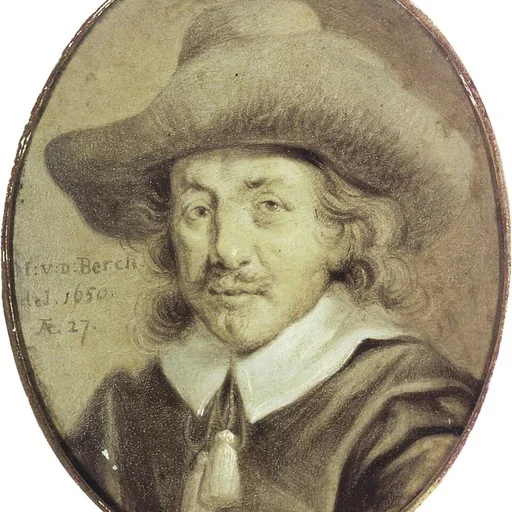
Nicolaes Pieterszoon Berchem (1 October 1620 – 18 February 1683) was a highly esteemed and prolific Dutch Golden Age painter of pastoral landscapes, populated with mythological or biblical figures, but also of a number of allegories and…