Artwork
Shepherds beside Roman ruins
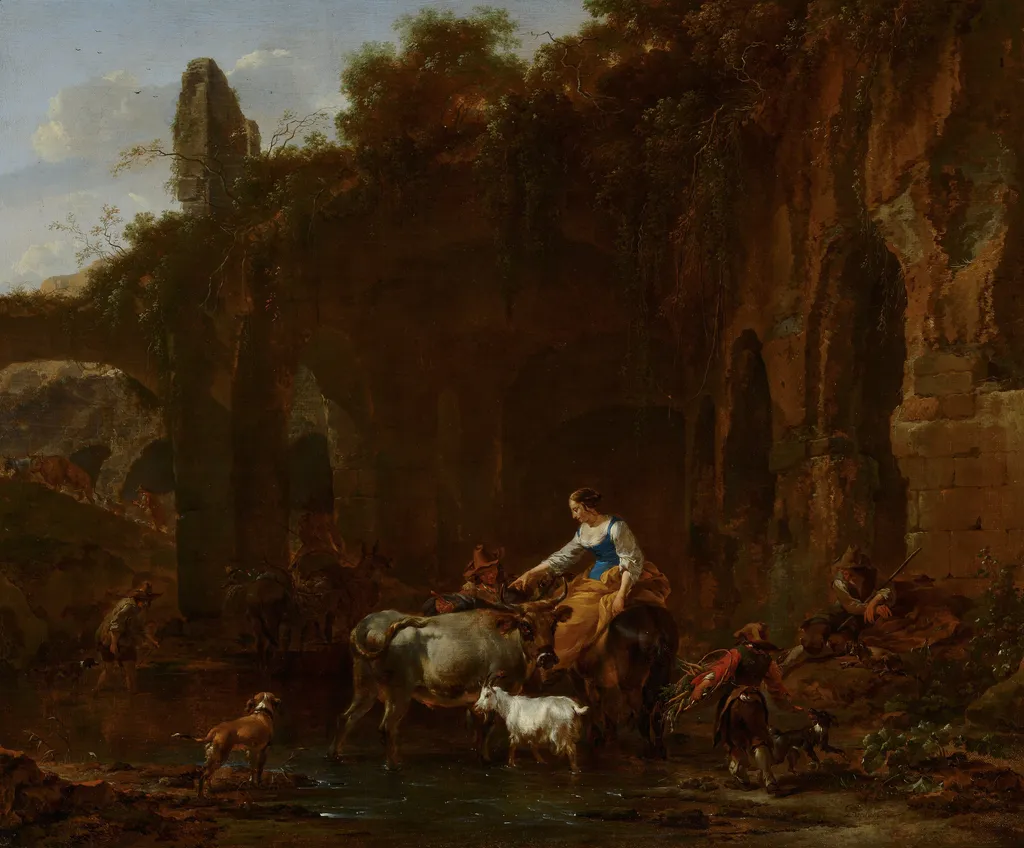
Shepherds beside Roman ruins is an oil painting by the Dutch Golden Age artist Nicolaes Pieterszoon Berchem. It dates from 1661 and is held in the collection of the Mauritshuis.
About this work
Overview
Nicolaes Pieterszoon Berchem’s 1661 canvas, Shepherds beside Roman ruins, presents a tranquil countryside scene where a small group of shepherds occupies the foreground while the remnants of an ancient Roman structure dominate the middle ground. The composition balances human activity with the silent decay of stone, creating a quiet dialogue between pastoral life and the passage of history.
Subject & Meaning
The work juxtaposes everyday rural labor with the grandeur of antiquity, suggesting a continuity between the simple shepherd’s world and the legacy of the Roman Empire. By placing the figures beside crumbling arches and vine‑covered walls, Berchem invites contemplation of the transience of civilization and the enduring rhythms of nature that persist beyond human achievements.
Technique & Style
Berchem employs a nuanced chiaroscuro, using warm, sun‑kissed tones on the stone to convey age, while cooler blues and greys define the sky and distant landscape. The delicate handling of light across foliage and figures creates depth, guiding the eye from the shepherd tending his flock in the foreground to the distant ruins, a hallmark of the Dutch Italianate landscape tradition.
History & Provenance
Created during the height of the Dutch Golden Age, the painting reflects Berchem’s engagement with Italianate motifs popular among his contemporaries. It entered the collection of the Mauritshuis in The Hague, where it remains part of the museum’s holdings of 17th‑century Dutch art, exemplifying the period’s fascination with classical ruins integrated into northern European scenery.
Own this work as a print
Artist & collection
Artist
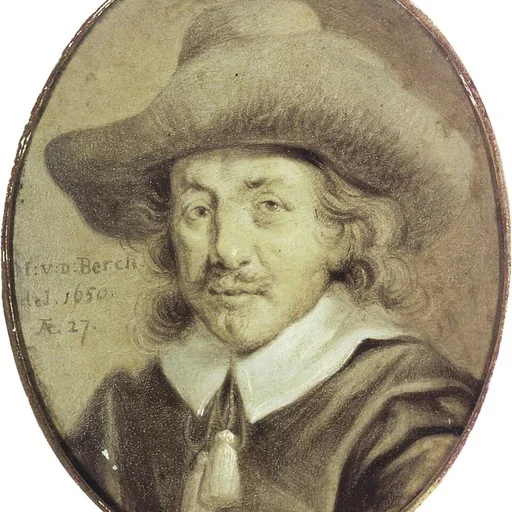
Nicolaes Pieterszoon Berchem (1 October 1620 – 18 February 1683) was a highly esteemed and prolific Dutch Golden Age painter of pastoral landscapes, populated with mythological or biblical figures, but also of a number of allegories and…

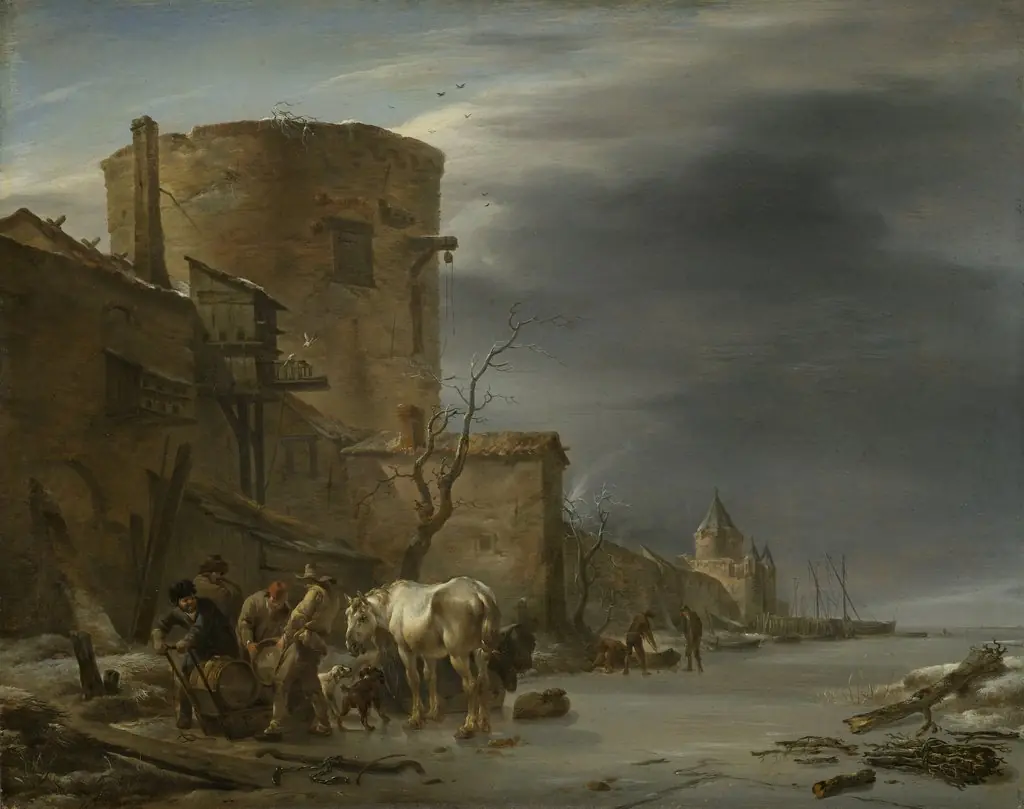
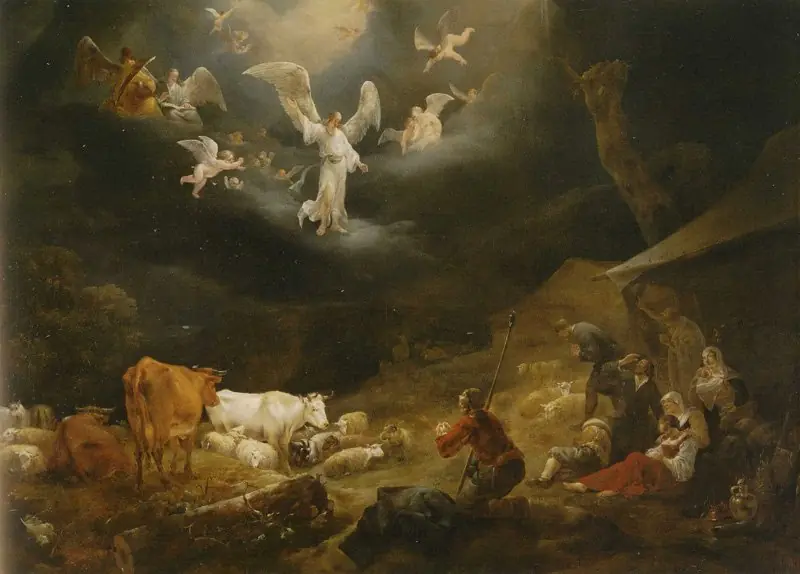
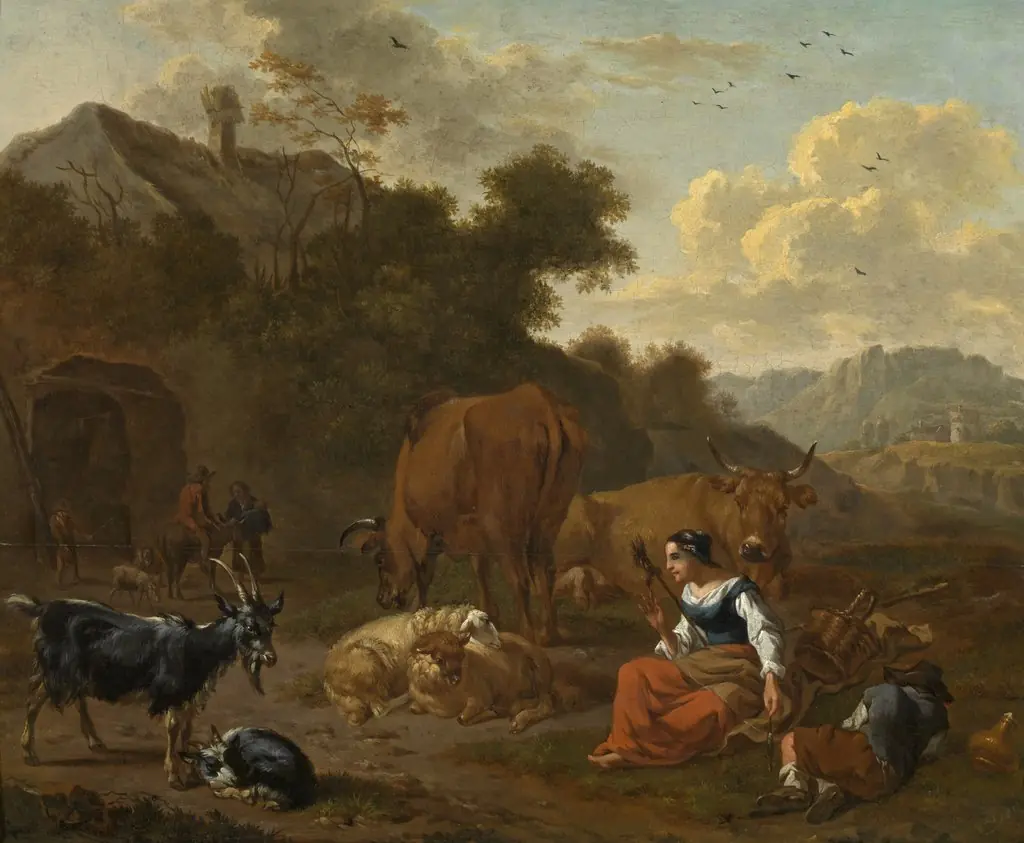 Landscape with a Spinner and Cattle
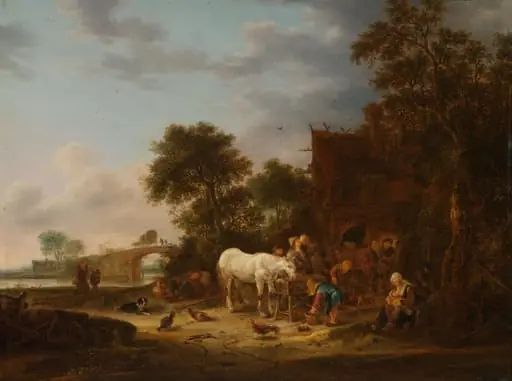 Country inn with a horse at the trough
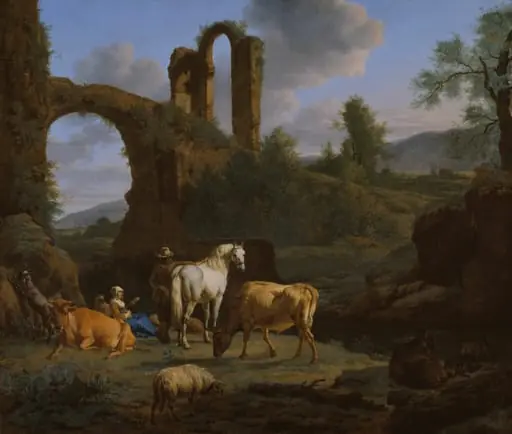 Pastoral Landscape with Ruins
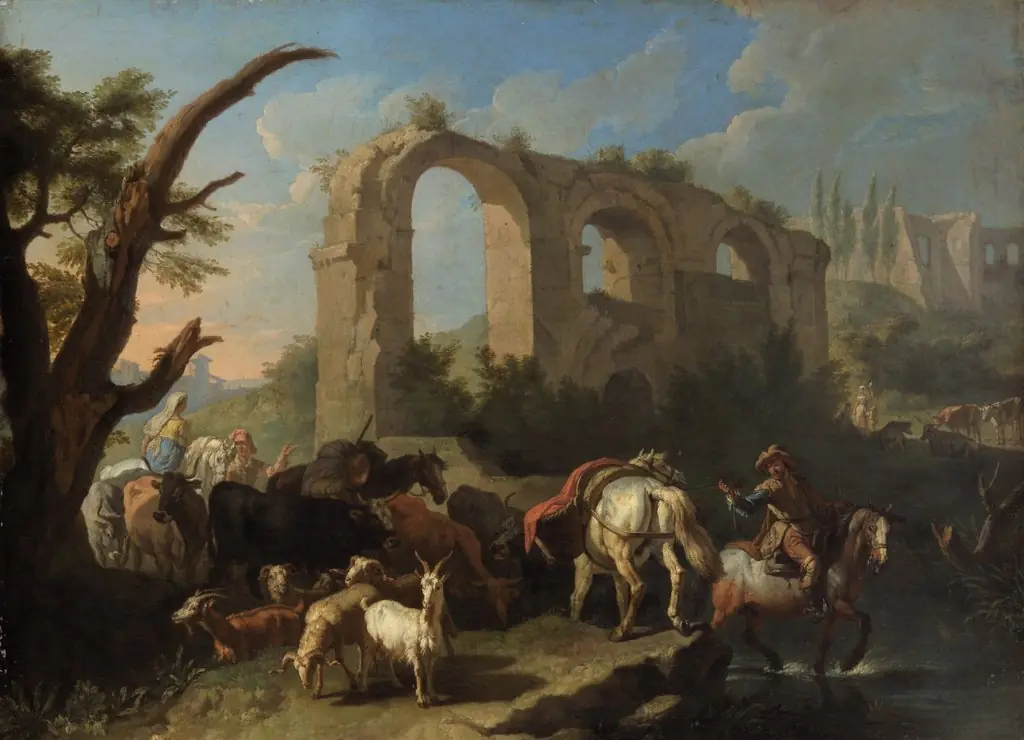 Italian Landscape with Horses and Herdsmen
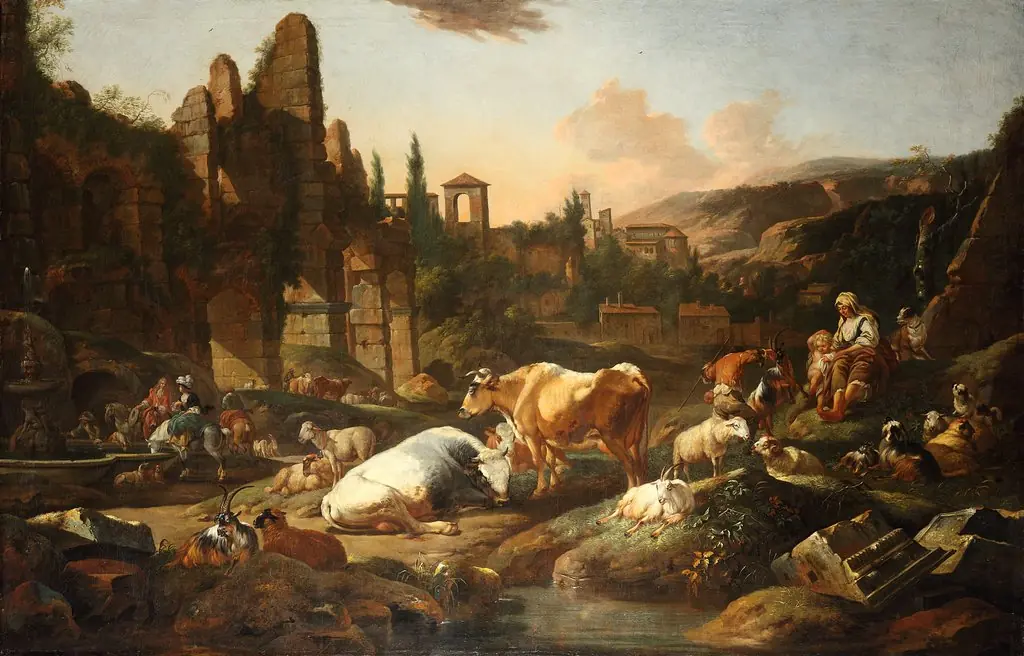 An Italian Landscape with Cattle
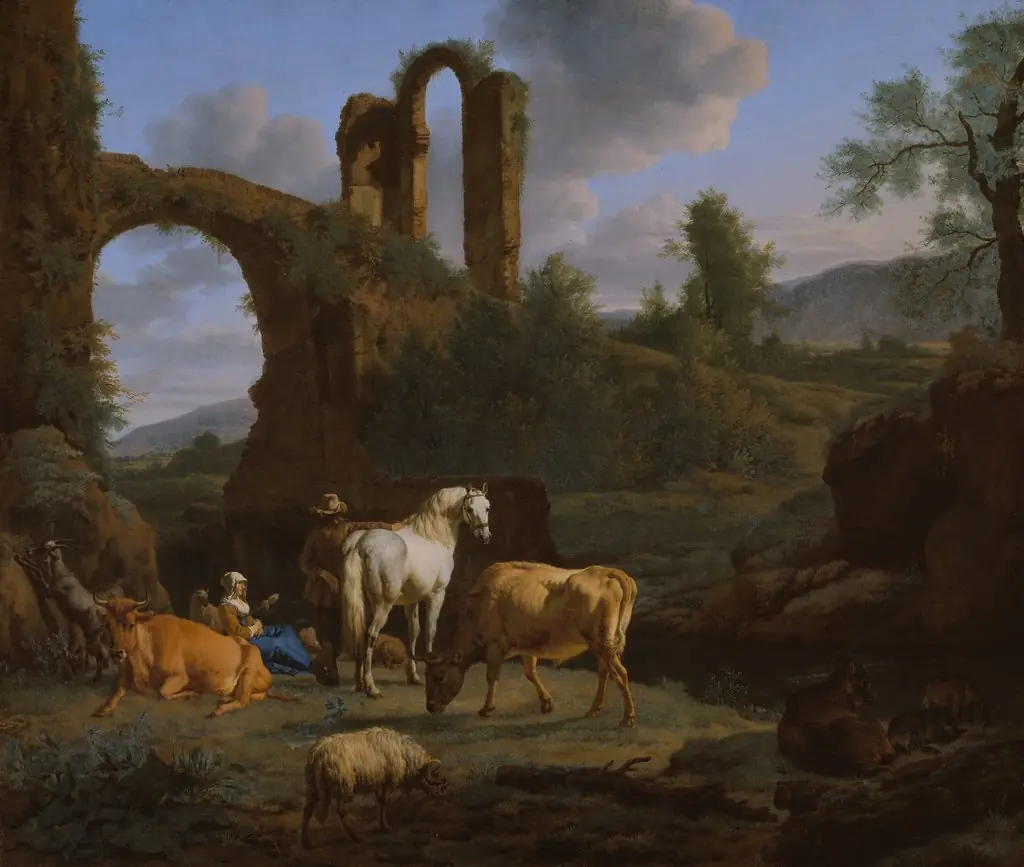 Pastoral Landscape with Ruins
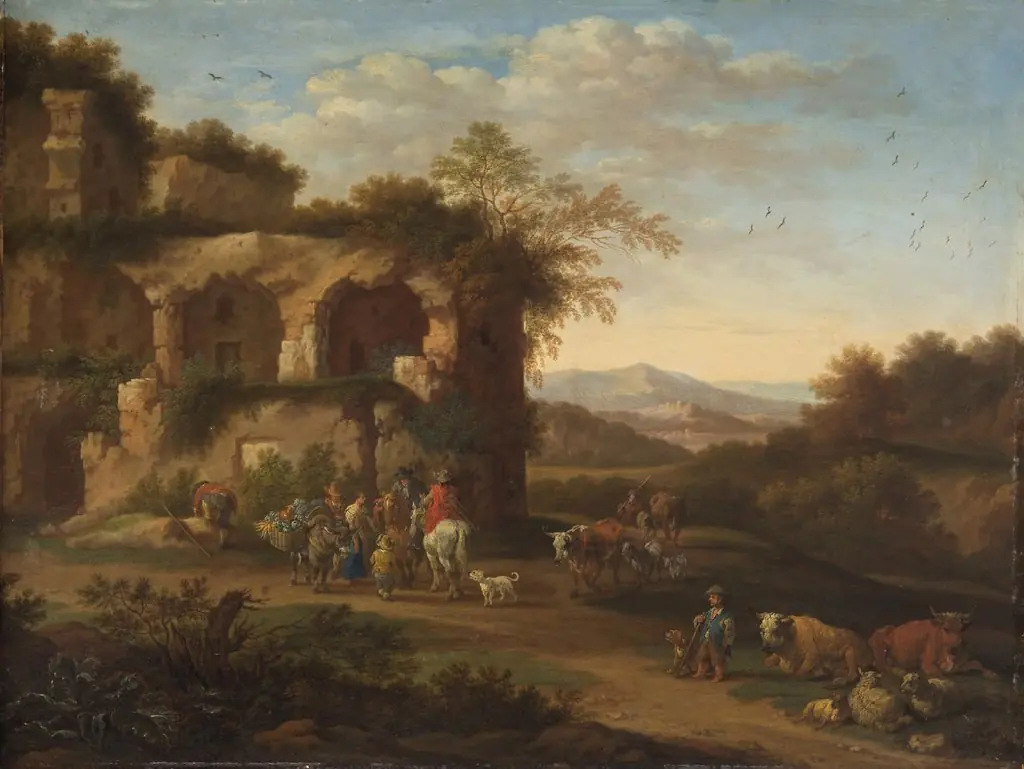 Italian landscape with antique ruins and herders
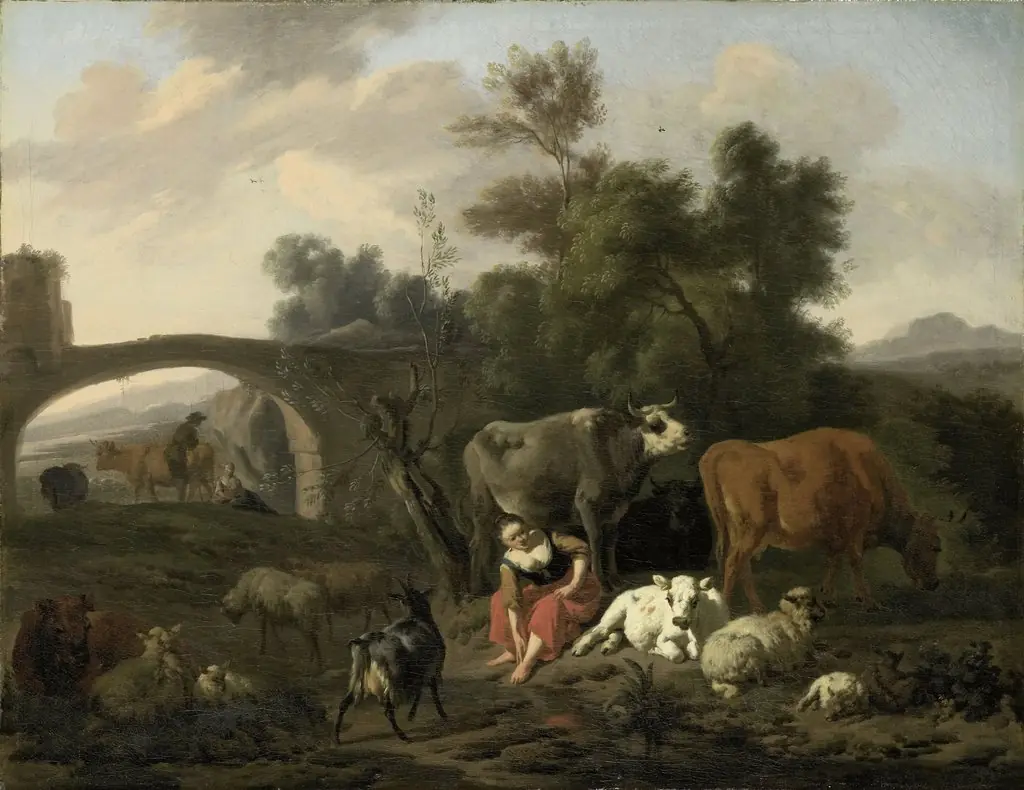 Landscape with herdsmen and cattle
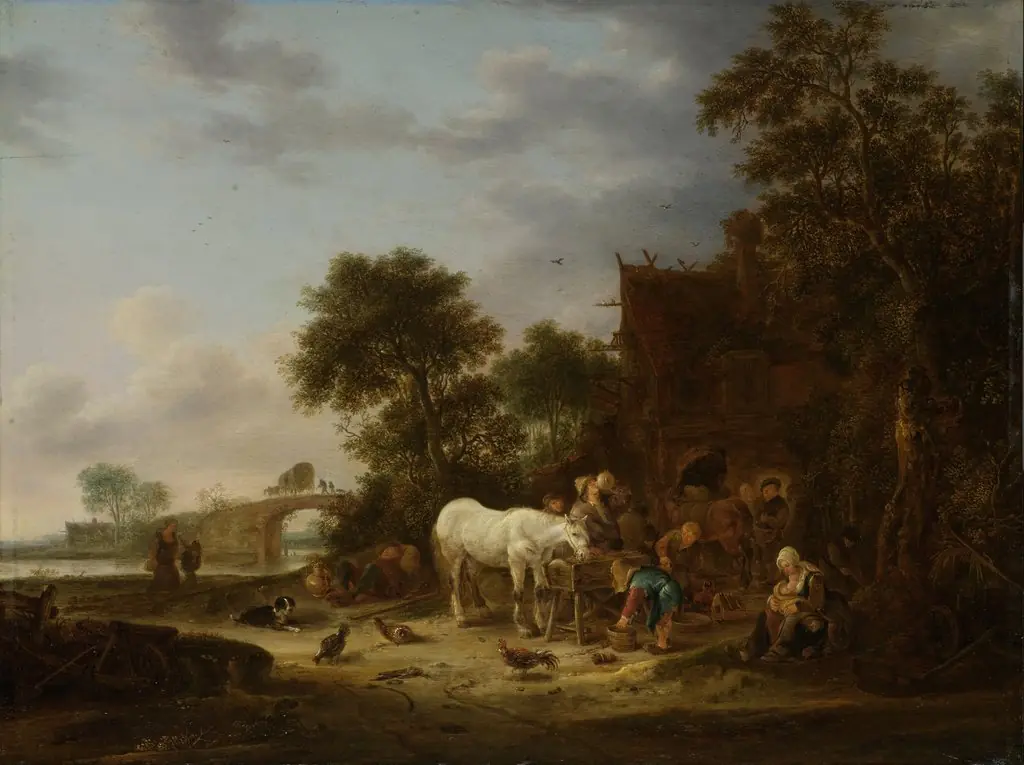 Country inn with a horse at the trough
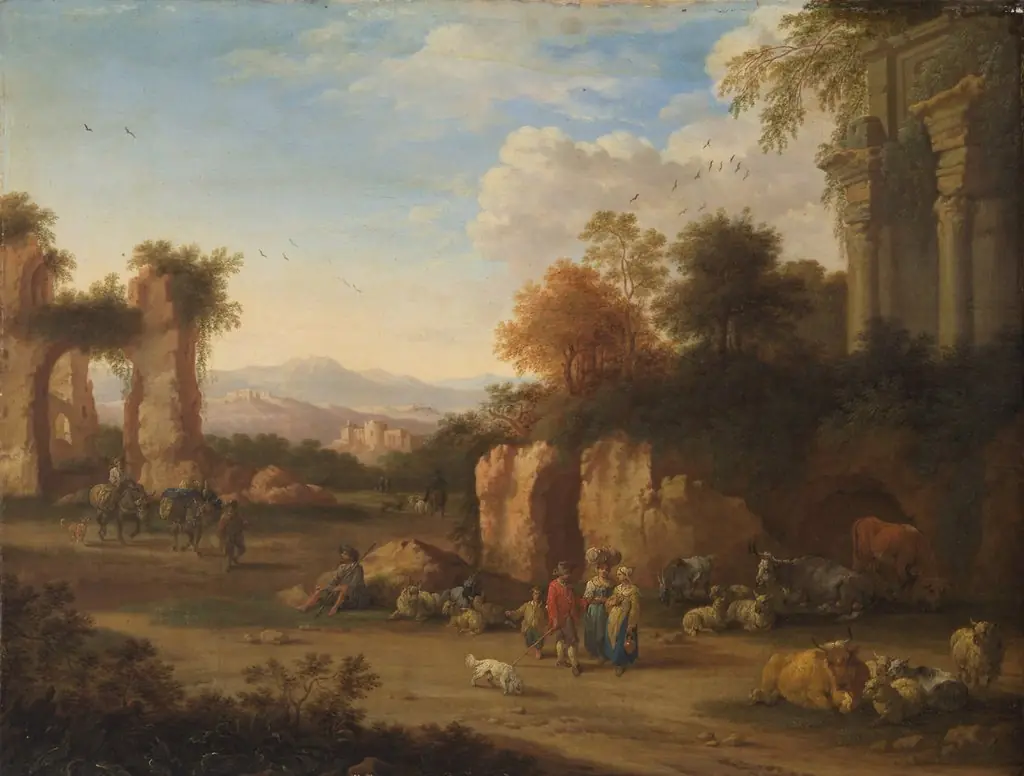 Italian landscape with ancient ruins and peasants
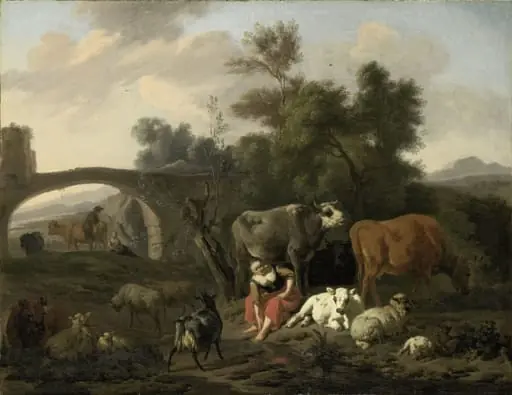 Landscape with Herdsmen and Cattle
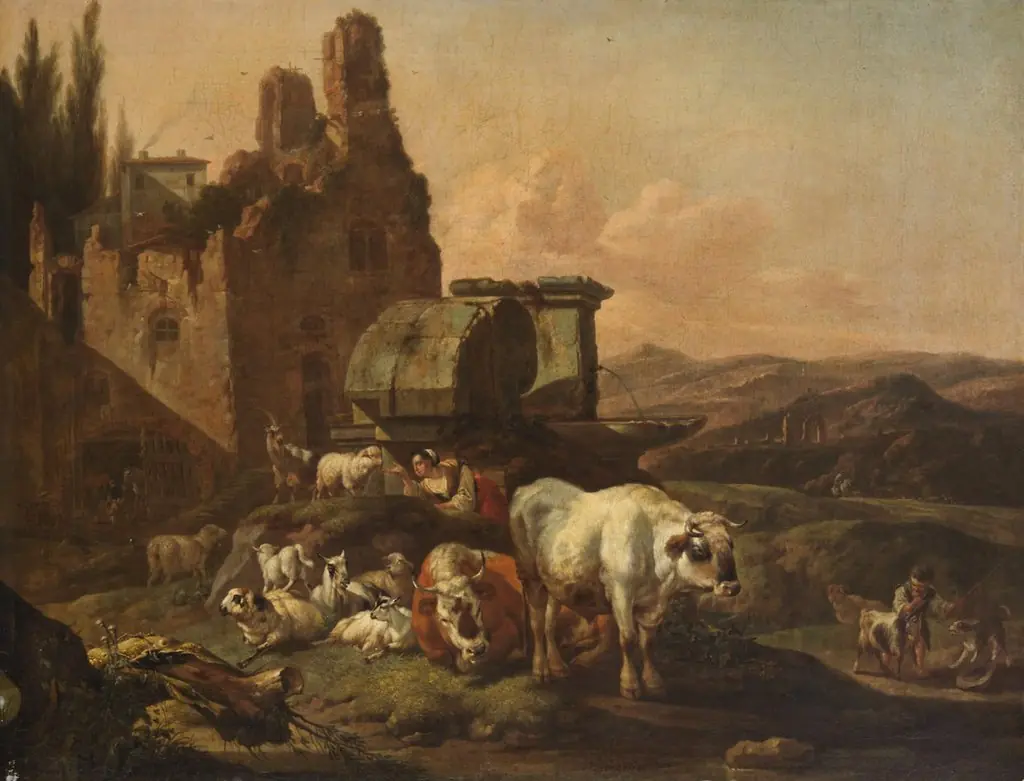 Landschaft mit Tieren an der Tränke