Artwork
Pastoral Landscape with Ruins
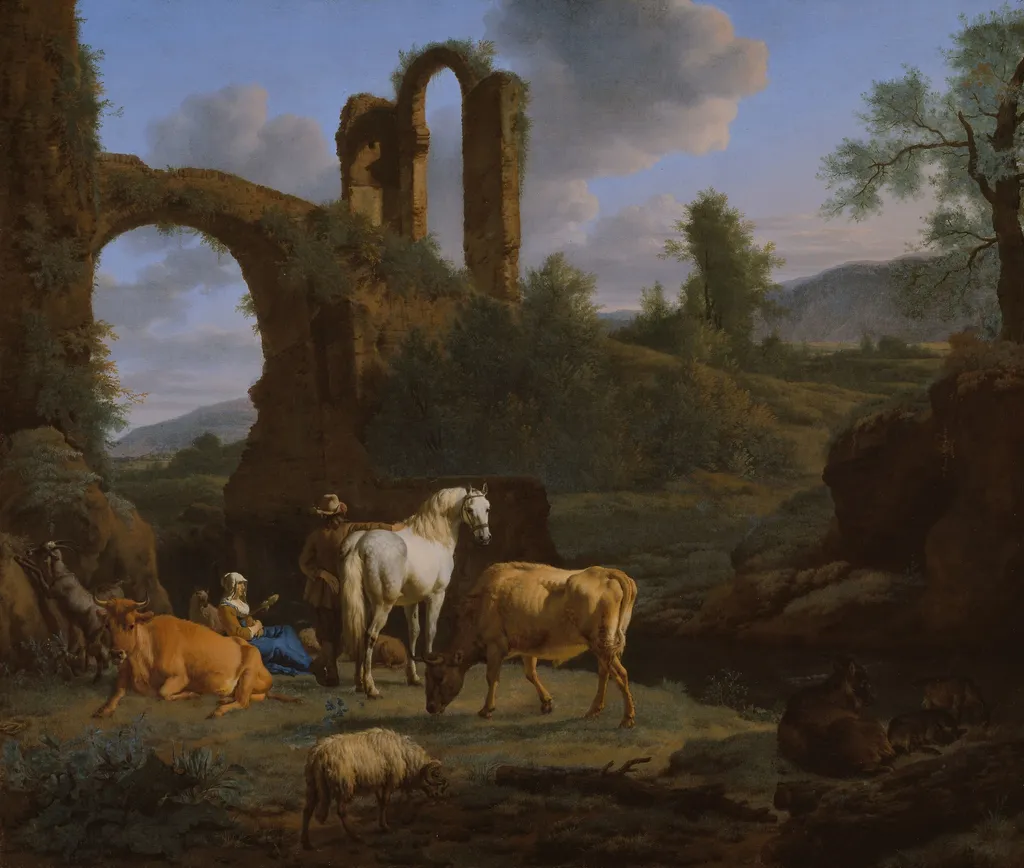
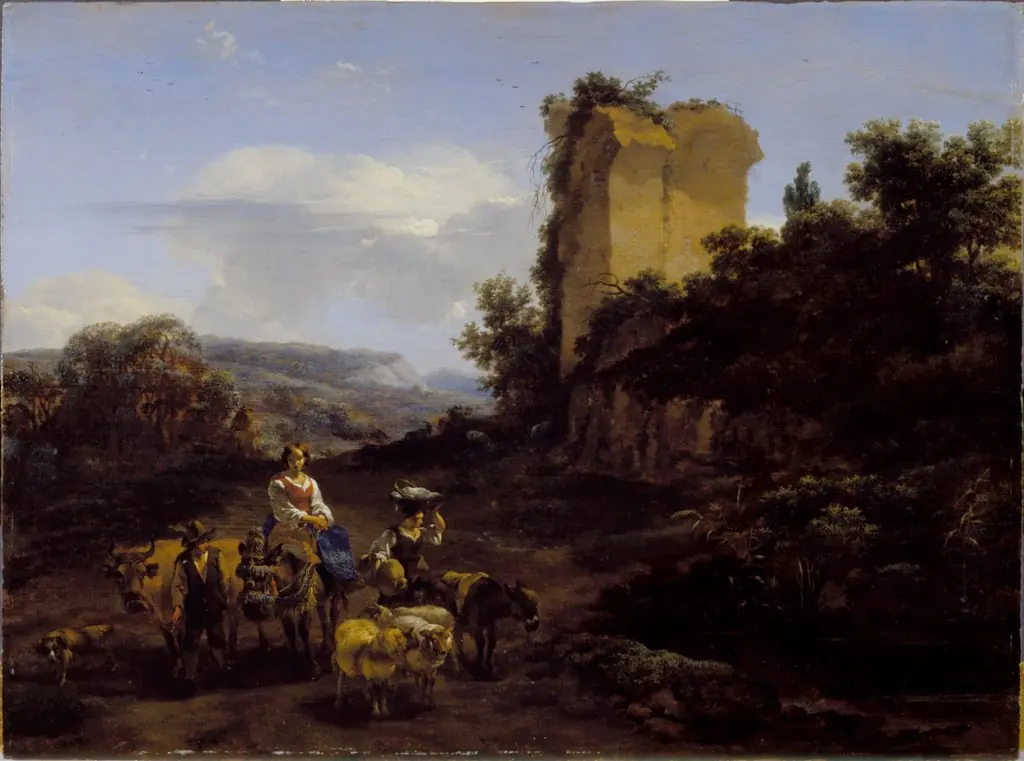
Pastoral Landscape with Ruins is an oil painting by the Dutch Golden Age artist Adriaen van de Velde. It dates from 1664 and is held in the collection of the Art Institute of Chicago.
About this work
Overview
Beyond this architectural element, the view extends to distant mountains under a broad sky filled with soft, white clouds against a blue expanse.
Painted in 1664, Pastoral Landscape with Ruins is a characteristic work by Adriaen van de Velde, a master of the Dutch Golden Age known for integrating figures and animals into landscape settings. The composition depicts a tranquil rural scene where a musician playing a lute sits among grazing cattle and a horse, establishing a harmonious relationship between humanity and nature. A prominent stone archway, partially overgrown with vegetation, anchors the middle ground, serving as a classical ruin that evokes a sense of timelessness and idealized antiquity. Beyond this architectural element, the view extends to distant mountains under a broad sky filled with soft, white clouds against a blue expanse. Van de Velde's technique demonstrates his signature precision in rendering animal anatomy and the varied textures of foliage and stone. Executed during the height of his career, this oil painting exemplifies the Dutch tradition of the idealized landscape, moving beyond topographical realism to create a poetic, serene atmosphere that reflects the era's appreciation for pastoral leisure and classical allusion.
Subject & Meaning
The image juxtaposes human leisure with pastoral labor, suggesting an idealized harmony between nature and culture. The lute player, a symbol of artistic refinement, shares space with domesticated animals, reinforcing the notion of a peaceful, cultivated rural life where art and agriculture coexist without tension.
Technique & Style
Van de Velde employs a warm, muted palette that softens the landscape, while fine brushwork renders the textures of stone, foliage, and animal fur. Atmospheric perspective is achieved through progressively lighter tones in the distant mountains, and the delicate rendering of clouds adds depth to the expansive sky.
History & Provenance
Created in the Dutch Golden Age, the painting entered the collection of the Art Institute of Chicago, where it remains on display. Its acquisition reflects the museum’s focus on 17th‑century Dutch landscape painting, a genre that celebrated the serene beauty of the countryside.
Context
The work belongs to a tradition of Dutch pastoral scenes that often incorporated classical ruins to evoke antiquity and moral reflection. Van de Velde, known for his skill in rendering animals and open-air settings, integrates these elements to create a balanced, narrative landscape typical of mid‑17th‑century Dutch art.
Own this work as a print
Artist & collection

Artist
Adriaen van de Velde, was a Dutch painter, draughtsman, and print artist. His favorite subjects were landscapes with animals and genre scenes. He also painted beaches, dunes, forests, winter scenes, portraits in…

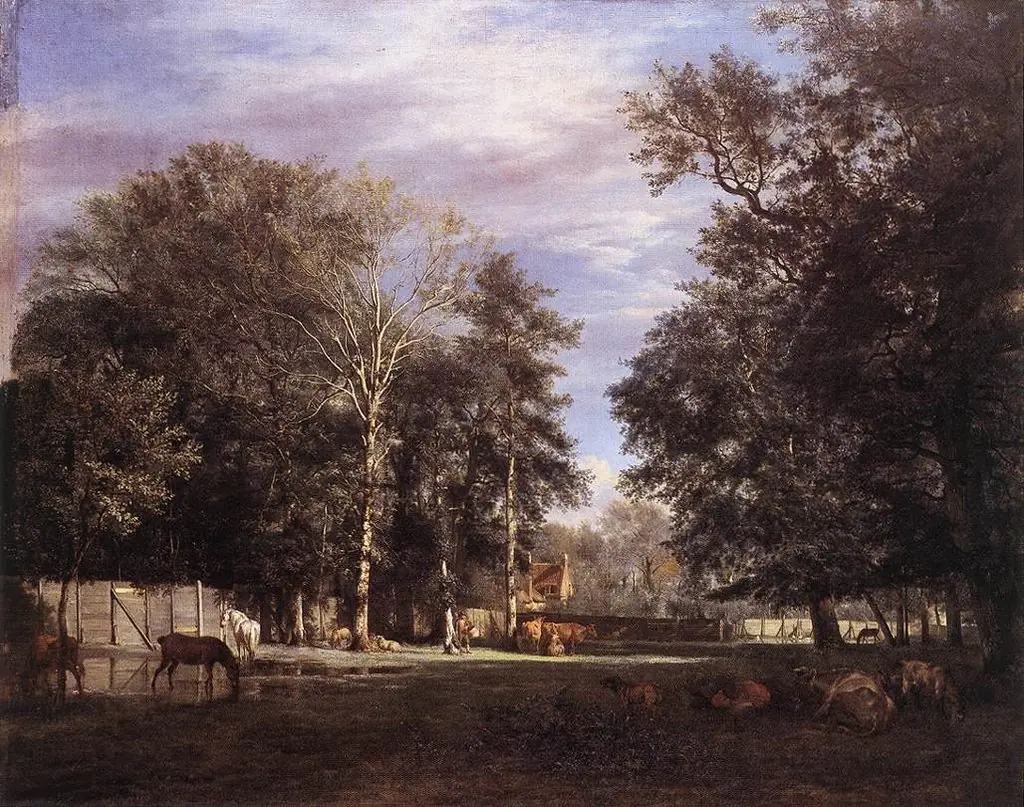
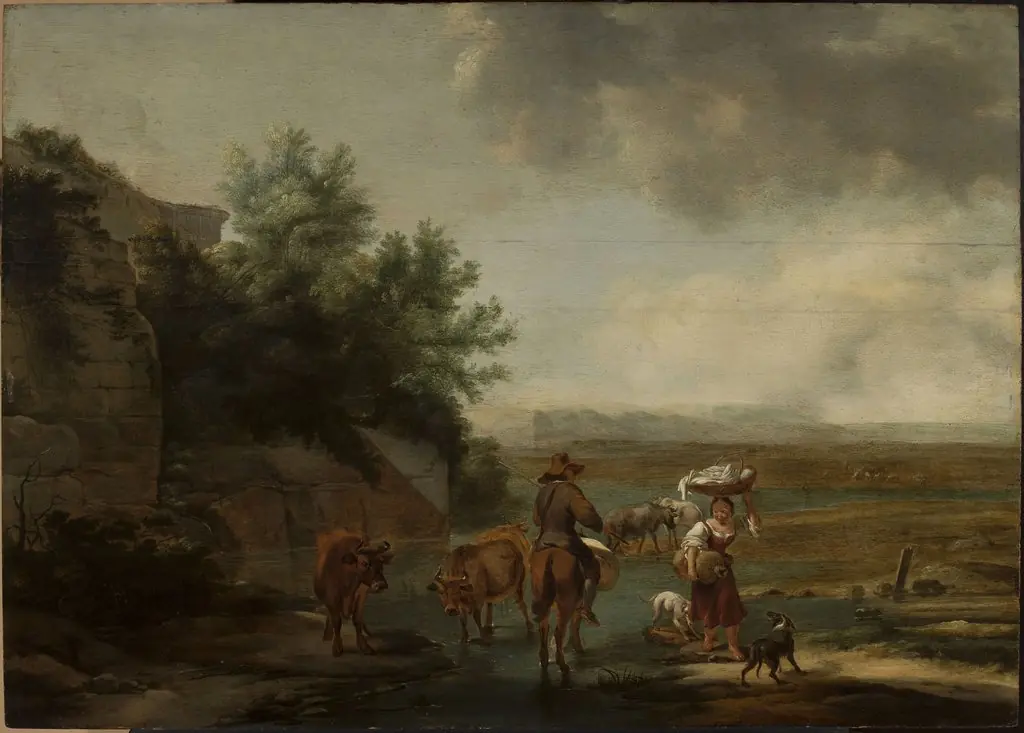 Pastoral landscape
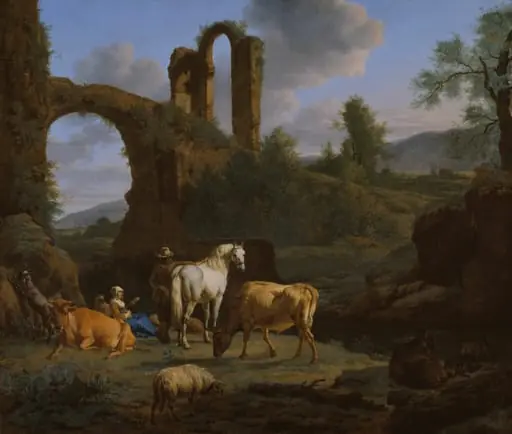 Pastoral Landscape with Ruins
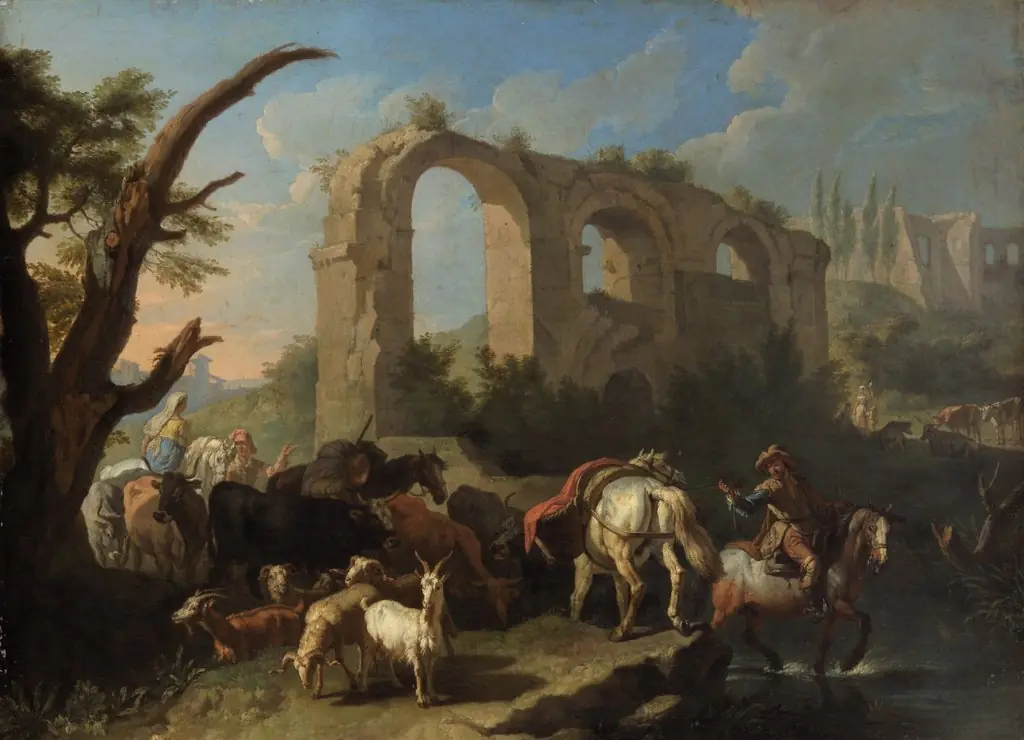 Italian Landscape with Horses and Herdsmen
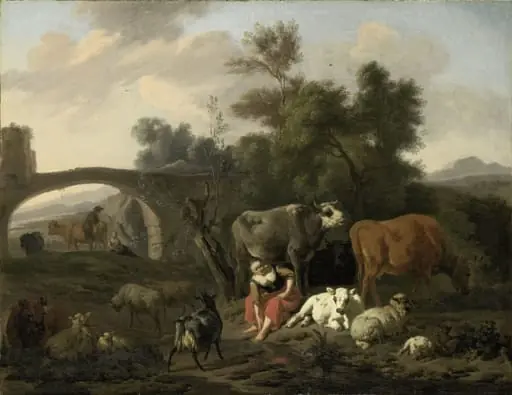 Landscape with Herdsmen and Cattle
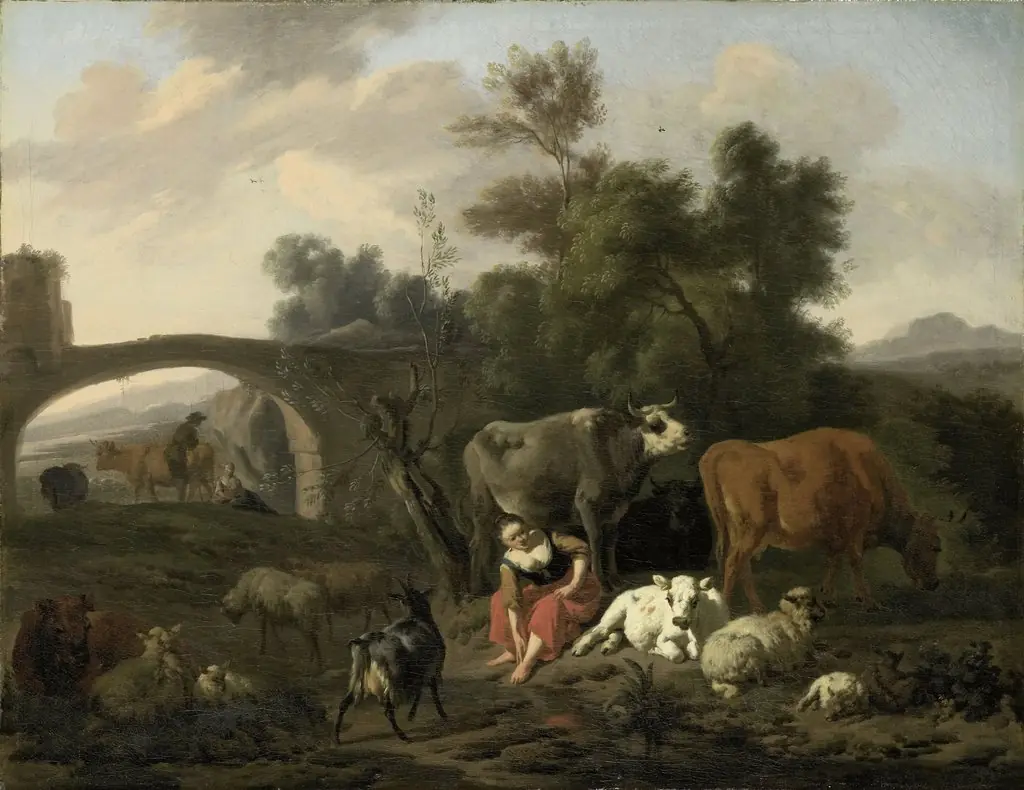 Landscape with herdsmen and cattle
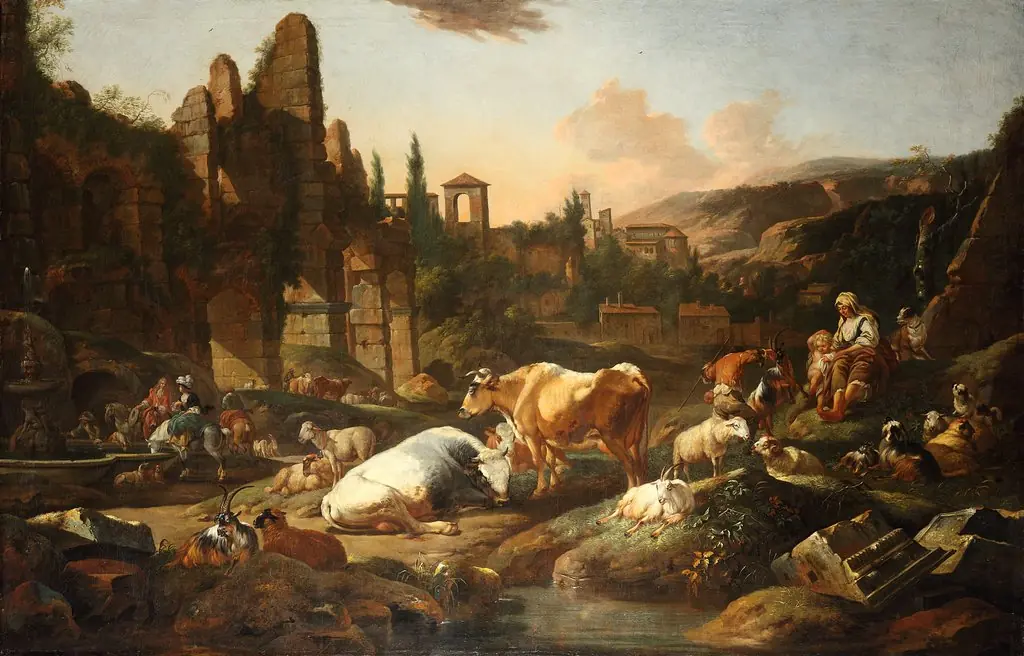 An Italian Landscape with Cattle
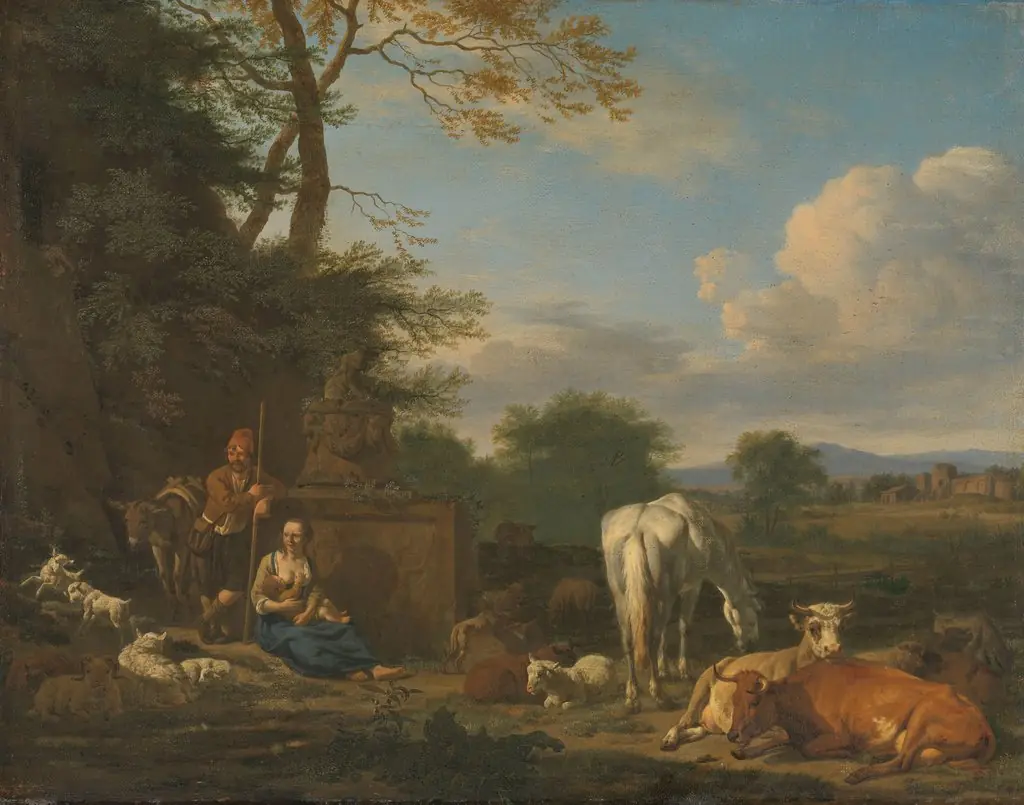 Arcadian landscape with resting herdsmen and cattle
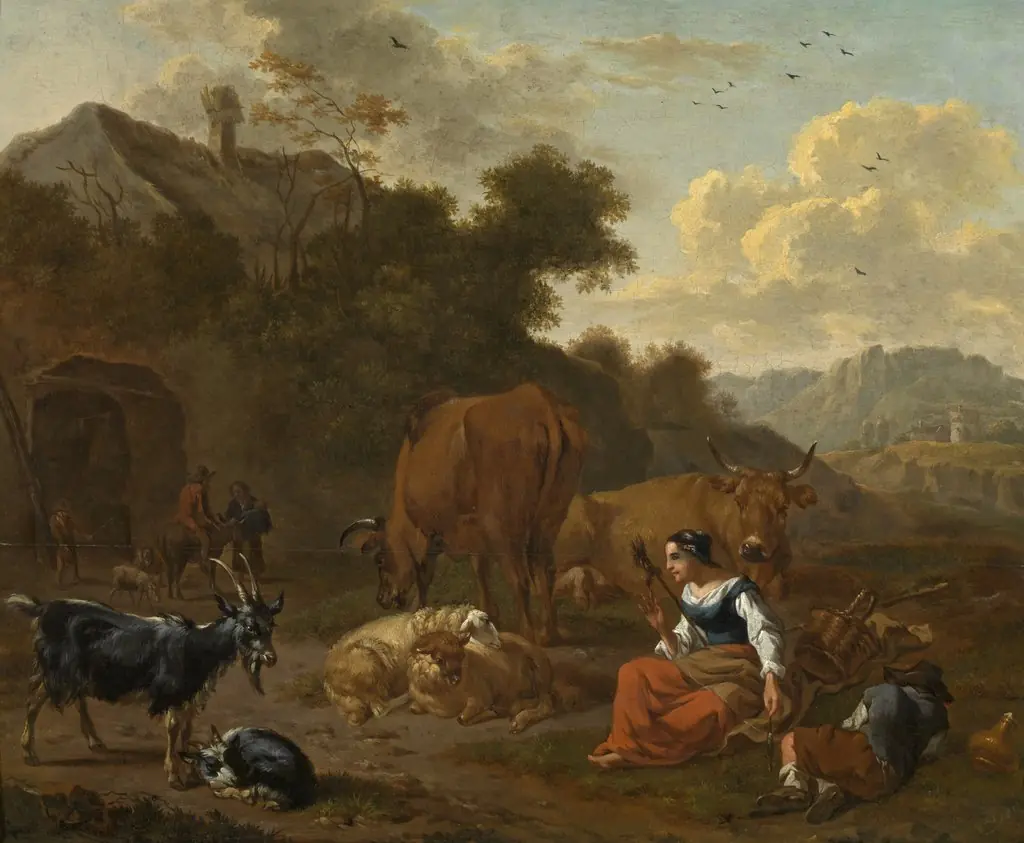 Landscape with a Spinner and Cattle
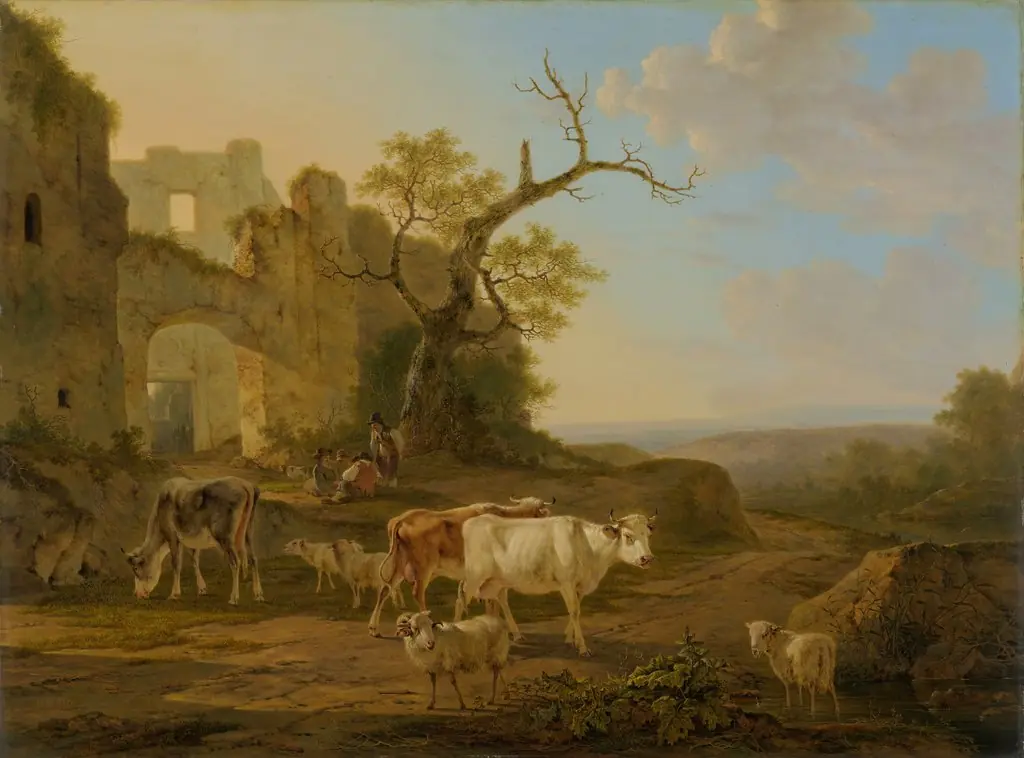 Landscape with Cows near a Ruin
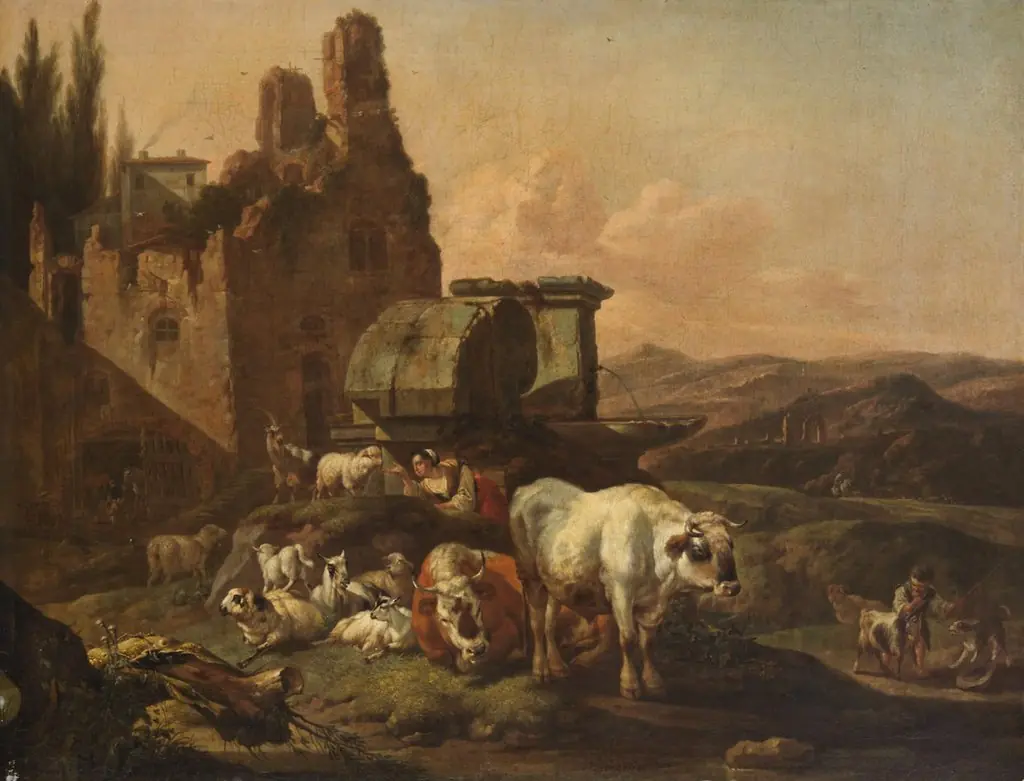 Landschaft mit Tieren an der Tränke
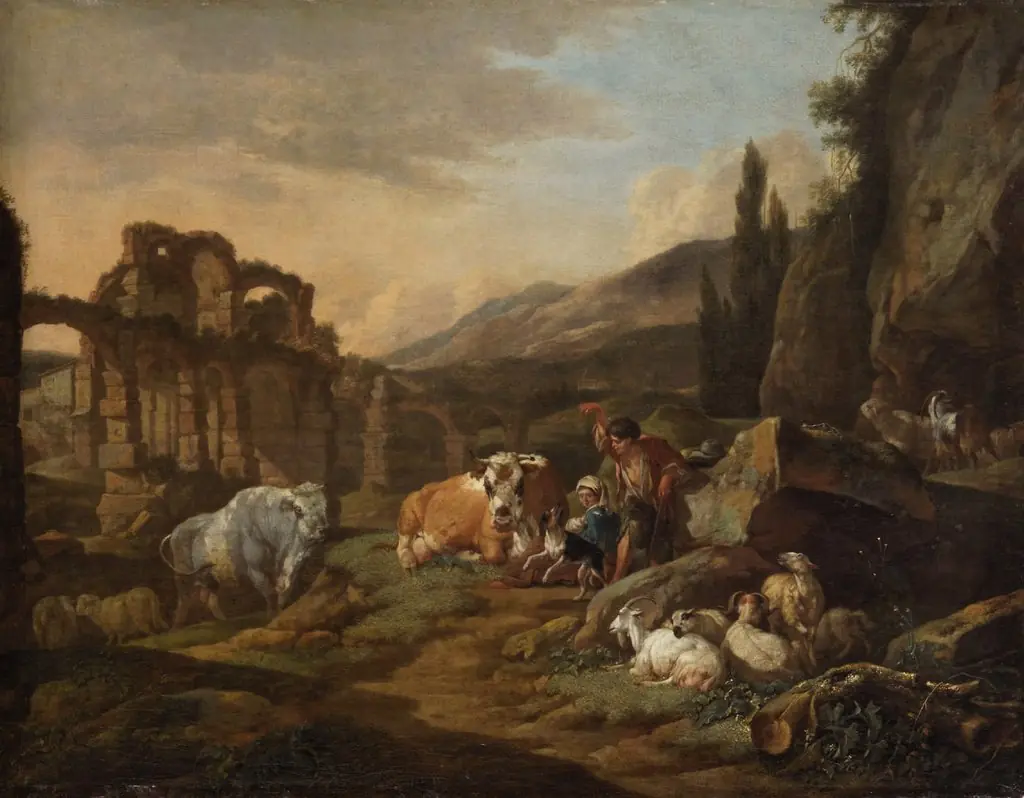 Landschaft mit Tieren
 Landscape with Ruins and Travelers