Artwork
Italian Landscape with Horses and Herdsmen
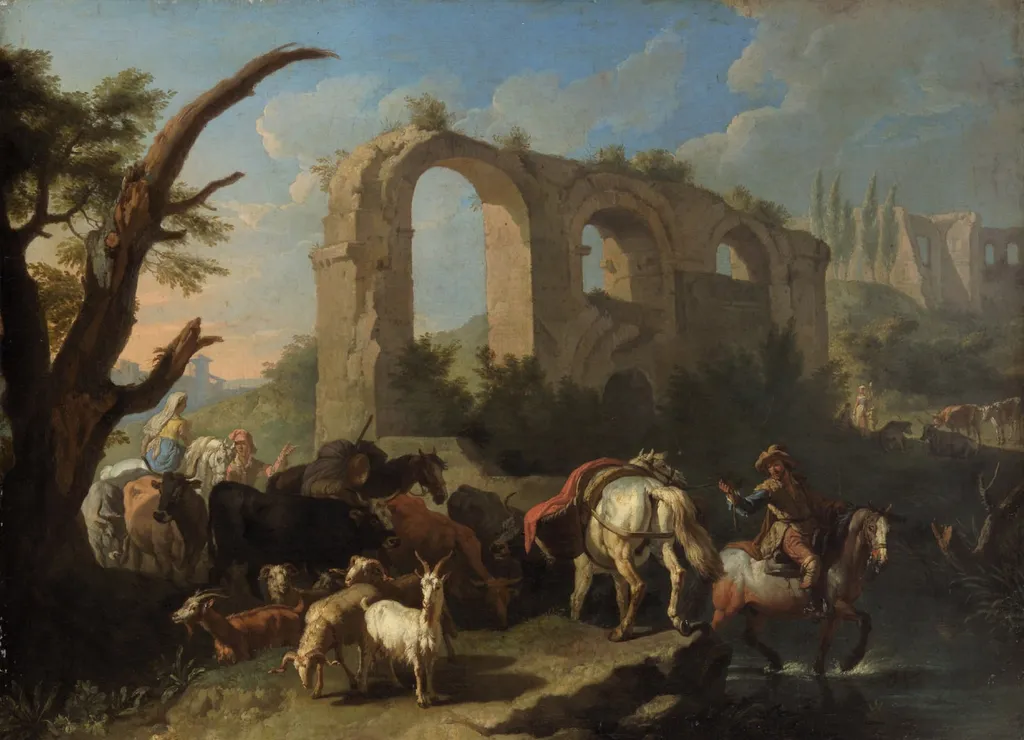
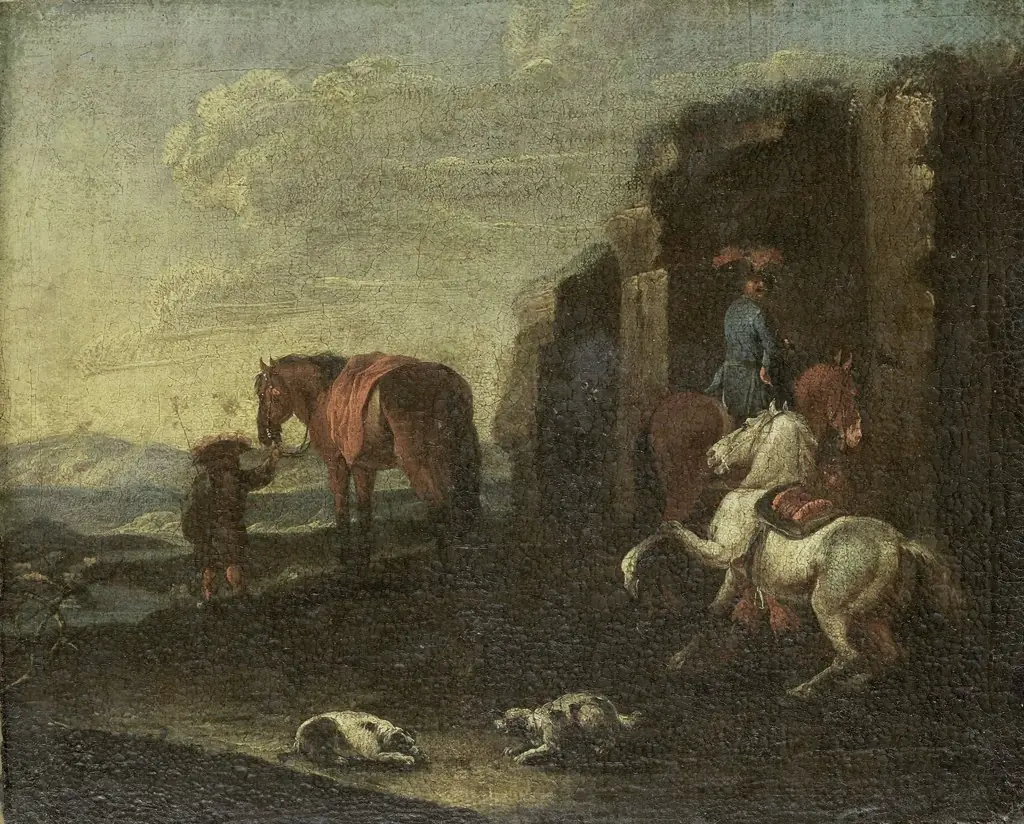
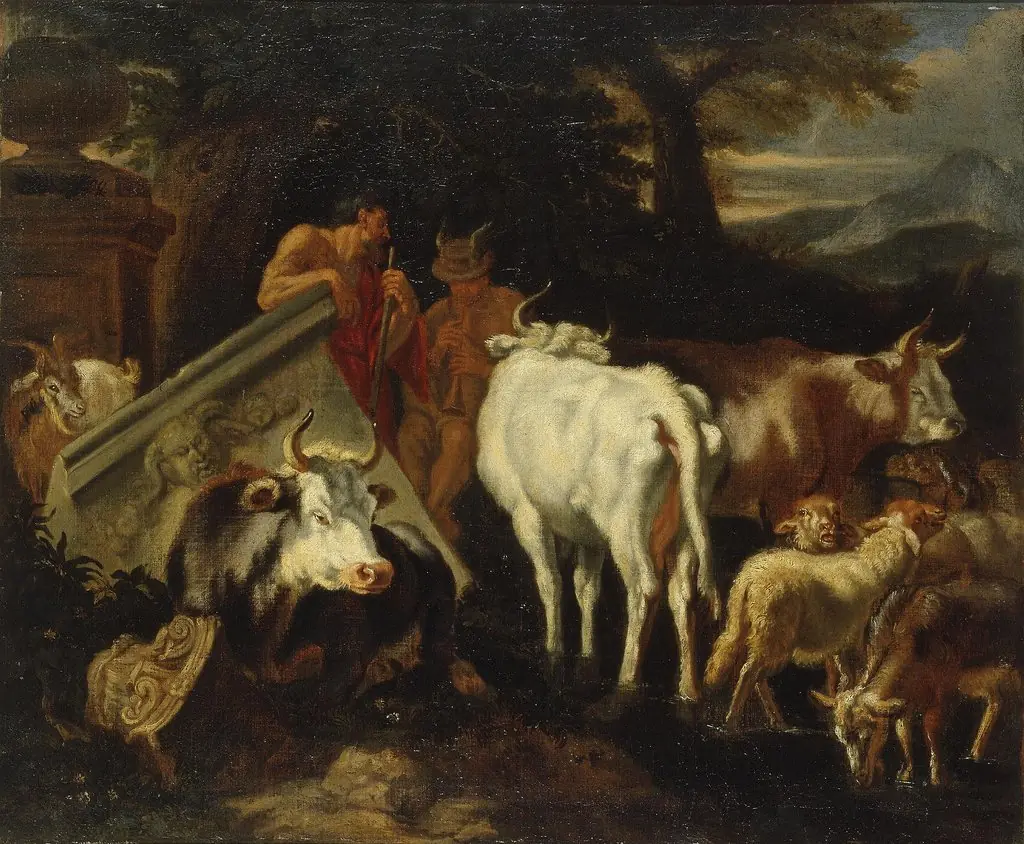
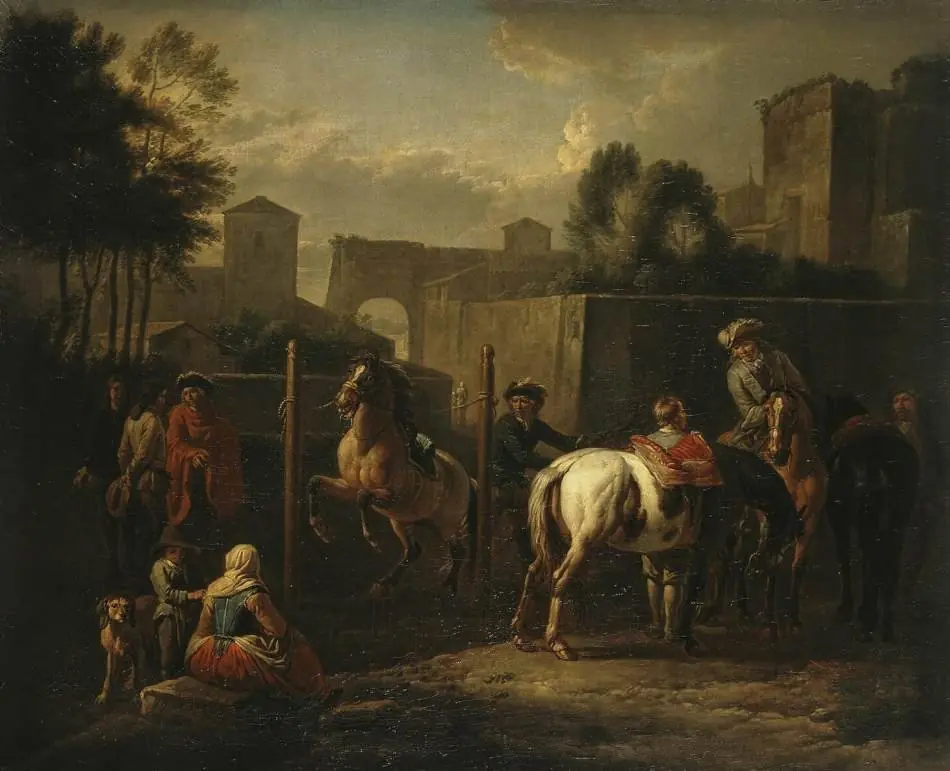
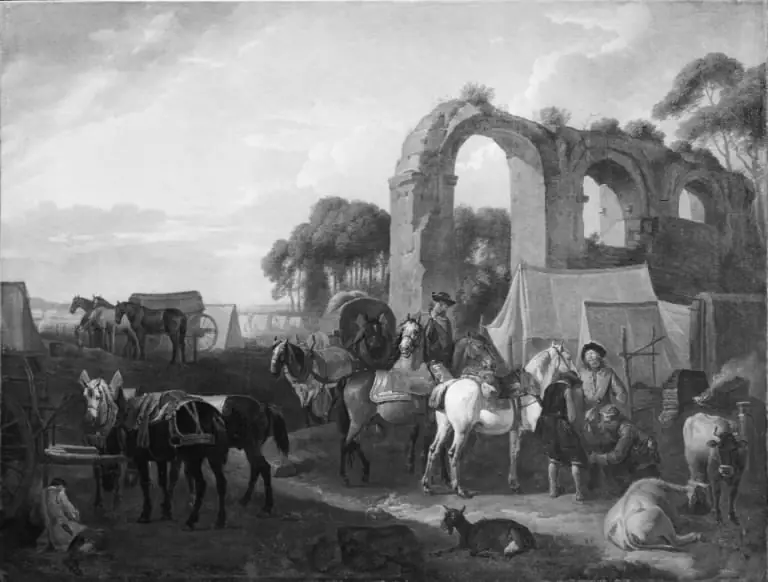
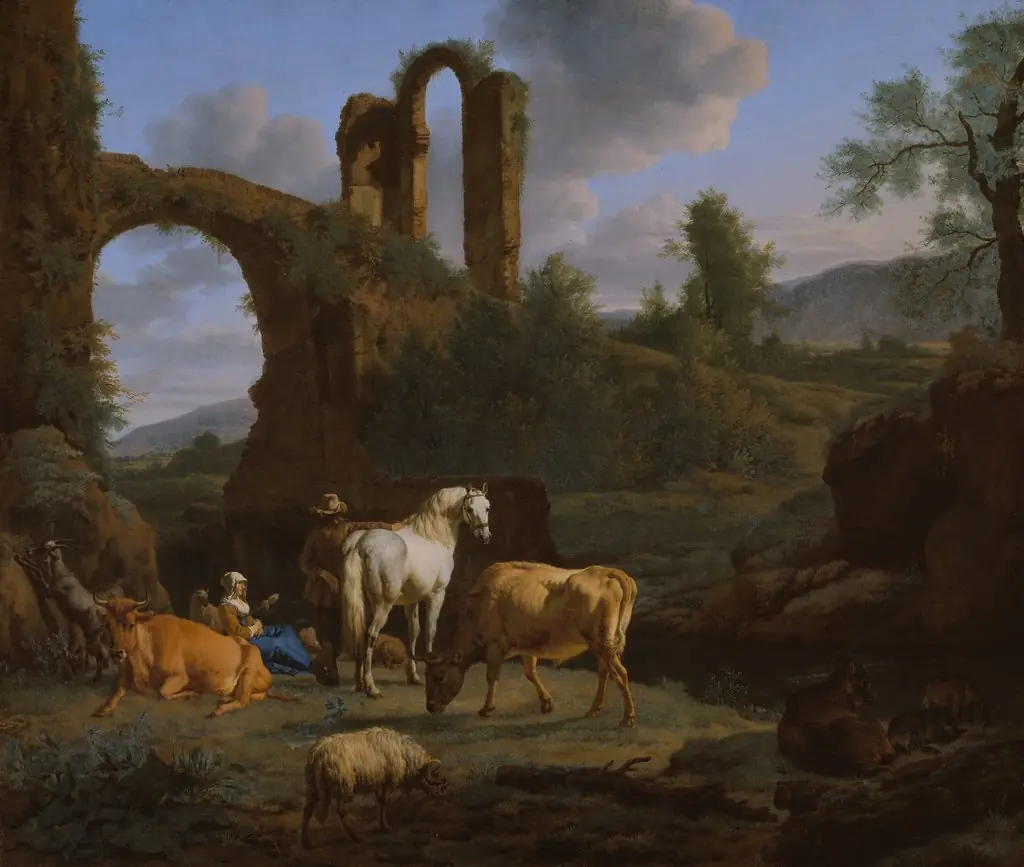
Italian Landscape with Horses and Herdsmen is an oil painting by the Flemish Baroque painting artist Pieter van Bloemen. It dates from 1694 and is held in the collection of the Kunsthistorisches Museum.
About this work
Overview
Van Bloemen, known for his focus on animals and rural life, rendered this landscape with attention to natural movement and atmospheric depth.
Painted in 1694 by the Flemish artist Pieter van Bloemen, this oil-on-canvas work depicts a pastoral scene set in the Italian countryside. Van Bloemen, known for his focus on animals and rural life, rendered this landscape with attention to natural movement and atmospheric depth. The painting is part of the Kunsthistorisches Museum’s collection and reflects the Flemish Baroque tradition of integrating figures and livestock into expansive, observational landscapes.
Subject & Meaning
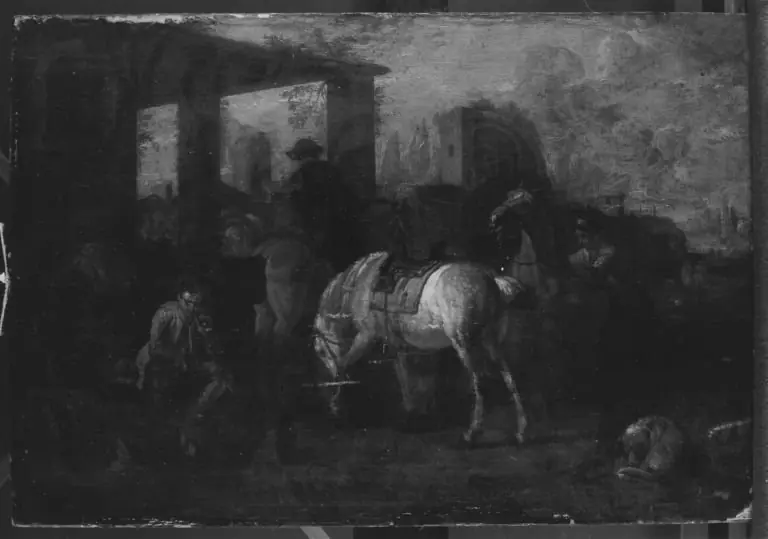
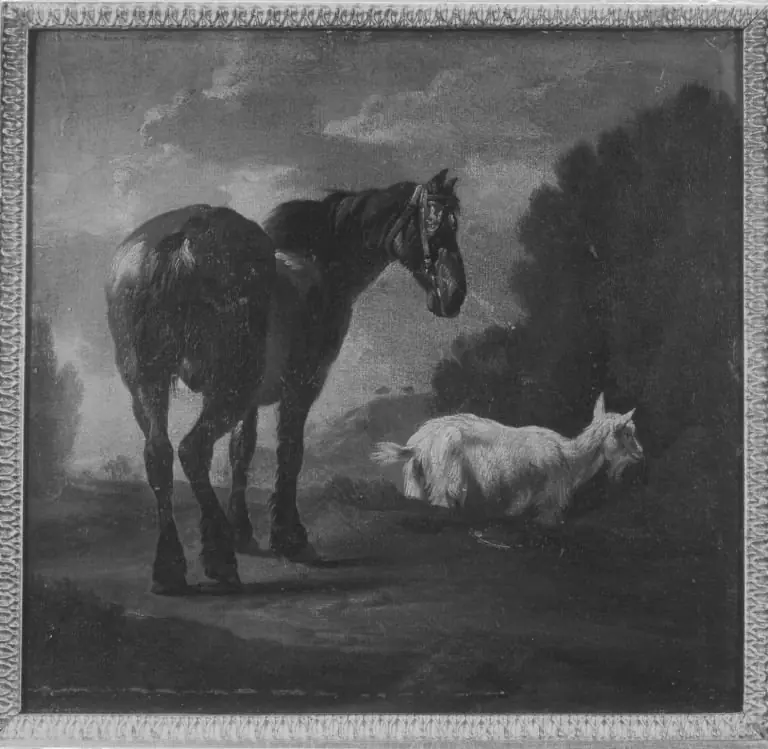
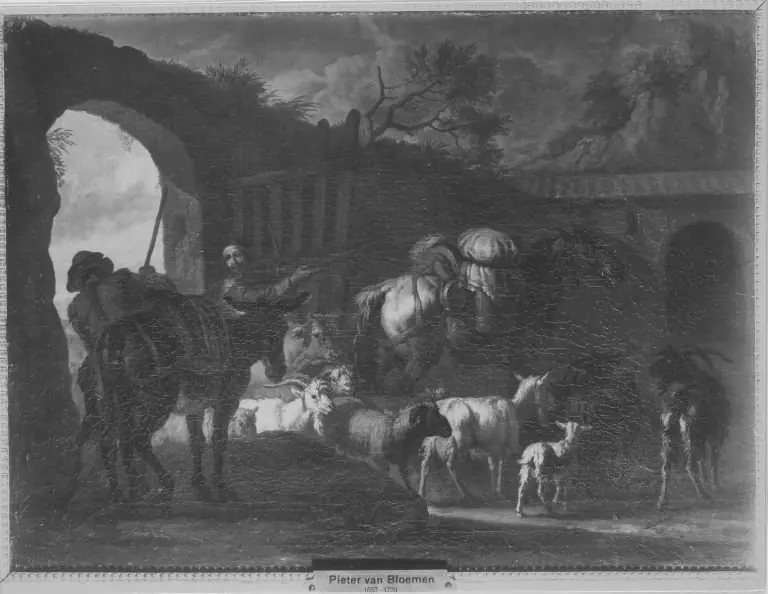
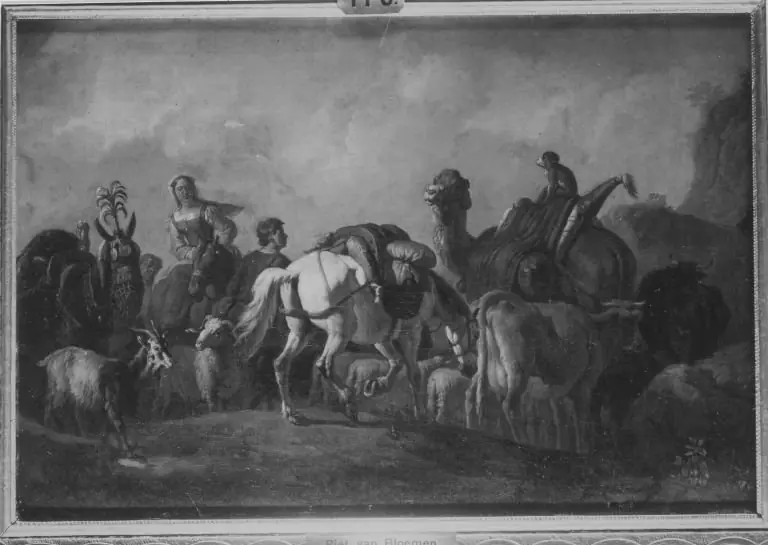
The scene centers on a group of horses and goats gathered near a stream, tended by a herdsman on horseback who gestures toward them. The presence of livestock and human activity suggests a working rural environment, not an idealized idyll. The distant stone archway and building hint at Roman ruins or rural architecture, grounding the composition in a recognizable Italian setting. The painting conveys quiet labor and the rhythms of pastoral life rather than narrative drama.
Technique & Style
Van Bloemen employed loose, fluid brushwork to capture the motion of animals and the texture of foliage. Warm earth tones and soft blues in the sky create a harmonious palette, while subtle contrasts in light suggest late afternoon sun. The figures and animals are rendered with observational precision, avoiding idealization. The composition guides the eye from foreground livestock to the architectural element in the distance, enhancing spatial depth without rigid perspective.
History & Provenance
Created in 1694 during van Bloemen’s time in Italy, the painting reflects his firsthand engagement with the Italian landscape after relocating from Flanders. It entered the Kunsthistorisches Museum’s collection in Vienna, likely through Habsburg acquisitions of Flemish art. The work’s survival in good condition and consistent attribution supports its documented provenance, though specific ownership records between its creation and museum acquisition remain limited.
Context
Van Bloemen worked within a tradition of Flemish artists who traveled to Italy to study classical ruins and natural scenery. His focus on animals distinguished him from contemporaries who emphasized grand historical or religious themes. This painting aligns with a growing 17th-century interest in everyday rural life and the natural world, reflecting both artistic curiosity and the broader European fascination with Italian topography.
Legacy
Van Bloemen’s detailed depictions of horses and pastoral life influenced later animal painters in Northern Europe. While not widely known today, his work contributed to the development of landscape painting that prioritized observation over myth or allegory. This painting remains a representative example of how Flemish artists adapted Italian scenery into their own visual language, bridging regional styles within the Baroque period.
Artist & collection
Artist
Pieter van Bloemen, also known as Standaart (bapt. 17 January 1657 – 6 March 1720), first name also spelled Peter or Peeter, was a Flemish painter, draughtsman and printmaker. He was a gifted landscape and animal artist…