Artwork
Christ Washing the Feet of His Disciples
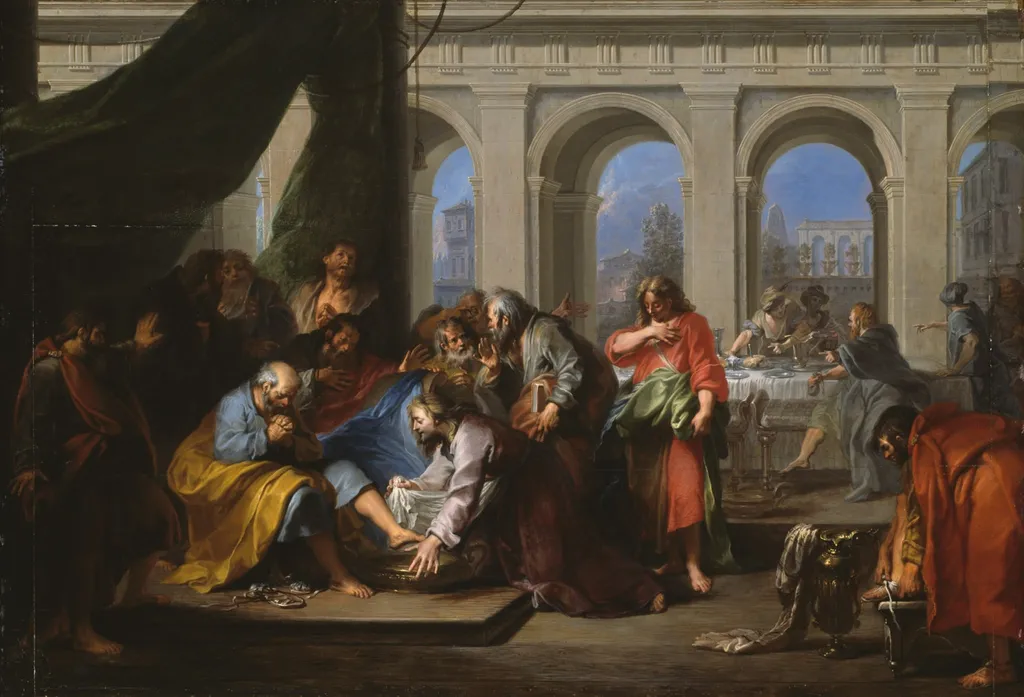
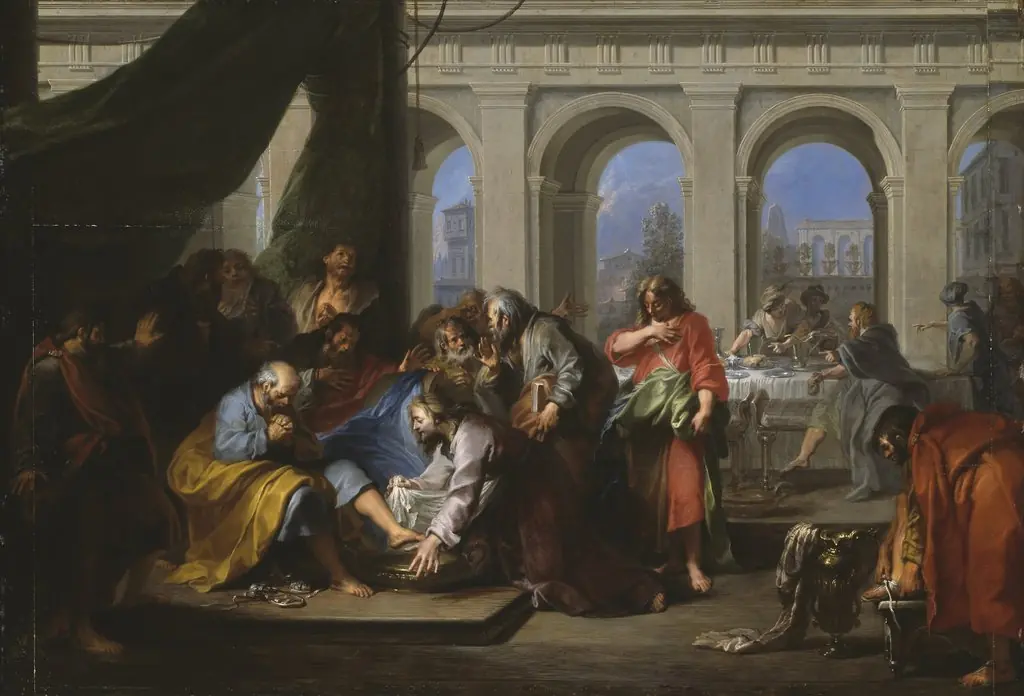
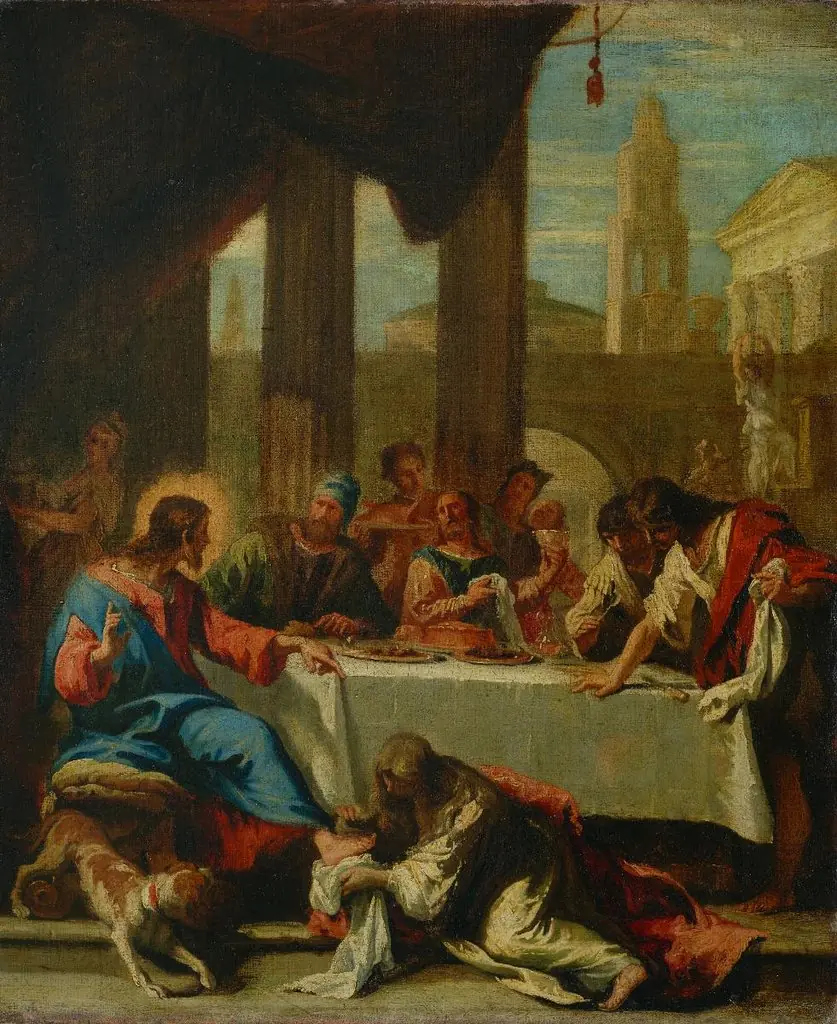
Christ Washing the Feet of His Disciples is an oil painting by the Baroque artist Nicolas Bertin. It dates from 1725 and is held in the collection of the Art Institute of Chicago.
About this work
Overview
The composition captures Christ’s act of humility during the Last Supper, rendered with theatrical grandeur rather than intimate simplicity.
Nicolas Bertin painted this religious scene in oil on panel, adhering to French academic training while drawing inspiration from Venetian Renaissance aesthetics. The composition captures Christ’s act of humility during the Last Supper, rendered with theatrical grandeur rather than intimate simplicity. The setting evokes palace architecture, and the figures are arranged with deliberate staging, reflecting Bertin’s interest in Venetian color and drama over French restraint.
Subject & Meaning
The scene illustrates John 13:4–5, where Christ washes the feet of his disciples, a gesture of service and humility. Peter, visibly startled, is the central focus of the action, while the other apostles observe with varied expressions—confusion, awe, and quiet reverence. The moment transcends ritual to convey spiritual instruction: leadership through service. Bertin emphasizes emotional nuance without overt sentimentality, grounding the divine in human reaction.
Technique & Style
Bertin employed glazing techniques to achieve luminous, richly layered colors, particularly in the robes of the figures. His brushwork suggests Venetian influence, with soft transitions and radiant light enhancing the fabric’s texture. The figures are posed with theatrical precision, their gestures and glances directing the viewer’s attention. The architectural backdrop, though ornate, serves to elevate the scene without distracting from its emotional core.
History & Provenance
The painting was created during Bertin’s active period in early 18th-century France, likely commissioned for a private or ecclesiastical setting. While its early ownership is undocumented, its stylistic choices align with French collectors’ tastes for Italianate religious narratives. It remained within French collections until its current institutional acquisition, preserving its original condition and panel support.
Context
Bertin worked in a period when French artists increasingly looked to Venice for compositional grandeur and chromatic richness, moving beyond strict classical norms. His choice of subject—Christ’s humble act—resonated with Counter-Reformation ideals of service and devotion. The theatricality reflects broader trends in French religious art seeking emotional engagement through visual spectacle, blending sacred narrative with contemporary aesthetic ideals.
Legacy
Though not widely known today, Bertin’s work exemplifies the cross-cultural exchange between French academic training and Venetian colorism in the early 1700s. This painting stands as a quiet testament to how Northern artists adapted Southern Renaissance models to convey spiritual themes with emotional depth. Its preservation offers insight into the evolving visual language of religious painting beyond the dominant Baroque centers.
Own this work as a print
Artist & collection