Artwork
Church of Saint John, Lyons
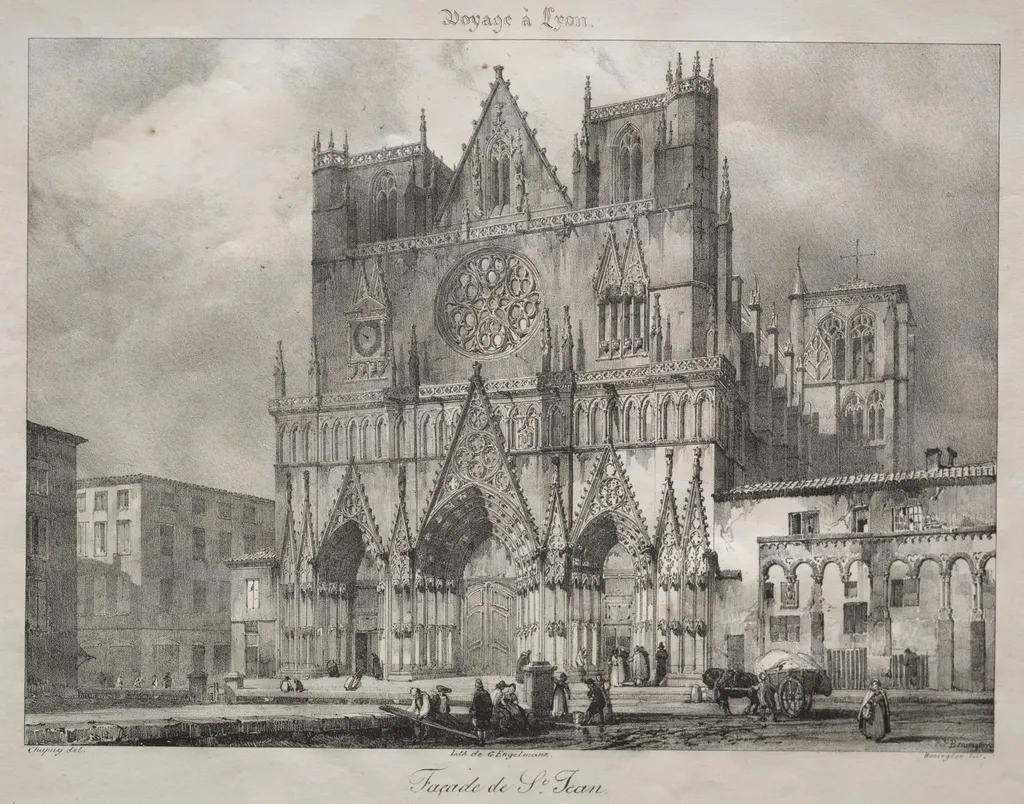
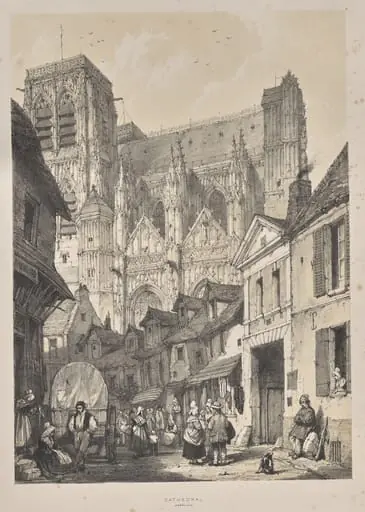
Church of Saint John, Lyons is a print by the Romanticist artist Nicolas-Marie-Joseph Chapuy. It dates from 1825 and is held in the collection of the Cleveland Museum of Art.
About this work
Overview
Created around 1825 by Nicolas-Marie-Joseph Chapuy, this drawing depicts the Church of Saint John in Lyon, France.
Created around 1825 by Nicolas-Marie-Joseph Chapuy, this drawing depicts the Church of Saint John in Lyon, France. It is part of a series titled 'Voyage à Lyon,' documenting architectural scenes from the city. The work is held in the collection of The Cleveland Museum of Art and reflects the artist’s interest in topographical accuracy and urban religious architecture during the early 19th century.
Subject & Meaning
The drawing presents the church as a monumental presence within its urban setting, framed by figures in period dress gathered on the steps and near a horse-drawn carriage. These human elements ground the structure in daily life, suggesting the church’s role as both spiritual and social center. The emphasis on architectural grandeur conveys reverence for civic and religious heritage without overt narrative or symbolism.
Technique & Style
Chapuy rendered the church with precise linear detail, capturing the intricate stonework of arches, towers, and tracery. The use of fine hatching and controlled shading enhances the texture of the stone and the play of light across surfaces. Figures are rendered with minimal detail, serving as scale indicators rather than focal points, reinforcing the building’s dominance in the composition.
History & Provenance
The drawing was produced during Chapuy’s travels in Lyon, likely as part of a documented series commissioned or intended for private circulation. It entered the Cleveland Museum of Art’s collection in the 20th century, where it remains as a representative example of French topographical drawing from the post-Revolutionary era, valued for its documentary precision.
Context
In the early 1800s, French artists increasingly turned to regional architecture as subjects, blending observation with national identity. The Church of Saint John, with its Gothic Revival features, symbolized continuity with medieval traditions amid rapid modernization. Chapuy’s work aligns with a broader trend of recording historic structures before urban transformation altered their appearance.
Legacy
Chapuy’s drawing contributes to a body of 19th-century topographical art that preserved the visual record of French ecclesiastical architecture. Though not widely exhibited, it remains a reference for scholars studying regional church design and the transition from Enlightenment documentation to Romantic-era sensibility in architectural representation.
Artist & collection
Artist
Nicolas-Marie-Joseph Chapuy (1790–1858) was a French artist, born in Paris.

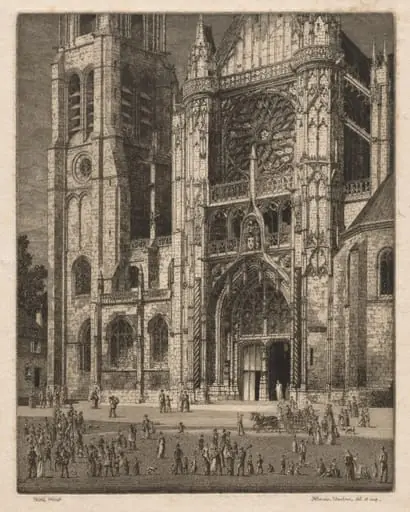 Sevins Cathedral
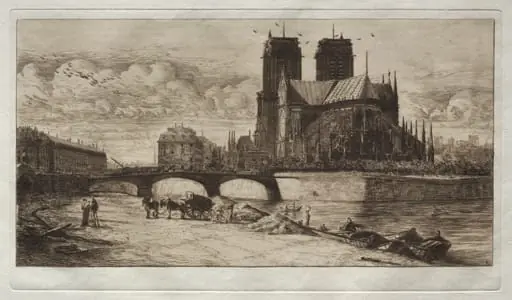 L'Abside de Notre Dame de Paris
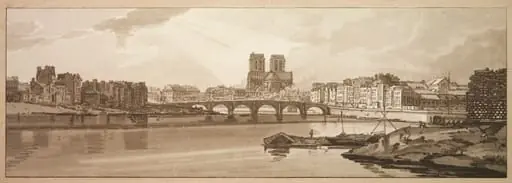 A Selection of Twenty of the Most Picturesque Views in Paris: View of Pont de la Tournelle & Notre Dame taken from the Arsenal
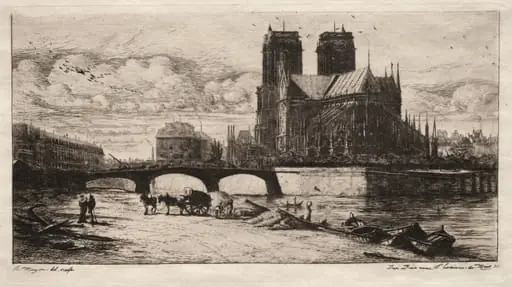 Etchings of Paris: The Apsis of the Cathedral of Notre Dame
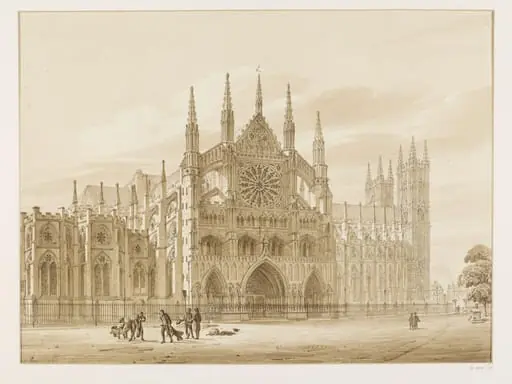 View of Westminster Abbey
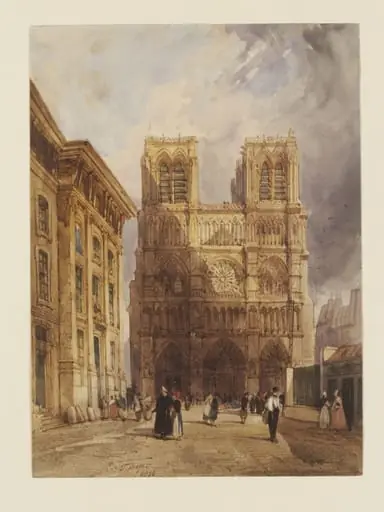 Notre Dame, Paris
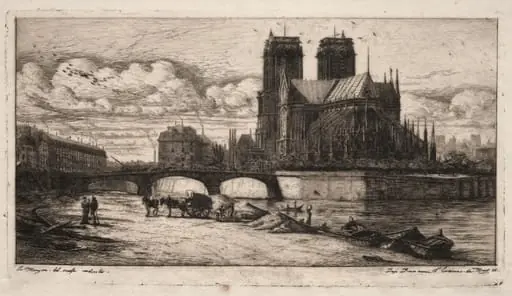 Etchings of Paris: The Apse of the Cathedral of Notre Dame
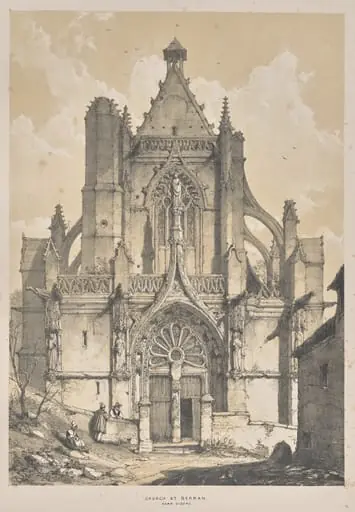 Architecture of the Middle Ages: Church at Serran, near Gisore
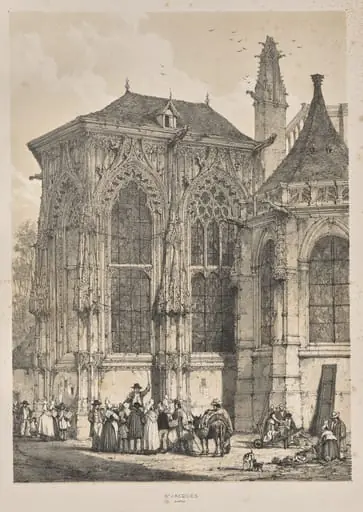 Architecture of the Middle Ages: St. Jacques, Dieppe, East End, Exterior
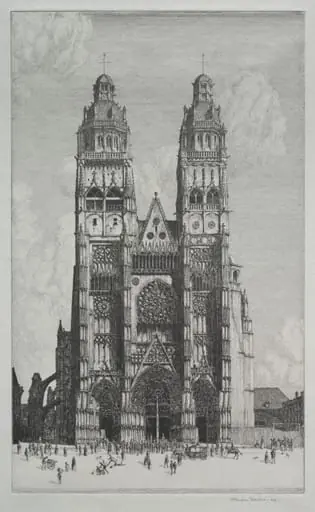 St. Gatiens, Tours
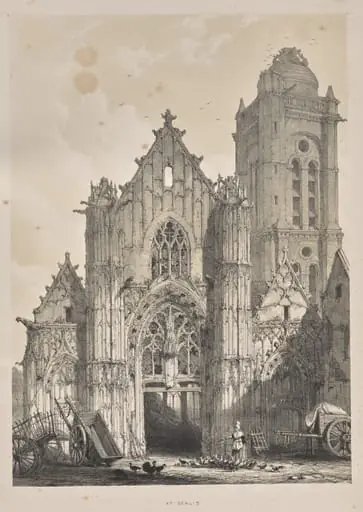 Architecture of the Middle Ages: At Senlis
 Architecture of the Middle Ages: Cathedral, Abbeville