Artwork
Salome with the Head of John the Baptist
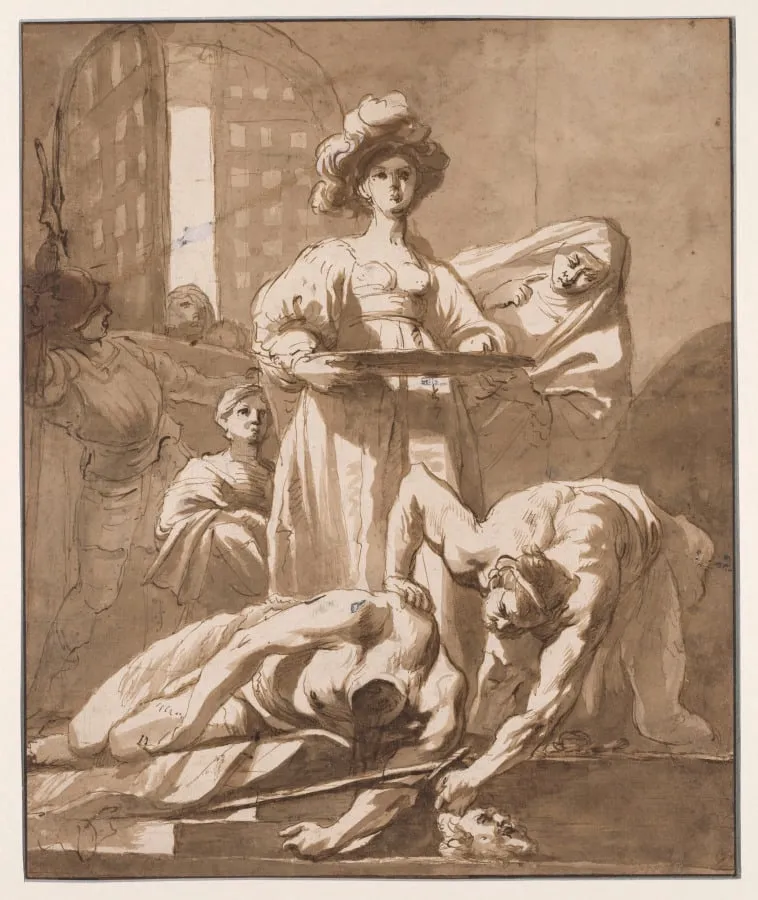
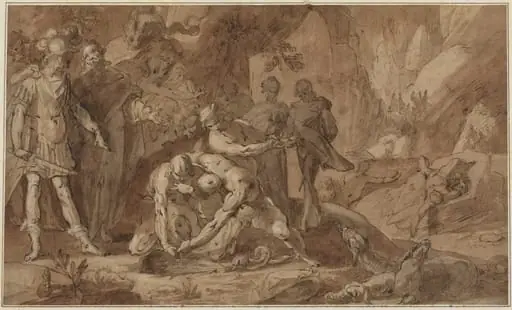
Salome with the Head of John the Baptist is a drawing by the Baroque artist Nicolaus Knupfer. It dates from 1650 and is held in the collection of the Cleveland Museum of Art. Nicolaes Knupfer’s drawing portrays the biblical episode in which Salome receives the severed head of John the Baptist on a tray.
About this work
Overview
Nicolaes Knupfer’s drawing portrays the biblical episode in which Salome receives the severed head of John the Baptist on a tray. The composition captures the moment after the execution, with the young woman standing calmly while attendants linger in the dimly lit interior. The work is executed as a study, likely intended to inform a larger painted version of the same subject.
Subject & Meaning
The image illustrates the New Testament narrative where Salome, prompted by her mother Herodias, requests John the Baptist’s head as a reward for her dance before King Herod. Knupfer emphasizes Salome’s detached demeanor, suggesting a focus on her agency and the reversal of power rather than moral remorse, aligning with the artist’s interest in strong female figures.
Technique & Style
The delicate hatching conveys texture of flesh and fabric, while the composition’s tight framing concentrates attention on the exchange of the platter.
Rendered in fine pen and wash, the drawing employs strong chiaroscuro to model forms through contrasts of light and shadow. A single candle illuminates the central figures, casting deep darkness around the periphery and heightening the dramatic tension. The delicate hatching conveys texture of flesh and fabric, while the composition’s tight framing concentrates attention on the exchange of the platter.
History & Provenance
Created in the mid‑17th century in Utrecht, the drawing is attributed to Knupfer, a Dutch painter known for historical and biblical subjects. It is believed to be a preparatory study for an oil painting that has not survived. The work entered the collection of a European museum in the early 20th century, where it remains documented as part of the artist’s oeuvre.
Artist & collection

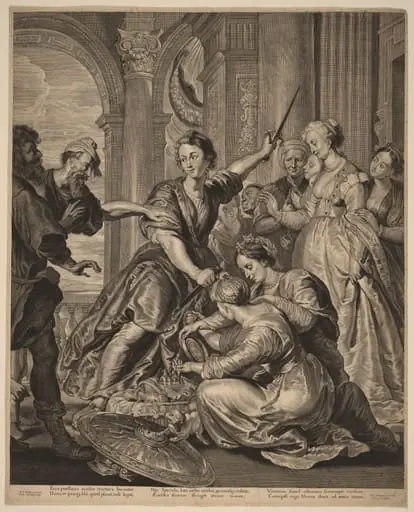 Achilles at the Court of Lycomedes
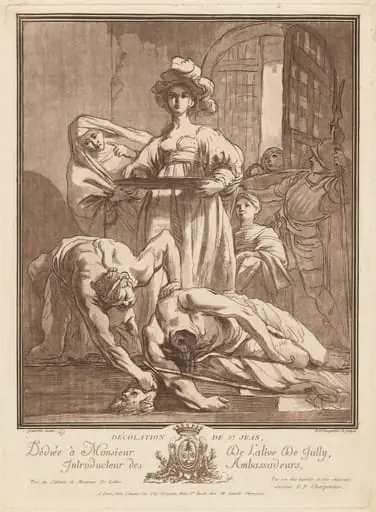 Décolation de St. Jean (Beheading of Saint John the Baptist)
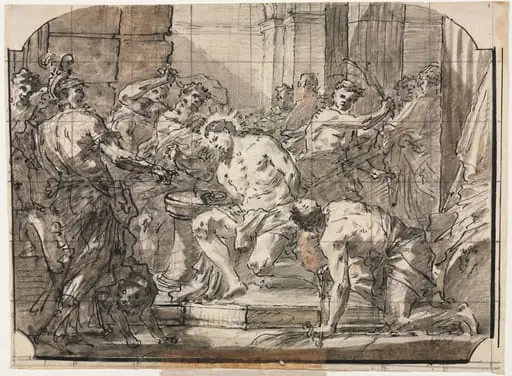 Flagellation of Christ
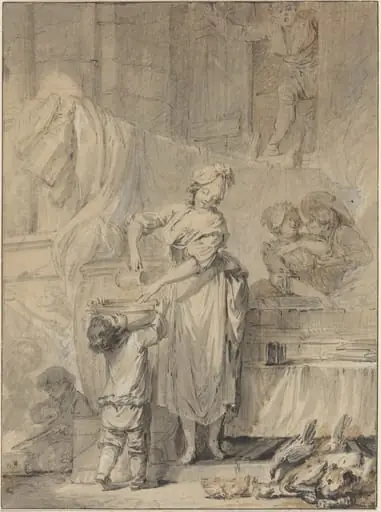 Kindly Martine
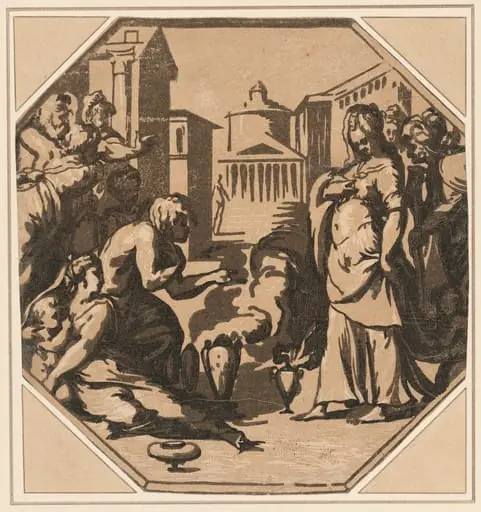 Homage to Psyche
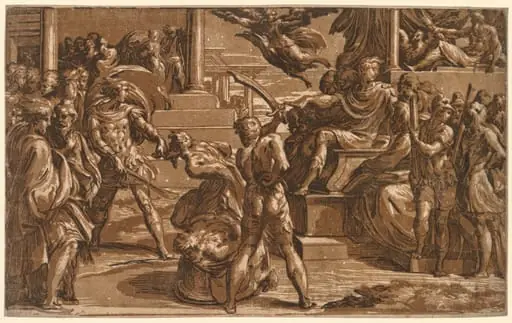 The Martyrdom of St. Peter and St. Paul
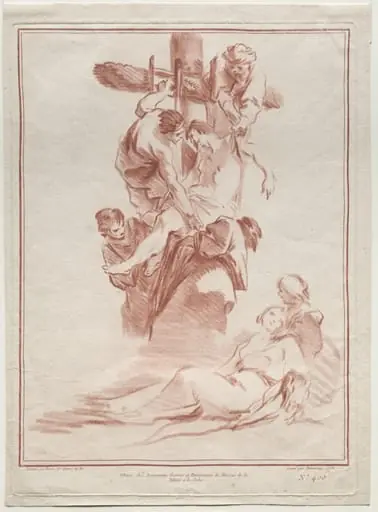 The Descent from the Cross
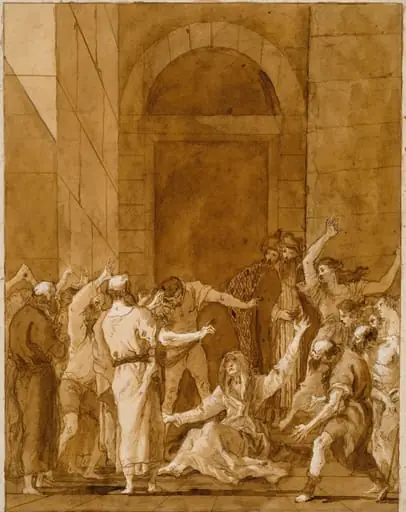 The Raising of Tabitha
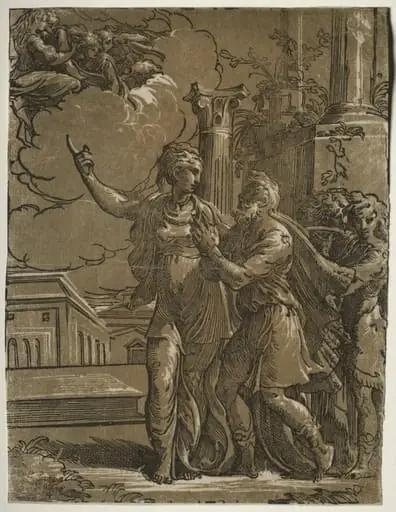 Tiburtine Sibyl and the Emperor Augustus
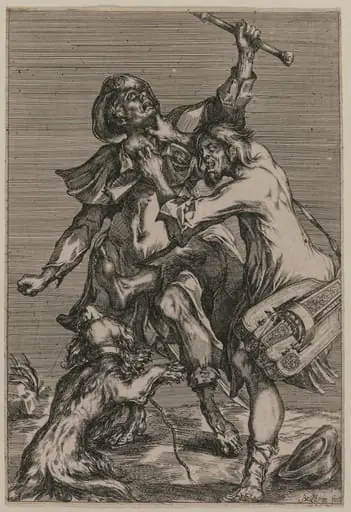 Two Beggars Fighting
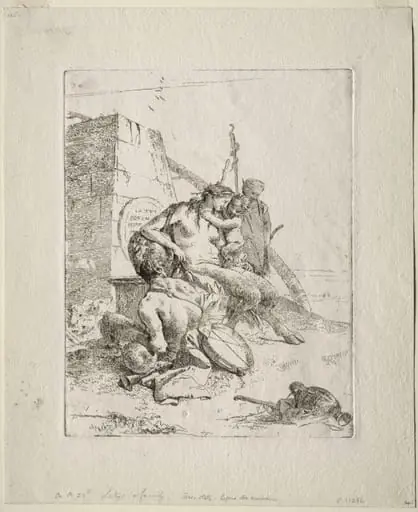 Scherzi di Fantasia: Satyr Family with the Obelisk
 Odysseus and Teiresias