Artwork
The Descent from the Cross
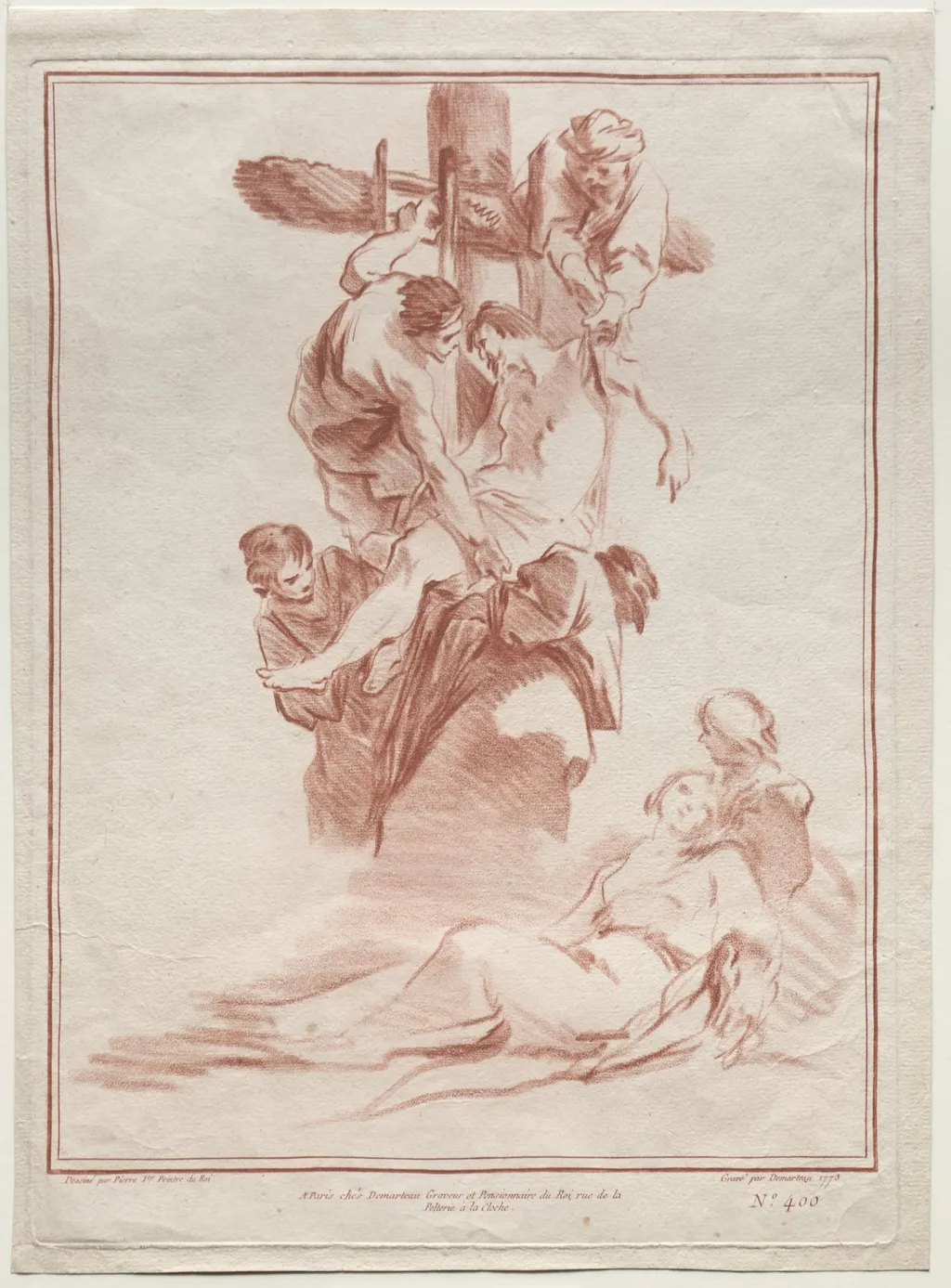
The Descent from the Cross is a print by the Romanticist artist Jean-Baptiste Marie Pierre. It dates from 1773 and is held in the collection of the Cleveland Museum of Art. Gilles Demarteau’s print depicts the removal of Christ’s body from the cross, rendered in a technique he pioneered: crayon-manner etching.
About this work
Overview
This method allowed him to translate the tonal subtleties of drawn sketches into printed form, appealing to collectors who admired the aesthetic of graphic art.
Gilles Demarteau’s print depicts the removal of Christ’s body from the cross, rendered in a technique he pioneered: crayon-manner etching. Unlike traditional etching with a needle, Demarteau employed a roulette—a toothed wheel—to produce fine, uniform dots that mimic the texture of red chalk drawings. This method allowed him to translate the tonal subtleties of drawn sketches into printed form, appealing to collectors who admired the aesthetic of graphic art.
Subject & Meaning
The scene captures the solemn moment after Christ’s crucifixion, as his body is carefully lowered by mourners. Figures surround the cross with expressions of grief, their postures conveying reverence and sorrow. The composition emphasizes human emotion and physical weight, focusing on the quiet dignity of the act rather than overt drama. The subject, drawn from Christian tradition, resonated with 18th-century audiences familiar with devotional imagery.
Technique & Style
Demarteau’s crayon-manner etching relied on a roulette to create a stippled surface, simulating the granular texture of red chalk on paper. The resulting print avoids sharp lines, instead using gradations of tone to suggest volume and shadow. This technique aligned with contemporary tastes for drawings over painted works, offering the intimacy of a sketch in a reproducible format. The effect is neither photographic nor painterly, but distinctly graphic and tactile.
History & Provenance
The print reproduces a drawing by Jean-Baptiste Marie Pierre, a prominent court painter to Louis XV. Demarteau’s version was produced in the mid-18th century, capitalizing on the popularity of chalk drawings among the rising bourgeoisie. These prints were sold as affordable art objects, allowing middle-class households to display imagery associated with elite artistic culture. The inscription on the print confirms its origin and purpose as a reproductive work.
Context
In 18th-century France, there was a surge in demand for drawings as collectible art, partly due to the influence of academies and royal patronage. Demarteau’s prints bridged the gap between high art and domestic decoration, making the style of court artists accessible beyond aristocratic circles. The use of red chalk, long associated with preparatory studies, lent these reproductions an air of authenticity and artistic process.
Legacy
Demarteau’s innovation in crayon-manner etching influenced later reproductive printmakers and helped establish a market for tonal, drawing-like prints. His work contributed to the broader shift in print culture, where technique and texture became as valued as subject matter. Though overshadowed by painters of his era, his technical contributions remain significant in the history of printmaking as a medium for artistic reproduction.
Artist & collection

Artist
Jean-Baptiste Marie Pierre (1714–1789) was a French artist, born in Paris.

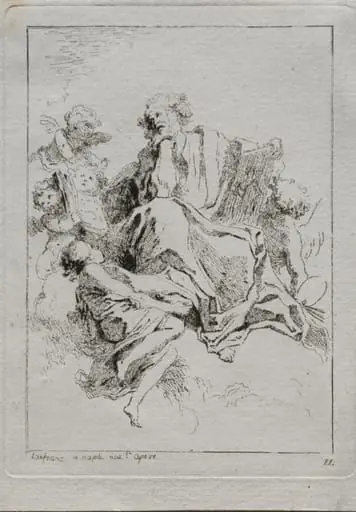 Saint Luke
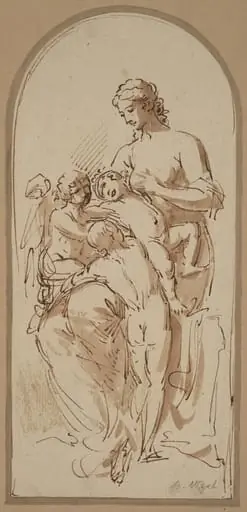 Charity
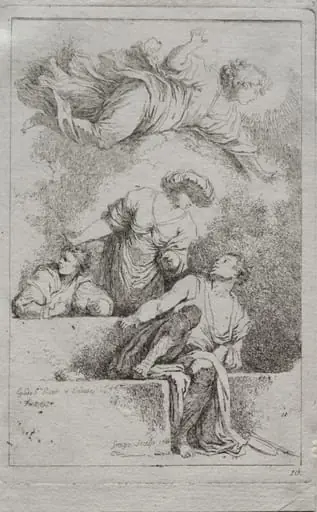 The Disciples at the Tomb
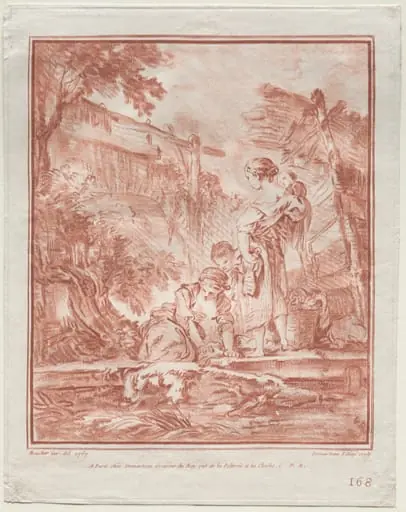 The Washerwoman
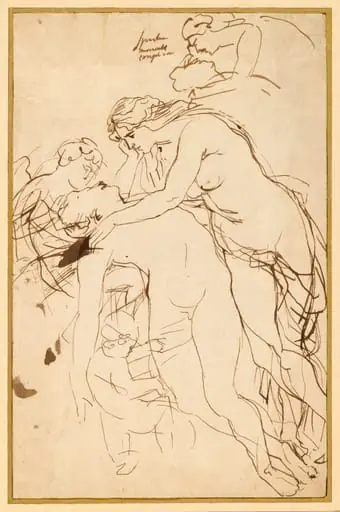 Venus Lamenting Adonis
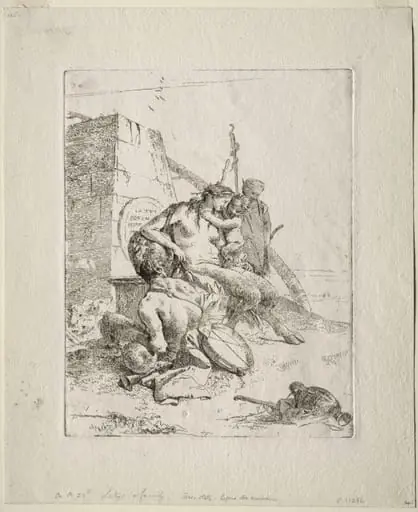 Scherzi di Fantasia: Satyr Family with the Obelisk
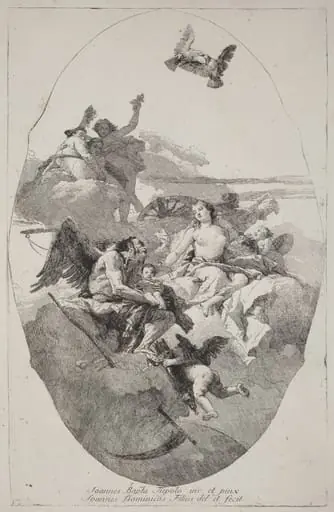 Venus Entrusting Cupid to Time
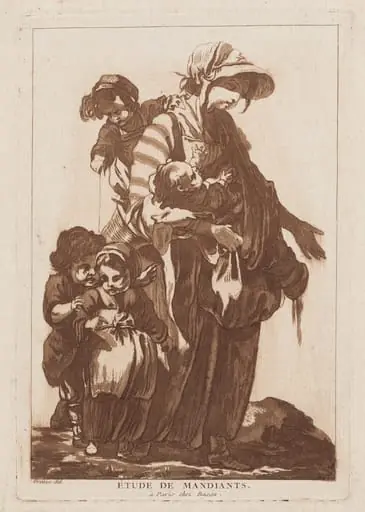 Étude de Mandiants (Study of Beggars)
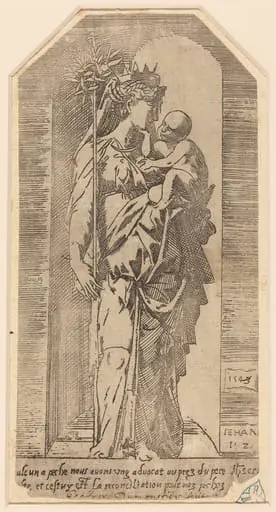 The Crowned Virgin in a Niche
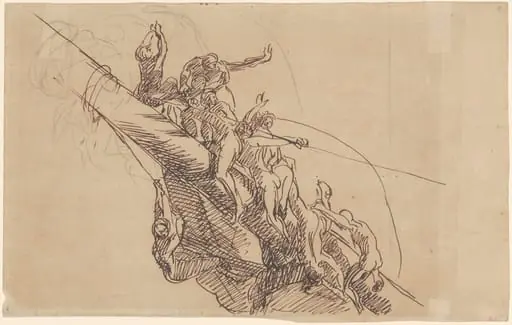 Study for "The Defeat of the Floating Batteries at Gibraltar"
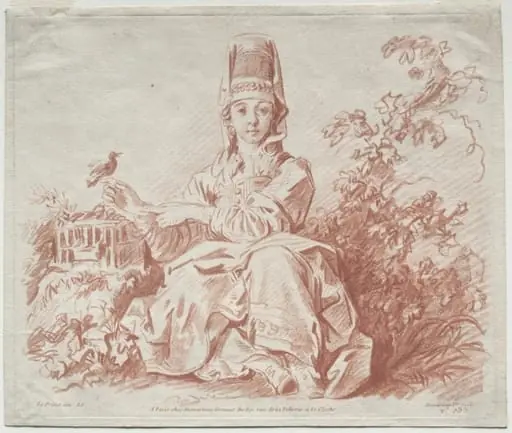 Young Girl Holding a Bird
 Susanna and the Elders