Artwork
Achilles at the Court of Lycomedes
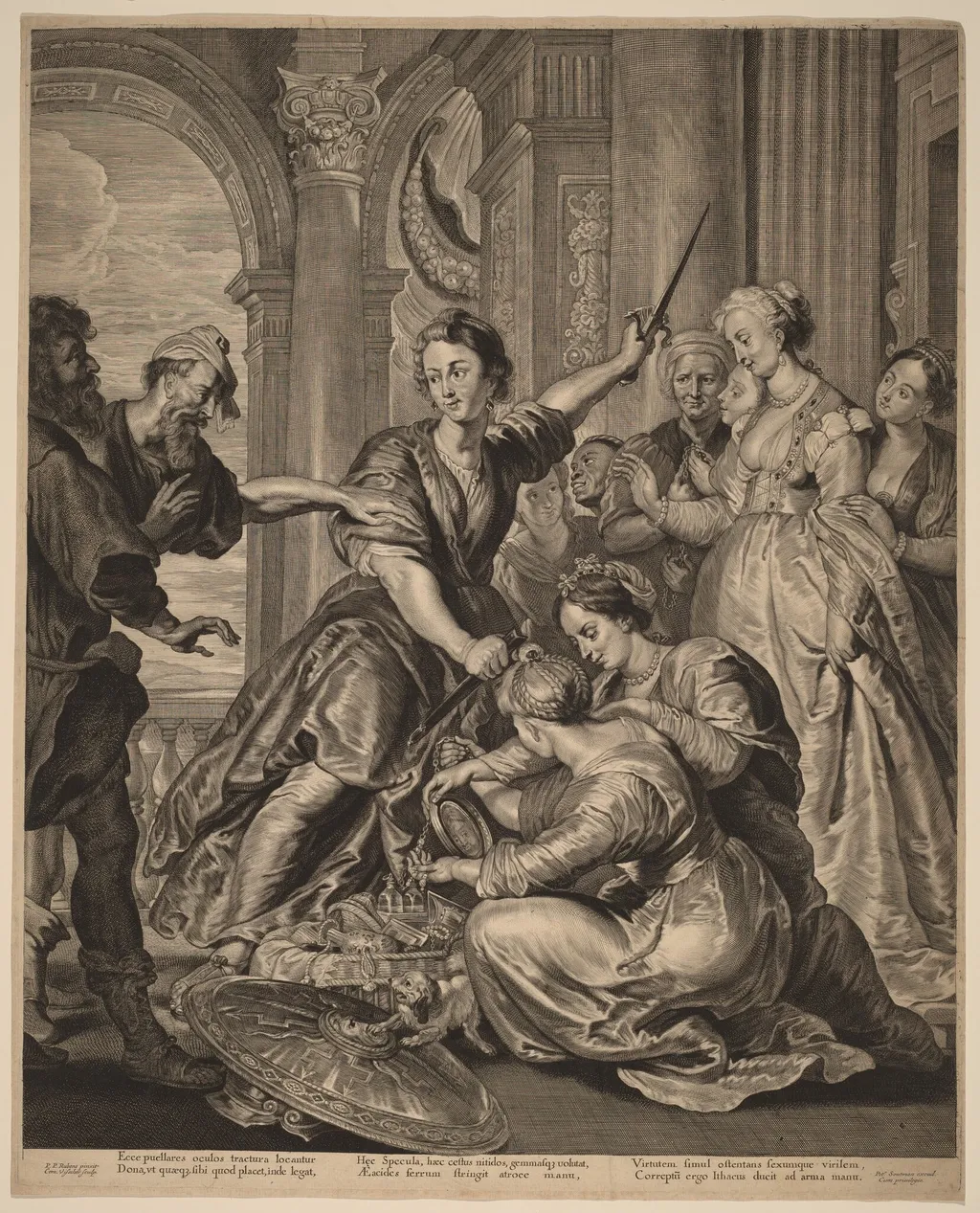
Achilles at the Court of Lycomedes is an ink print by the Baroque artist Cornelis Visscher. It dates from 1646 and is held in the collection of the National Gallery of Art.
About this work
Overview
The composition captures a tense, intimate moment filled with motion and varied human reactions.
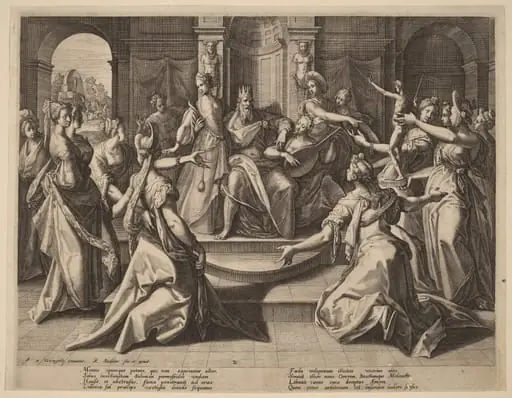
Created in 1646 by Cornelis Visscher, this engraving depicts a moment from Greek myth in which Achilles, disguised as a woman, is revealed at the court of King Lycomedes. Rendered in black ink on laid paper, the work is a finely detailed print made using the engraving technique, where lines are incised into a metal plate and transferred to paper under pressure. The composition captures a tense, intimate moment filled with motion and varied human reactions.
Subject & Meaning
The scene illustrates the moment Achilles, hidden among Lycomedes’ daughters to avoid the Trojan War, is discovered holding a child. A woman in elaborate dress kneels, cradling the infant, while others react with surprise or alarm. The narrative draws from the myth in which Odysseus uncovers Achilles’ identity by presenting weapons among feminine goods. The engraving emphasizes revelation and hidden identity, framing the moment as both personal and fateful.
Technique & Style
Visscher employed fine, precise lines and cross-hatching to model form and depth, creating contrast through dense shadow and delicate highlights. The intricate network of strokes builds texture in fabrics, architecture, and facial expressions without color. The composition is tightly packed, with figures arranged in layered groups that guide the viewer’s eye through the scene. The sharp, controlled lines reflect the precision typical of Dutch engraving in the mid-seventeenth century.
History & Provenance
The print was produced in the Netherlands during a period of flourishing print culture, when mythological and historical subjects were popular among collectors. Visscher, part of a family of engravers, often worked after designs by other artists. While the original source image for this scene is not definitively known, the print circulated widely in Europe, likely as part of illustrated collections or as standalone works for educated audiences interested in classical themes.
Context
In the 1640s, Dutch artists frequently turned to classical mythology as a vehicle for exploring human psychology and moral dilemmas. Engravings like this one served both educational and decorative purposes, appealing to patrons with humanist interests. The depiction of Achilles’ disguise reflects contemporary fascination with themes of identity, gender performance, and fate—ideas resonant in a society navigating political and religious upheaval.
Legacy
Visscher’s engraving contributed to the visual tradition of illustrating classical myths in print form, influencing later artists and collectors. Though not widely reproduced today, it remains a representative example of Dutch engraving’s technical refinement and narrative clarity. The work endures as a document of how early modern Europe interpreted ancient stories through the lens of contemporary artistic practice and intellectual curiosity.
Artist & collection