Artwork
Ornament Panel with Orpheus and the Judgment of Paris
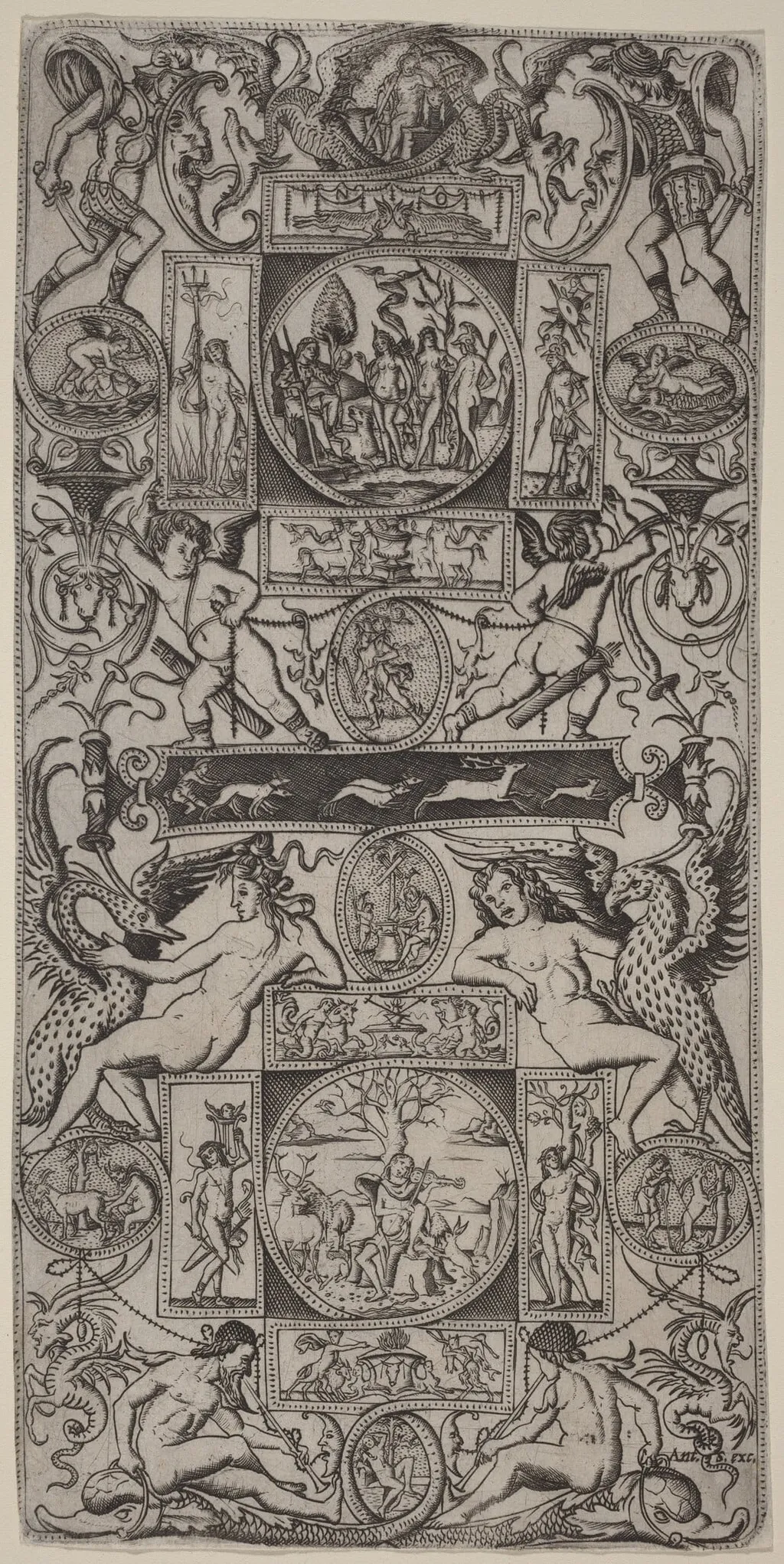
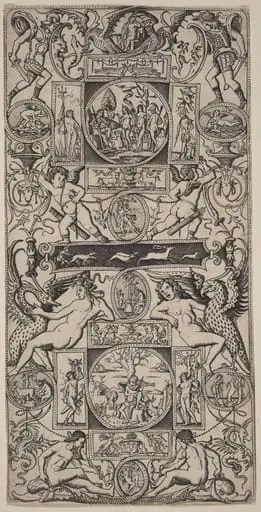
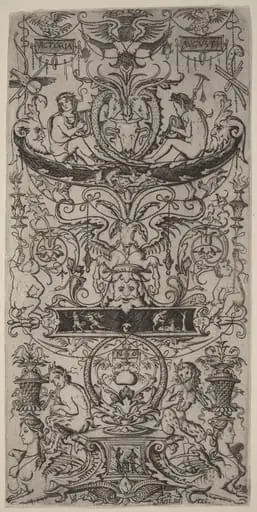
Ornament Panel with Orpheus and the Judgment of Paris is an ink print by the Renaissance artist Nicoletto da Modena. It dates from 1507 and is held in the collection of the National Gallery of Art.
About this work
Overview
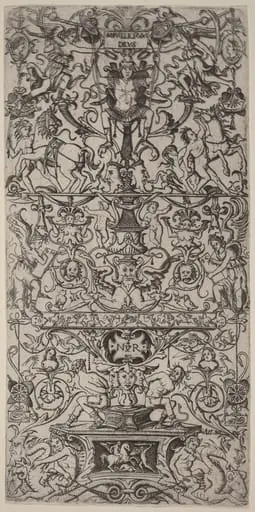
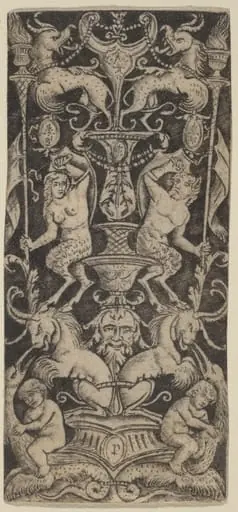
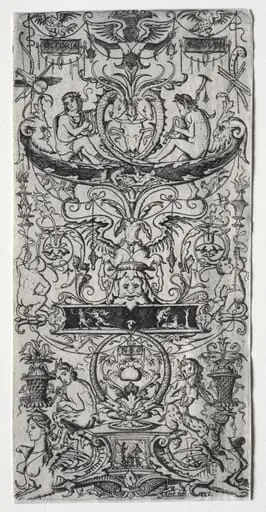
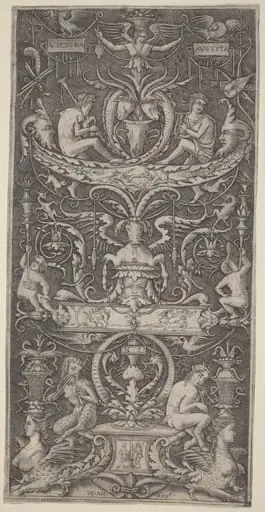
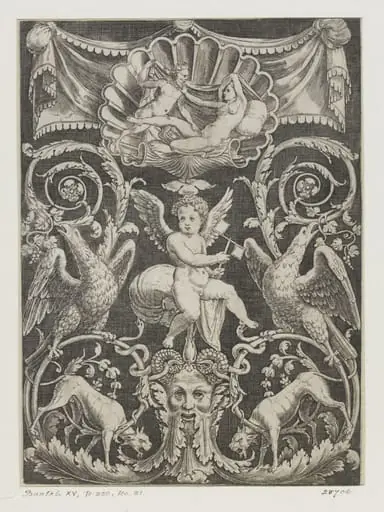
The work functions as a decorative border, densely populated with a multitude of miniature figures that occupy virtually every available space on the plate.
Ornament Panel with Orpheus and the Judgment of Paris is a copper engraving executed by the Italian printmaker Nicoletto da Modena around 1507. The work functions as a decorative border, densely populated with a multitude of miniature figures that occupy virtually every available space on the plate. Its compact format and intricate detailing exemplify the early‑Renaissance fascination with ornamental complexity.
Subject & Meaning
The panel juxtaposes two classical narratives: the musician Orpheus, shown serenading a gathering of animals, and the myth of the Judgment of Paris, in which the Trojan prince debates the merits of three goddesses beneath a tree. By placing these episodes side by side, the print invites a comparison between harmonious artistic persuasion and the discord of contested beauty, themes common in humanist circles of the period.
Technique & Style
Nicoletto incised the design into a metal plate with a burin, creating a network of fine lines that hold ink during printing. The resulting image is characterized by crisp, sharply defined contours that retain clarity even in the tiniest vignette. The composition relies on repetitive geometric frames—circles and squares—to organize the crowded scene, a stylistic device that reflects the ornamental aesthetics of early 16th‑century Italian printmaking.
History & Provenance
Created in the early 1500s, the engraving was likely intended for inclusion in a larger decorative scheme, possibly as a border for a manuscript or wall panel. Surviving copies are held in several European collections, indicating that the print circulated widely among connoisseurs of ornamental design. Its attribution to Nicoletto da Modena rests on stylistic comparison with other signed works by the Modenese artist.
Artist & collection