Artwork
Țărm infinit IV
Țărm infinit IV is an unspecified painting by Florin Niculiu. It dates from 1950 and is held in the collection of the Gavrila Simion Eco-Museum Research Institute Tulcea.
About this work
Overview
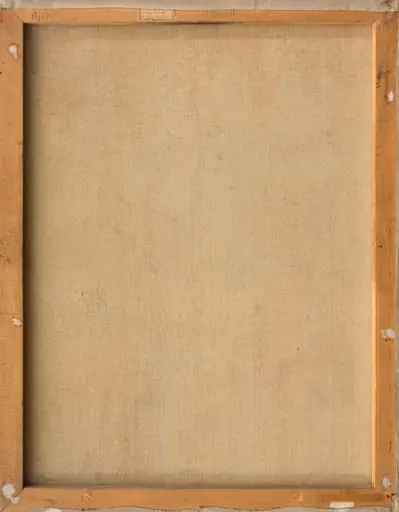
Florin Niculiu’s *Țărm infinit IV* (c. 1950) presents a deliberately unadorned canvas, its surface devoid of pigment or gesture. The work, housed in the Museum of Ethnography, consists of a pale, smooth expanse framed in wood, its edges showing minor wear. A small inscription in one corner identifies it as the fourth in a series, though its visual content remains absent by design.
Subject & Meaning
The title, translating to *Infinite Shore IV*, suggests a conceptual engagement with emptiness or boundlessness.
The title, translating to *Infinite Shore IV*, suggests a conceptual engagement with emptiness or boundlessness. By omitting representational elements, Niculiu directs attention to the idea of absence as a subject. The work invites interpretation not through imagery but through the tension between expectation and the deliberate refusal of visual information, prompting reflection on perception itself.
Technique & Style
Executed with minimal intervention, the piece relies on the stark contrast between the blank canvas and its material context. The smooth surface lacks brushstrokes or texture, emphasizing the physical presence of the support. This approach aligns with strategies of reduction, where the artist’s restraint becomes the defining formal choice, stripping away conventional markers of artistic labor.
History & Provenance
Created around 1950, *Țărm infinit IV* is part of a series that explores similar themes of negation. Its inclusion in the Museum of Ethnography situates it within a collection focused on cultural artifacts, though its conceptual nature challenges traditional categorizations. The worn frame and inscribed number indicate its handling over time, though specific exhibition history remains sparse.
Context
Niculiu’s decision to leave the canvas empty reflects broader mid-20th-century tendencies toward dematerialization in art. While not directly linked to contemporaneous movements like Minimalism or Conceptualism, the work shares their interest in questioning artistic conventions. The reference to cardboard in related discussions suggests an exploration of humble or overlooked materials as vehicles for meaning.
Artist & collection
Artist
Florin Niculiu painted inland landscapes and coastal scenes that stretch the horizon into a single line of color.
Museum
Gavrila Simion Eco-Museum Research Institute Tulcea
Continue through works from the same source collection.