Artwork
Peisaj la Calica
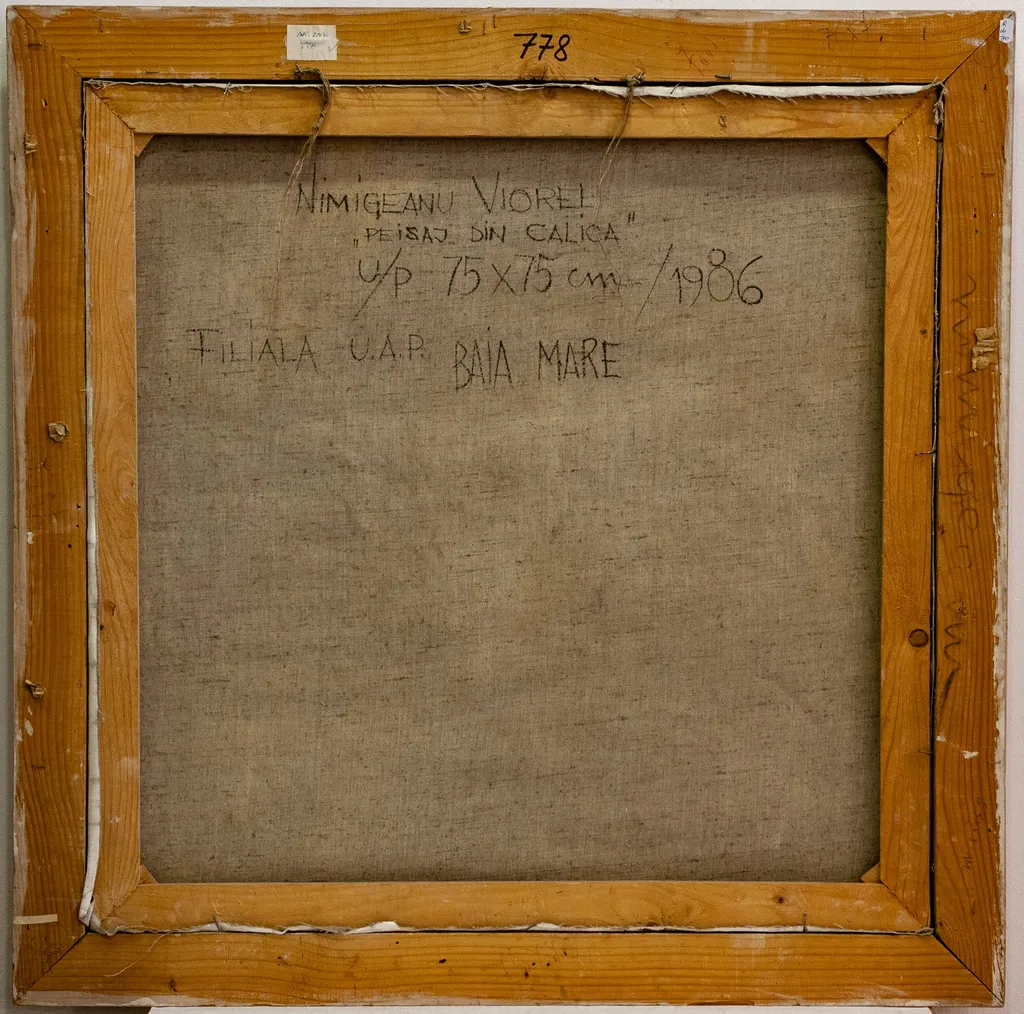
Peisaj la Calica is a print by Nimigeanu Viorel. It dates from 1986 and is held in the collection of the Gavrila Simion Eco-Museum Research Institute Tulcea.
About this work
Overview
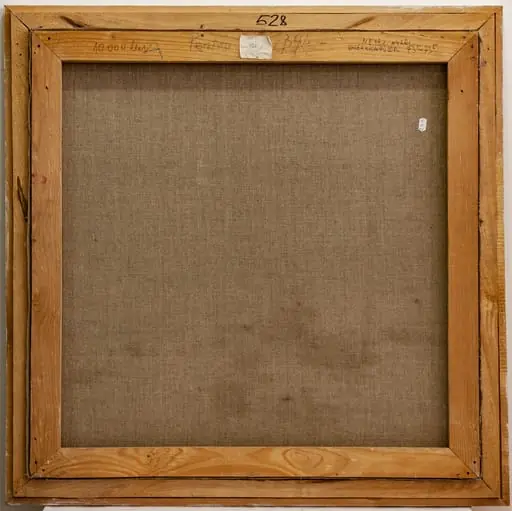
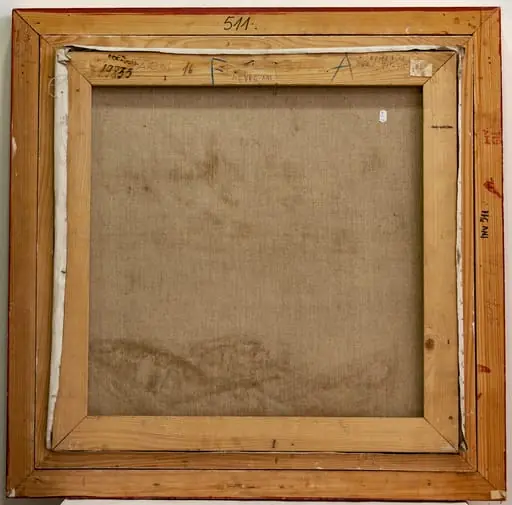
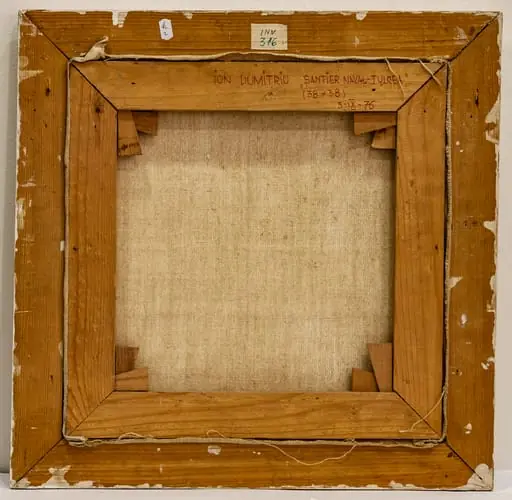
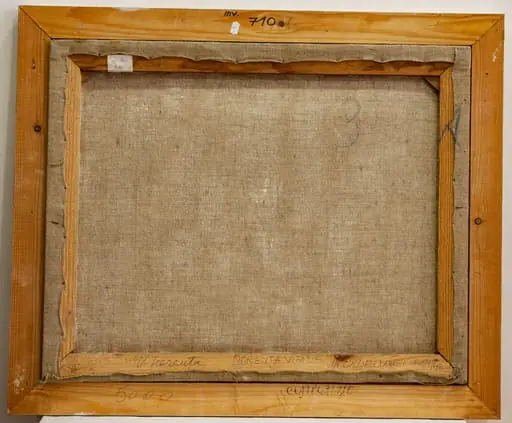
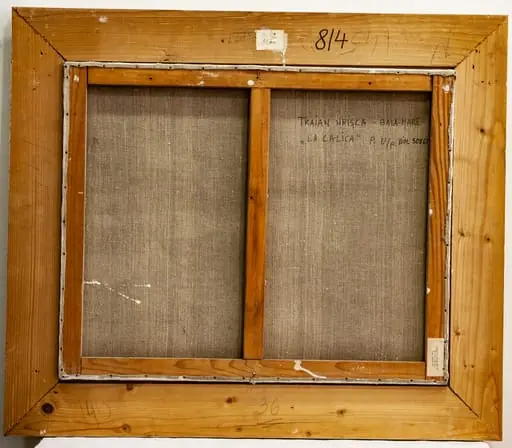
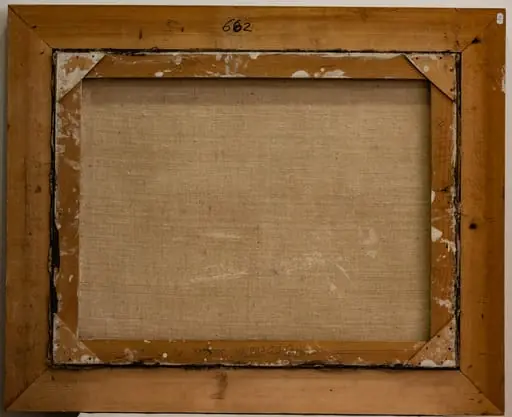
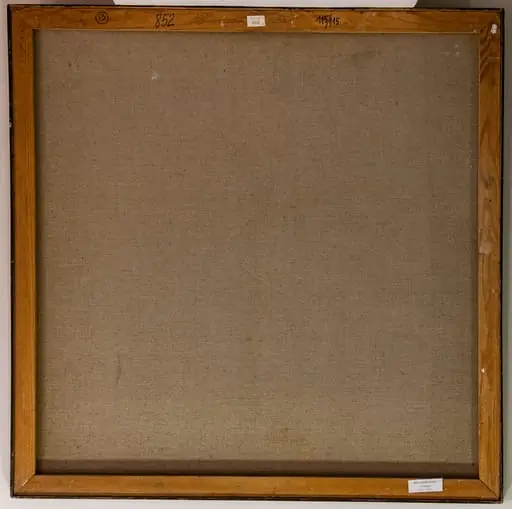
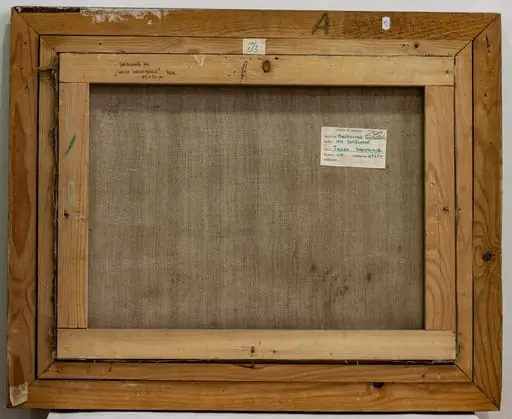
The canvas shows signs of age—creases, uneven edges, and a faint, uniform brown tone—suggesting it was prepared but never completed as a traditional landscape.
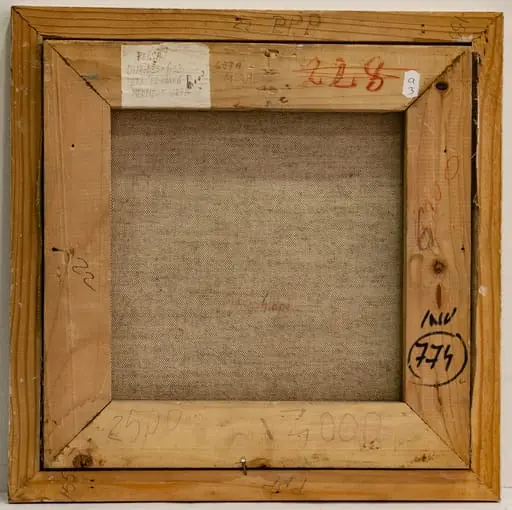
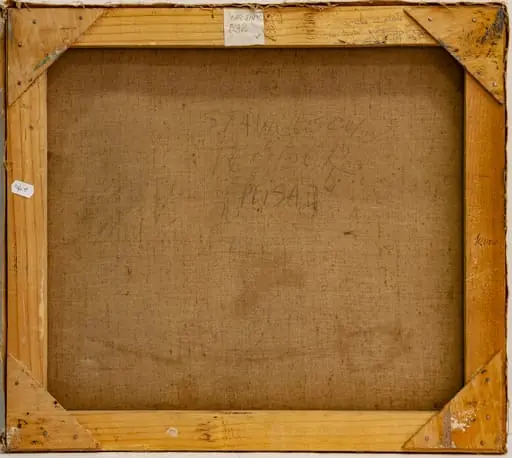
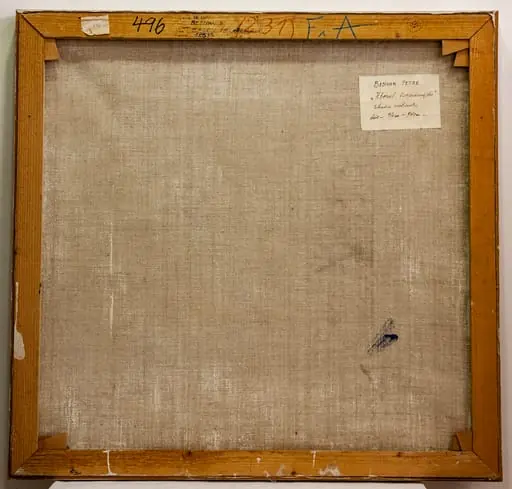
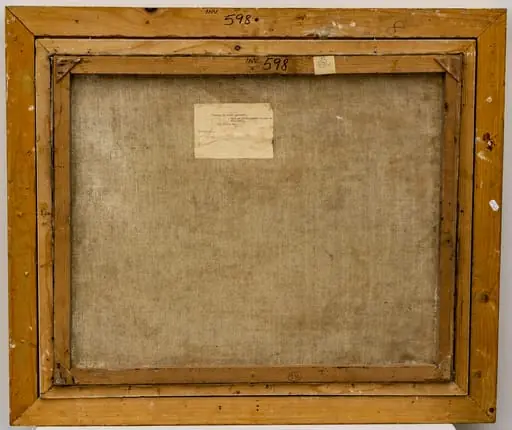
Peisaj la Calica is a 1986 work by Romanian artist Nimigeanu Viorel, consisting of an unadorned canvas within a modest, aged wooden frame secured with twine. The surface bears only handwritten inscriptions identifying the title and artist, with no painted imagery. The canvas shows signs of age—creases, uneven edges, and a faint, uniform brown tone—suggesting it was prepared but never completed as a traditional landscape.
Subject & Meaning
The title, meaning 'Landscape at Calica,' implies an intended depiction of a specific rural location, likely tied to the artist’s personal or regional memory. Yet the absence of visual content transforms the work into a silent placeholder—an artifact of intention rather than execution. The handwritten text functions as both label and lament, pointing to an unfulfilled artistic act or a deliberate withdrawal from representation.
Technique & Style
The work rejects conventional painting techniques entirely. The canvas is left bare, with no brushwork, pigment, or compositional structure. The frame and mounting are rudimentary, emphasizing materiality over polish. The handwritten script, casual yet deliberate, contrasts with the formal expectations of gallery display, suggesting a private or experimental gesture rather than a public statement.
History & Provenance
The piece entered the collection of the Museum of Ethnography after the artist’s lifetime, where it is preserved alongside objects reflecting everyday Romanian life. Its inclusion suggests curatorial interest in artistic processes, absences, or marginal practices. No documentation exists regarding its creation context or whether it was ever exhibited during the artist’s lifetime.
Context
Created in 1986, during the final years of Romania’s communist regime, the work may reflect broader cultural constraints on artistic expression. While many artists navigated censorship through allegory, Viorel’s blank canvas could represent a quiet resistance—a refusal to produce imagery under pressure, or a meditation on the limits of representation in a repressive environment.
Legacy
Peisaj la Calica endures not as a failed painting but as an artifact of silence. It invites reflection on what art becomes when the act of making is suspended. Its presence in an ethnographic museum underscores its value as a cultural object—evidence of an individual’s unspoken relationship to place, labor, and the weight of expectation.
Artist & collection
Artist
A Romanian printmaker, Nimigeanu Viorel made quiet, sunlit landscapes in the 1980s.
Museum
Gavrila Simion Eco-Museum Research Institute Tulcea
Continue through works from the same source collection.