Artwork
Catafalque in the Cathedral of Piacenza for Odoardo Farnese, Duke of Parma and Piacenza
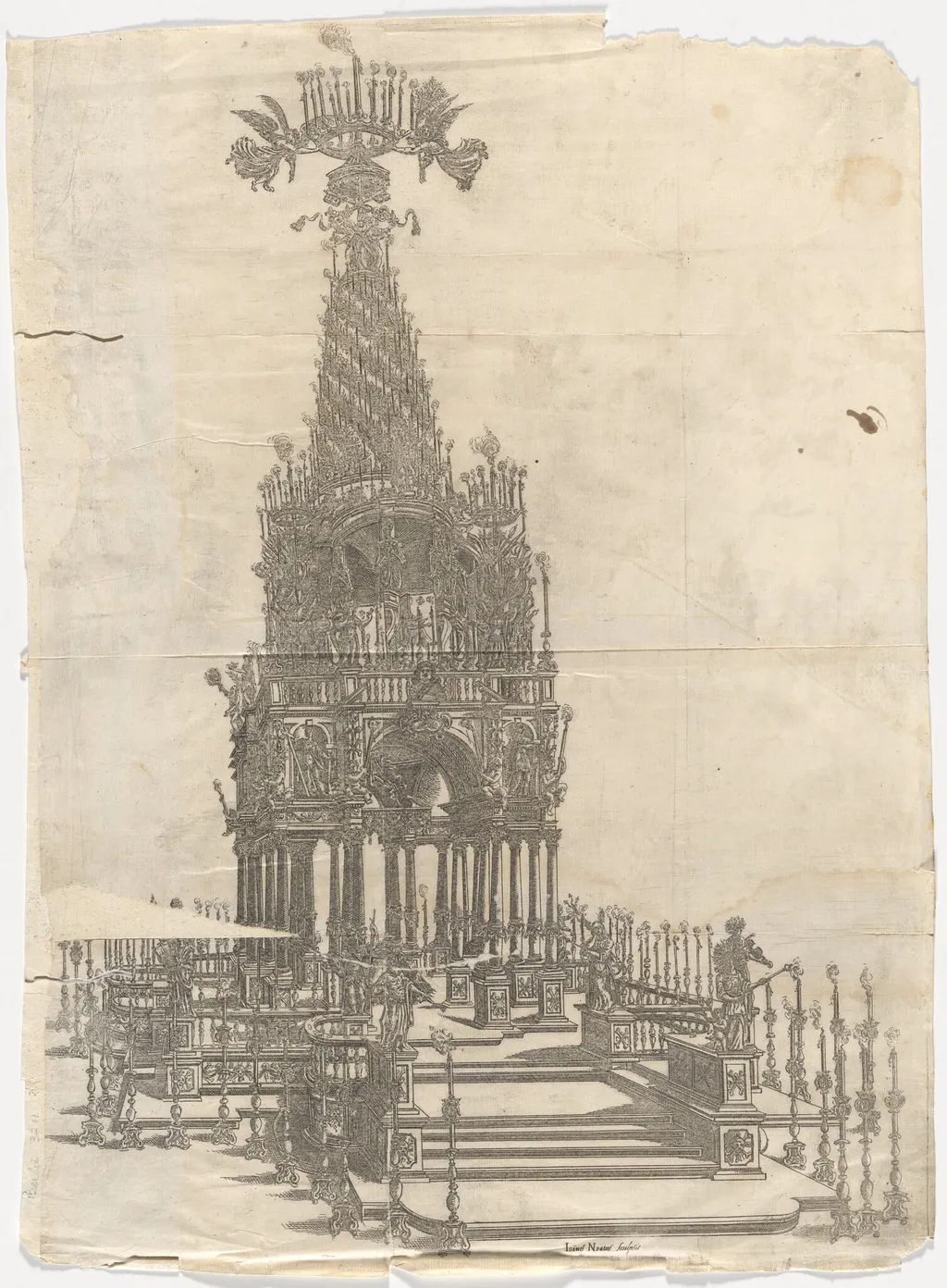
Catafalque in the Cathedral of Piacenza for Odoardo Farnese, Duke of Parma and Piacenza is an ink print by the Baroque artist Giovanni Noati. It dates from 1647 and is held in the collection of the National Gallery of Art.
About this work
Overview
An etching by Giovanni Noati, dated 1647, depicts the temporary funeral monument erected in Piacenza Cathedral for Odoardo Farnese, Duke of Parma and Piacenza.
An etching by Giovanni Noati, dated 1647, depicts the temporary funeral monument erected in Piacenza Cathedral for Odoardo Farnese, Duke of Parma and Piacenza. Created shortly after the duke’s death, the print captures the elaborate catafalque constructed for his funeral rites. The work is held in the collection of the National Gallery of Art in Washington, D.C., and serves as a documentary record of Baroque ceremonial architecture.
Subject & Meaning
The composition centers on a grand, multi-tiered structure designed to honor the deceased duke. Ornate columns, sculpted angels, a crowned cross, and rows of lit candles convey both religious solemnity and dynastic prestige. Small figures gathered at its base suggest mourning clergy and nobility, reinforcing the event’s public and ceremonial nature. The monument functions as a visual assertion of the Farnese family’s power and piety in death.
Technique & Style
Noati employed fine, controlled etching lines to render intricate architectural details and dramatic chiaroscuro. The dense network of hatching creates depth and texture, giving the wooden and metallic elements a tangible weight. Delicate tracery of scrolls, railings, and floral motifs is rendered with precision, reflecting the meticulous craftsmanship of the original structure. The print’s tonal range enhances the monument’s imposing scale and spatial complexity.
History & Provenance
The etching was produced in 1647, the year of Odoardo Farnese’s death, likely for distribution among court circles or as a commemorative artifact. It was acquired by the National Gallery of Art in Washington, D.C., where it remains part of its prints and drawings collection. No other known copies of this specific view survive, making it a rare visual testament to a transient, ephemeral installation.
Context
In mid-17th century Italy, elaborate catafalques were standard for noble funerals, blending sacred symbolism with theatrical display. Piacenza, as a key city in the Duchy of Parma, hosted such rituals to affirm the Farnese dynasty’s authority. Noati’s print aligns with a tradition of architectural commemoration, where artists documented temporary monuments before their dismantling, preserving their memory for posterity.
Legacy
Noati’s etching endures as a precise record of Baroque funeral architecture, offering insight into how power was visually enacted in sacred spaces. While the original catafalque was dismantled after the funeral, the print ensures its form and symbolism remain accessible. It contributes to scholarly understanding of how early modern courts used art and ritual to negotiate legacy and authority.
Artist & collection

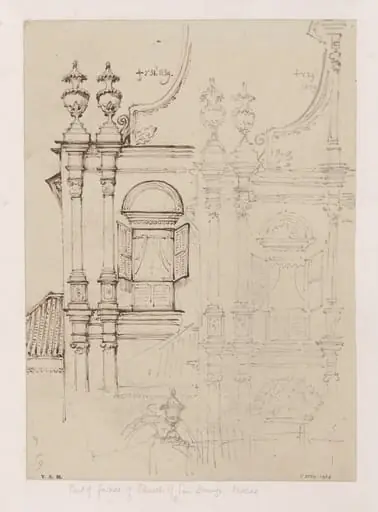 The church of S. Domingos, Macau
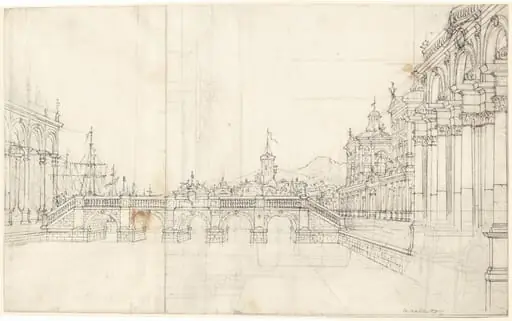 A Capriccio of Palaces and a Loggia Facing a Classical Bridge
 History of the Corcoran Gallery of Art
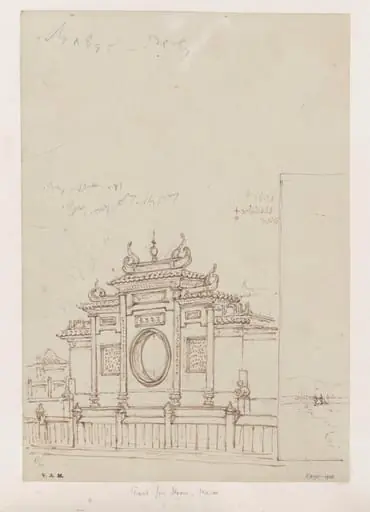 The main entrance to the A-Ma Temple, Macau
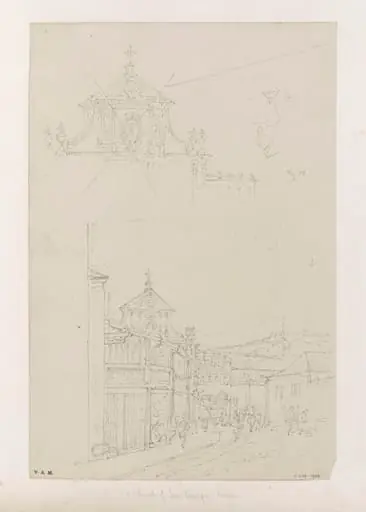 The church of San Domingos, Macau
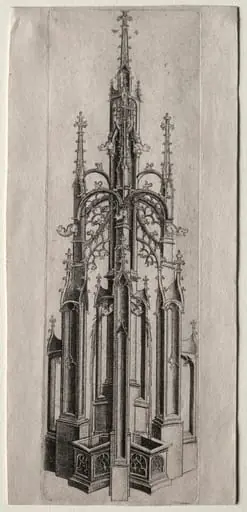 Design for a Gothic Fountain
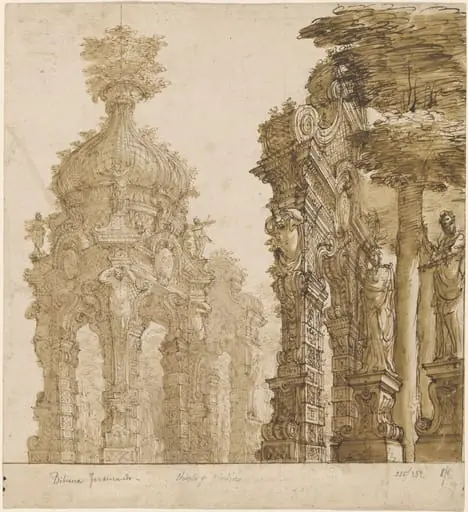 Stage Design of Garden Pavilions
 Sundareshvara teaching a bird a mantra
 Shiva Ravananugrahamurti; woman holding a flywhisk; rearing yali
 Catafalque for the Funeral of Giulio Thieni, Marquis of Scandiano