Artwork
The main entrance to the A-Ma Temple, Macau
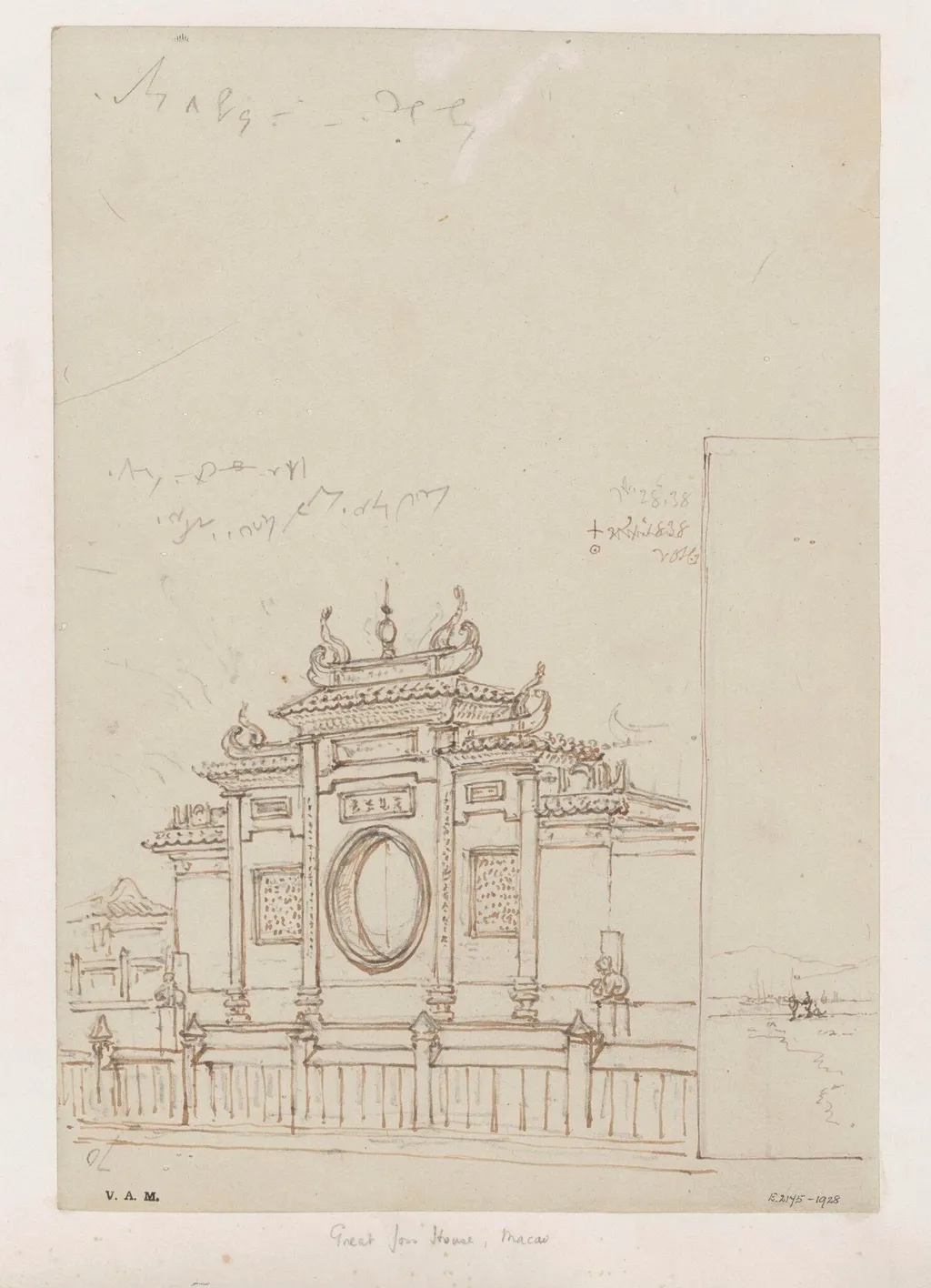
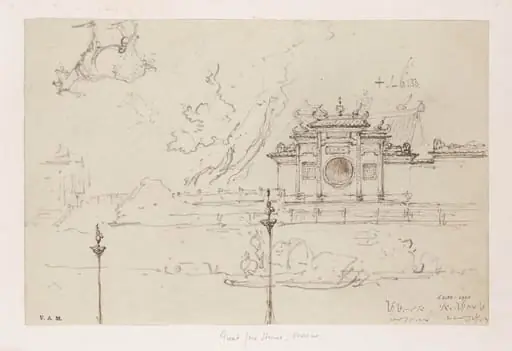
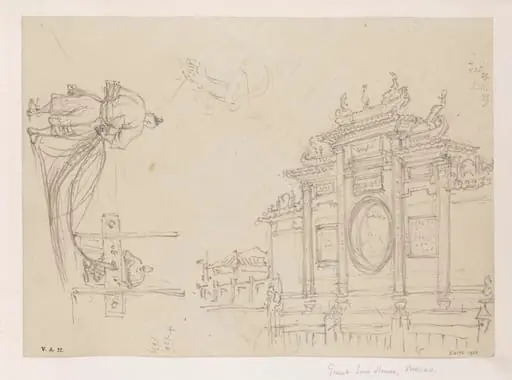
The main entrance to the A-Ma Temple, Macau is a drawing by the Romanticist artist George Chinnery. It dates from 1838 and is held in the collection of the Victoria and Albert Museum. This drawing captures the main entrance of the A-Ma Temple in Macau, known as the 'moon gateway.
About this work
Overview
' Rendered in fine detail, it focuses on the architectural form of the gateway and includes a smaller, detached view of the Praya Grande waterfront.
This drawing captures the main entrance of the A-Ma Temple in Macau, known as the 'moon gateway.' Rendered in fine detail, it focuses on the architectural form of the gateway and includes a smaller, detached view of the Praya Grande waterfront. The composition suggests an intent to document both the sacred structure and its surrounding urban context, reflecting an observer’s attention to place and design.
Subject & Meaning
The moon gateway serves as a symbolic threshold between the secular and the sacred in traditional Chinese temple architecture. Its inclusion as the central subject underscores its ritual significance as a passage into the temple complex. The accompanying view of the Praya Grande situates the temple within Macau’s maritime landscape, hinting at its historical role as a spiritual anchor for seafarers and traders.
Technique & Style
The artist employed precise line work and cross-hatching to render the gateway’s ornate carvings and textured surfaces. The method emphasizes depth and materiality, particularly in the stone reliefs and tiled eaves. The smaller coastal view is rendered with looser strokes, creating a visual contrast that directs focus to the gateway while still acknowledging its environmental setting.
History & Provenance
The drawing likely dates to the 18th or early 19th century, a period when foreign travelers and artists documented Macau’s unique blend of Chinese and Portuguese influences. Its detailed focus on temple architecture suggests it may have been made by a visitor or colonial official interested in local religious structures, though its exact origin remains undocumented.
Context
A-Ma Temple, one of Macau’s oldest religious sites, was a focal point for maritime communities who worshipped the goddess Mazu for protection at sea. The gateway’s prominence in the drawing reflects its cultural weight as both a physical and spiritual entryway. The inclusion of the Praya Grande, a bustling harbor, reinforces the temple’s connection to the city’s maritime identity.
Legacy
As a record of a specific architectural feature at a time of cultural transition, the drawing contributes to the visual archive of Macau’s heritage. It preserves details of craftsmanship and spatial arrangement that may no longer be visible today, offering insight into how early observers interpreted and valued local religious structures through the medium of drawing.
Artist & collection
Artist
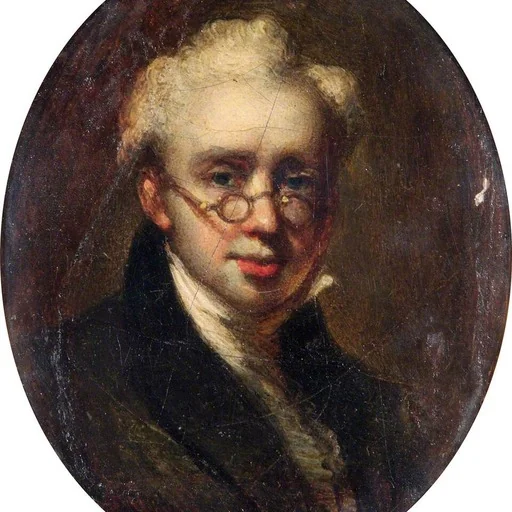
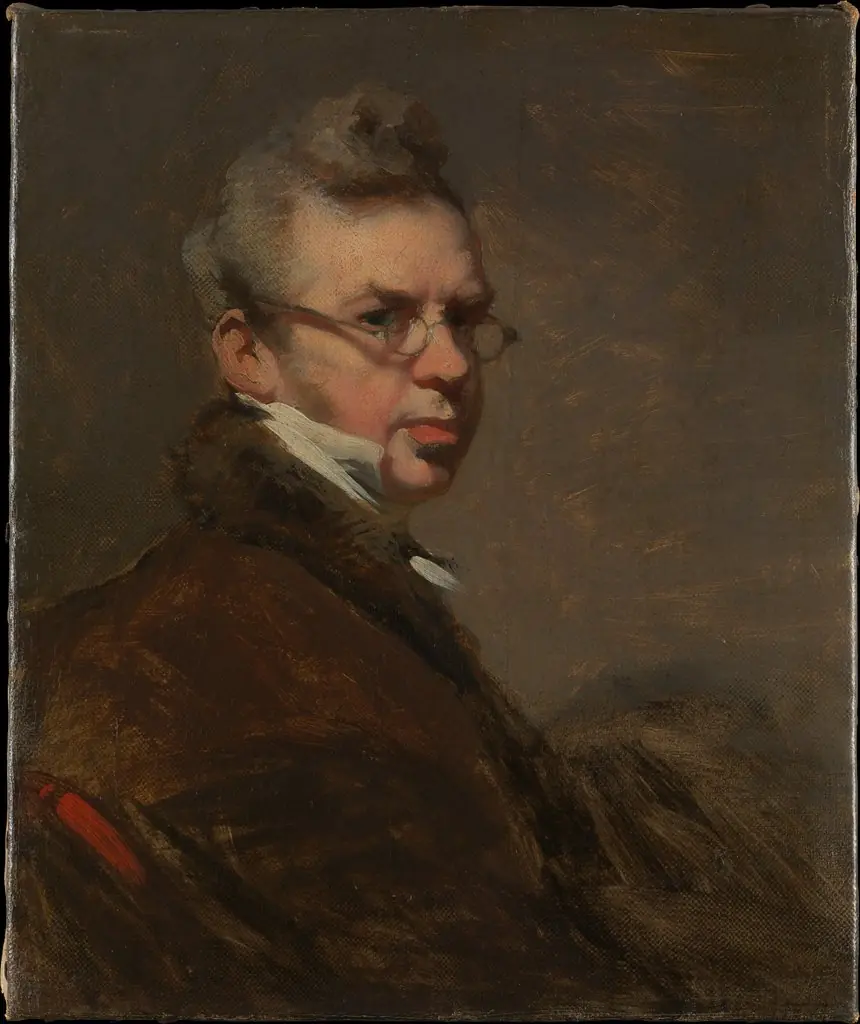
George Chinnery (Chinese: 錢納利; 5 January 1774 – 30 May 1852) was an English painter who spent most of his life in Asia, especially India and southern China.

 The Zhengjiao Chanlin Buddhist Temple, a part of the A-Ma Temple in Macau
 The main entrance to the A-Ma Temple, Macau
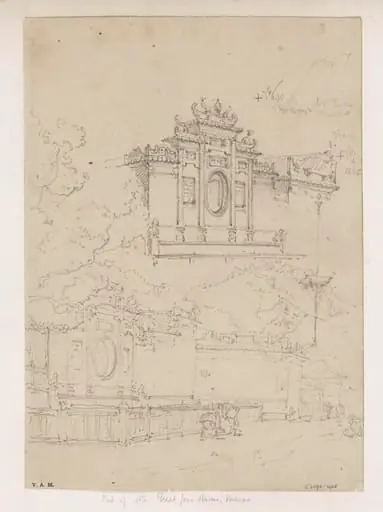 Drawings of the A-Ma temple, Macau
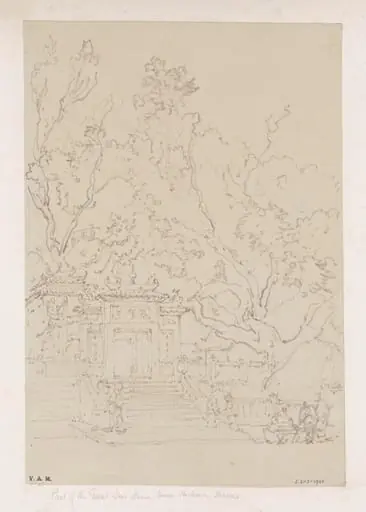 The A-Ma temple, Macau
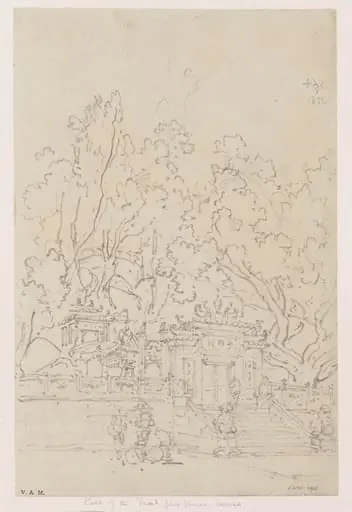 Part of the A-Ma Temple, Macau
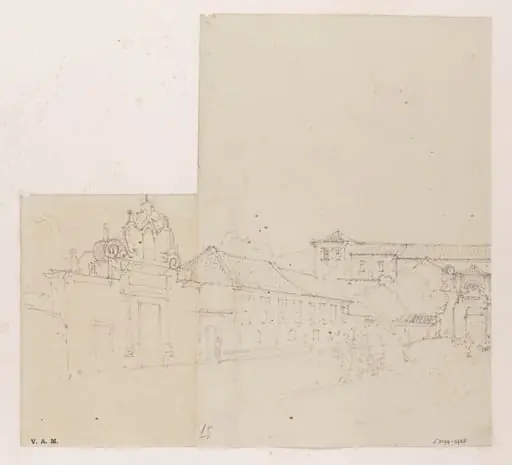 The gateway to the convent of Santa Clara, Macau
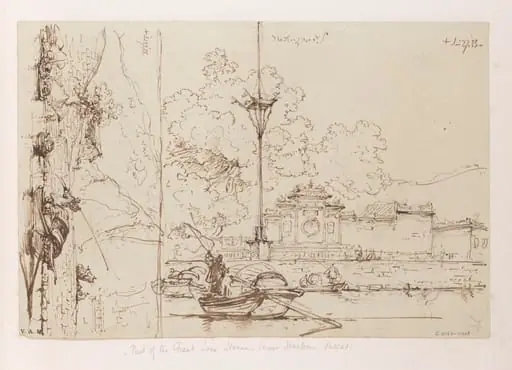 The A-Ma temple, Macau, and the nearby rocks, both seen from the bay
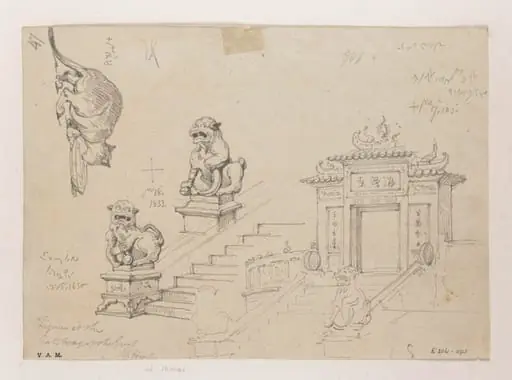 The gateway pavilion at the A-Ma temple, Macau, its guardian lions, and a cat
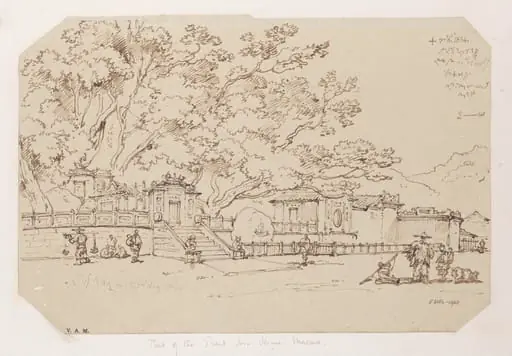 The A-Ma Temple, Macau
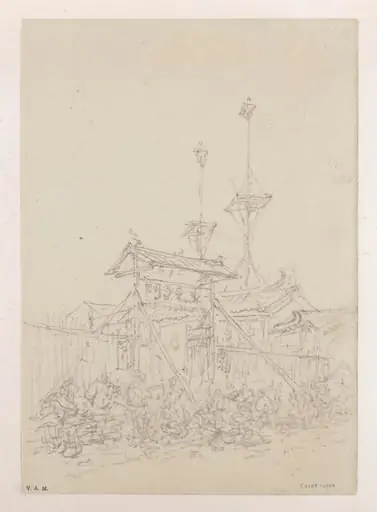 Market stalls by an entrance to a Chinese temple, Macau
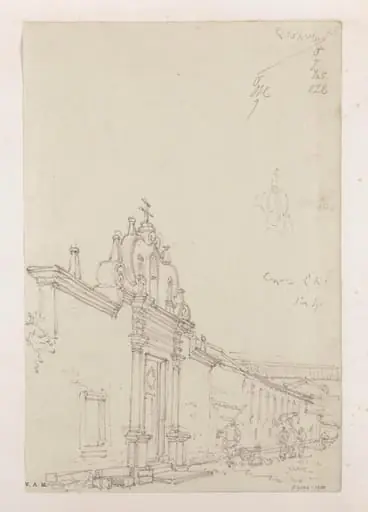 The gateway to the convent of Santa Clara, Macau
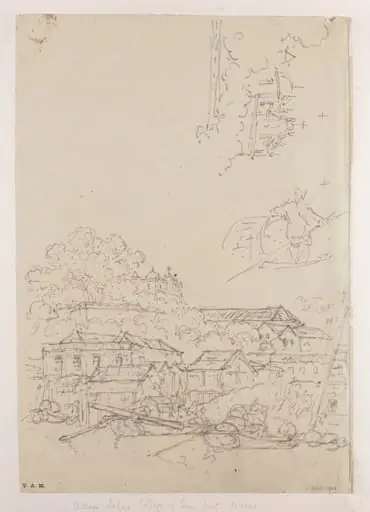 Buildings below the College of S. José, Macau