Artwork
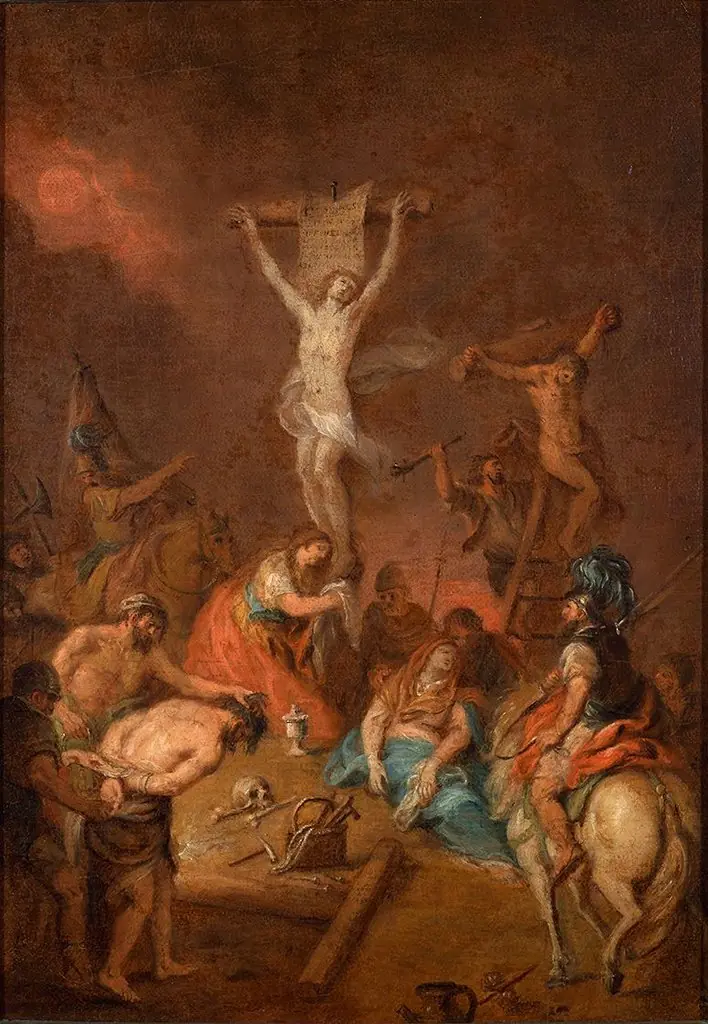
The Crucifixion
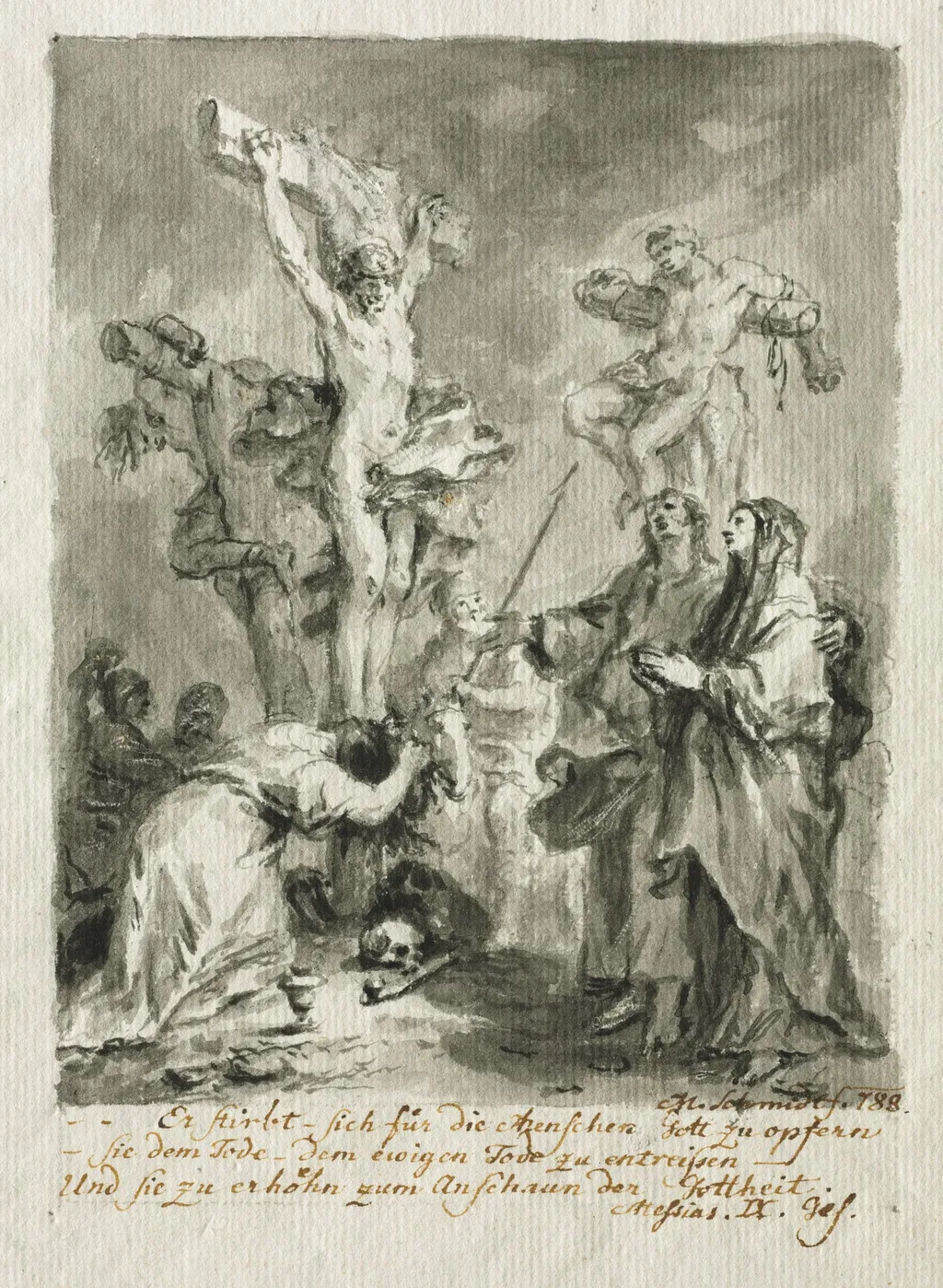
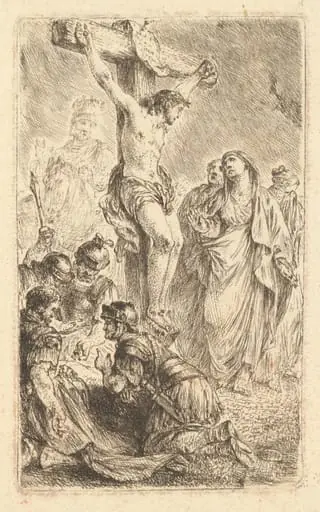
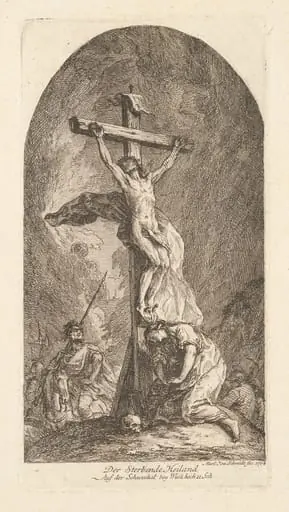
The Crucifixion is a drawing by the Romanticist artist Martin Johann Schmidt. It dates from 1788 and is held in the collection of the Cleveland Museum of Art.
About this work
Overview
Created in 1788, *The Crucifixion* is a drawing by Austrian artist Martin Johann Schmidt, often referred to as Kremser Schmidt. Executed during the late Baroque/Rococo era, the work portrays the biblical moment of Jesus on the cross, surrounded by a gathering of mournful figures, set against a dark, atmospheric background.
Subject & Meaning
The composition centers on the crucified Christ, his body affixed to the cross, while a kneeling woman and a standing figure behind her gaze upward in palpable grief. Their anguished expressions convey the profound sorrow associated with the Passion, emphasizing the emotional intensity of the scene.
Technique & Style
Schmidt employs dramatic chiaroscuro, contrasting deep shadows with illuminated forms to heighten the sense of drama. The drawing reflects the influence of northern Italian art, evident in its dynamic arrangement of figures and the expressive handling of line and shading characteristic of late Baroque sensibilities.
History & Provenance
Born in Grafenwörth in 1718 to sculptor Johannes Schmidt, Martin Johann Schmidt trained with Gottlieb Starmayr before establishing a prolific career in Stein, Lower Austria. There he fulfilled numerous ecclesiastical commissions for churches and monasteries, of which *The Crucifixion* is a representative example of his religious output.
Context
The work belongs to a period when Austrian artists were integrating Baroque grandeur with Rococo elegance, often producing devotional images for liturgical settings. Schmidt’s drawing aligns with this trend, serving both as a visual meditation on Christ’s sacrifice and as a didactic tool for the faithful.
Artist & collection
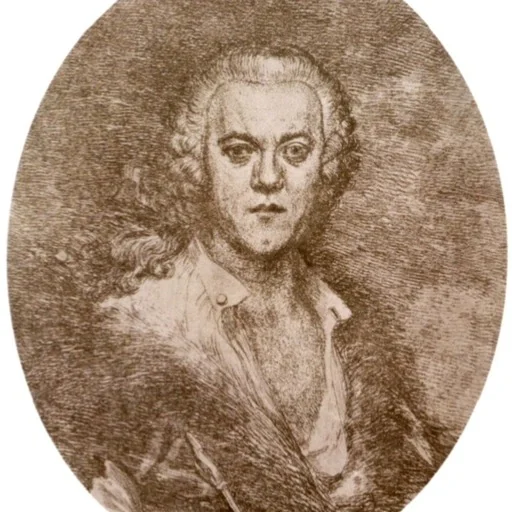
Artist
Martin Johann Schmidt, called Kremser Schmidt or Kremserschmidt, (25 September 1718 – 28 June 1801), was one of the outstanding Austrian painters of the late Baroque/Rococo along with Franz Anton Maulbertsch.