Artwork
St. Antonis Gate (St. Antonis Poort)
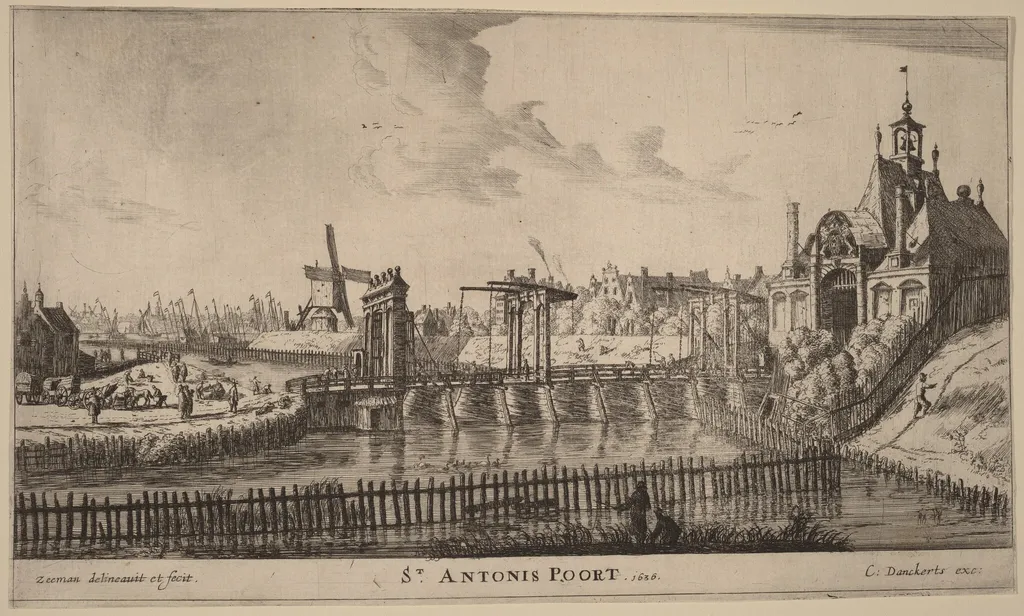
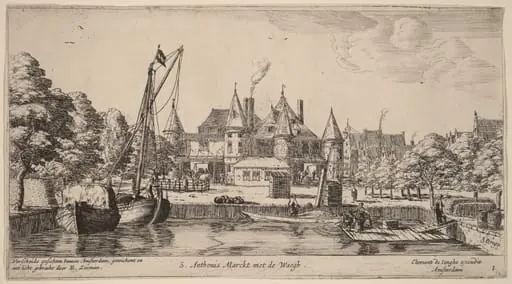
St. Antonis Gate (St. Antonis Poort) is an ink print by the Baroque artist Nooms, called Zeeman, Reinier. It dates from 1636 and is held in the collection of the National Gallery of Art. Created in 1636, the etching titled *St.
About this work
Overview
Created in 1636, the etching titled *St. Antonis Gate* presents a quiet canal scene centered on a substantial gatehouse. The structure, topped with a clock tower and a flag, anchors the composition on the right, while figures attend to work in the water and along the banks. Distant buildings, windmills and a few vessels complete the urban landscape, conveying a calm, everyday atmosphere.
Subject & Meaning
The print captures a moment of ordinary city life, emphasizing the interaction between architecture and daily labor. The gatehouse serves as a focal point, symbolizing civic order, while the workers and passers‑by illustrate the bustling yet tranquil rhythm of a 17th‑century Dutch port town.
Technique & Style
Executed in fine etching, the work displays Nooms’s characteristic precision and graphic clarity. Delicate line work renders architectural details and the play of light and shadow, creating depth across the water’s surface and the surrounding structures. The controlled hatching conveys texture, from the rippling canal to the stone of the gate.
History & Provenance
Reinier Nooms, known as Zeeman for his maritime subjects, produced this early topographical piece before his more extensive series of city views in the 1650s. The etching circulated among collectors and served as a reference for later artists who replicated its compositional accuracy.
Artist & collection

Artist
Reinier Nooms (c. 1623 – 1664), also known as Zeeman or Seeman (Dutch for "sailor"), was a Dutch maritime painter known for his highly detailed paintings and etchings of ships. From the 1650s, Nooms started producing…