Artwork
Two Merchant-Men: the "Geele Fortuÿn," Trading in the Baltic, and the "Liefde," Trading in Norway
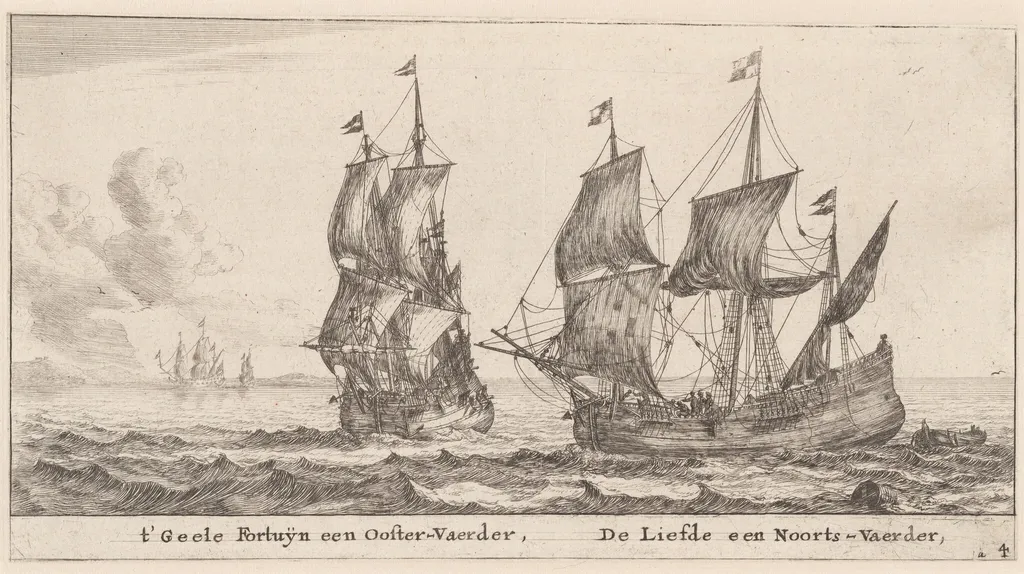
Two Merchant-Men: the "Geele Fortuÿn," Trading in the Baltic, and the "Liefde," Trading in Norway is an ink print by the Baroque artist Nooms, called Zeeman, Reinier. It dates from 1653 and is held in the collection of the National Gallery of Art. This etching by Reinier Nooms, also known as Zeeman, is a detailed representation of two merchant vessels, created around 1653.
About this work
This etching depicts two merchant ships, the "Geele Fortuÿn" and the "Liefde", sailing in the Baltic Sea and Norway, respectively.
This etching depicts two merchant ships, the "Geele Fortuÿn" and the "Liefde", sailing in the Baltic Sea and Norway, respectively. The ships are shown in detail, with their sails and rigging visible. The background is a calm sea with a few other ships in the distance.
The etching is done in a realistic style, with attention to detail in the depiction of the ships and the sea. The use of drypoint adds texture to the image, giving it a sense of depth and dimensionality.
This etching is an example of the Baroque style, which was popular in the 17th century. To learn more about this style, you can explore the works of other Baroque artists, such as Rembrandt and Vermeer.
Overview
This etching by Reinier Nooms, also known as Zeeman, is a detailed representation of two merchant vessels, created around 1653. The work showcases Nooms' skill in capturing maritime scenes with precision.
Subject & Meaning
The etching depicts the 'Geele Fortuÿn' and 'Liefde', two Dutch merchant ships trading in the Baltic Sea and Norway, respectively. The scene reflects the commercial maritime activity of the 17th century, highlighting the importance of trade in the region.
Technique & Style
Executed in etching with drypoint on laid paper, the work demonstrates a realistic style with meticulous attention to detail. The use of drypoint adds texture, creating a sense of depth and dimensionality in the image.
History & Provenance
Created around 1653, this etching is part of Nooms' refined series from the 1650s. The work's detailed craftsmanship made it a reference for other artists, underscoring Nooms' influence on his contemporaries.
Artist & collection

Artist
Reinier Nooms (c. 1623 – 1664), also known as Zeeman or Seeman (Dutch for "sailor"), was a Dutch maritime painter known for his highly detailed paintings and etchings of ships. From the 1650s, Nooms started producing…

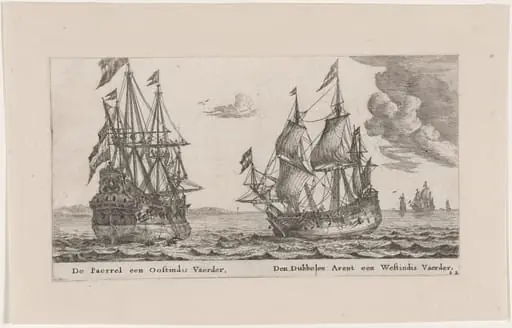 The "Parel" (Pearl), an East Indiaman and the "Dubbele Arent" (Spread Eagle), a West Indiaman
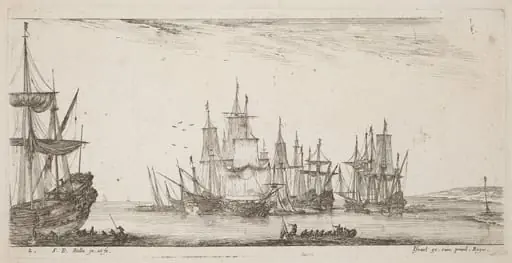 Group of Ships
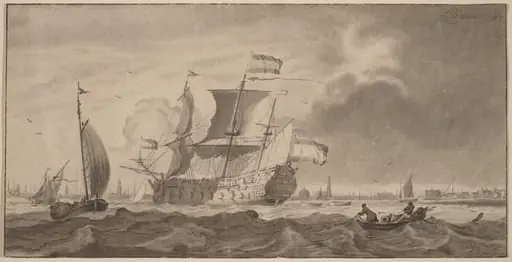 War Vessel in the Y
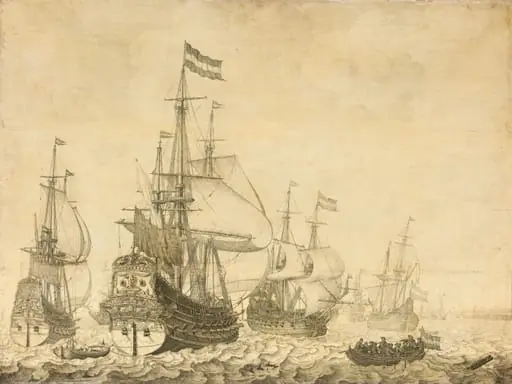 "Seascape with the Dutch Men-of-War including the "Drenthe" and the "Prince Frederick-Henry""
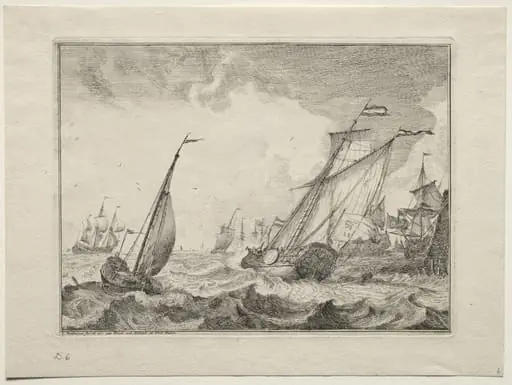 Ships in a Gale
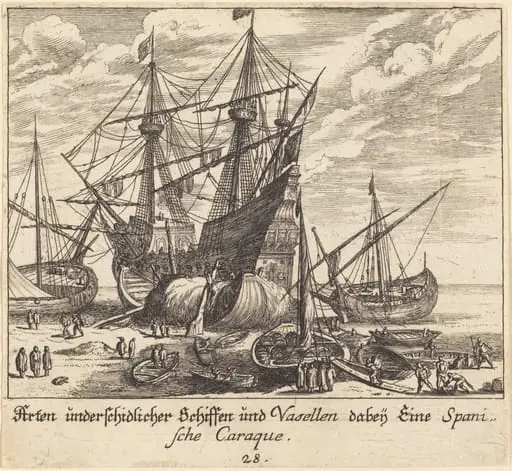 Ships
Ships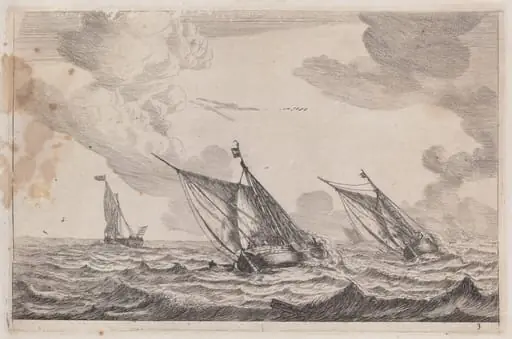 Three Sailing Vessels at Choppy Sea
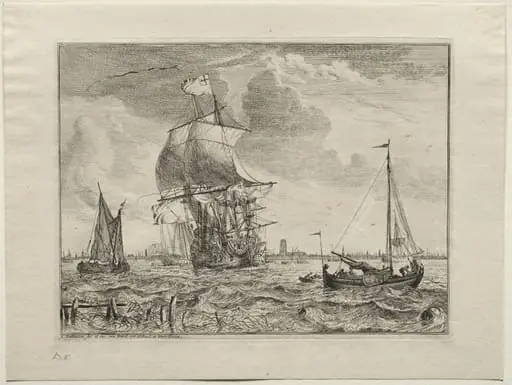 Marine Scene with Amsterdam in the Distance
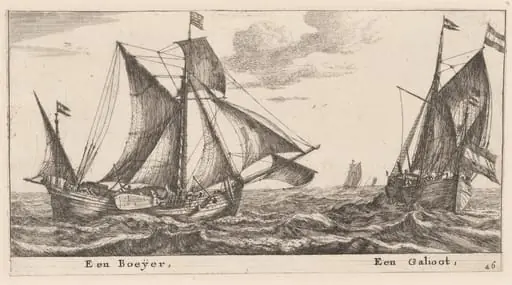 A Boeier and a Galliot