Artwork
The "Parel" (Pearl), an East Indiaman and the "Dubbele Arent" (Spread Eagle), a West Indiaman
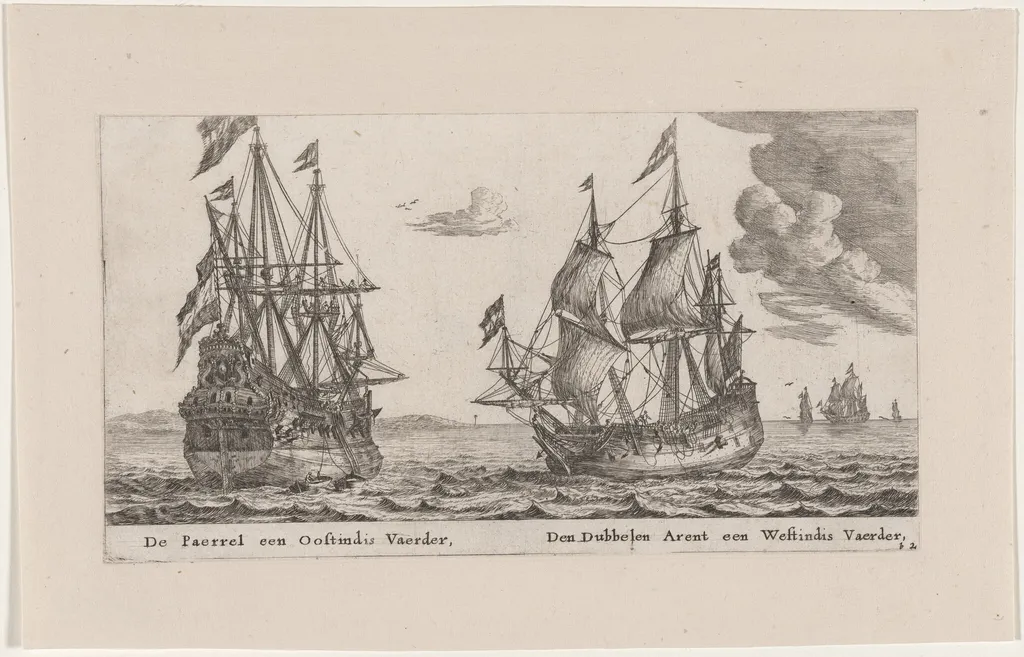
The "Parel" (Pearl), an East Indiaman and the "Dubbele Arent" (Spread Eagle), a West Indiaman is an ink print by the Baroque artist Nooms, called Zeeman, Reinier. It dates from 1653 and is held in the collection of the National Gallery of Art.
About this work
Overview
His focus on contemporary vessels underscores the Dutch Republic’s commercial dominance in global trade during the mid-seventeenth century.
Created around 1653 by Reinier Nooms, known as Zeeman, this print captures two Dutch merchant ships at sea: the East Indiaman Parel and the West Indiaman Dubbele Arent. Executed in etching and drypoint on laid paper, the work reflects Nooms’s dedication to precise maritime documentation. His focus on contemporary vessels underscores the Dutch Republic’s commercial dominance in global trade during the mid-seventeenth century.
Subject & Meaning
The two ships represent the twin pillars of Dutch overseas commerce: the Dutch East India Company, focused on Asia, and the Dutch West India Company, active in the Americas. Their side-by-side depiction signals the nation’s maritime reach and economic ambition. The inclusion of flags, hull details, and rigging emphasizes their functional roles rather than symbolic grandeur, grounding the image in the reality of merchant activity.
Technique & Style
Nooms employed etching for fine lines and drypoint for richer, textured strokes, enhancing the tactile quality of sails, ropes, and water. The choppy sea and wind-swept flags convey motion through deliberate ink density and line variation. His technique avoids romanticism, favoring observational accuracy—each spar, flag, and wave is rendered with the clarity of a surveyor’s sketch, reinforcing the print’s documentary purpose.
History & Provenance
Nooms, a native of Amsterdam, produced numerous maritime prints during the 1650s, often commissioned or circulated among merchants and naval officials. This print likely served both as a record of ship design and as a commercial product for collectors. Its survival in multiple institutional collections suggests early recognition of its value as a precise visual archive of Dutch shipping.
Context
In the 1650s, the Dutch Republic led global trade networks, with fleets like the Parel and Dubbele Arent transporting spices, silver, and textiles across continents. Naval power and merchant efficiency were intertwined, and detailed ship imagery became a form of civic pride. Nooms’s work emerged within this culture, offering visual testimony to the vessels that sustained the nation’s wealth and influence.
Legacy
Nooms’s prints set a standard for maritime documentation in the Netherlands, influencing later artists and cartographers. His attention to technical detail made his works useful references for shipbuilders and historians. Though not widely exhibited as art in his time, his prints endure as primary sources for understanding the design, operation, and visual culture of 17th-century merchant vessels.
Artist & collection

Artist
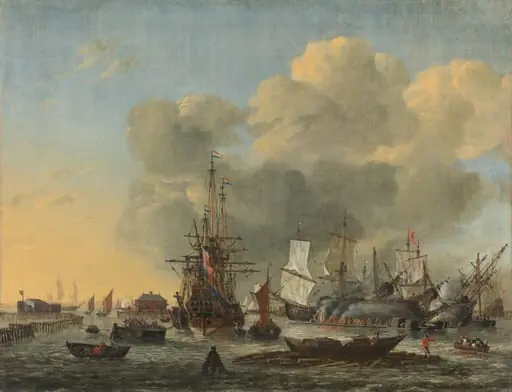
Reinier Nooms (c. 1623 – 1664), also known as Zeeman or Seeman (Dutch for "sailor"), was a Dutch maritime painter known for his highly detailed paintings and etchings of ships. From the 1650s, Nooms started producing…

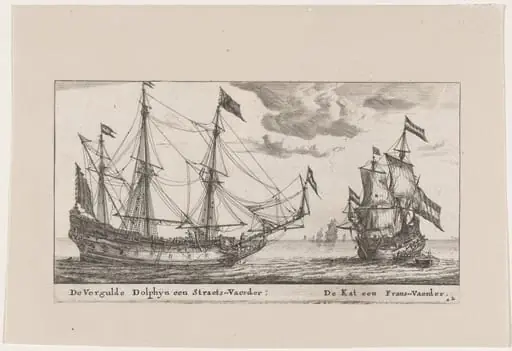 The "Vergulde Dolphyn," a Large Merchant Vessel, and the "Kat," a Flute
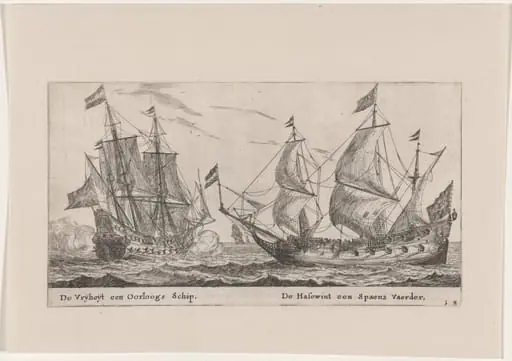 The "Vrijheijt," a Man-of-War and the "Hazewind," a Merchantman for Spain
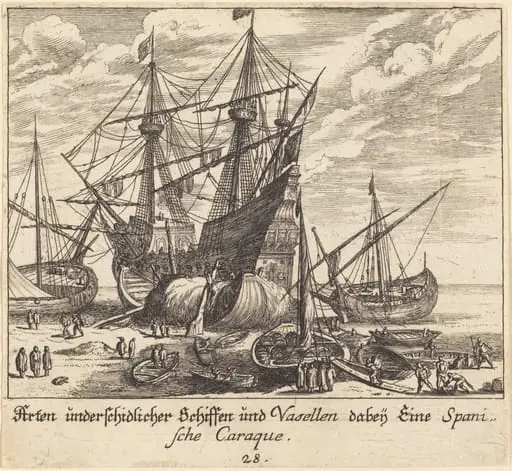 Ships
Ships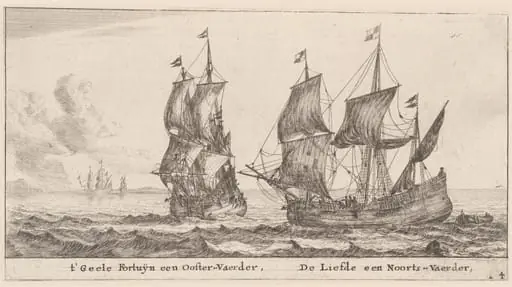 Two Merchant-Men: the "Geele Fortuÿn," Trading in the Baltic, and the "Liefde," Trading in Norway
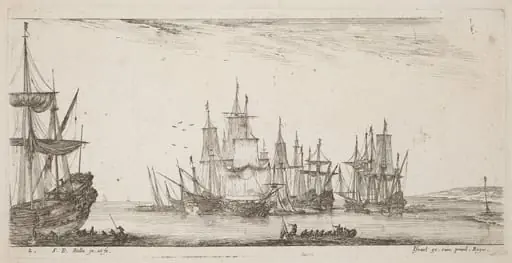 Group of Ships
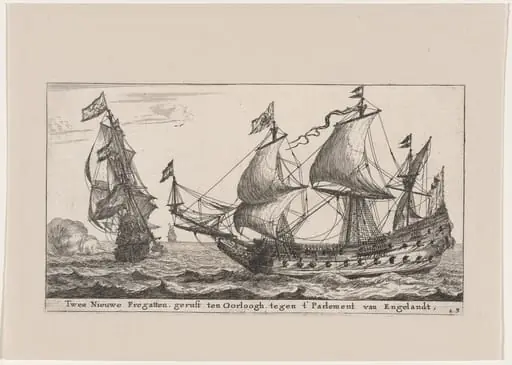 Two Dutch Frigates
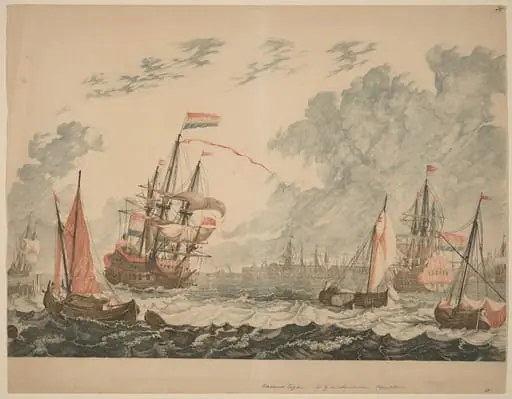 Amsterdam, Ships at the IJ on Choppy Water
 Dutch Ships near the Coast
 Marine Scene with Amsterdam in the Distance
 Sailing Vessels: Armed Four-Master Putting Out to Sea
 War Vessel in the Y
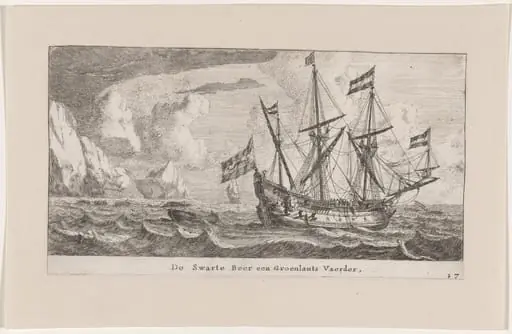 The "Zwarte Beer" (Black Bear), a Dutch Greenlander