Artwork
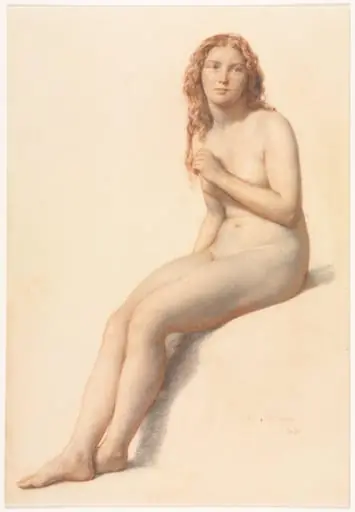
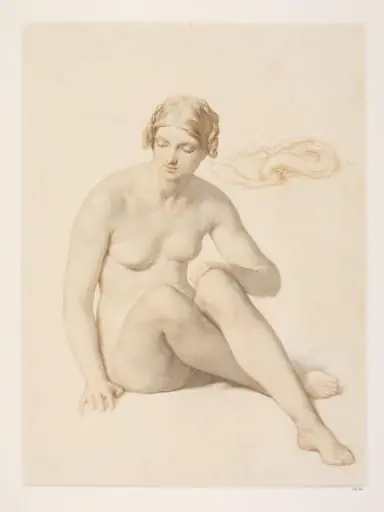
Seated female nude
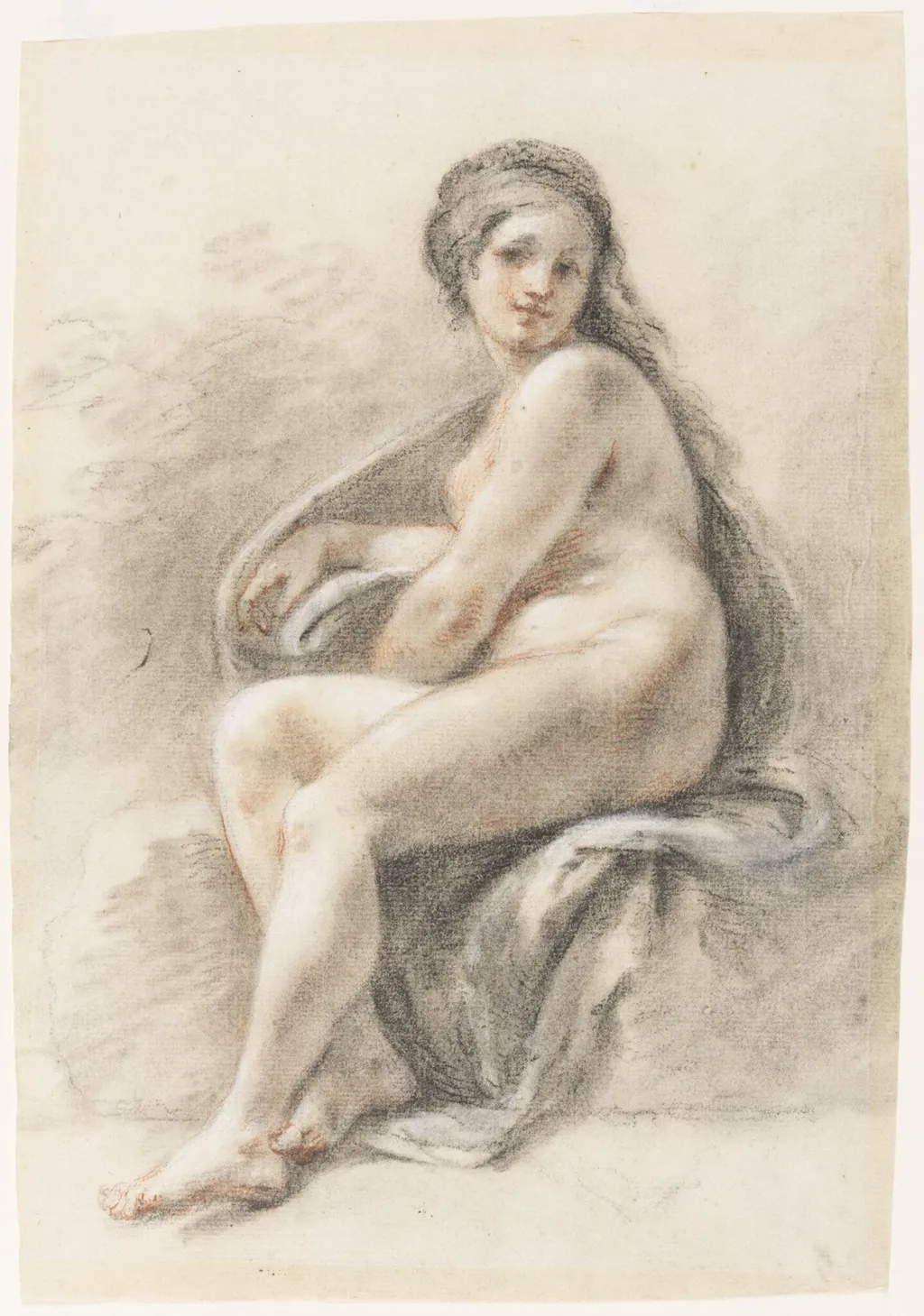
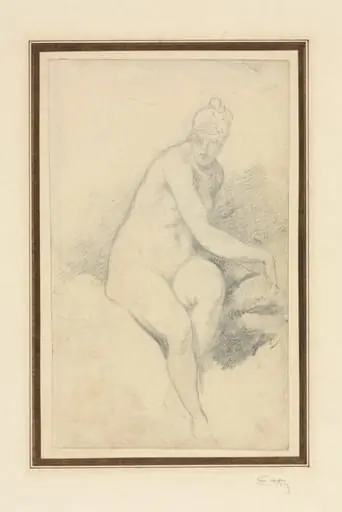
Seated female nude is a drawing by the Baroque artist Richard Norris. It dates from 1702 and is held in the collection of the Victoria and Albert Museum.
About this work
Overview
The paper shows signs of repeated handling, with smudged tones and layered lines that indicate prolonged engagement with the pose.
This 1702 drawing by Richard Norris presents a seated female nude in pencil or chalk, executed with a loose, observational hand. The figure is partially covered by a draped cloth, suggesting a study rather than a formal portrait. The paper shows signs of repeated handling, with smudged tones and layered lines that indicate prolonged engagement with the pose. Its unfinished quality points to its function as a working sketch within a studio practice.
Subject & Meaning
The figure, barefoot and seated with legs drawn close, adopts a private, introspective posture. The hand holding the drapery and the arm resting on the knee convey quiet stillness rather than idealized beauty. The modest covering and closed form suggest an emphasis on naturalism over mythological or allegorical symbolism. This may reflect a shift toward observing the human body in unadorned, everyday stillness, common in preparatory studies of the period.
Technique & Style
Norris employed light, fluid lines and soft tonal smudging to model form without hard contours. The shading is subtle, built up in layers to suggest volume and the fall of light on skin. The sketchy, repetitive strokes reveal an artist working directly from life, refining shape through repetition. The absence of fine detail and the worn surface of the paper underscore the drawing’s role as a study, prioritizing gesture and structure over polish.
History & Provenance
Created in 1702, the drawing originates from a British artistic context where life drawing was becoming central to training. Though Norris is not widely documented, such works were often kept in private collections or artist studios as reference material. Its survival suggests it was valued by contemporaries for its pedagogical use. The Victoria and Albert Museum holds comparable examples from this era, indicating shared practices among British draftsmen.
Context
In early 18th-century Britain, academic art was still developing, and life drawing served as foundational training. Artists like Norris engaged with classical ideals but often worked from live models in informal settings. This drawing reflects a transitional moment—between rigid formalism and emerging naturalism—where the focus shifted toward capturing the body’s weight, posture, and quiet presence without theatrical embellishment.
Legacy
Though not attributed to a major public figure, this drawing contributes to the broader understanding of British draughtsmanship before the rise of institutional academies. Its emphasis on observation over idealization anticipates later 18th-century trends in sketching from life. Surviving examples like this help trace the evolution of artistic pedagogy and the quiet, persistent practice of studying the human form in private.
Artist & collection
Artist
Richard Norris drew figure studies in the 1700s, leaving behind careful line-work like *Seated female nude* from 1702–88.

![Nude Female Figure [verso], by Italian 17th Century](https://artifactworldgallery.com/img/italian-17th-century--nude-female-figure-verso--6445c1e7fff03965-w320.webp)