Artwork
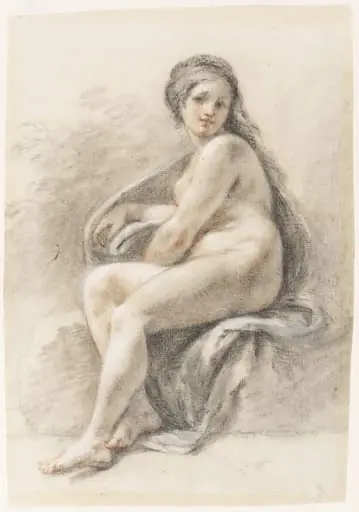
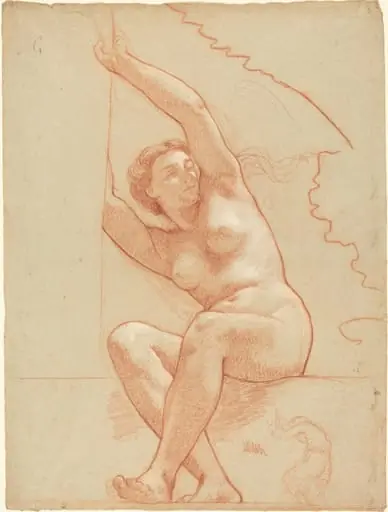
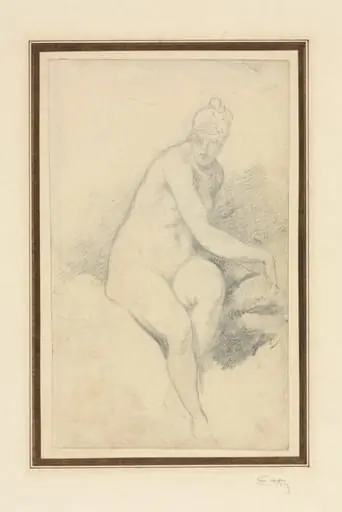
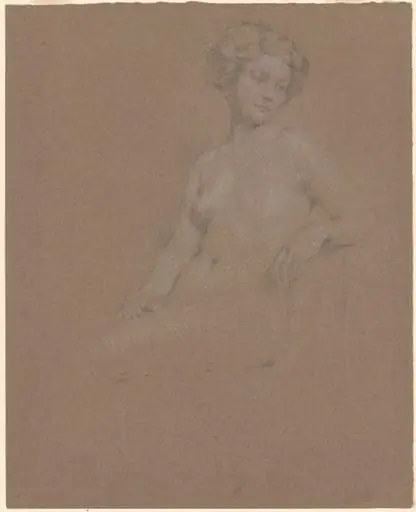
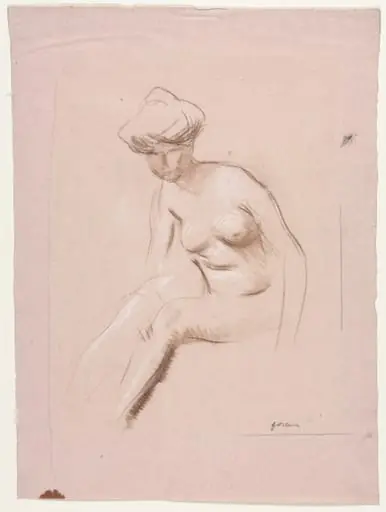
Female nude, seated, bending forward
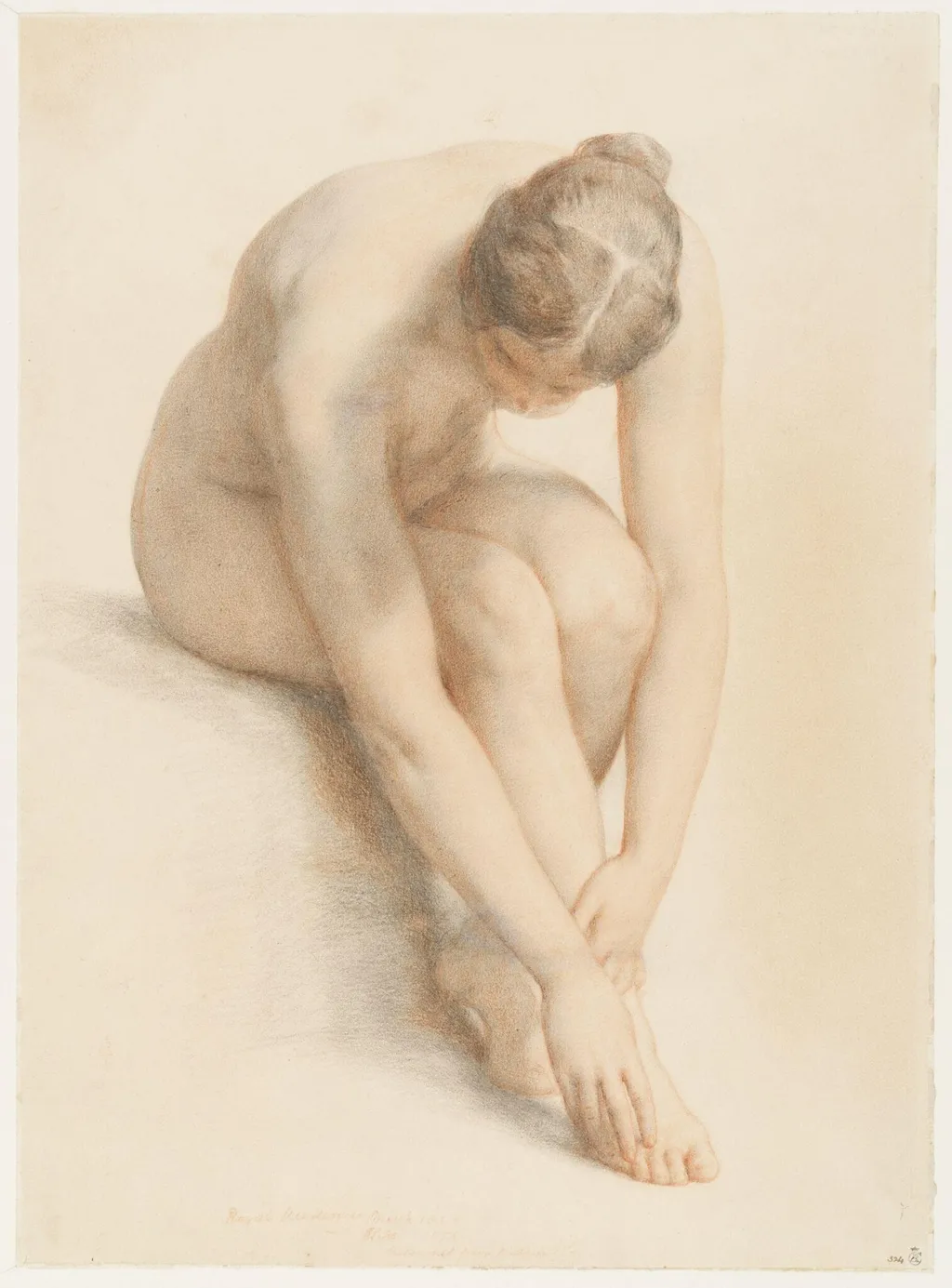
Female nude, seated, bending forward is a drawing by the Impressionist artist William Mulready. It dates from 1856 and is held in the collection of the Victoria and Albert Museum.
About this work
Overview
Created in 1856, this pencil and red chalk drawing by William Mulready presents a seated female nude in a forward-bending pose.
Created in 1856, this pencil and red chalk drawing by William Mulready presents a seated female nude in a forward-bending pose. The figure, rendered with restrained elegance, touches her ankles while her head is lowered. The composition is minimal, set against a neutral background, emphasizing the quiet stillness of the form. The artist’s initials and the date are inscribed, anchoring the work in its time and authorship.
Subject & Meaning
The figure’s posture—bent forward, hands clasped, face turned inward—suggests introspection rather than performance. There is no narrative context or symbolic attribute; the focus lies in the physicality of the body in repose. The lack of facial definition and the subdued expression invite interpretation as a study of vulnerability, solitude, or private contemplation, detached from idealized or eroticized conventions.
Technique & Style
Mulready employs soft pencil lines and delicate red chalk to model the body’s contours with subtle gradations of tone. The shading is gentle, avoiding harsh contrasts, which enhances the intimacy of the form. Hair is rendered in fine, controlled strokes, while the skin appears smooth and unadorned. The absence of background detail directs attention entirely to the figure’s quiet presence and the sensitivity of the draftsmanship.
History & Provenance
The drawing is dated and signed by the artist, indicating it was likely a personal study or preparatory work rather than a commissioned piece. Mulready, known primarily for genre scenes, produced numerous figure drawings during this period, often exploring the human form in private settings. Its survival suggests it was preserved within the artist’s circle or collected by a contemporary with interest in academic drawing practices.
Context
In mid-19th-century Britain, academic training required rigorous study of the nude, yet public display of such works was often restricted. Mulready’s drawing reflects the private, pedagogical use of the figure, aligned with Royal Academy practices. Its modest scale and intimate tone contrast with monumental nudes of the era, revealing a quieter, more personal engagement with the subject.
Legacy
This drawing remains a quiet example of 19th-century British figure study, valued for its restraint and technical sensitivity. It contributes to understanding how artists like Mulready navigated the boundaries between academic discipline and personal expression. Though not widely exhibited, it endures as a testament to the enduring practice of drawing the nude as an act of observation, not spectacle.
Own this work as a print
Artist & collection
Artist
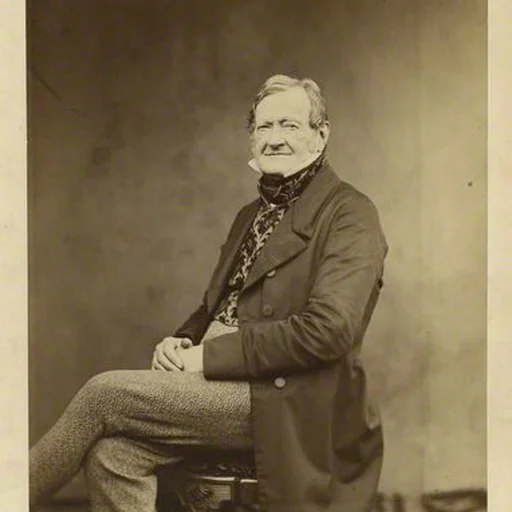
William Mulready was an Irish genre painter living in London. He is best known for his romanticising depictions of rural scenes, and for creating Mulready stationery letter sheets, issued at the same time as the Penny Black postage stamp.