Artwork
Church and houses at Conway
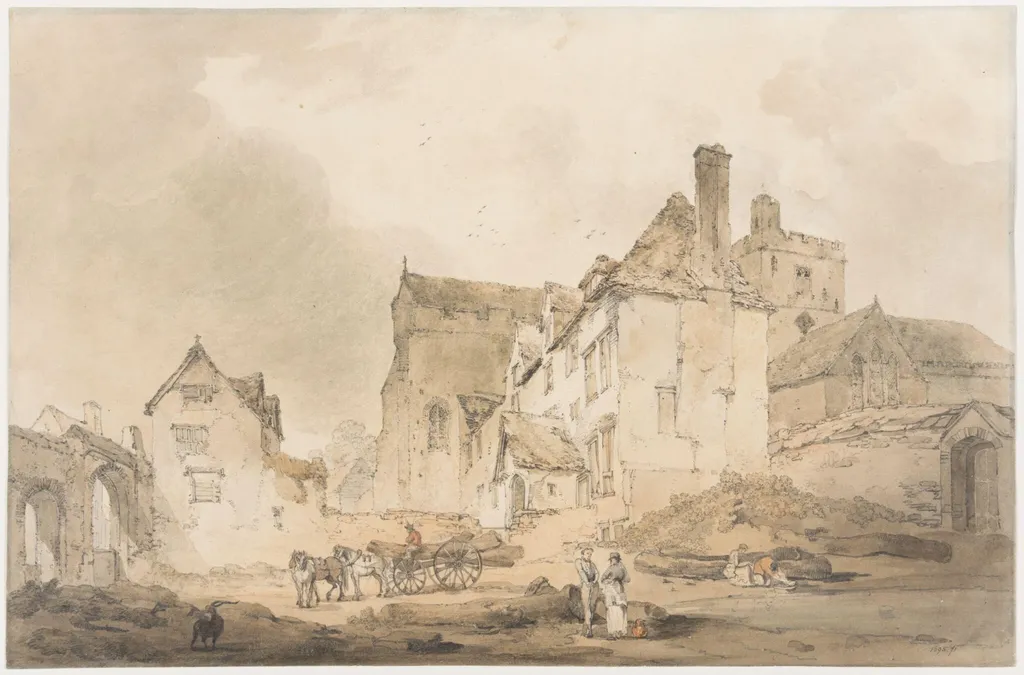
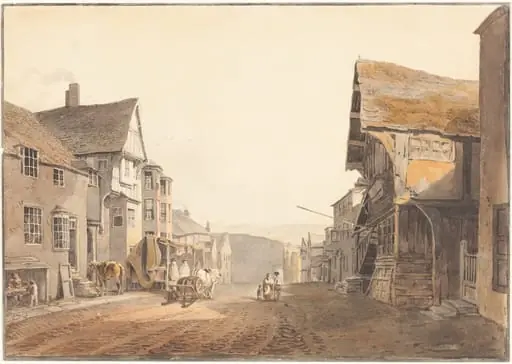
Church and houses at Conway is a watercolor work on paper by the British Romanticist artist Hugh O'Neill. It dates from 1817 and is held in the collection of the Victoria and Albert Museum.
About this work
Overview
Created around 1817, this watercolour by Hugh O'Neill depicts the town of Conway in Wales, focusing on its ecclesiastical ruins and surrounding dwellings.
Created around 1817, this watercolour by Hugh O'Neill depicts the town of Conway in Wales, focusing on its ecclesiastical ruins and surrounding dwellings. Executed in delicate washes, the work captures a quiet, atmospheric moment in a landscape marked by time and weather. The piece resides in the Victoria and Albert Museum’s collection, where it contributes to the broader documentation of British topographical watercolours from the early nineteenth century.
Subject & Meaning
The scene centers on the remnants of a medieval church, its tower still standing amid crumbling walls, surrounded by modest, partially collapsed homes. A lone cart drawn by a horse passes through the foreground, while figures rest on the ground, one holding a basket. Animals—a dog and a goat—move naturally through the space. The composition suggests a contemplative mood, reflecting the quiet persistence of life amid architectural decay.
Technique & Style
O'Neill employs transparent watercolour washes to suggest atmospheric depth and subtle shifts in light. The cloudy sky is rendered with soft, muted greys, enhancing the somber tone. Buildings are outlined with light pencil and lightly tinted, allowing the paper’s texture to contribute to the sense of weathering. The style aligns with Romantic-era topographical art, prioritizing mood and naturalism over precise architectural detail.
History & Provenance
The painting entered the Victoria and Albert Museum’s collection as part of its extensive holdings in British watercolours. While little is documented about its early ownership, its inclusion in the museum’s 19th-century British art section indicates it was valued for its representation of Welsh landscape and vernacular architecture during a period of growing antiquarian interest.
Context
In the early 1800s, artists and travelers increasingly turned to Wales’s medieval ruins as subjects, drawn by their evocative decay and association with national heritage. O'Neill’s work reflects this trend, aligning with the Romantic fascination with time, nature’s reclamation, and the quiet dignity of rural life. Such images were often produced for private collectors rather than public exhibition.
Legacy
Though not widely known today, O'Neill’s watercolour contributes to a significant body of work that documented Britain’s changing landscapes during industrialization. Its preservation in a major national collection underscores its role as a quiet record of place, offering insight into how ordinary scenes of ruin and daily life were perceived and valued in the early 19th century.
Artist & collection
Artist
Hugh O'Neill (1784–1824) was an English architectural and antiquarian draughtsman who contributed 441 drawings of scenes from Bristol, England to the topographical collection of George Weare Braikenridge.

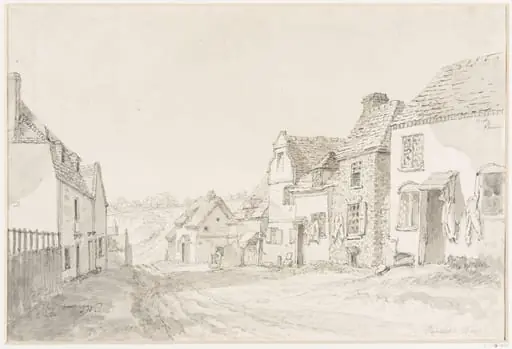 Pegwell Bay
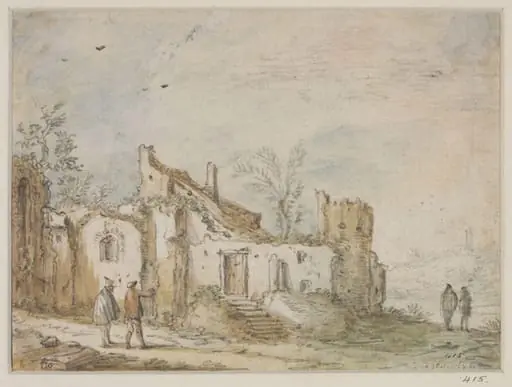 Untitled
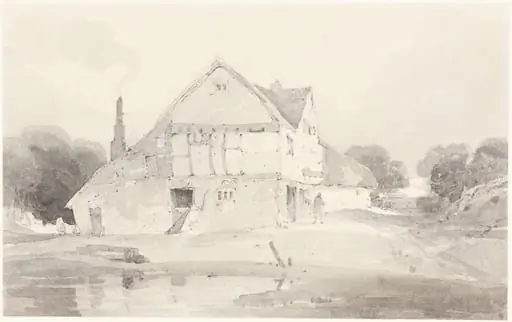 A Cottage at Dorking in Surrey
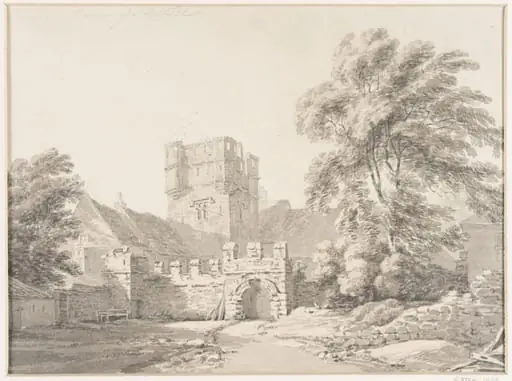 Mortham Tower, near Rokeby, Yorkshire.
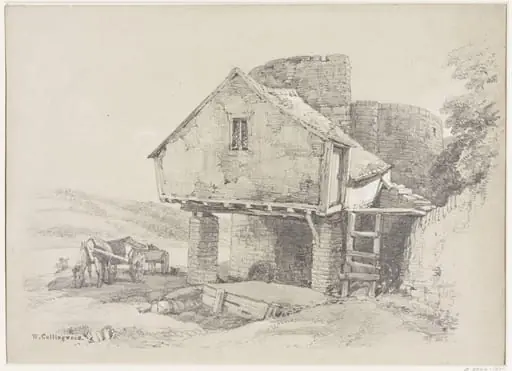 Bideford
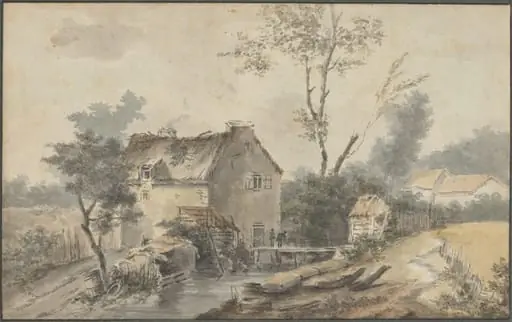 Mill with Bridge and Figures
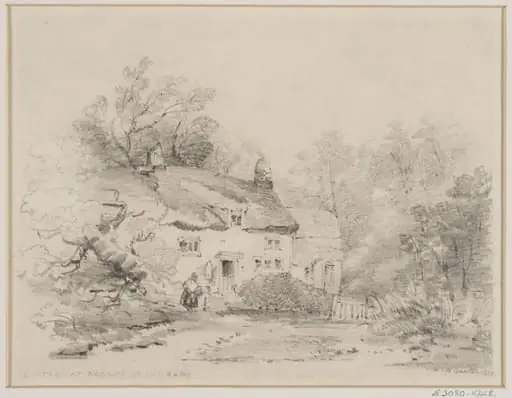 Cottage at Scalby, nr. Scarborough
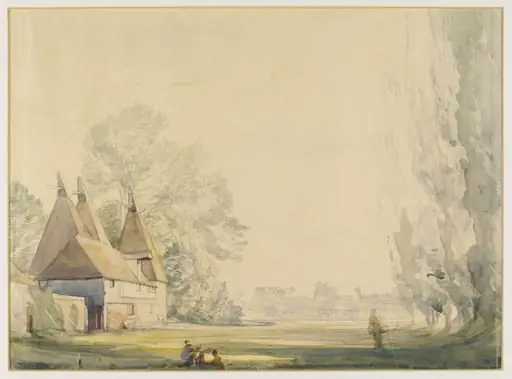 Oast House, Littlebourne
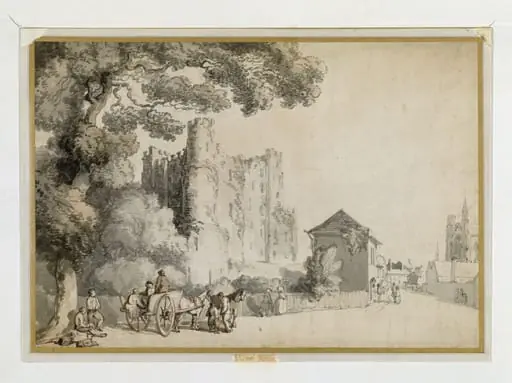 Boley Hill and Castle, Rochester, with the "Justice Tree"
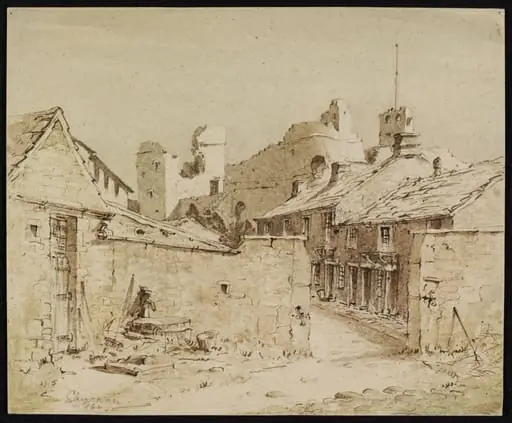 Middleham Street and Castle
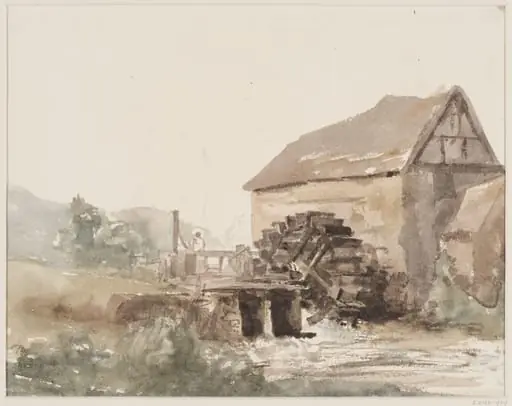 View of a water-mill near Ridware
 Conway in North Wales