Artwork
明呂紀杏花孔雀 軸
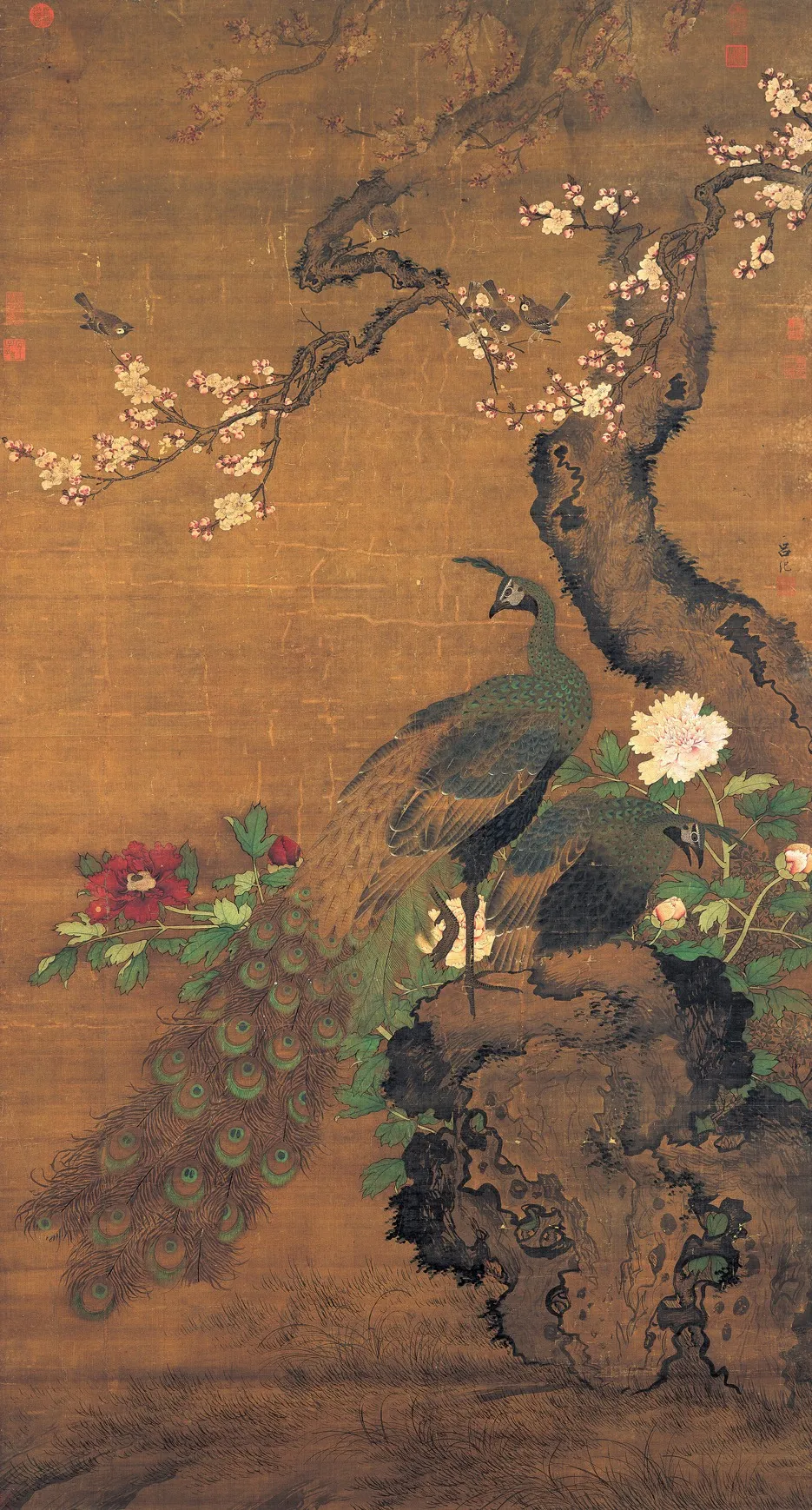
明呂紀杏花孔雀 軸 is an unspecified painting by Lü Ji. It is held in the collection of the National Palace Museum.
About this work
Overview
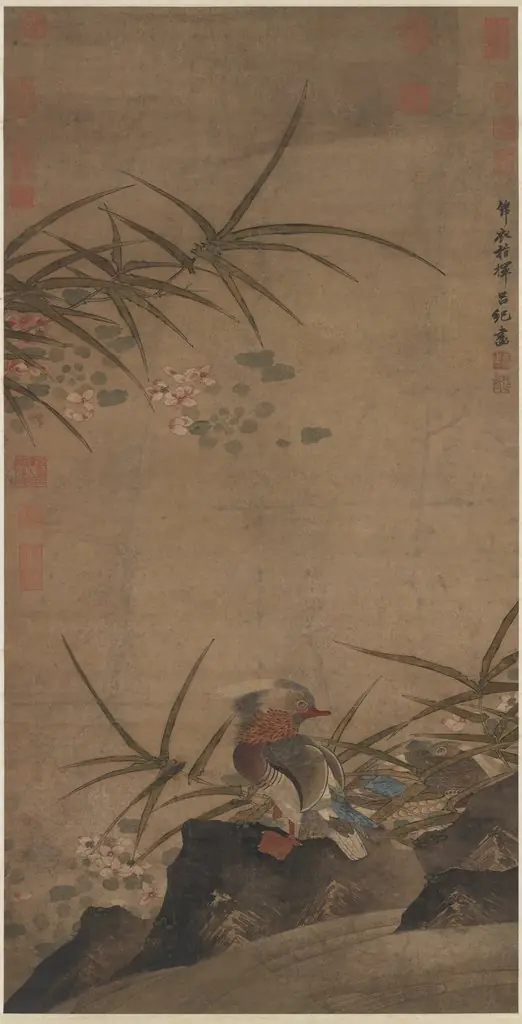
This hanging scroll, painted on silk, originates from the Ming dynasty and features a composition of apricot blossoms and a pair of peacocks. The work reflects the tradition of courtly bird-and-flower painting, where natural elements are rendered with precision and symbolic intent. Its vertical format suits display in imperial or scholarly settings, emphasizing harmony between flora and fauna.
Subject & Meaning
The apricot tree in bloom symbolizes spring and renewal, while the peacock, with its elaborate plumage, represents dignity and beauty. Together, they convey a quiet celebration of seasonal cycles and aristocratic refinement. The pairing suggests balance and order, values central to Ming aesthetic philosophy, without overt narrative or mythological reference.
Technique & Style
The artist employed fine brushwork and layered mineral pigments on silk to achieve delicate textures in petals and feathers. Contours are precise yet fluid, with subtle gradations of color suggesting volume and light. The background remains unadorned, focusing attention on the subjects and enhancing the sense of stillness and contemplation.
History & Provenance
Attributed to Lü Ji, a court painter active during the early Ming period, the work aligns with official artistic standards of the time. Though specific ownership records are sparse, its materials and style suggest it was created for imperial or high-ranking patronage, likely preserved within court collections or elite private holdings.
Context
Produced during a period when the Ming court revived classical Chinese painting traditions, this piece reflects the revival of Song dynasty naturalism adapted to Ming tastes. Bird-and-flower subjects were favored in imperial ateliers as expressions of cultivated taste, distinct from the more expressive styles emerging among literati painters.
Legacy
Works like this contributed to the codification of Ming court painting aesthetics, influencing later imperial commissions. While Lü Ji’s oeuvre is not widely documented, this painting remains a representative example of the technical discipline and symbolic restraint valued in official art of the era.
Artist & collection


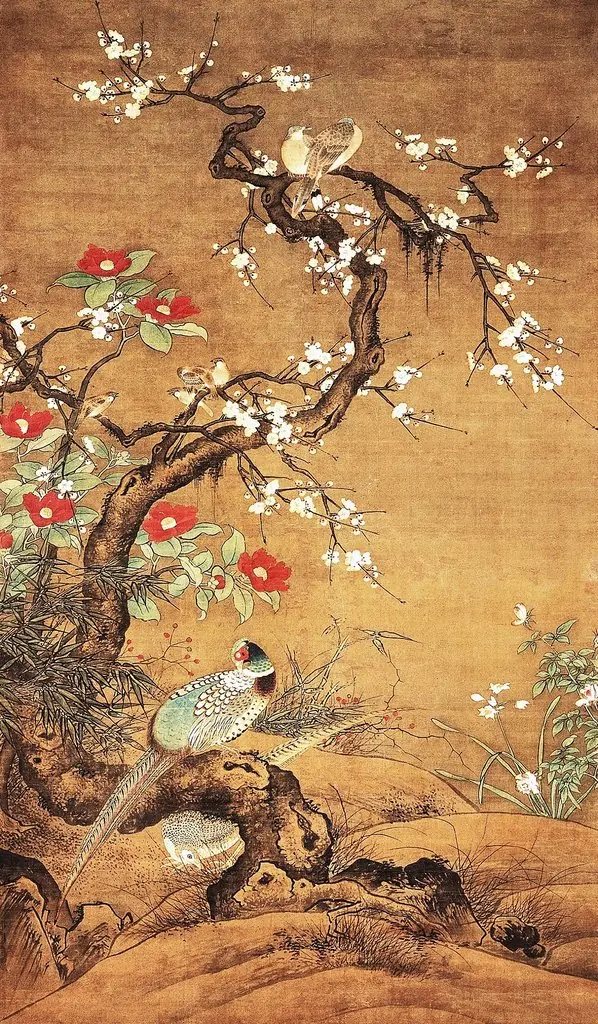 Pheasant and camellia shrub
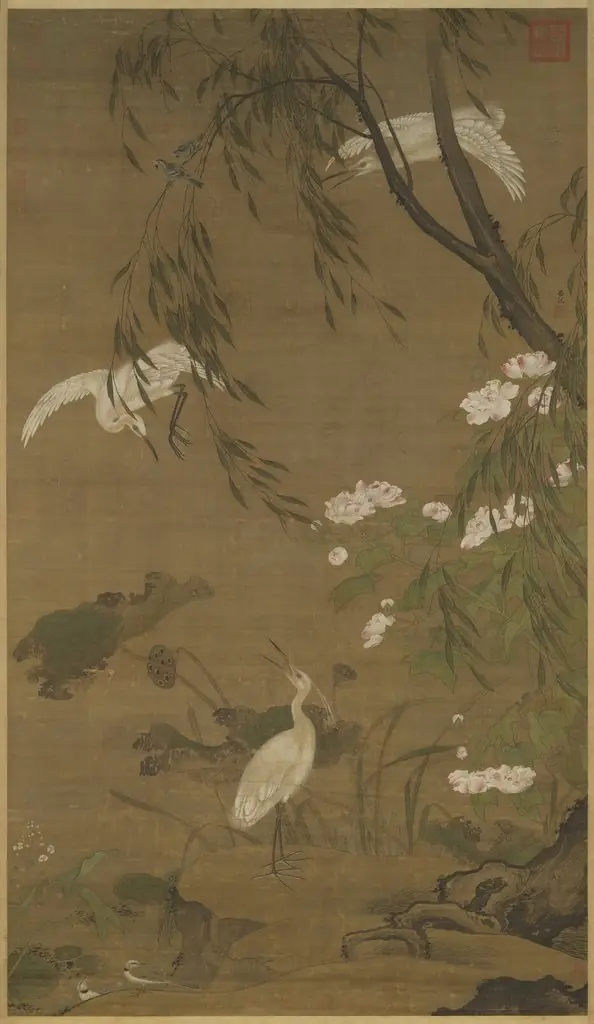
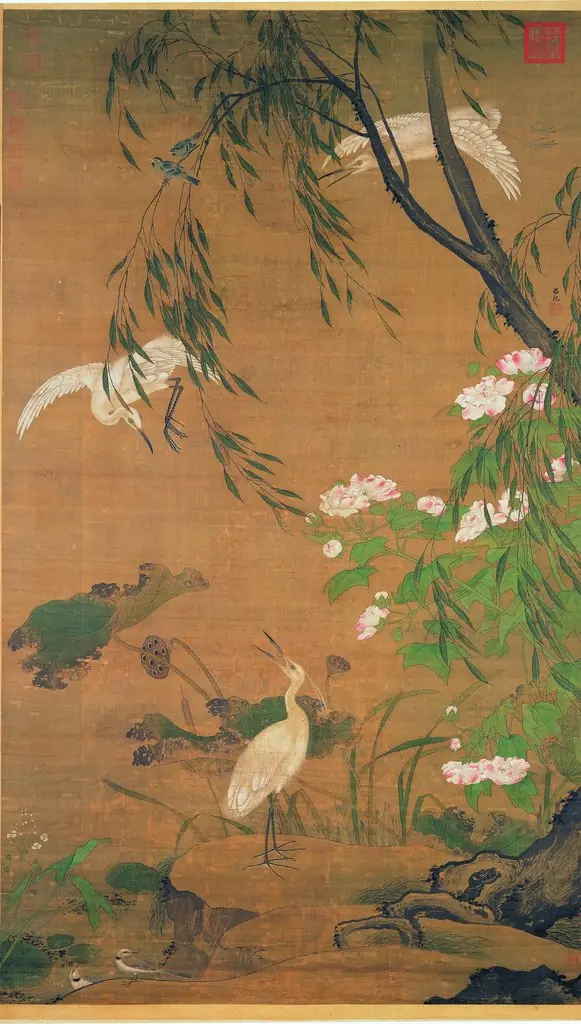 Egrets and Hibiscus in Autumn
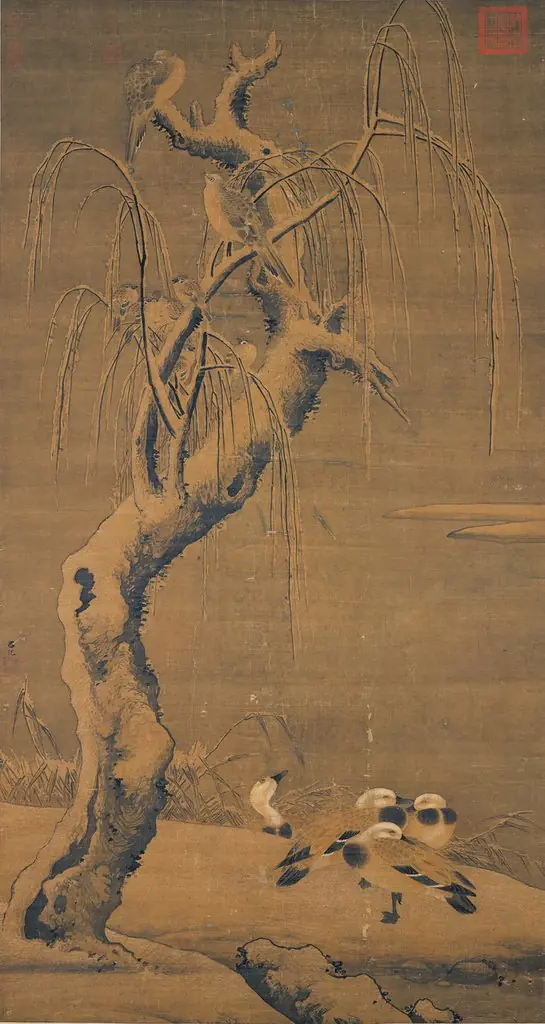
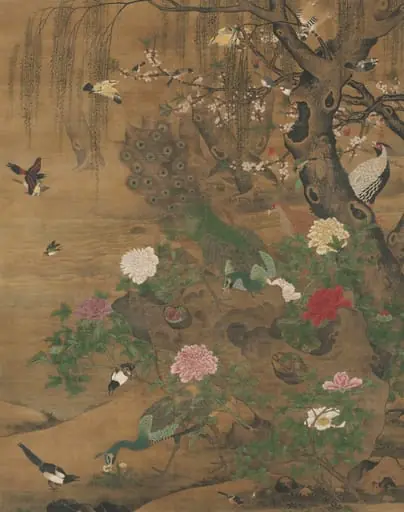 Birds Gather under the Spring Willow
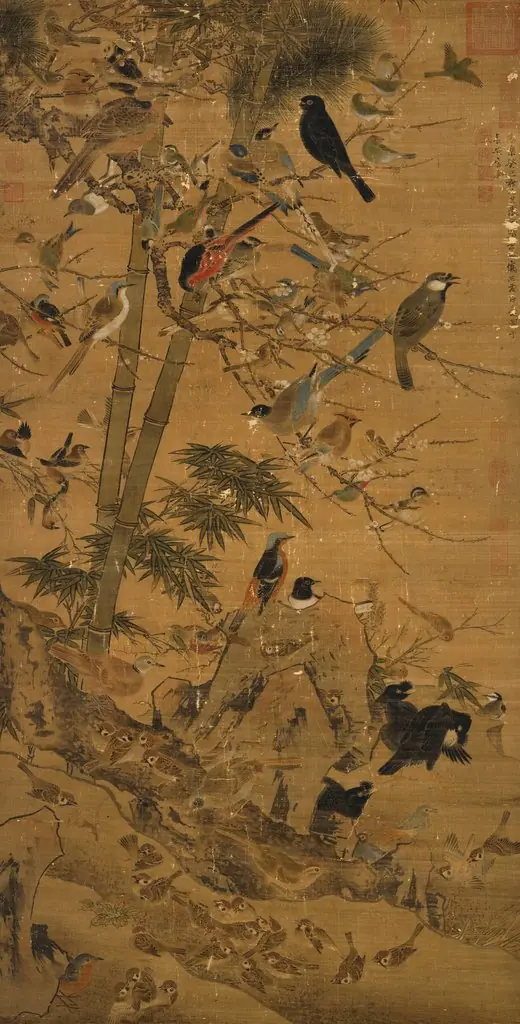 The "Three Friends" and a Hundred Birds
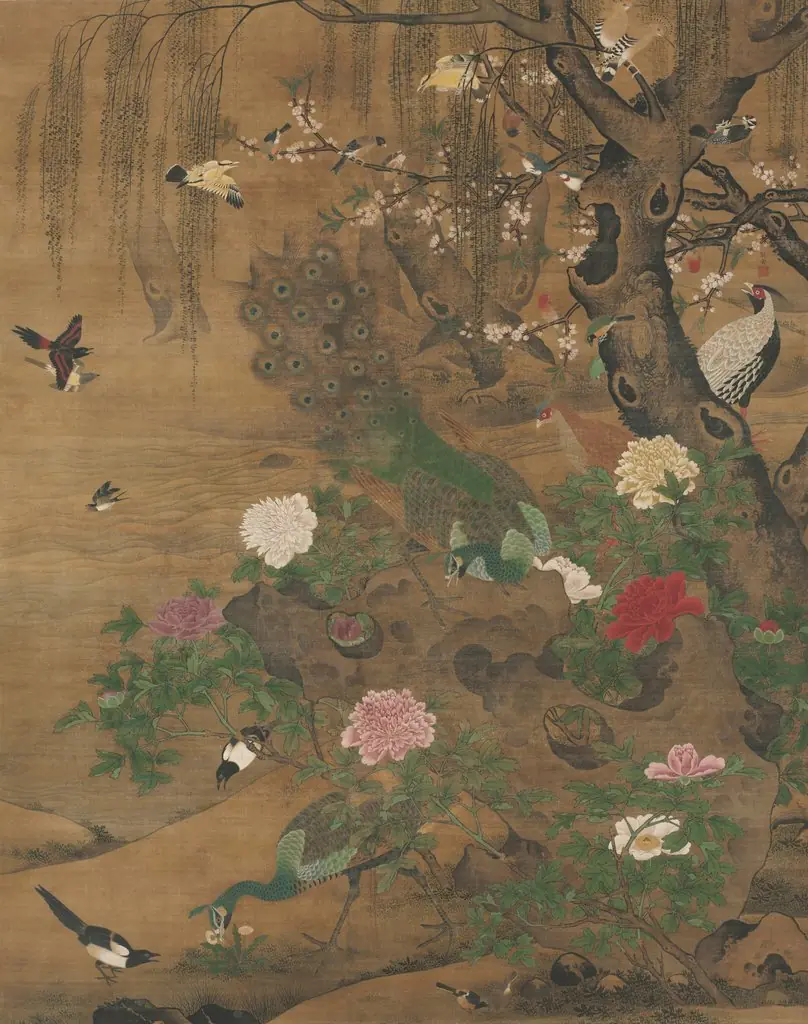 Birds Gather under the Spring Willow
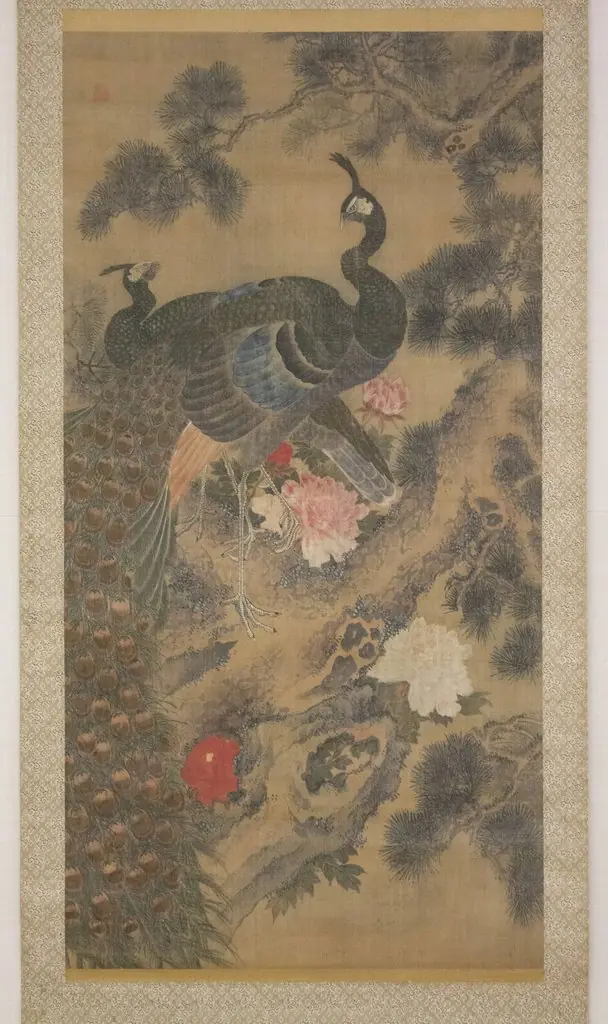
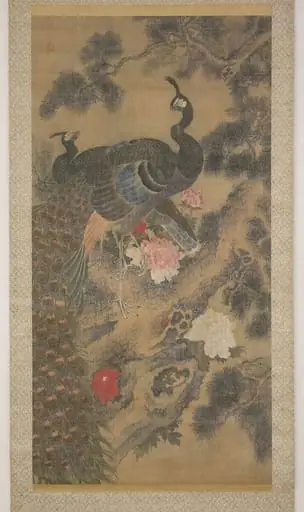 松牡丹孔雀図|Peacocks, Pine Tree, and Peonies
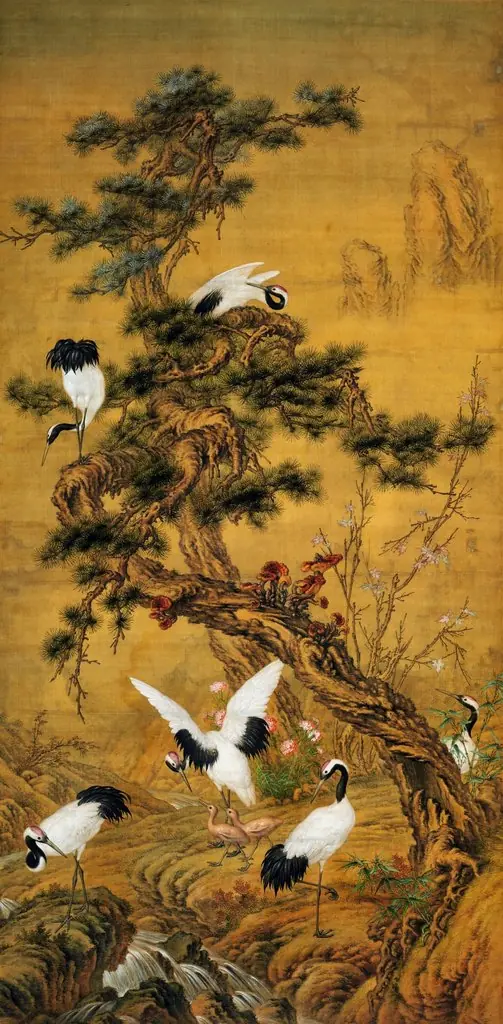 Pines and cranes in spring.
 Plum Tree, Bamboo, and a Gathering of Birds
 元/明 佚名 古木竹禽圖 團扇|Old Tree, Bamboo, and Birds
 明/清 佚名 舊傳艾宣 鵪鶉 卷|Quail
 宋? 佚名 傳宋徽宗 白頭海棠圖 卷|Chinese Bulbuls on Flowering Cherry-Apple
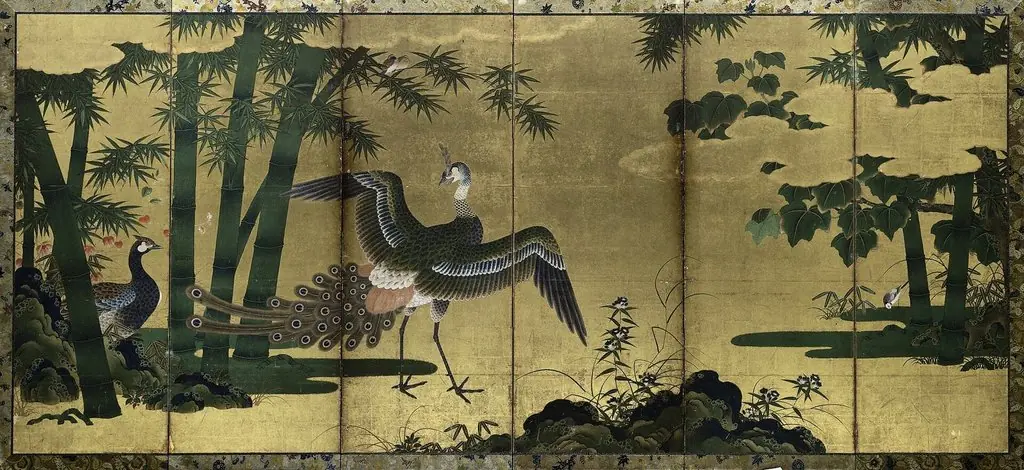 Peacocks and Bamboo