Artwork
A Woman Clothed with the Sun
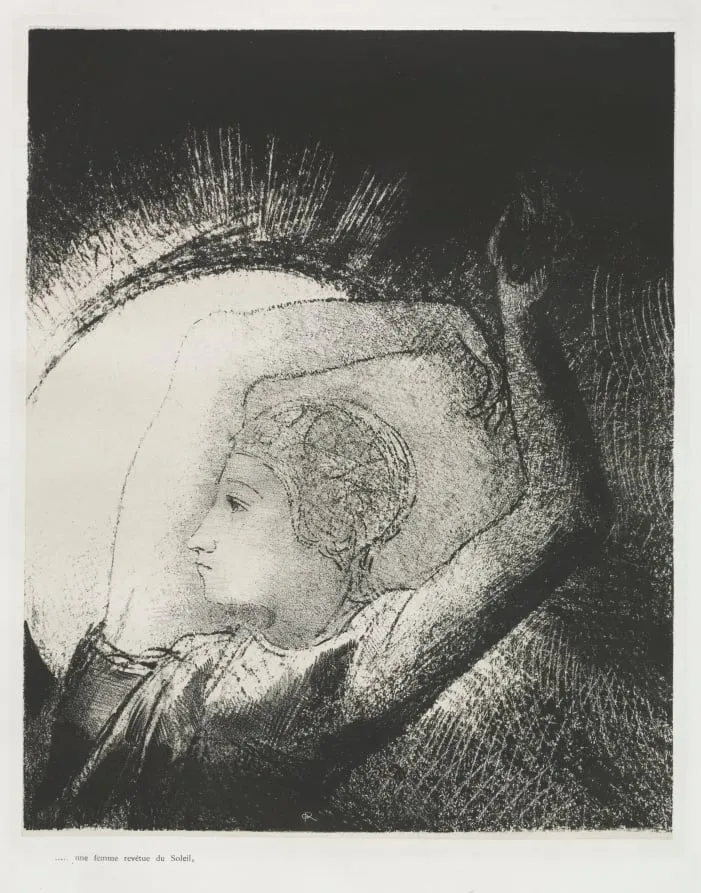
A Woman Clothed with the Sun is a print by the Impressionist artist Odilon Redon. It dates from 1899 and is held in the collection of the Cleveland Museum of Art.
About this work
Overview
A Woman Clothed with the Sun is the final lithographic portfolio by Odilon Redon, comprising twelve prints derived from the Book of Revelation.
A Woman Clothed with the Sun is the final lithographic portfolio by Odilon Redon, comprising twelve prints derived from the Book of Revelation. Unlike his earlier symbolic works, this series directly interprets specific biblical passages. Published in 1904 by Ambroise Vollard, it marked a rare moment of textual precision in Redon’s career and solidified his standing in the print market, particularly among collectors in Europe and beyond.
Subject & Meaning
The central image depicts the apocalyptic woman from Revelation 12, described as robed in sunlight, standing on a crescent moon. Redon’s interpretation aligns with traditional Christian iconography, yet his treatment remains ethereal rather than didactic. The figure hovers in a luminous void, suggesting divine presence rather than narrative action. Other prints in the series reference additional verses, including the fall of a great star, reinforcing the apocalyptic tone without overt moralizing.
Technique & Style
Redon employed lithography to achieve subtle gradations of tone, using ink washes and delicate line work to render the woman as an ethereal form emerging from light. The background dissolves into golden haze, minimizing spatial definition and enhancing the sense of otherworldliness. While reminiscent of sfumato in its soft transitions, Redon’s method is rooted in printmaking’s capacity for atmospheric ambiguity, not oil painting traditions.
History & Provenance
The portfolio was published in 1904 by Ambroise Vollard, who had begun promoting Redon’s prints a year earlier, helping to establish a commercial audience for his graphic work. Vollard’s involvement signaled growing institutional recognition of lithography as a serious artistic medium. The series was among Redon’s last major projects before his death in 1916 and remains one of the few instances where he adhered closely to a literary source.
Context
Redon’s engagement with biblical themes occurred during a period when Symbolist artists sought spiritual meaning beyond material reality. While contemporaries like Gustave Moreau explored myth and mysticism, Redon’s approach was more introspective. His decision to illustrate Revelation directly reflected a broader late-19th-century interest in eschatology, yet his execution avoided literalism, favoring emotional resonance over doctrinal clarity.
Legacy
The portfolio stands as a unique convergence of Redon’s symbolic language and explicit narrative intent. It influenced later printmakers interested in merging literary symbolism with visual ambiguity. Though not widely reproduced in his lifetime, its rarity and thematic cohesion have ensured its place in collections focused on Symbolist printmaking and the intersection of religion and modern art.
Artist & collection
Artist
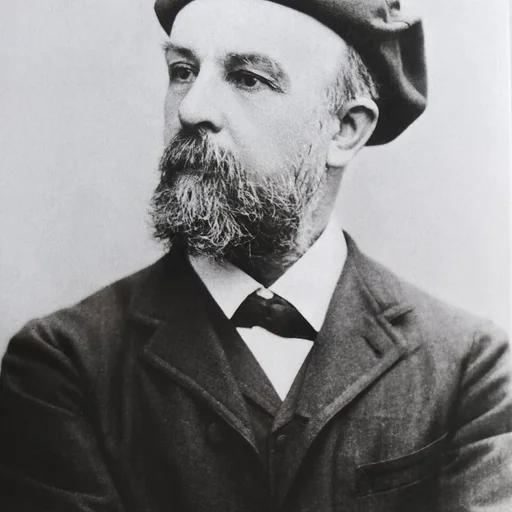
Born Bertrand-Jean Redon on 20 April 1840 in Bordeaux, the artist adopted the name Odilon from his mother, Marie-Odile.

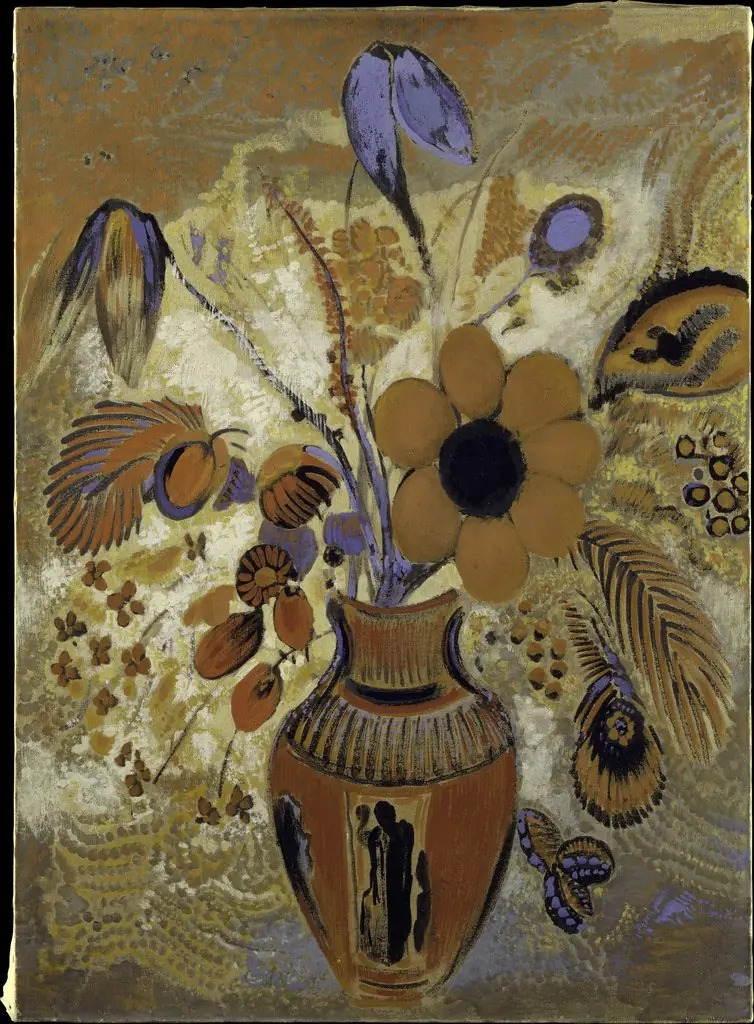

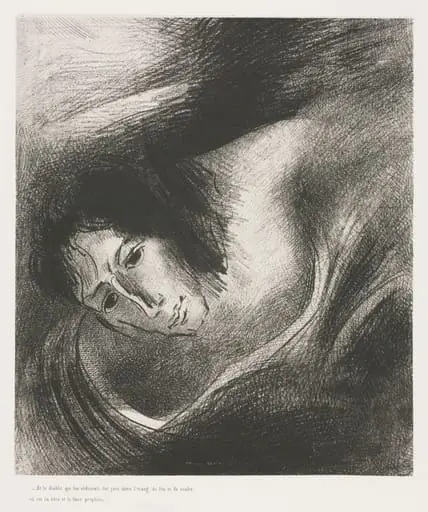 And the Devil That Deceived Them was Cast into the Lake of Fire and Brimstone, Where the Beast and the False Prophet Are
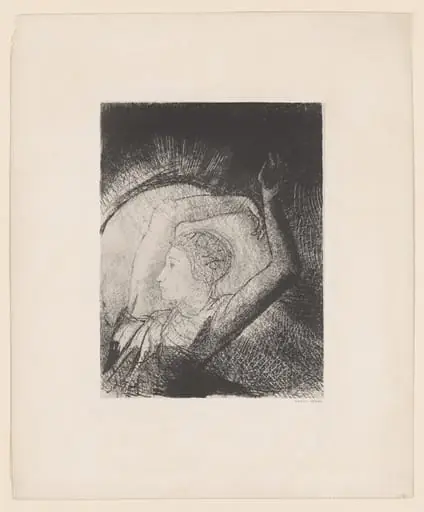 Untitled
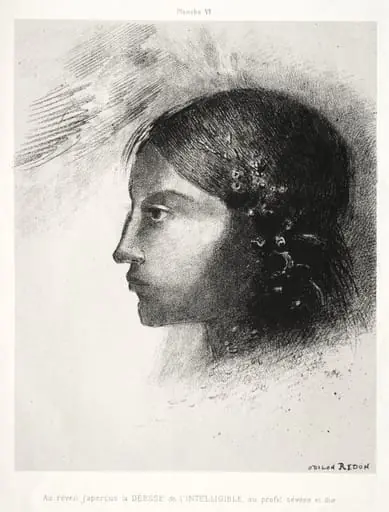 Upon Awakening I Saw the Goddess of the Intelligible with Her Severe and Hard Profile
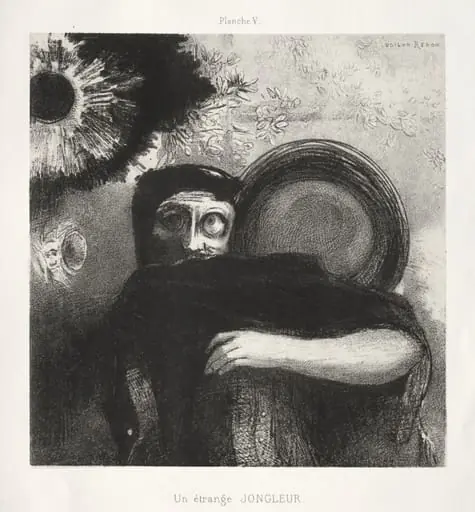 A Strange Juggler
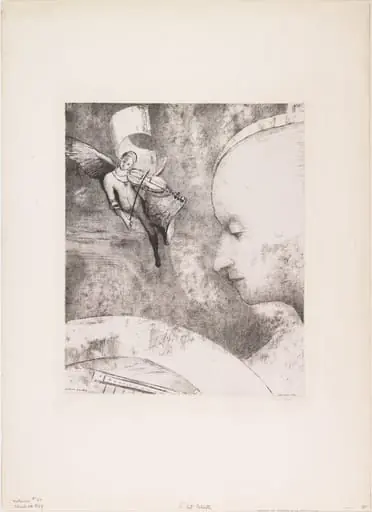 Untitled
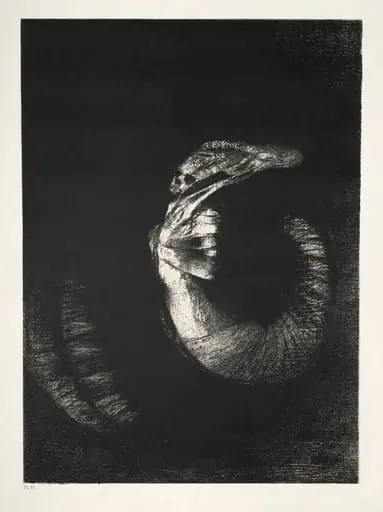 It Is a Skull Wreathed with Roses. It Dominates a Woman's Torso of Pearly Whiteness
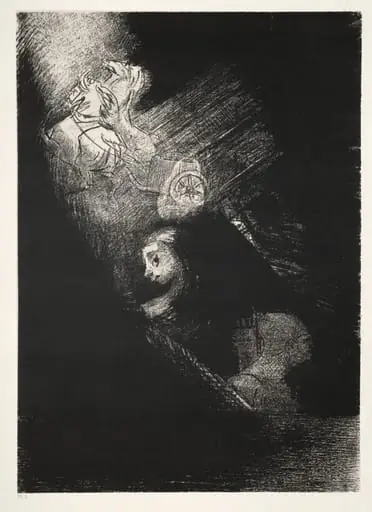 First a Pool of Water, Then a Prostitute, the Corner of a Temple, a Soldier's Face, a Chariot with Two White, Rearing Horses
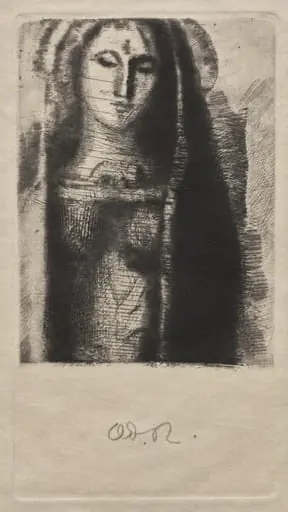 Princess Maleine (The Little Madonna)
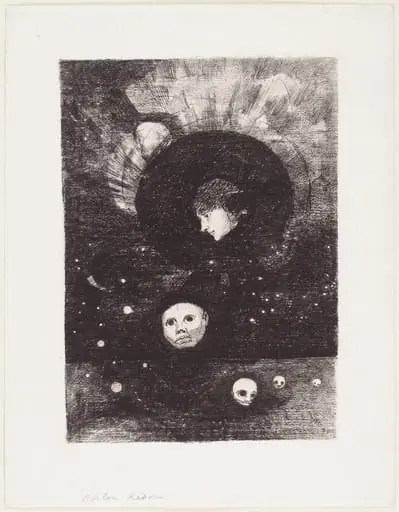 Untitled
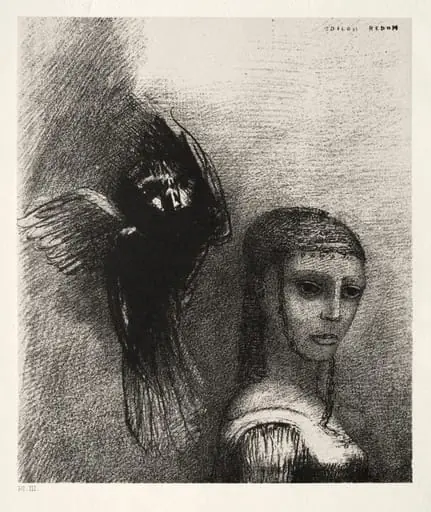 And a Large Bird, Descending from the Sky, Hurls Itself against the Topmost Point of Her Hair