Artwork
Short Nap on a Long Summer Day
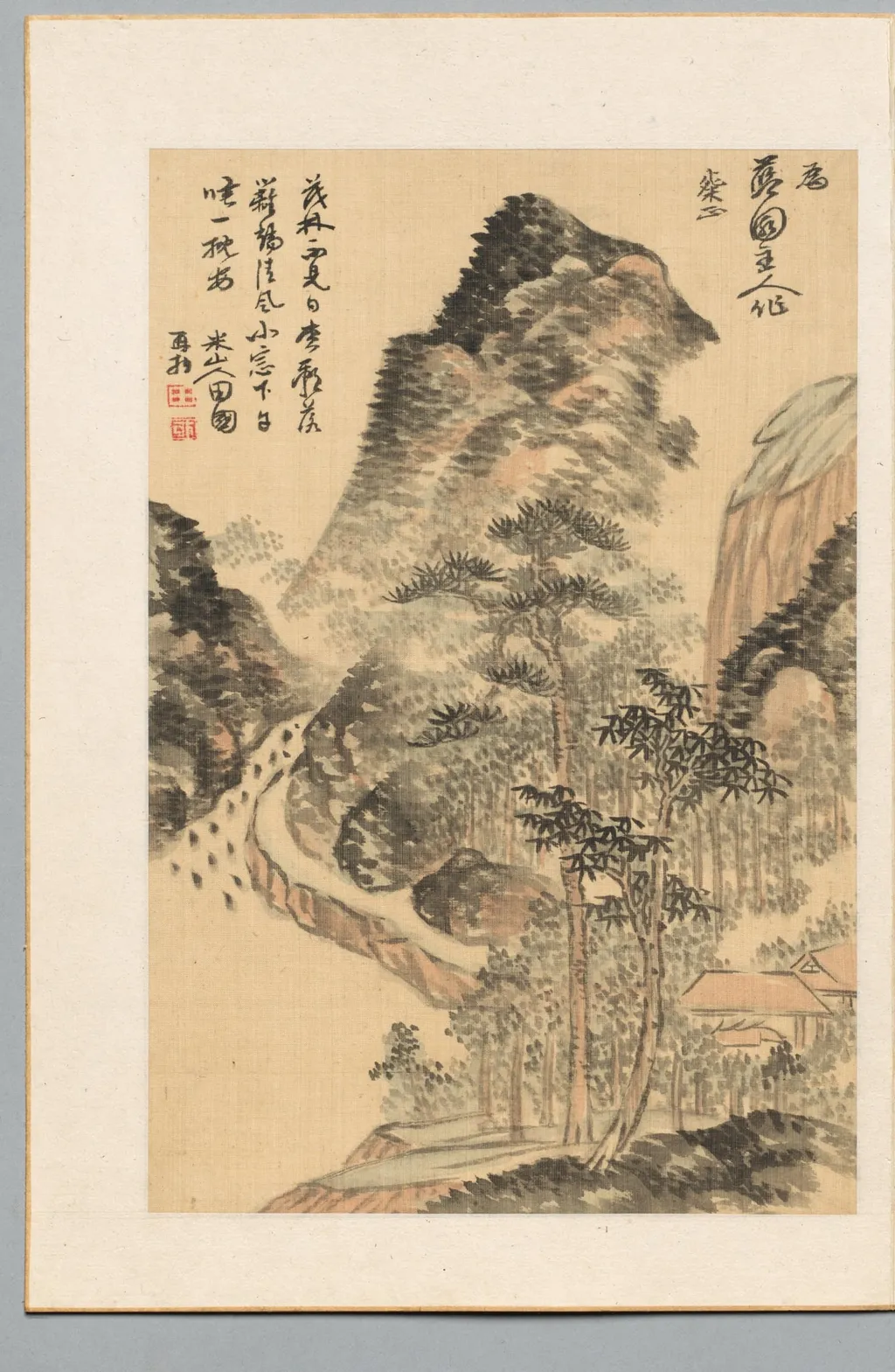
Short Nap on a Long Summer Day is a work on paper by the Romanticist artist Okada Beisanjin. It dates from 1795 and is held in the collection of the Cleveland Museum of Art.
About this work
A man dozes on a woven mat under a tree, his hat tipped over his face.
This small painting was likely swapped between friends—Nanga artists traded works like letters. The loose brushstrokes and quiet scene feel personal, not grand. It’s more about a lazy afternoon than a famous moment.
To see how other Edo artists painted everyday life, look up the subject: *japan, edo period (1615–1868)*.
Overview
“Short Nap on a Long Summer Day” is a modestly sized work typical of the Nanga, or Southern School, tradition that flourished in Japan during the 17th and 18th centuries. The painting depicts a solitary figure reclining on a woven mat beneath a tree, his hat shielding his face as he rests. Its intimate scale and informal subject place it within the private exchanges that characterized the genre.
Subject & Meaning
The scene captures a moment of quiet repose, emphasizing the everyday pleasure of a summer afternoon. By portraying a lone individual in a state of relaxation, the work reflects a broader aesthetic appreciation for simplicity and the fleeting nature of leisure, rather than commemorating a historic event or narrative.
Technique & Style
Executed with fluid, loosely applied brushstrokes, the painting conveys a sense of immediacy and personal touch. The understated palette and minimal detailing align with Nanga artists’ preference for spontaneous expression, drawing on Chinese literati ideals while adapting them to Japanese sensibilities.
History & Provenance
Works of this size were commonly exchanged among Nanga practitioners as informal correspondence, often compiled later into shared albums that recorded gatherings of artist friends. This particular sheet likely circulated within such a network, serving both as a creative token and a record of communal artistic interaction.
Artist & collection


 Reverberations of Taiga, Volume 2 (leaf 34)
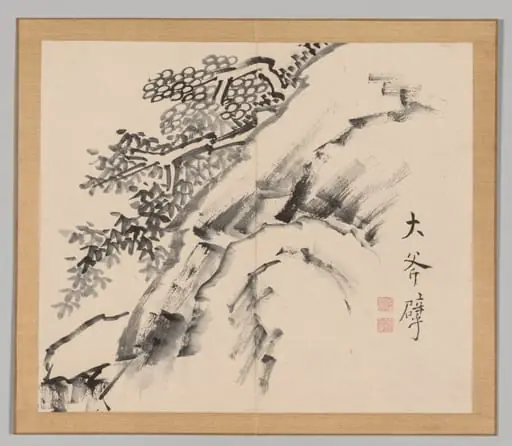 Reverberations of Taiga, Volume 1 (leaf 9)
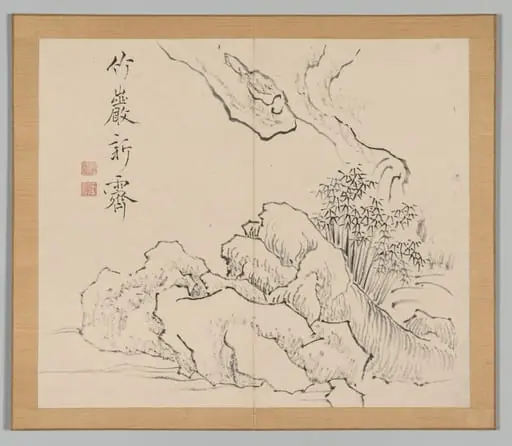 Reverberations of Taiga, Volume 2 (leaf 19)
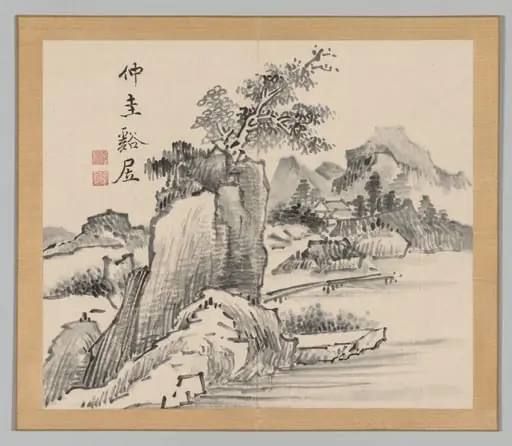 Reverberations of Taiga, Volume 2 (leaf 14)
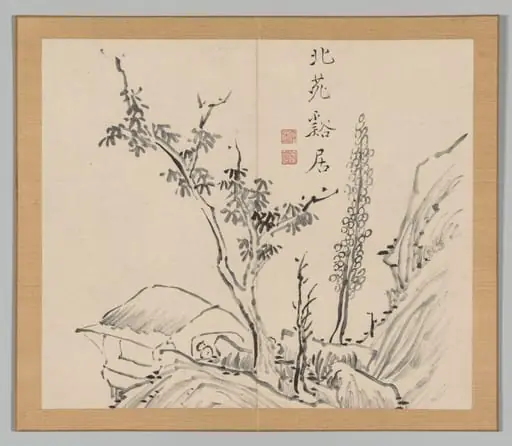 Reverberations of Taiga, Volume 2 (leaf 13)
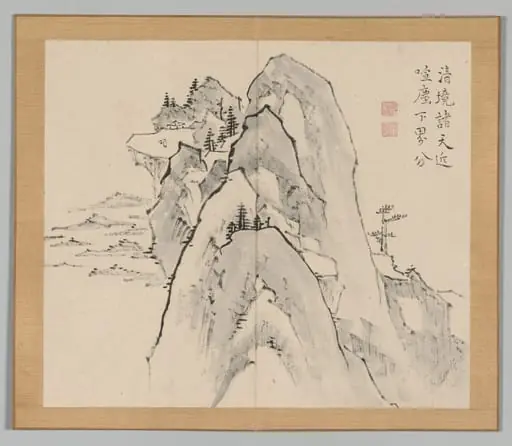 Reverberations of Taiga, Volume 2 (leaf 33)
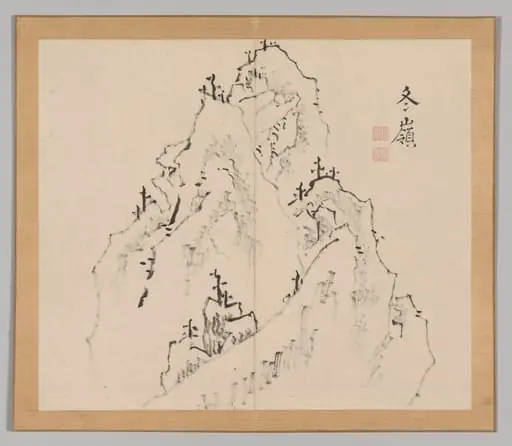 Reverberations of Taiga, Volume 1 (leaf 25)
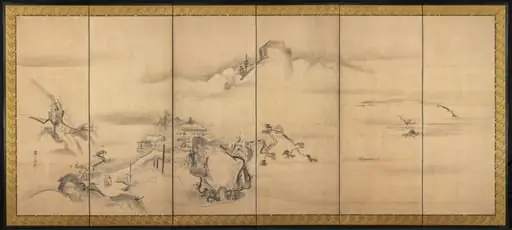 Eight Views of the Xiao and Xiang Rivers