Artwork
Reverberations of Taiga, Volume 2 (leaf 34)
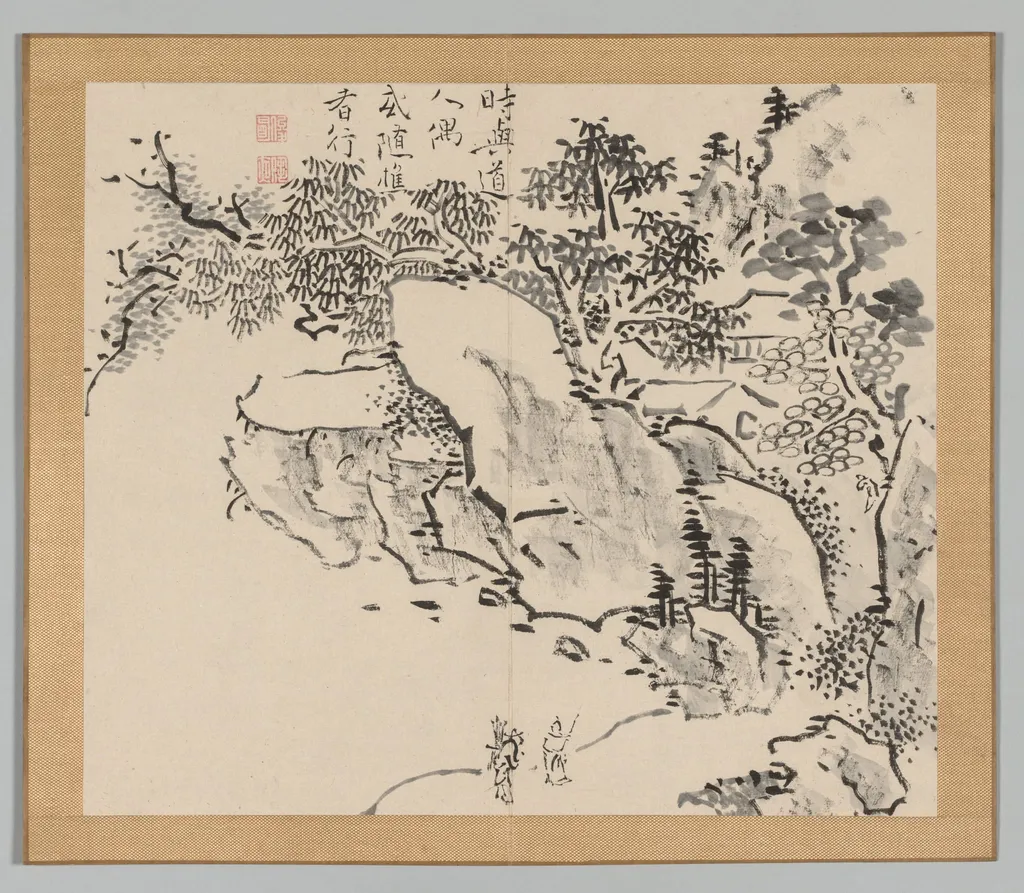
Reverberations of Taiga, Volume 2 (leaf 34) is a work on paper by the Baroque artist Aoki Shukuya. It dates from 1704 and is held in the collection of the Cleveland Museum of Art.
About this work
Aoki Shukuya copied his teacher Ikeno Taiga’s style to practice brushwork and balance in nature scenes.
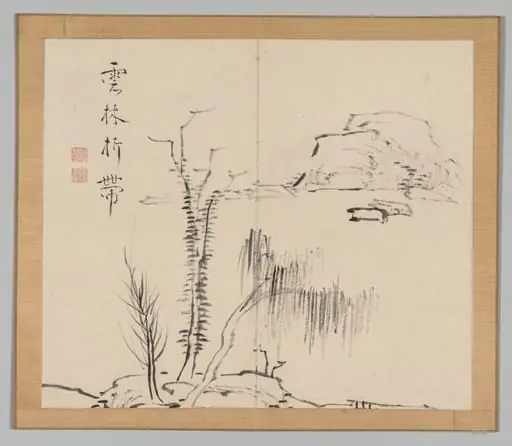
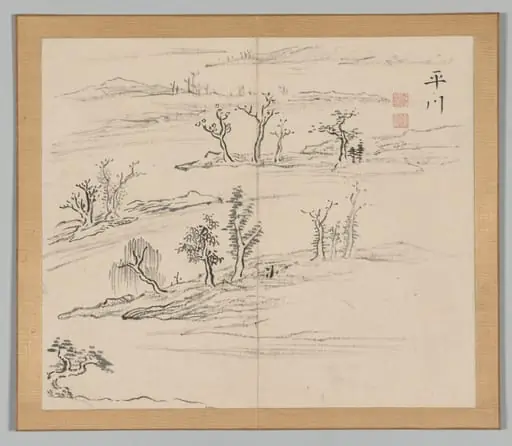
You see loose ink sketches of rocky slopes, crooked trees, and distant peaks on paper. The lines are quick and light, like notes from a nature diary.
This is one page from a book of drawings made by a student learning from a master. Aoki Shukuya copied his teacher Ikeno Taiga’s style to practice brushwork and balance in nature scenes. These sketches were not meant for display, but for training.
Look up the Edo period (1615–1868) to explore more about the time and culture that shaped this art.
Overview
Reverberations of Taiga, Volume 2 (leaf 34) is a loose ink sketch on paper, depicting natural elements such as rocky slopes, crooked trees, and distant mountains. Created as part of a training portfolio, this piece showcases quick, light lines reminiscent of informal nature observations.
Subject & Meaning
The subject matter focuses on elements of the natural world, reflecting the traditional emphasis in Japanese art on capturing the essence of landscapes. The composition practices balance and harmony, key principles in the depicted style.
Technique & Style
The work exhibits the style of Ikeno Taiga, under whom the artist Aoki Shukuya was apprenticed. The quick, light brushstrokes and ink techniques are characteristic of the learning process, where apprentices copied masters' compositions to hone their skills.
History & Provenance
Created during the Edo period (1615–1868), this leaf is part of a larger portfolio used by Aoki Shukuya for training under Ikeno Taiga in Kyoto. The piece was not intended for public display but rather for the artist’s technical development.
Context
Reflecting traditional Japanese art education, this sketch represents a common practice where young artists learned by replicating their master’s works. The Edo period’s cultural and artistic values are embodied in the piece’s emphasis on nature and balance.
Legacy
While not a display piece in its time, this sketch contributes to the understanding of apprenticeship practices in Edo-period Japan and the stylistic lineage of Ikeno Taiga’s school. It provides insight into the formative stages of an artist’s training.
Artist & collection

 Reverberations of Taiga, Volume 1 (leaf 4)
 Reverberations of Taiga, Volume 2 (leaf 30)
 Reverberations of Taiga, Volume 1 (leaf 12)
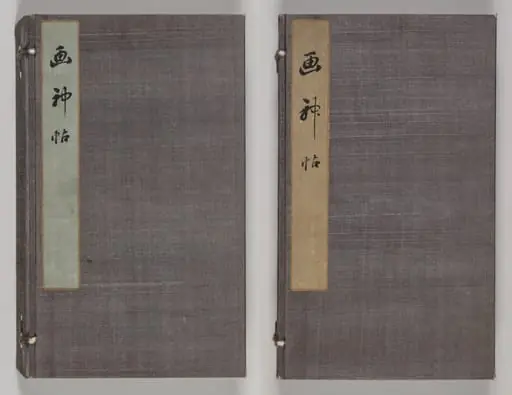 Reverberations of Taiga
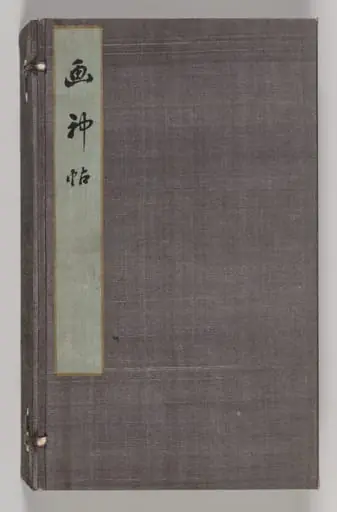 Reverberations of Taiga (Volume 1)
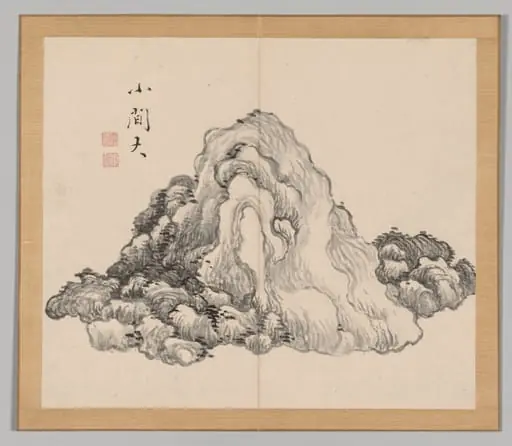 Reverberations of Taiga, Volume 1 (leaf 7)
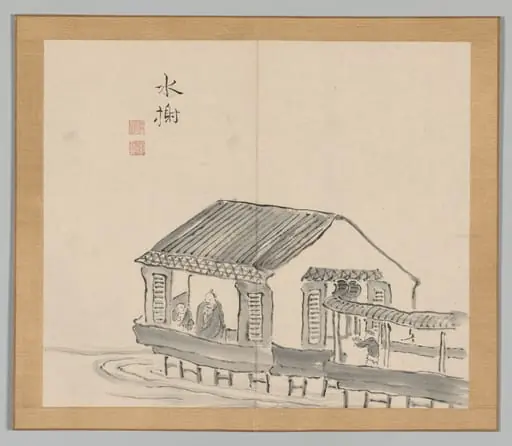 Reverberations of Taiga, Volume 2 (leaf 29)
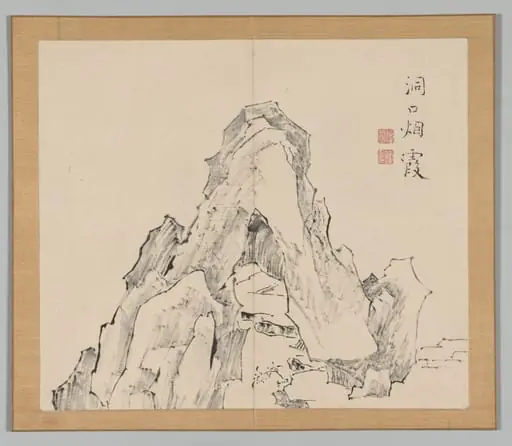 Reverberations of Taiga, Volume 2 (leaf 20)
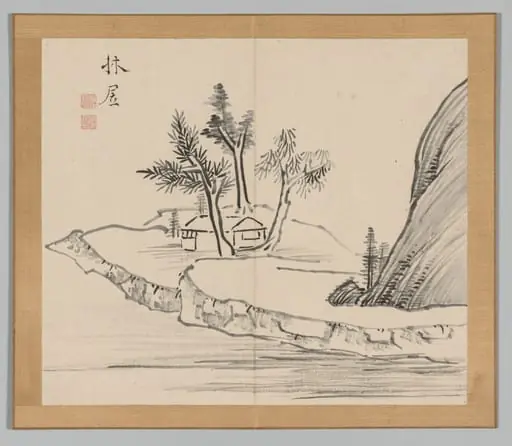 Reverberations of Taiga, Volume 2 (leaf 22)
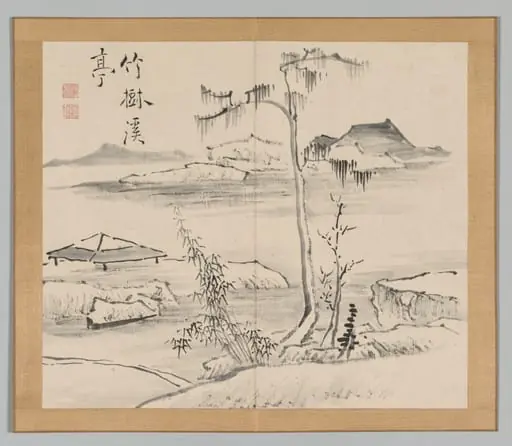 Reverberations of Taiga, Volume 2 (leaf 24)
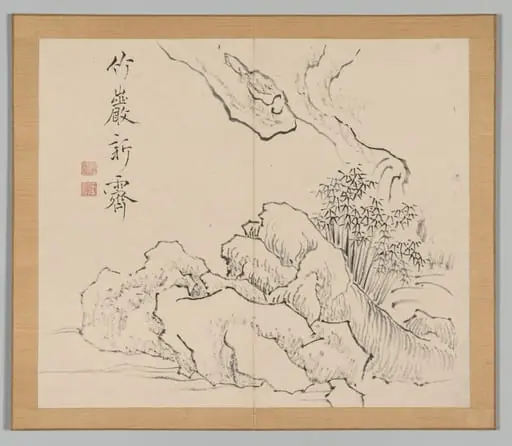 Reverberations of Taiga, Volume 2 (leaf 19)
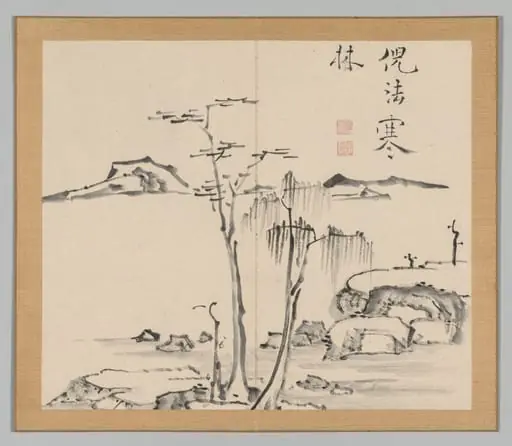 Reverberations of Taiga, Volume 2 (leaf 15)
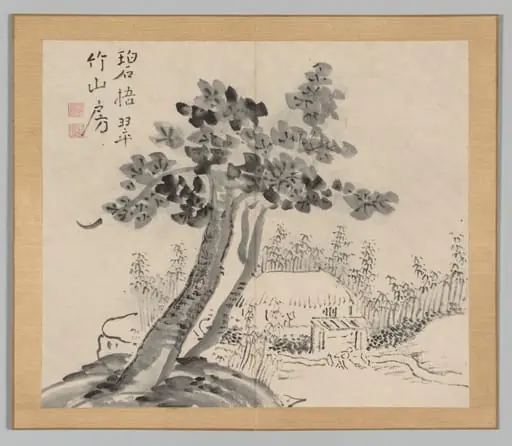 Reverberations of Taiga, Volume 2 (leaf 32)
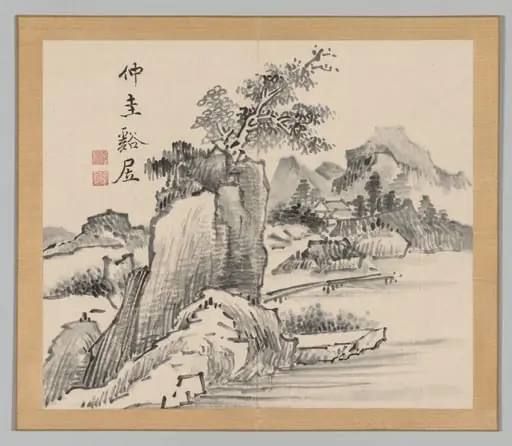 Reverberations of Taiga, Volume 2 (leaf 14)
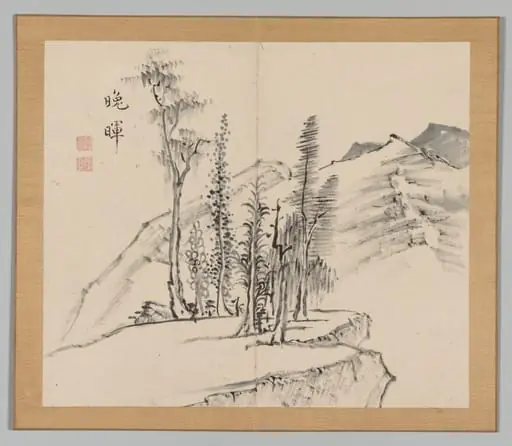 Reverberations of Taiga, Volume 2 (leaf 21)
 Reverberations of Taiga, Volume 2 (leaf 16)
 Reverberations of Taiga, Volume 2 (leaf 9)