Artwork
Reverberations of Taiga, Volume 2 (leaf 33)
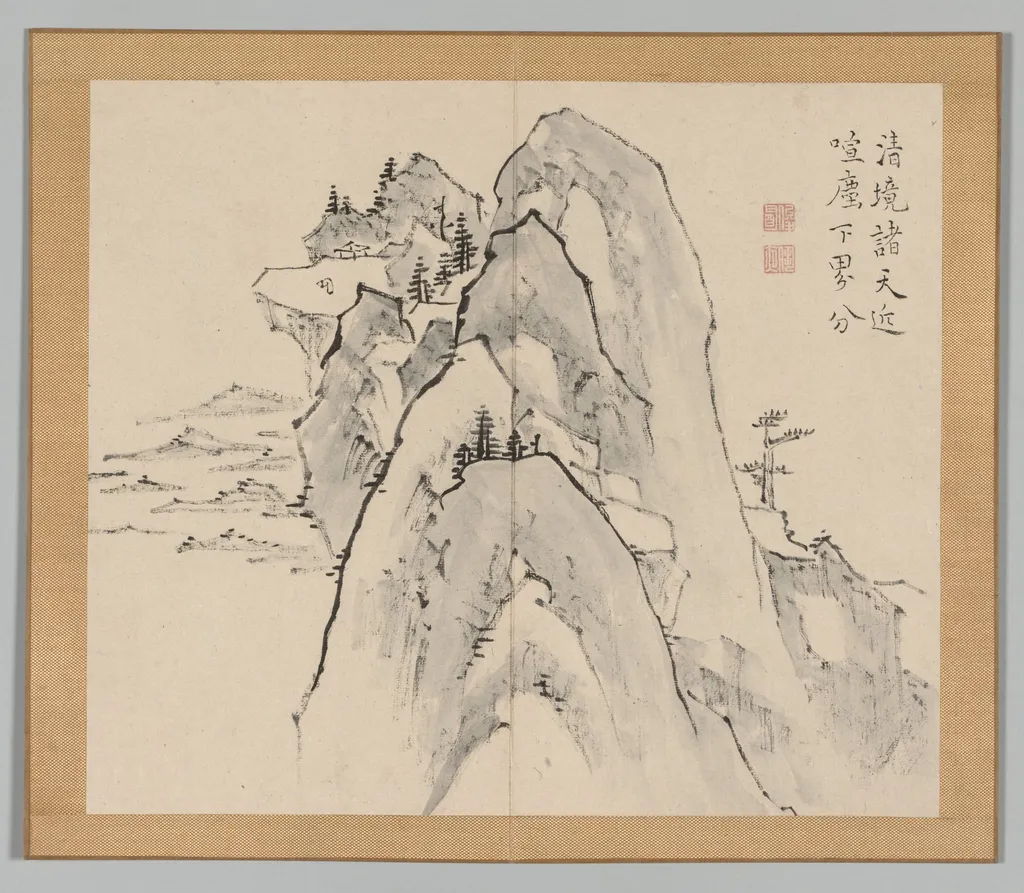
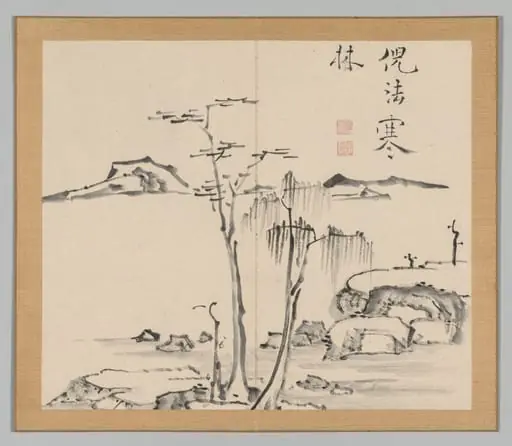
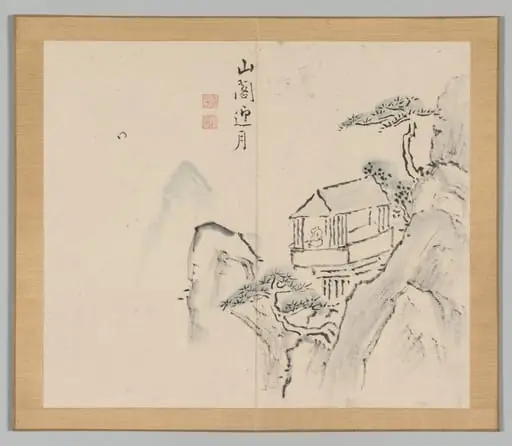
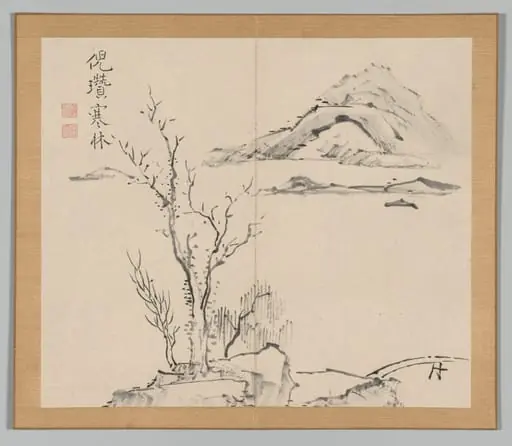
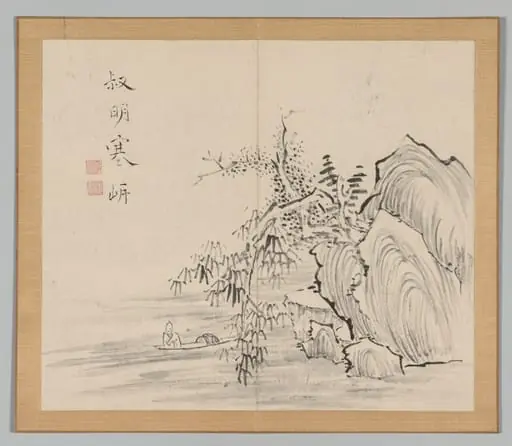
Reverberations of Taiga, Volume 2 (leaf 33) is a work on paper by the Baroque artist Aoki Shukuya. It dates from 1704 and is held in the collection of the Cleveland Museum of Art.
About this work
Overview
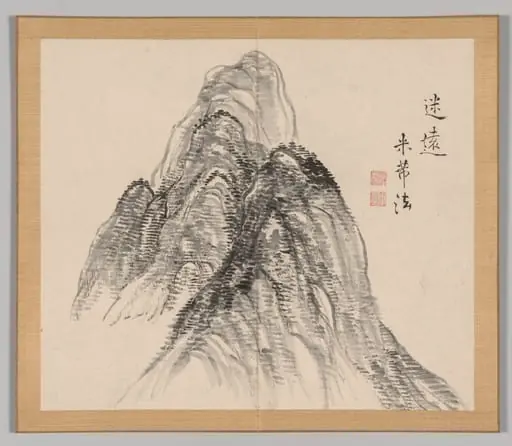
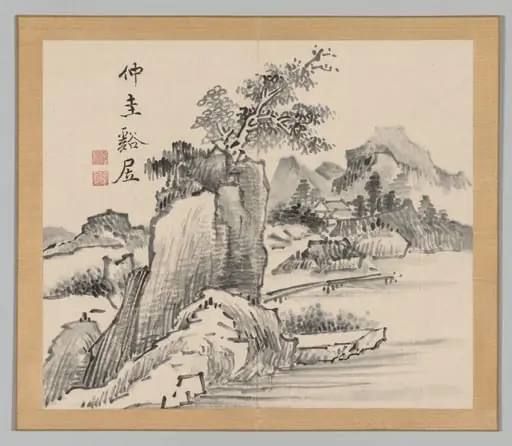
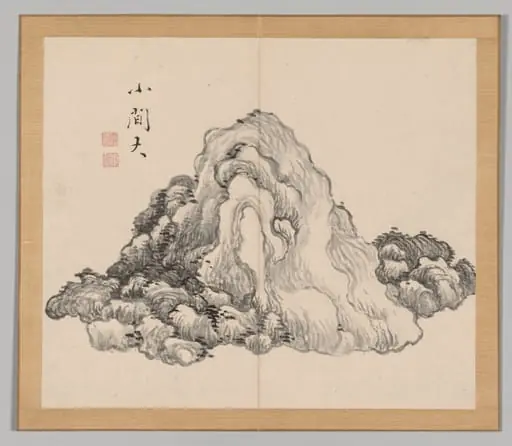
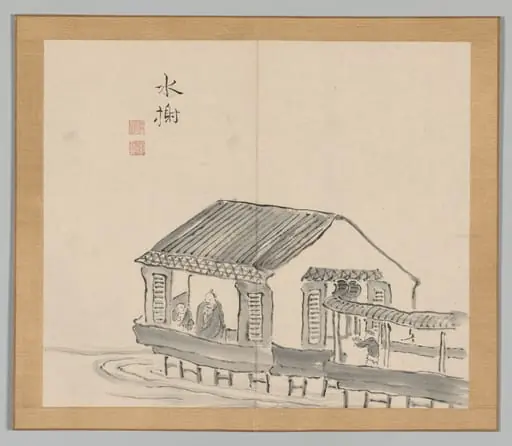
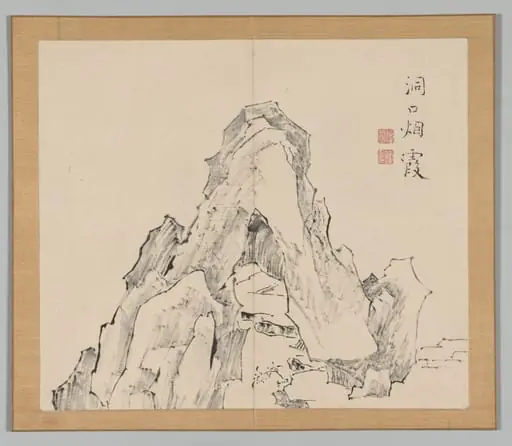
This leaf is part of a portfolio by Aoki Shukuya, created as a study exercise during his training under the Kyoto painter Ikeno Taiga. It belongs to a series of ink sketches meant to internalize the master’s compositional language. Each page functions less as an independent artwork and more as a disciplined practice in brush control, tonal gradation, and spatial arrangement.
Subject & Meaning
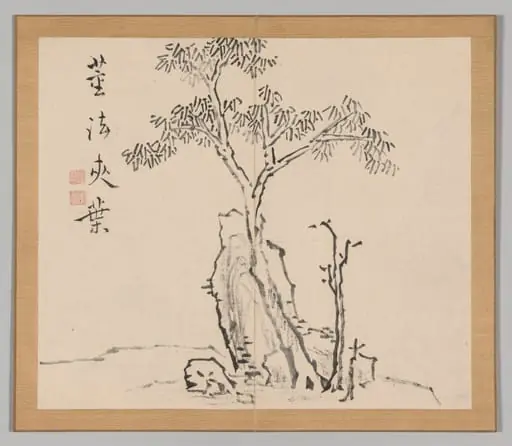
The subject consists of simplified rock formations, gnarled trees, and distant mountain contours—common motifs in literati landscape traditions. These elements are not rendered for narrative or symbolic depth but as formal exercises. Their minimalism reflects the pedagogical aim: to absorb the master’s handling of natural forms through repetition, not interpretation.
Technique & Style
Shukuya employed monochrome ink washes with controlled brushstrokes, emulating Taiga’s restrained aesthetic. Lines vary in weight to suggest volume and texture, while areas of diluted ink create atmospheric depth. The style avoids dramatic contrast or embellishment, favoring subtlety and economy—hallmarks of the literati approach passed from teacher to student.
History & Provenance
The portfolio was produced in mid-18th century Kyoto, during Shukuya’s apprenticeship under Taiga, a leading figure in the literati movement. Such study albums were typically kept privately, used for skill development rather than public display. This leaf likely remained within the artist’s circle until later acquisition by a collector or institution.
Context
In Edo-period Japan, artistic training followed a master-apprentice model, especially among literati painters. Copying the master’s works was not imitation for its own sake but a method of internalizing aesthetic principles. Taiga’s influence extended beyond technique, shaping a philosophical engagement with nature that students like Shukuya sought to embody.
Legacy
Shukuya’s portfolio exemplifies how artistic lineage was maintained through disciplined practice. While his individual output remained modest, these studies preserved Taiga’s visual language and contributed to the broader transmission of literati ideals. Such works are now valued as records of pedagogical tradition, not as expressions of original genius.
Artist & collection

 Reverberations of Taiga, Volume 1 (leaf 4)
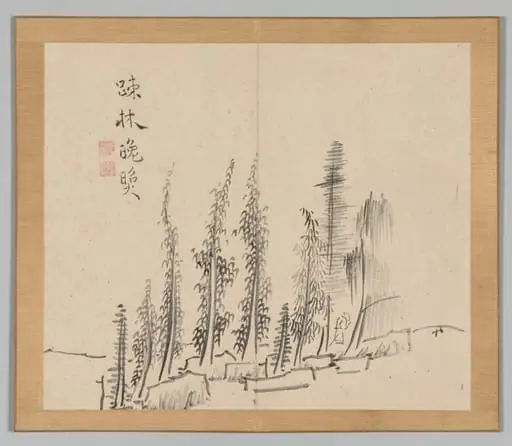 Reverberations of Taiga, Volume 2 (leaf 30)
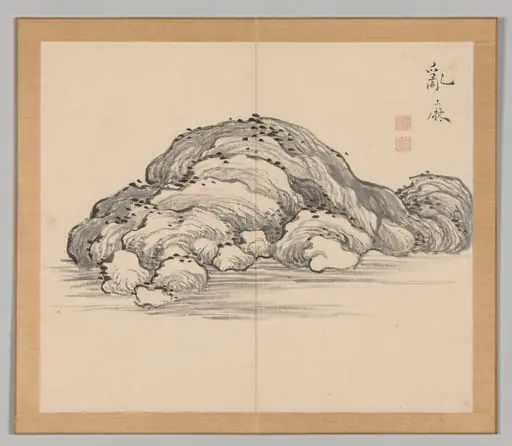 Reverberations of Taiga, Volume 1 (leaf 12)
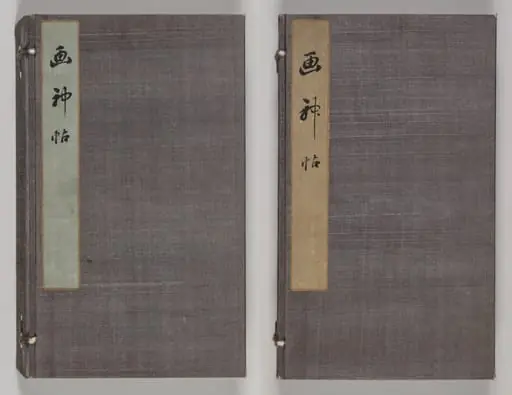 Reverberations of Taiga
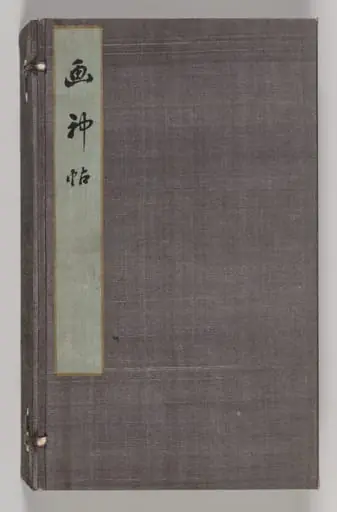 Reverberations of Taiga (Volume 1)
 Reverberations of Taiga, Volume 1 (leaf 7)
 Reverberations of Taiga, Volume 2 (leaf 29)
 Reverberations of Taiga, Volume 2 (leaf 20)