Artwork
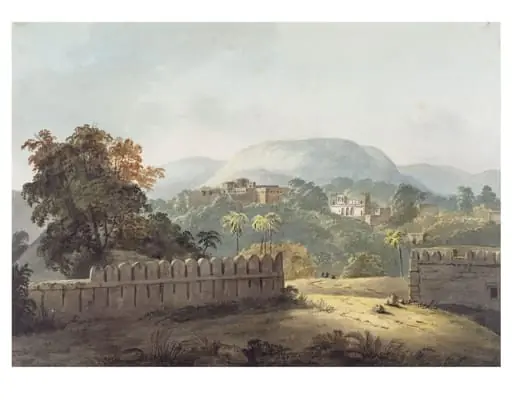
View of the hill fort, Trichinopoly
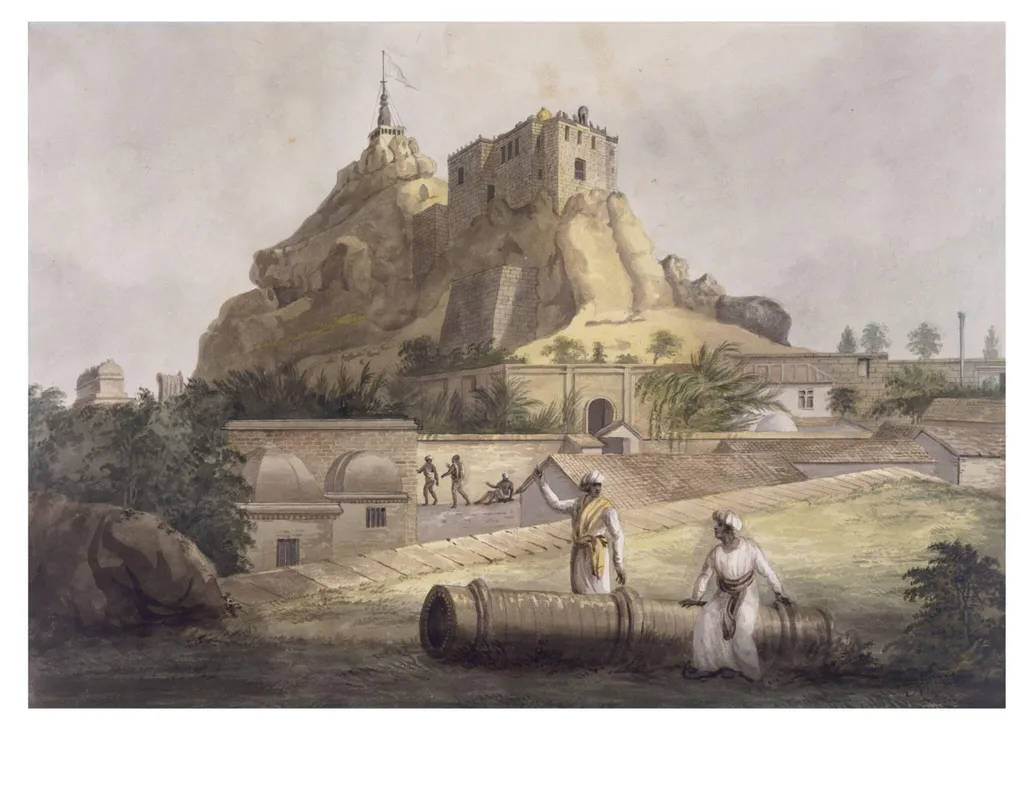
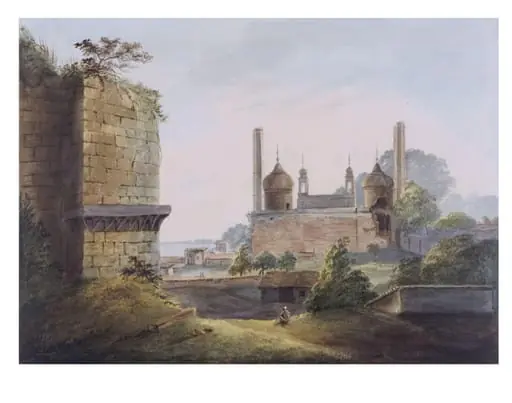
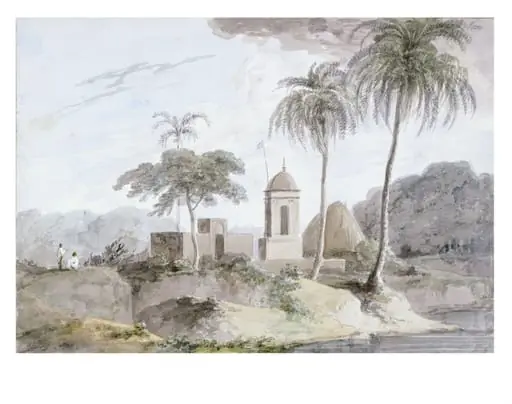
View of the hill fort, Trichinopoly is a paint painting by the Romanticist artist William Orme. It dates from 1803 and is held in the collection of the Victoria and Albert Museum. This watercolour depicts the hill fort at Tiruchchirapalli (then known as Trichinopoly) in southern India.
About this work
This painting is titled View of the hill fort, Trichinopoly. It's a work by William Orme.
William Orme was active from about 1795 to 1819. He was a landscape painter with a preference for topographical subjects, and his works were exhibited at the Royal Academy between 1797 and 1819.
You can learn more about this style of painting by looking into the movement: Romanticism.
Overview
Created by William Orme, an English artist active in the late 18th and early 19th centuries, the work reflects his engagement with topographical subjects.
This watercolour depicts the hill fort at Tiruchchirapalli (then known as Trichinopoly) in southern India. Created by William Orme, an English artist active in the late 18th and early 19th centuries, the work reflects his engagement with topographical subjects. Orme, primarily a landscape painter, exhibited regularly at the Royal Academy between 1797 and 1819, though his output included both rural English scenes and distant locales.
Subject & Meaning
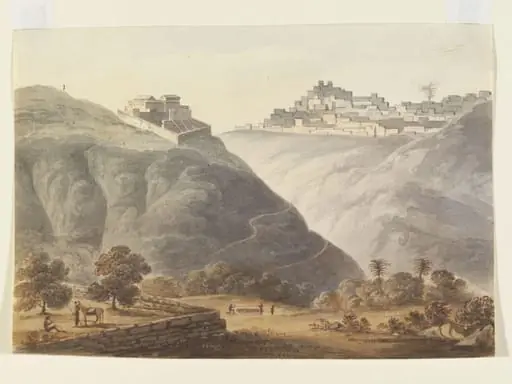
The painting captures the fortified outcrop of Trichinopoly, a strategic site in southern India. Such depictions were often commissioned to document colonial territories, blending geographical accuracy with an aesthetic appreciation of foreign landscapes. The composition emphasizes the fort’s imposing position, suggesting both its military significance and its visual prominence within the surrounding terrain.
Technique & Style
Orme’s approach aligns with the conventions of topographical watercolour, characterized by precise rendering of architectural and natural features. The work demonstrates a controlled application of washes and fine detailing, typical of late 18th-century British landscape practice. While not overtly Romantic in execution, it shares the period’s interest in recording distant places with clarity and restraint.
History & Provenance
The painting is based on an unidentified earlier source, likely a sketch or engraving, reflecting the common practice of artists working from secondary material when depicting foreign sites. Orme’s career spanned London, where he operated from addresses in Great Maddox Street and later New Bond Street, the latter serving as the base for the Orme family’s publishing enterprise.
Context
During Orme’s active years, British artists increasingly depicted colonial landscapes, responding to growing public and institutional interest in distant territories. His work fits within a broader tradition of topographical painting, which served both documentary and decorative purposes. The fort at Trichinopoly, a site of historical conflict, would have held particular resonance for British viewers familiar with India’s strategic importance.
Artist & collection
Artist
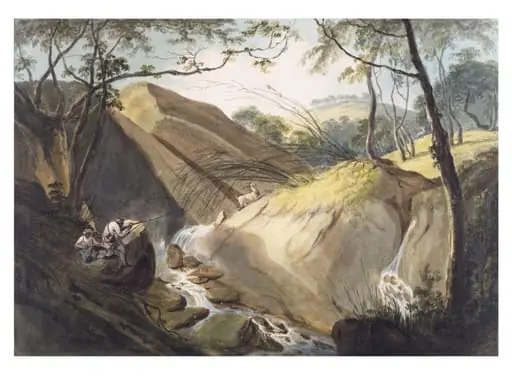
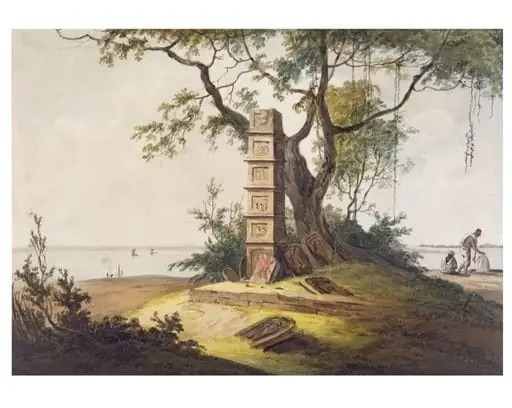
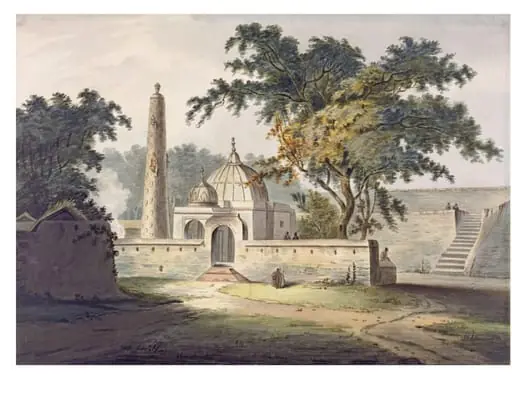
William Orme painted detailed scenes of early-1800s India, when British artists were stationed there and sketched everything from hunting parties to temples.