Artwork
Principal range of tombs
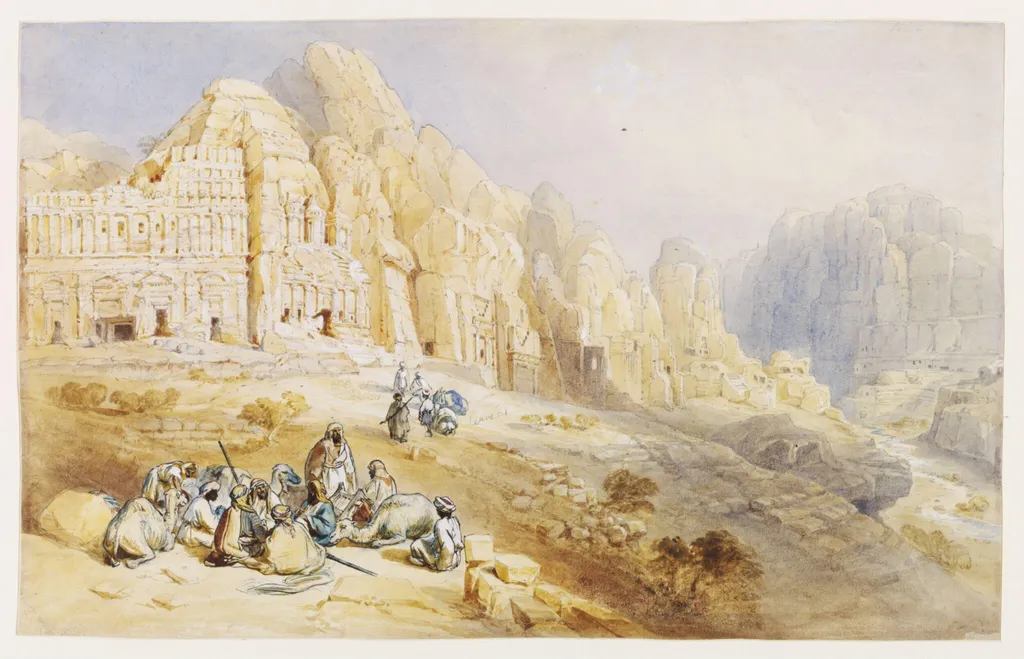
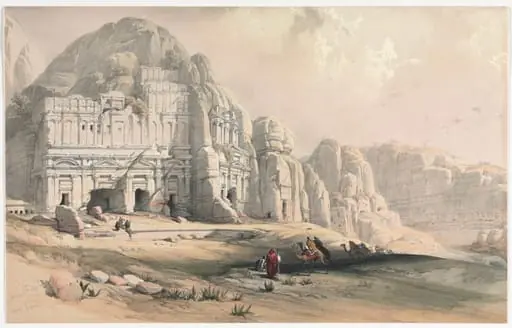
Principal range of tombs is a watercolor work on paper by the Romanticist artist William Henry Bartlett. It dates from 1846 and is held in the collection of the Victoria and Albert Museum.
About this work
Overview
William Henry Bartlett created this watercolour during his 1845 journey to Petra, one of seven trips he made to North Africa and the Near East.
William Henry Bartlett created this watercolour during his 1845 journey to Petra, one of seven trips he made to North Africa and the Near East. The work was produced as part of his illustrated travelogue Forty Days in the Desert, reflecting the mid-19th century surge in public interest in illustrated travel literature. His detailed observation of distant landscapes and architectural ruins positioned him among a generation of artists documenting remote sites for European audiences.
Subject & Meaning
The painting depicts the rock-cut tombs of Petra, an ancient Nabataean city rediscovered by Western travelers in 1812. Bartlett focused on the monumental scale and eerie stillness of the carved facades set against a barren desert expanse. His choice of subject reflects the period’s fascination with lost civilizations and the sublime qualities of untouched antiquity, rather than any narrative or symbolic intent.
Technique & Style
Bartlett employed light watercolour washes to suggest the arid atmosphere and distant rock formations, reserving stronger ink outlines and concentrated pigment for the figures and architectural details. This method enhanced spatial depth while preserving the delicate transparency characteristic of topographical watercolours. His approach prioritized accuracy over dramatic effect, aligning with the documentary aims of his travel publications.
History & Provenance
The watercolour was made during Bartlett’s November 1845 visit to Petra, reached via Aqaba after crossing the Sinai Peninsula from Cairo. It later served as the basis for an engraving in his book Forty Days in the Desert. The work belongs to a series of studies produced on-site during his travels, intended for reproduction and distribution to a readership eager for firsthand visual accounts of the Eastern Mediterranean.
Context
Petra’s rediscovery by Jean Louis Burckhardt in 1812 ignited Western curiosity about its isolated desert setting and monumental architecture. Artists such as David Roberts and Edward Lear followed in his footsteps, drawn by the site’s romantic allure and physical remoteness. Bartlett’s contribution was part of a broader trend in which travel and visual documentation converged to shape European perceptions of the Middle East during the Victorian era.
Legacy
Bartlett’s watercolours of Petra helped standardize the visual representation of the site for 19th-century audiences. Though not the first artist to depict it, his precise, restrained style influenced the aesthetic of illustrated travel books. His works remain valuable as historical records of the landscape before modern tourism and conservation efforts altered the site’s appearance.
Artist & collection
Artist
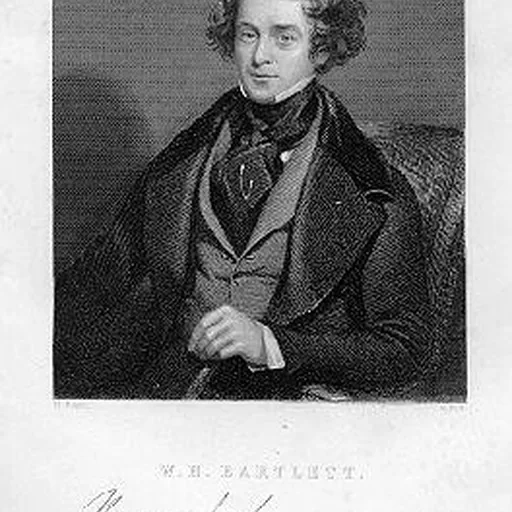
William Henry Bartlett (26 March 1809 – 13 September 1854) was a British artist, best known for his numerous drawings rendered into steel engravings.

 Petra, Eastern End of the Valley
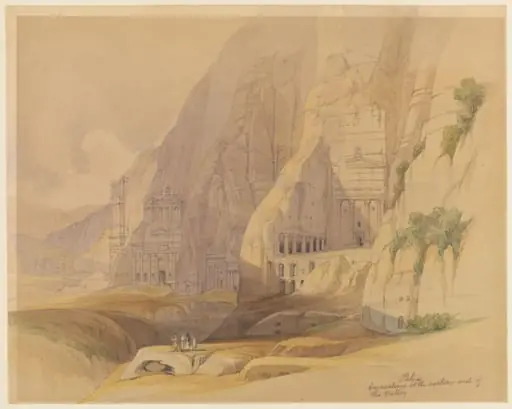 Petra Excavations at the eastern end of the Valley
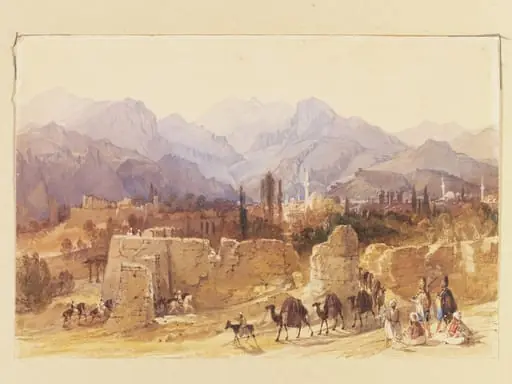 Philadelphia
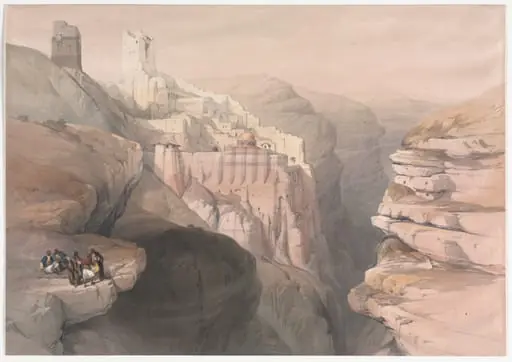 Convent of St. Saba
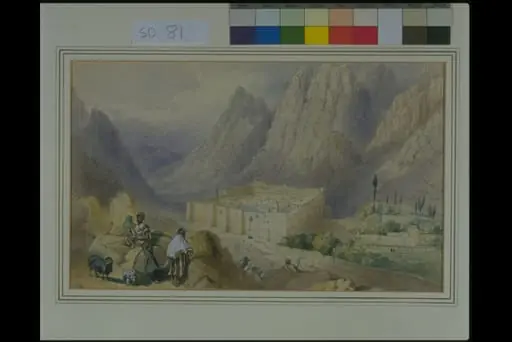
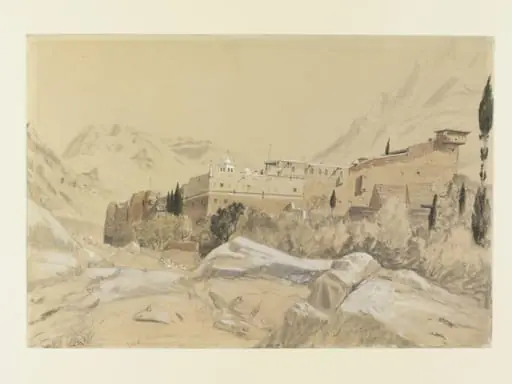 The Convent, Mount Sinai
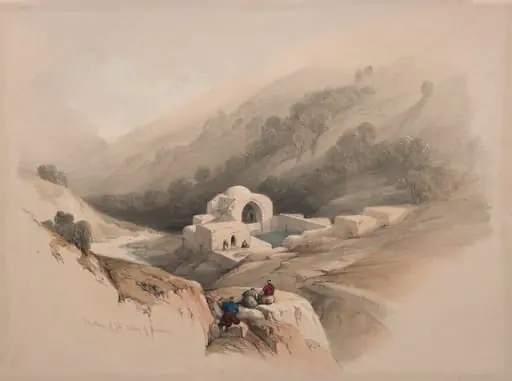 Fountain of Job, Valley of Hinnom
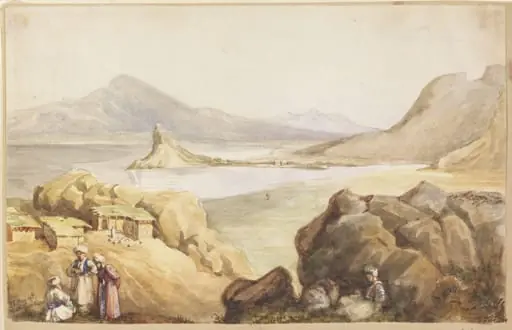 Gule-Hissa Ovassy in the Northern part of Lycia
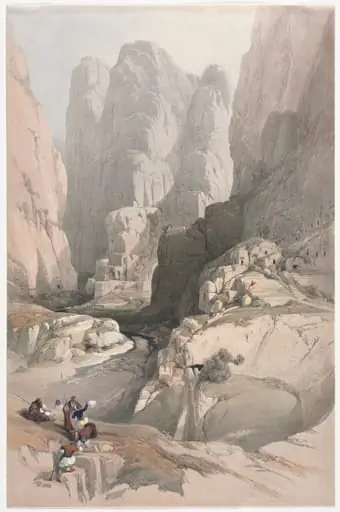 Entrance to Petra, the Theatre
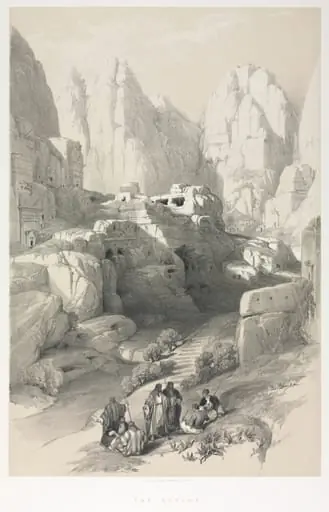 The Holy Land, Syria, Idumea, Arabia, Egypt & Nubia: Petra