Artwork
Tomb of an unidentified Muslim saint at Anupshahr
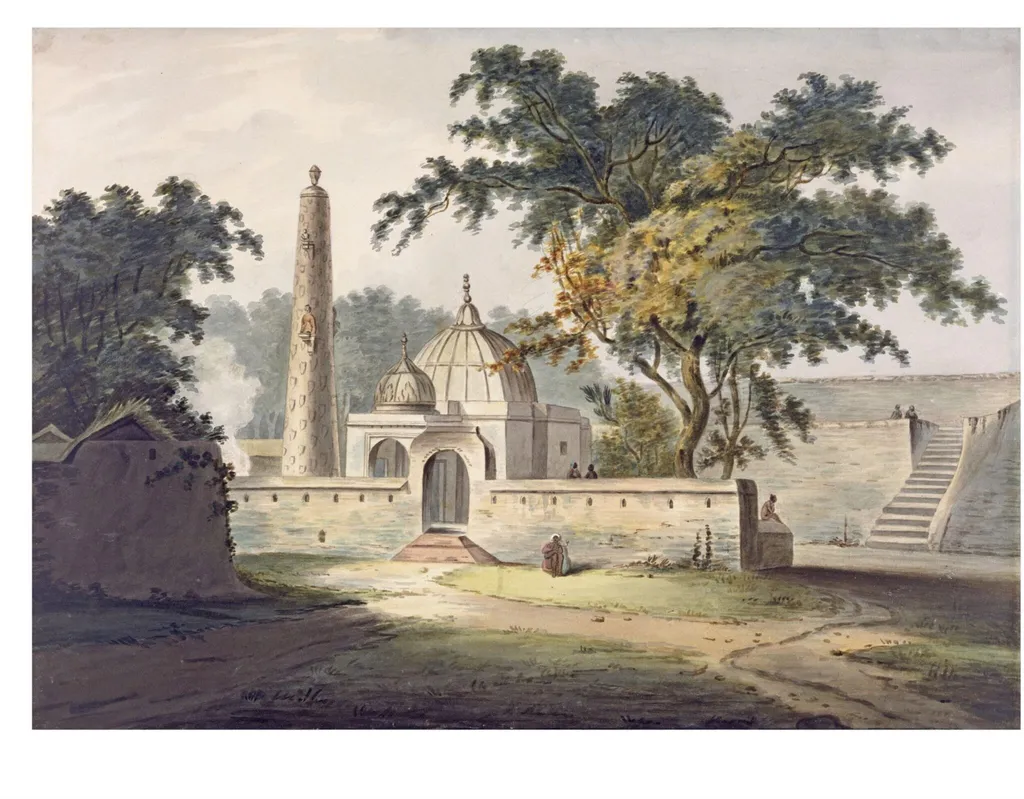
Tomb of an unidentified Muslim saint at Anupshahr is a paint painting by the British Romanticist artist William Orme. It dates from 1802 and is held in the collection of the Victoria and Albert Museum.
About this work
Overview
William Orme, an English painter active between 1795 and 1819, is primarily known for topographical landscapes of Britain and Wales.
William Orme, an English painter active between 1795 and 1819, is primarily known for topographical landscapes of Britain and Wales. This watercolor, depicting a Muslim saint’s tomb in Anupshahr, stands as an unusual subject in his oeuvre. Likely executed around 1802, it was created as a preparatory study for an aquatint published in January 1803. Orme’s rare engagement with Indian architecture reflects his involvement in publishing ventures rather than direct travel abroad.
Subject & Meaning
The painting portrays a modest domed tomb nestled in a quiet courtyard, with a solitary figure kneeling beneath a tree, his back turned to the viewer. The absence of inscriptions or identifying markers leaves the saint’s identity unknown. The scene conveys quiet reverence rather than ritual spectacle, emphasizing solitude and contemplation. Its focus on a non-Christian sacred site suggests an interest in cultural observation, common among British artists documenting colonial India.
Technique & Style
Executed in watercolor, the work employs delicate washes to render pale stone walls and soft, warm shadows that suggest late afternoon light. The composition is restrained, with minimal detail and no dramatic elements, favoring atmospheric calm. Orme’s handling reflects his training in British topographical traditions, adapted here to an unfamiliar architectural context. The subdued palette and careful tonal gradation convey serenity without embellishment.
History & Provenance
The image derives from an oil painting by Francis Swain Ward, who traveled to northern India in the early 1790s. Ward’s original is now lost, but Orme’s watercolor served as the basis for an unpublished aquatint released in 1803. Orme, then based in London and involved in his family’s print publishing business, likely reproduced the image for commercial distribution. This work is among the few surviving examples of Orme’s non-British subjects.
Context
During the early 19th century, British artists and publishers increasingly documented Indian architecture and customs for domestic audiences. Though Orme never traveled to India, his engagement with Ward’s imagery aligns with a broader trend of visual appropriation by London-based printmakers. The choice of a Muslim saint’s tomb reflects curiosity about local religious practices, even as it filtered them through a colonial lens of quiet, picturesque observation.
Legacy
This watercolor remains one of the few surviving works by William Orme that engages with non-European subjects. Its existence underscores the role of print publishing in disseminating images of colonial India to British viewers. While Orme’s reputation rests largely on his British landscapes, this piece offers a rare glimpse into his adaptability and the cross-cultural currents shaping early 19th-century British visual culture.
Own this work as a print
Artist & collection
Artist
William Orme painted detailed scenes of early-1800s India, when British artists were stationed there and sketched everything from hunting parties to temples.

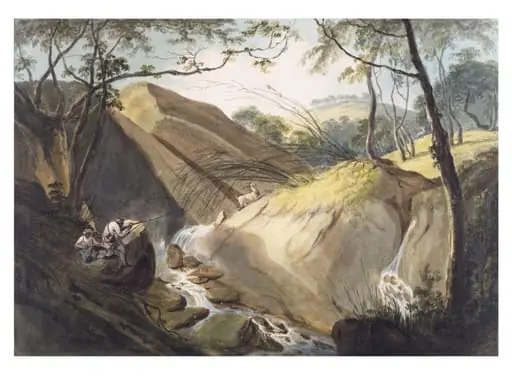
 View near Bandell, India
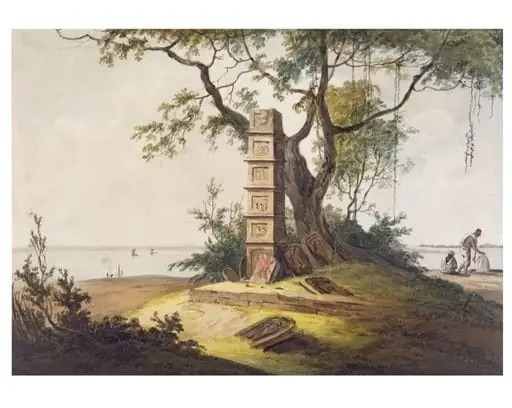
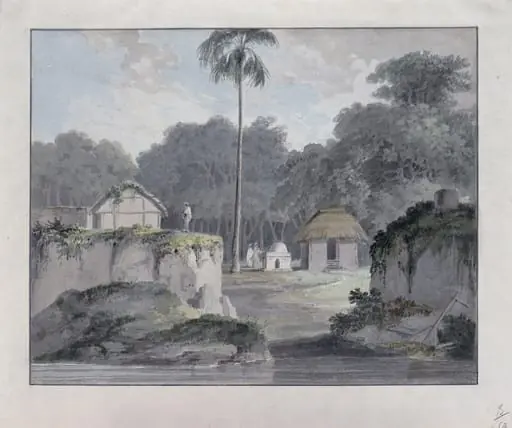 View near Nia-sirai
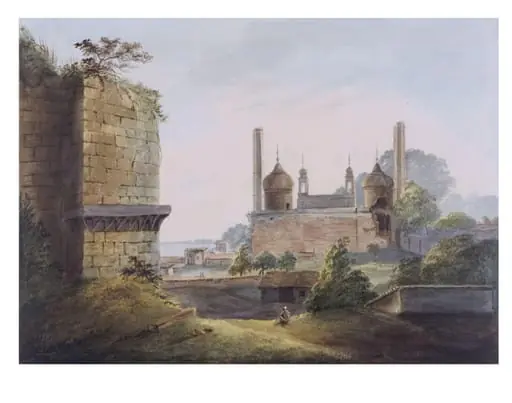
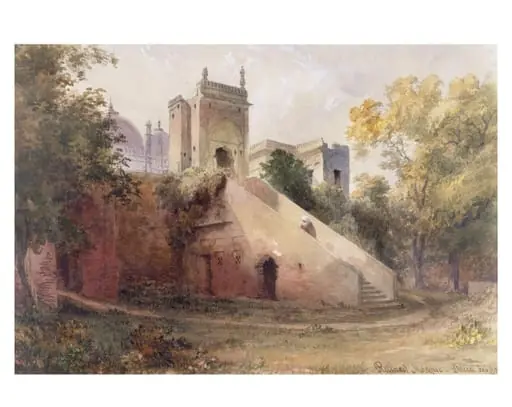 Ruined Mosque - Dacca
![Yediküle with a Muslim Cemetery, Constantinople, by Michel-François Préaulx [Préaux]](https://artifactworldgallery.com/img/michel-francois-preaulx-preaux--yedikule-with-a-muslim-cemetery-constantinople--c422bdec8e9c6ba8-w320.webp) Yediküle with a Muslim Cemetery, Constantinople
Yediküle with a Muslim Cemetery, Constantinople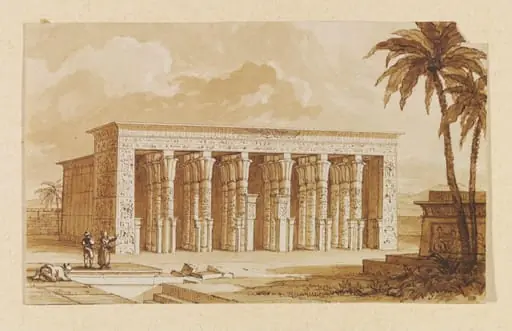 Perspective view of the Temple of Antaeopolis
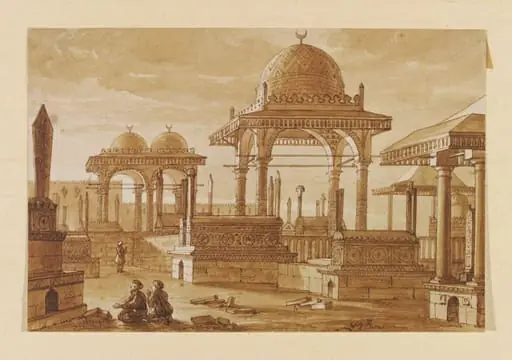 Part of the City of Tombs at Cairo
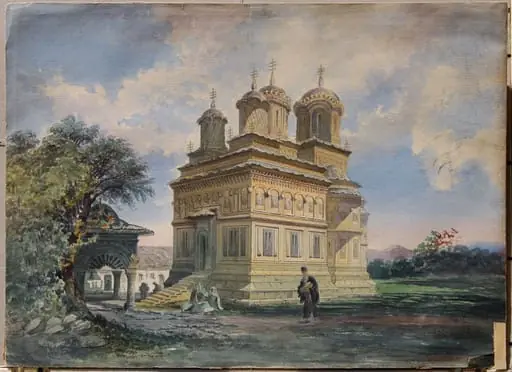 Curtea de Argeș
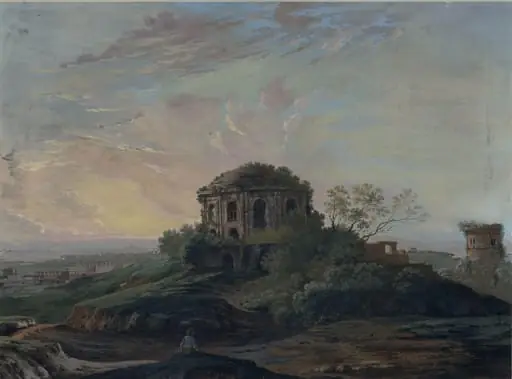 Tempio della Tosse
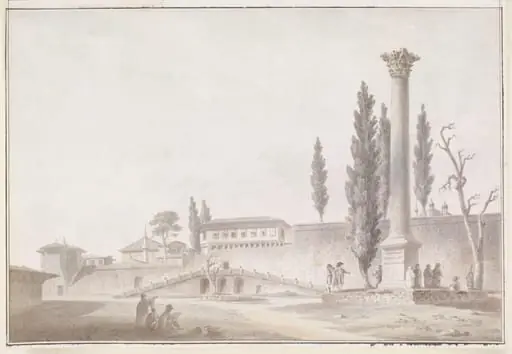 The Gardens of the Seraglio with European visitors inspecting the Column of the Goths, Constantinople