Artwork
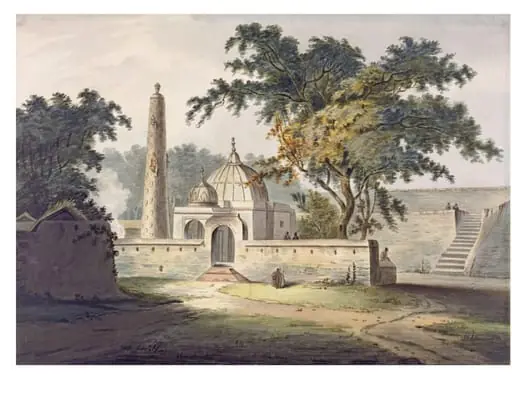
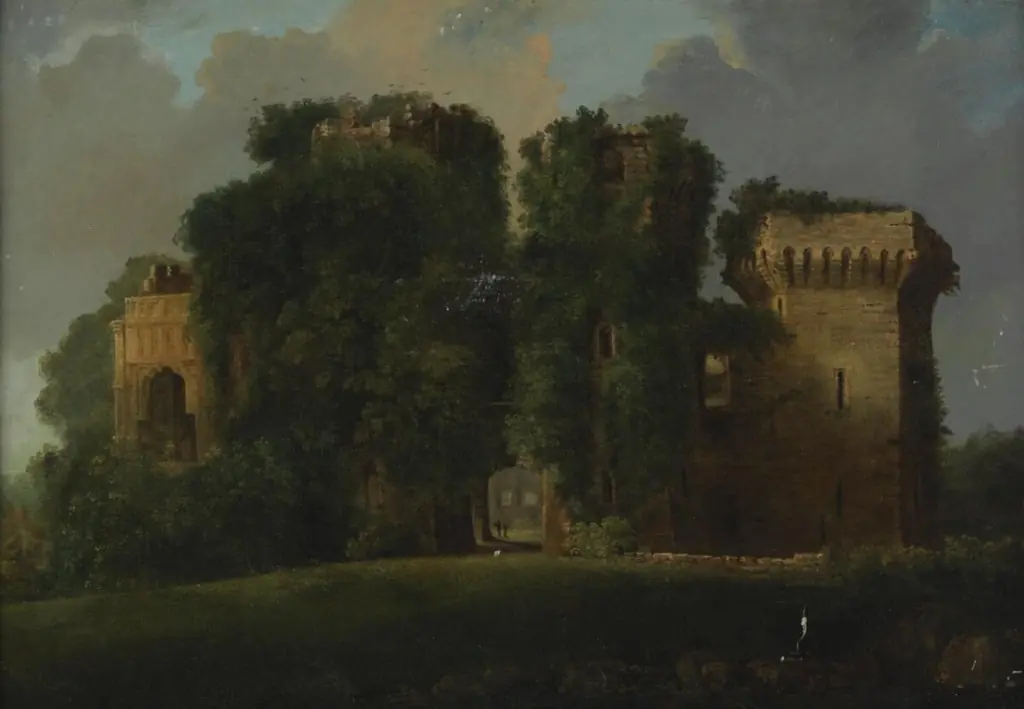
Mosque on the bank of the River Gumti near Lucknow
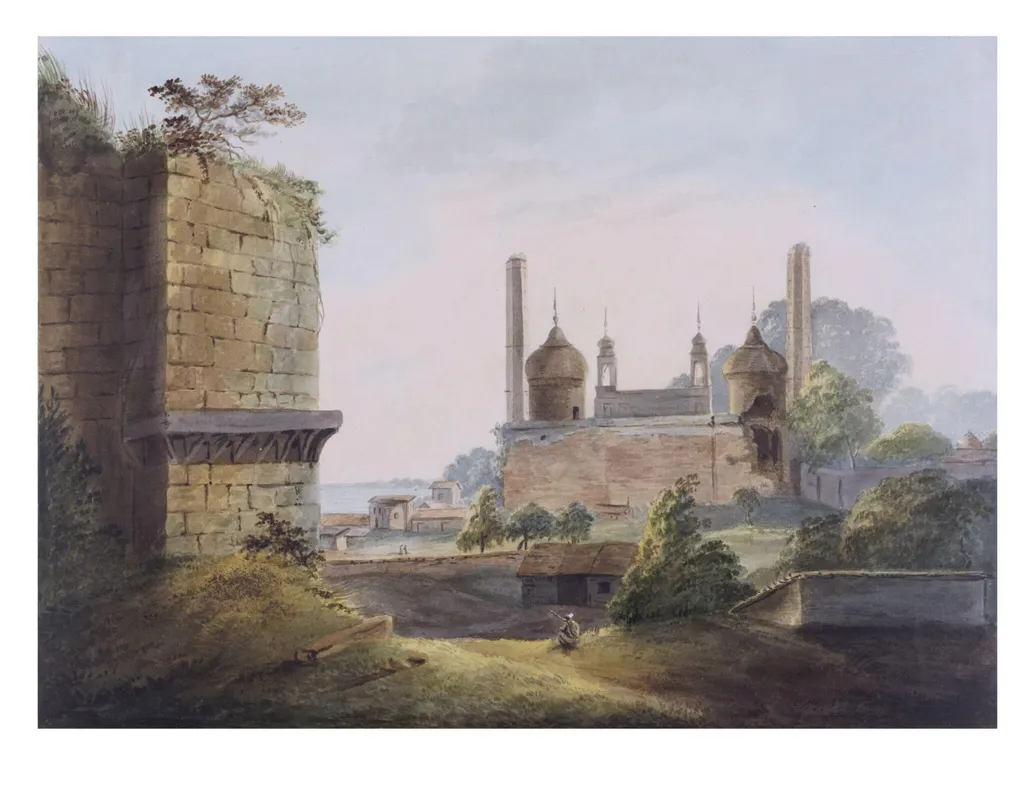
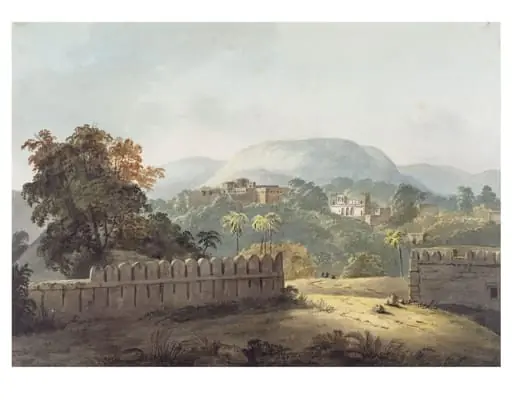
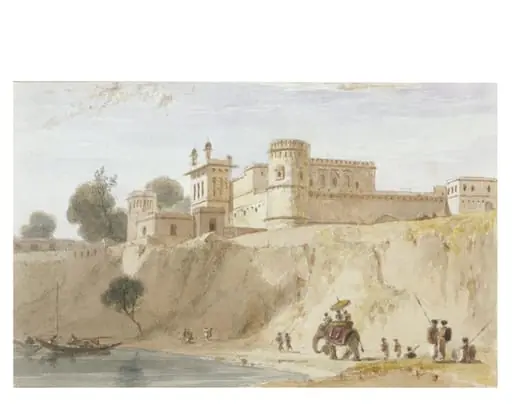
Mosque on the bank of the River Gumti near Lucknow is a paint painting by the Romanticist artist William Orme. It dates from 1803 and is held in the collection of the Victoria and Albert Museum.
About this work
The painting is titled Mosque on the bank of the River Gumti near Lucknow.
It was created by William Orme around 1801-1805.
The artist's background is interesting - he was a landscape painter with a preference for topographical subjects.
He exhibited his works at the Royal Academy between 1797 and 1819.
You can learn more about this style at the movement: Romanticism.
Overview
Though based in London, he contributed to publications documenting Indian life through drawings made after the work of François Baltazard Solvyns.
William Orme, an English landscape painter active between 1795 and 1819, produced topographical watercolours primarily of Britain and Wales. Though based in London, he contributed to publications documenting Indian life through drawings made after the work of François Baltazard Solvyns. This watercolour, dated circa 1801–1805, was likely created as a preparatory study for an engraving in the 1804–1805 publication 'The Costume of Indostan,' commissioned by his brother Edward.
Subject & Meaning
The painting depicts a mosque situated along the River Gumti, though the title mistakenly places it near Lucknow rather than Calcutta, where Solvyns made his original observations. The structure is rendered with architectural precision, reflecting an interest in documenting local religious buildings. The scene carries no overt narrative, instead emphasizing the quiet integration of built form within the natural landscape, consistent with topographical documentation rather than symbolic interpretation.
Technique & Style
Executed in watercolour, the work employs fine brushwork and restrained tonal gradations to capture architectural detail and atmospheric light. Orme’s approach aligns with the topographical tradition—accurate, unembellished, and observational. The composition avoids dramatic Romantic elements, focusing instead on clarity of form and spatial depth, characteristic of illustrations intended for reproduction in printed volumes rather than standalone artistic expression.
History & Provenance
The watercolour was created as part of a series of drawings derived from Solvyns’s 1799 etchings of Indian life, selected for inclusion in Edward Orme’s 1804–1805 publication. William Orme’s role was to adapt these images into watercolour for engraving. The piece entered the V&A’s collection as part of a group of original studies used in the production of 'The Costume of Indostan,' linking it directly to the collaborative publishing venture between the Orme brothers and Solvyns’s fieldwork.
Context
During the early 19th century, British publishers increasingly sought visual records of India to satisfy public curiosity. Solvyns’s ethnographic studies provided a foundation, while Orme’s watercolours served as intermediaries between original sketches and printed engravings. This work reflects the intersection of colonial documentation, commercial publishing, and the emerging demand for accurate visual accounts of South Asia, distinct from imaginative or exoticized portrayals.
Legacy
Orme’s contribution lies in his role as a facilitator of cross-cultural visual transmission rather than as an independent artist of the period. His watercolours helped disseminate ethnographic imagery to a British audience, preserving details of architecture and environment that might otherwise have been lost. Though not widely recognized as a major figure in art history, his work remains a valuable record of early colonial visual documentation practices.
Artist & collection
Artist
William Orme painted detailed scenes of early-1800s India, when British artists were stationed there and sketched everything from hunting parties to temples.