Artwork
Untitled
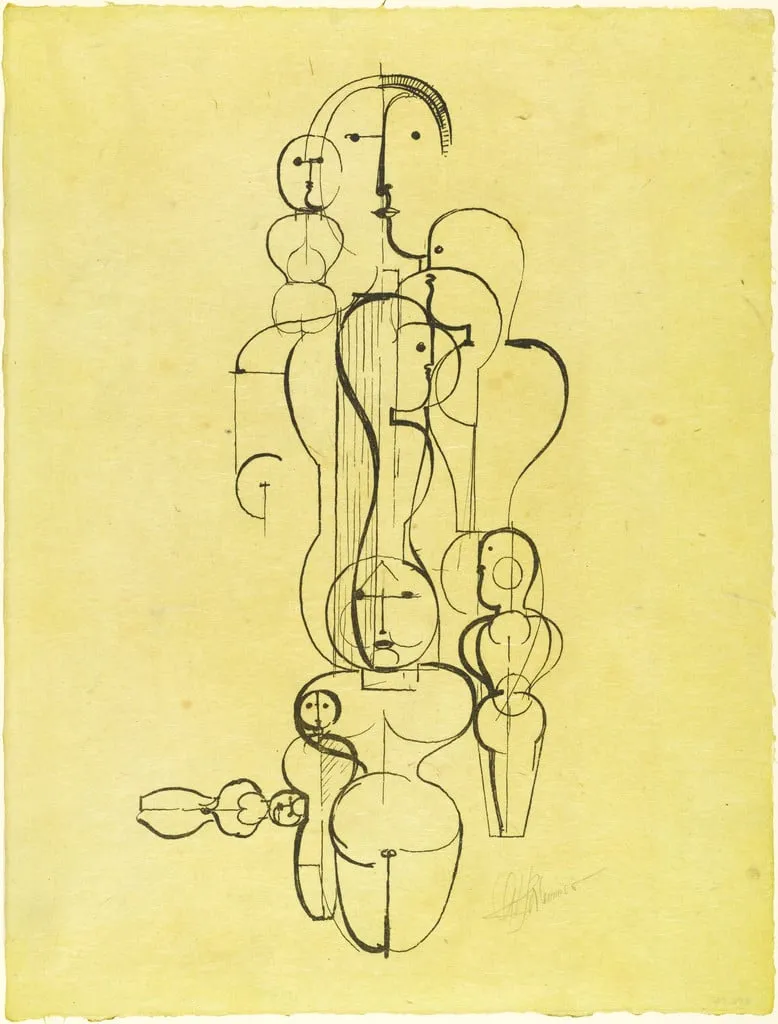
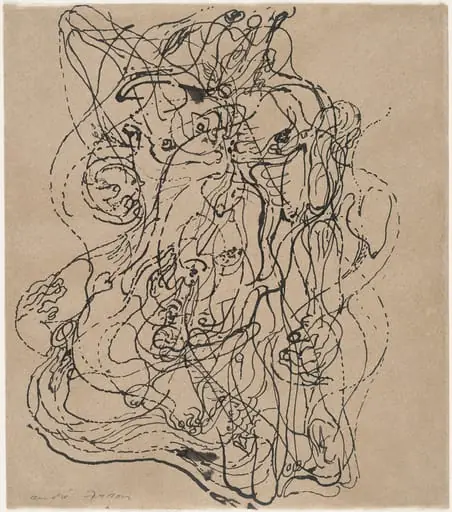
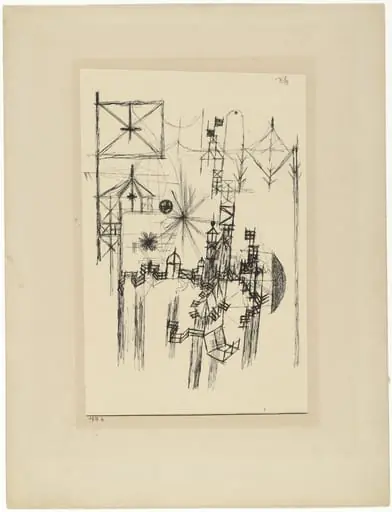
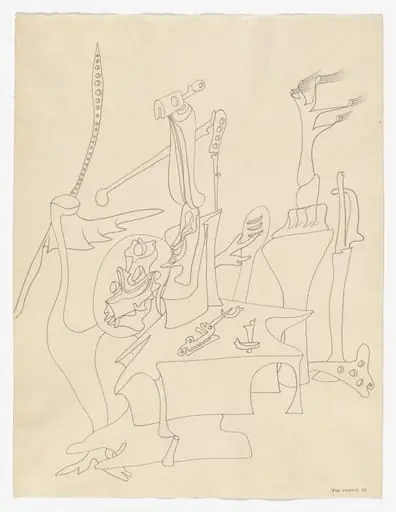
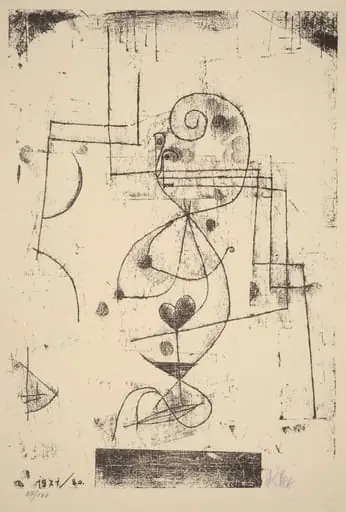
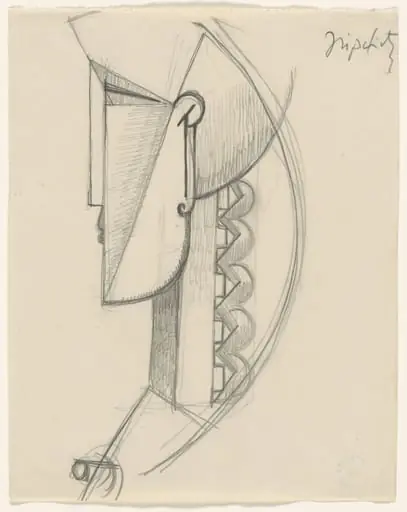
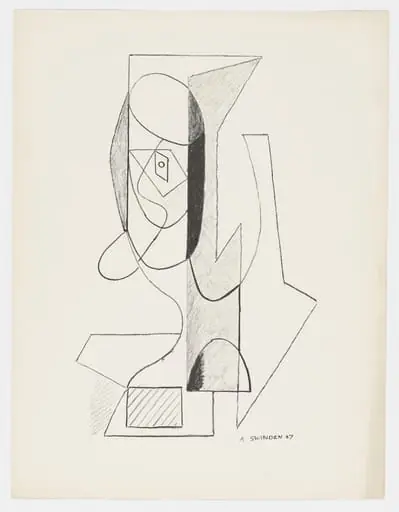
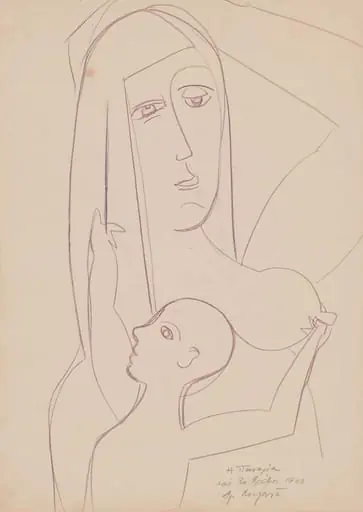
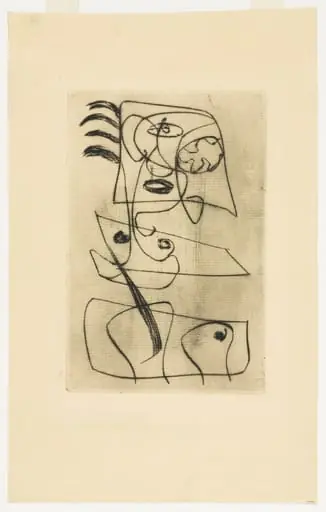
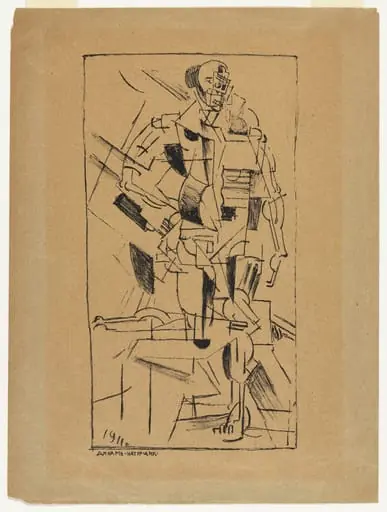
Untitled is an ink print by Oskar Schlemmer. It dates from 1921 and is held in the collection of the Museum of Modern Art.
About this work
Overview
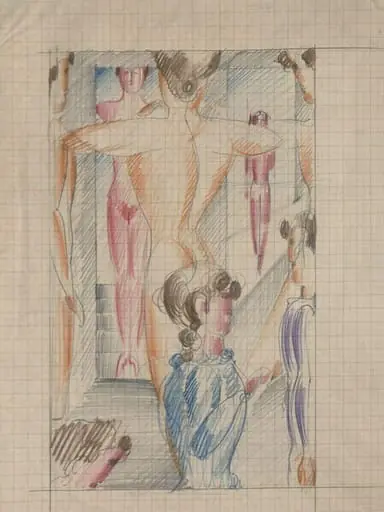
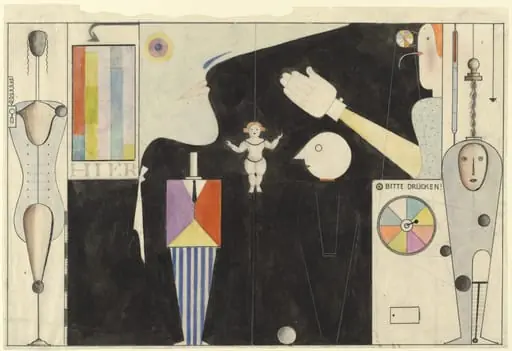
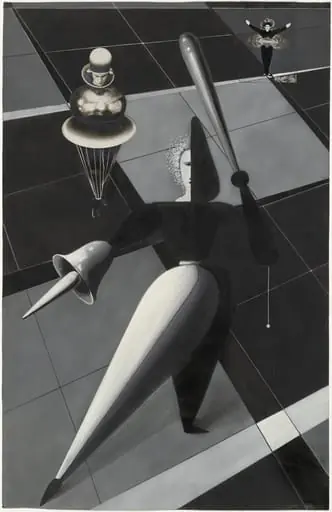
Created in 1921, this lithograph by Oskar Schlemmer is an early example of his engagement with abstracted human forms. Made during his time at the Bauhaus, the work reflects the school’s emphasis on synthesizing art, craft, and design. Though untitled, its composition reveals Schlemmer’s fascination with structure and movement, using minimal lines to suggest both anatomy and mechanical rhythm.
Subject & Meaning
Smaller circular shapes scattered along its length resemble detached heads or facial features, suggesting fragmentation or multiplicity of identity.
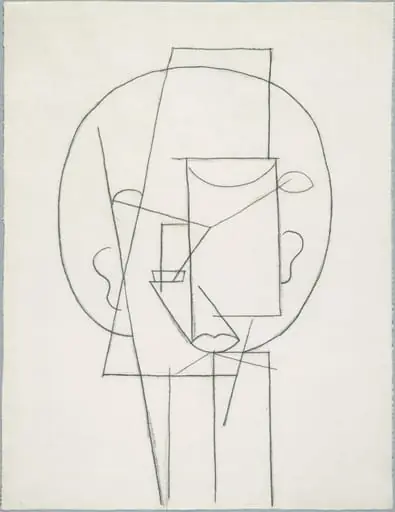
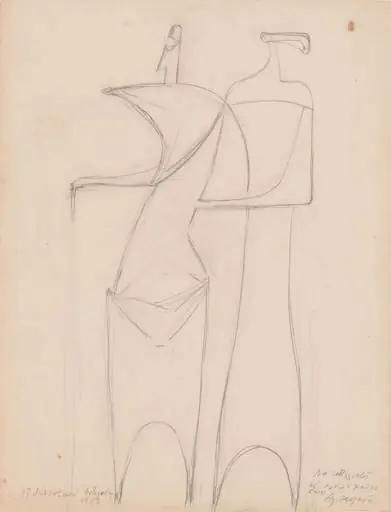
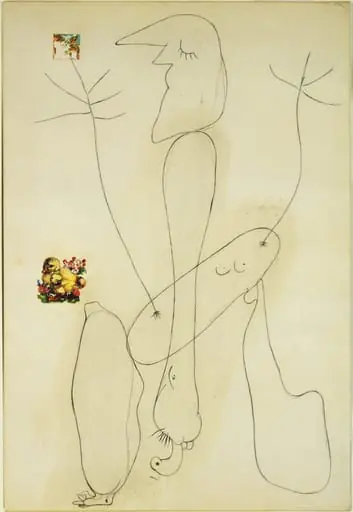
The figure in the print is an elongated, skeletal form composed of overlapping circles and irregular lines, evoking a human silhouette fused with machine-like elements. Smaller circular shapes scattered along its length resemble detached heads or facial features, suggesting fragmentation or multiplicity of identity. The absence of detail invites interpretation: is it a solitary being, a collective, or an abstract representation of motion?
Technique & Style
Executed in lithography, the work employs fluid, spontaneous lines that retain the immediacy of a sketch. The wobbly, unrefined contours contrast with the underlying geometric logic of the composition, creating tension between control and spontaneity. The medium’s capacity for tonal subtlety is used sparingly, emphasizing line over shading, aligning with Bauhaus principles of clarity and functional form.
History & Provenance
Produced in 1921, this print predates Schlemmer’s formal appointment as Master of Form at the Bauhaus theatre workshop in 1923. It belongs to a series of early experiments in which he translated theatrical and spatial ideas into two-dimensional form. The signature in the corner confirms authorship, though no documented provenance or exhibition history is widely recorded for this specific piece.
Context
In early 1920s Germany, the Bauhaus sought to redefine art’s role in modern society through abstraction and functional design. Schlemmer’s work responded to this by reimagining the human body as a geometric entity within space. This lithograph aligns with contemporaneous explorations in expressionism and constructivism, yet resists emotional intensity in favor of structural inquiry.
Legacy
Though lesser known than Schlemmer’s later stage designs, this lithograph exemplifies the foundational phase of his artistic development. Its fusion of organic and mechanical forms influenced subsequent generations exploring the body in abstract and industrial contexts. The work remains a quiet but significant document of Bauhaus experimentation in print media.
Artist & collection
Artist
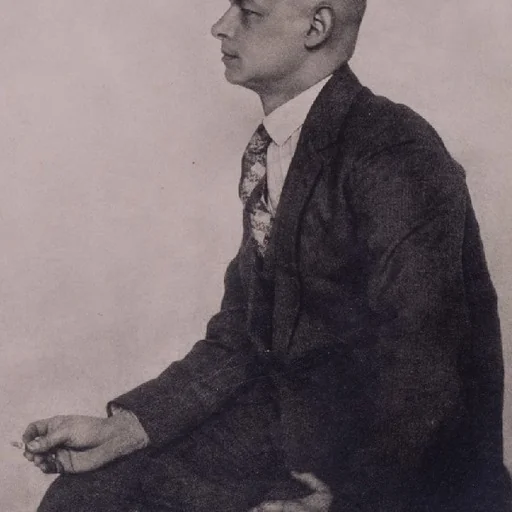
Oskar Schlemmer (German pronunciation: ; 4 September 1888 – 13 April 1943) was a German painter, sculptor, designer and choreographer associated with the Bauhaus school.