Artwork
Untitled
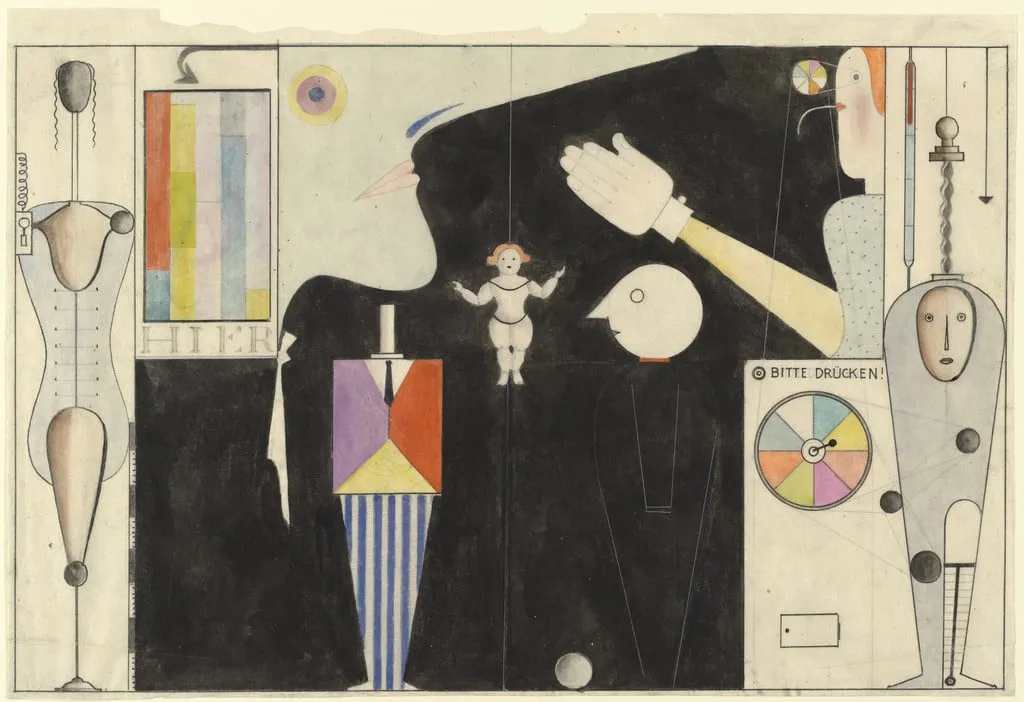
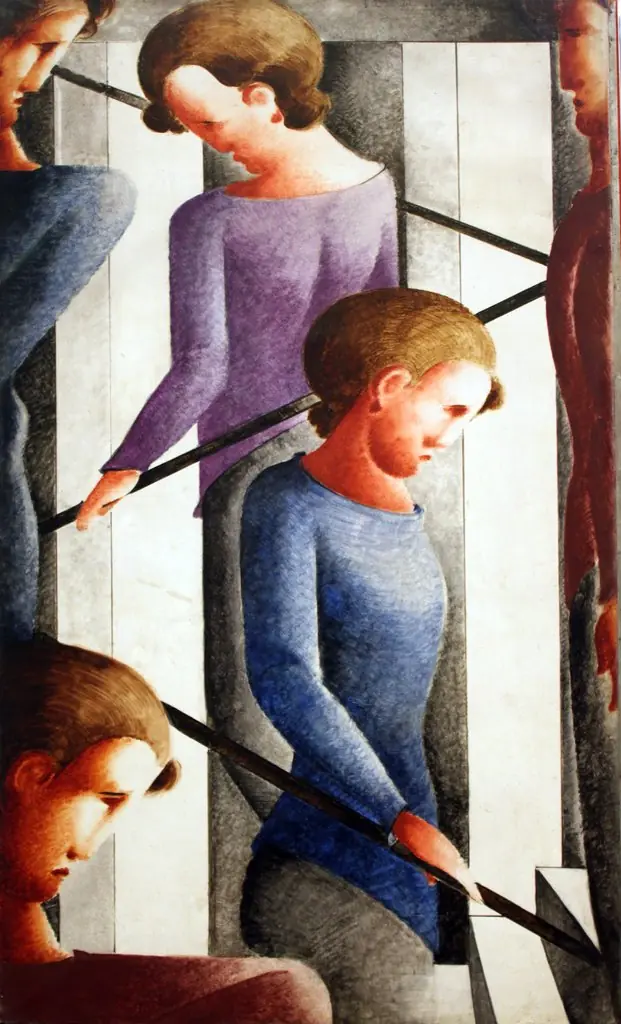
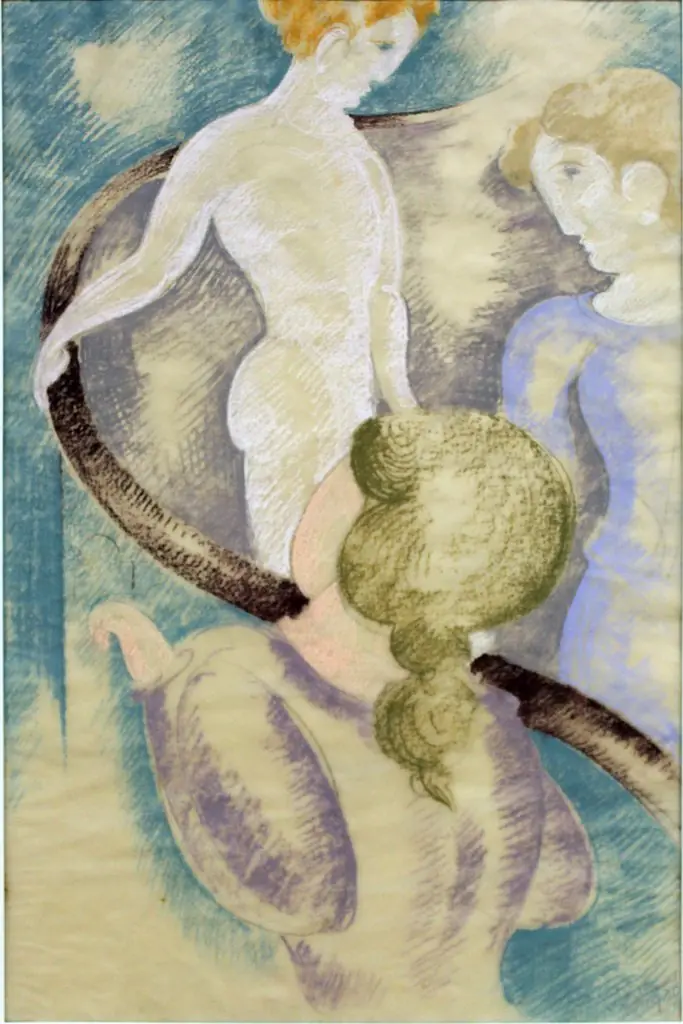
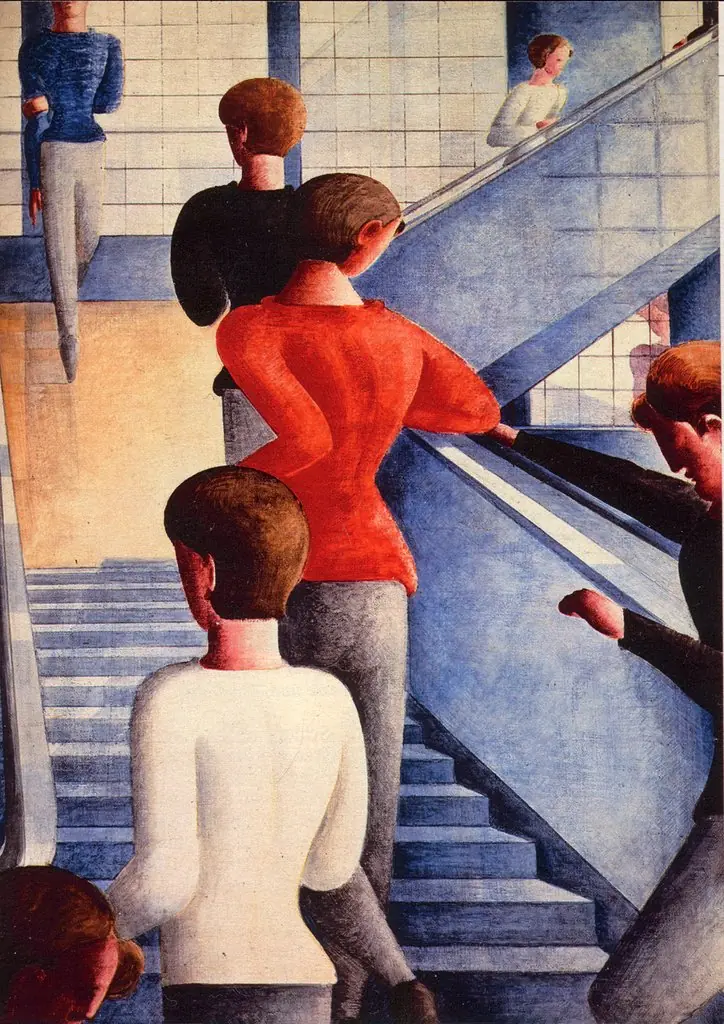
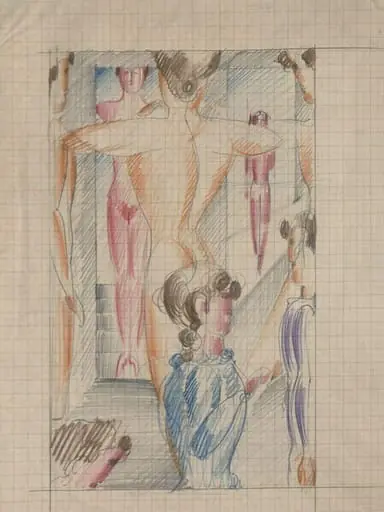
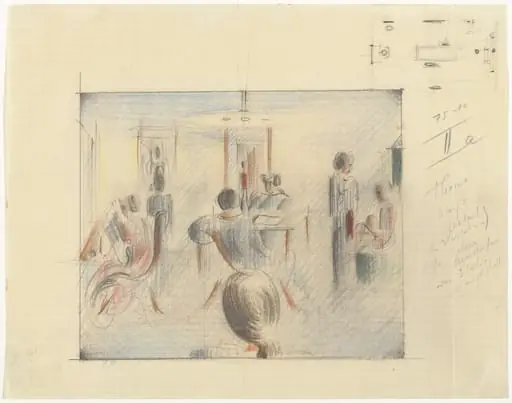
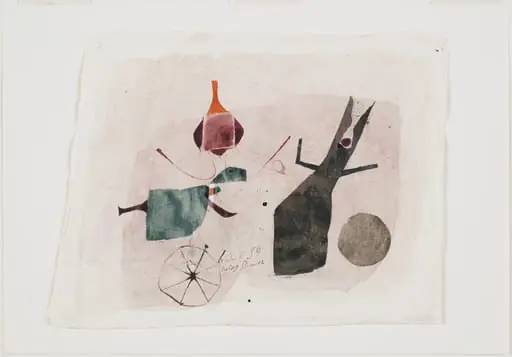
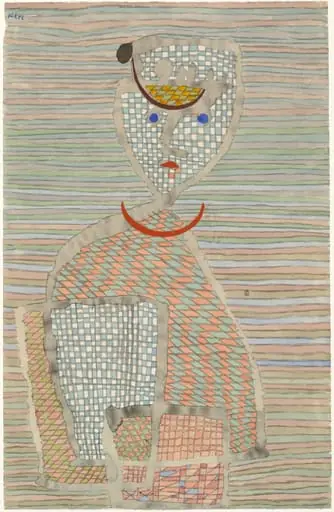
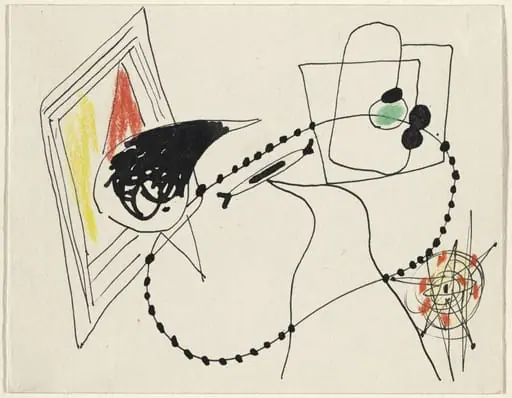
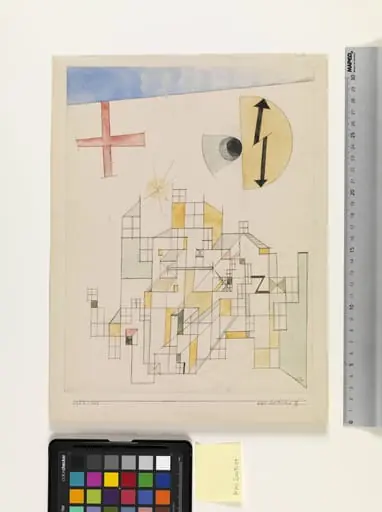
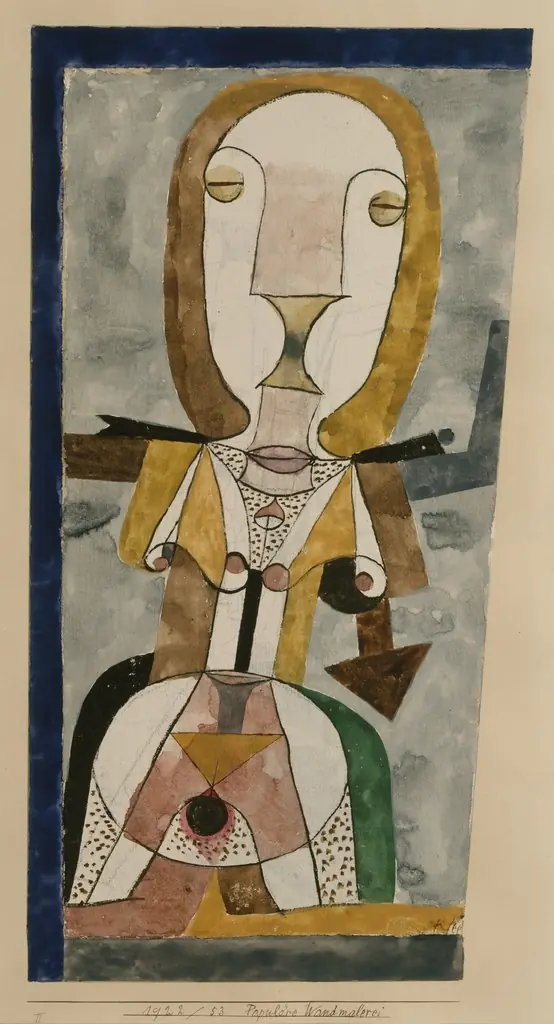
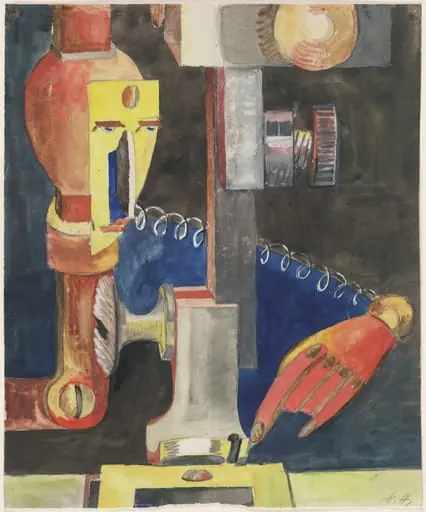
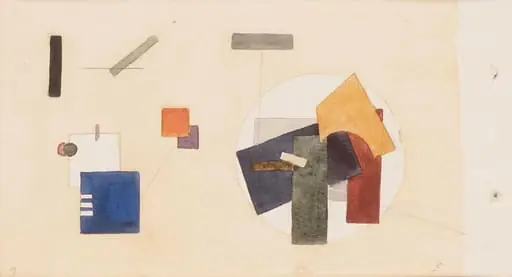
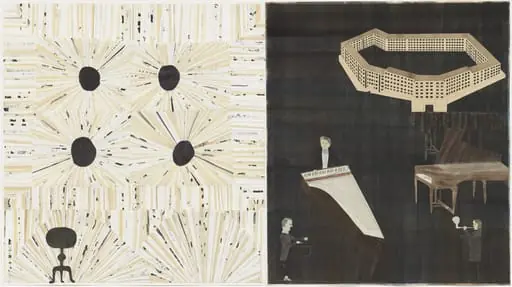
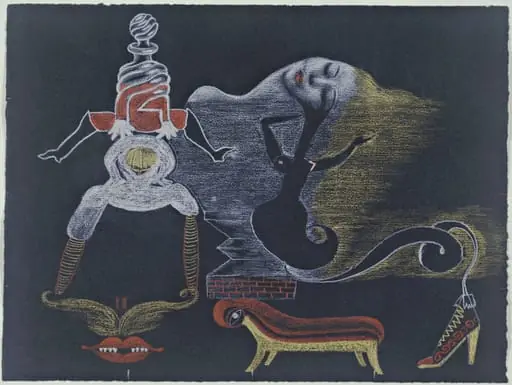
Untitled is a watercolor drawing by Oskar Schlemmer. It dates from 1922 and is held in the collection of the Museum of Modern Art.
About this work
Overview
It belongs to a series of works produced during his time at the Bauhaus, where he investigated the relationship between the human form and abstract space.
Created in 1922 by Oskar Schlemmer, this drawing combines watercolor, pencil, and ink on transparentized paper. It belongs to a series of works produced during his time at the Bauhaus, where he investigated the relationship between the human form and abstract space. The medium’s translucency enhances the layered, architectural quality of the composition, reflecting Schlemmer’s interest in dematerializing the figure through structured line and color.
Subject & Meaning
A tall, monochromatic figure stands centrally, arms raised as if in motion or ritual. A small, doll-like form hovers near its chest, suggesting a puppet or surrogate self. To the left, a vertical band of primary colors evokes a window or stage backdrop; on the right, a segmented circle resembles a clock or mechanical wheel. The German phrase 'Bitte Drücken!'—'Please Press'—introduces an ironic, performative directive, implying interaction with an unseen mechanism or audience.
Technique & Style
Schlemmer employed precise pencil outlines and flat, unmodulated washes of watercolor to reduce forms to essential geometries. The use of transparentized paper allowed for overlapping layers, creating depth without perspective. Ink accents define sharp contours, while the black-and-white background isolates the colored elements, emphasizing their symbolic rather than naturalistic function. The style aligns with Bauhaus principles of abstraction and functional design.
History & Provenance
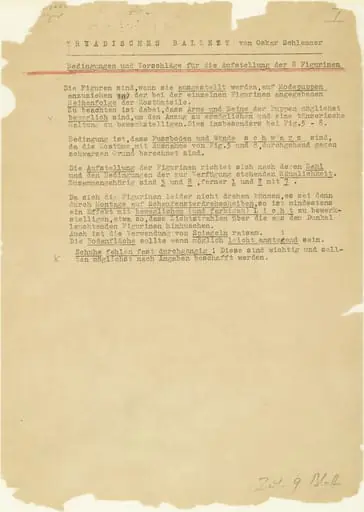
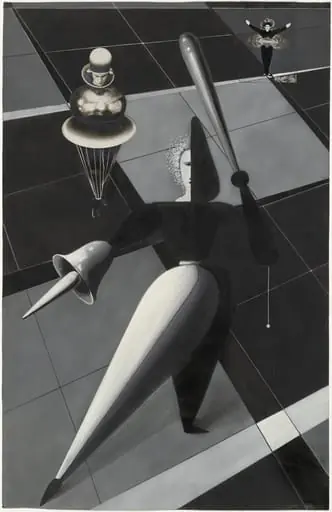
This work emerged during Schlemmer’s tenure at the Bauhaus, prior to his appointment as Master of Form in 1923. It was likely made in connection with his theatrical experiments, particularly those leading to the *Triadic Ballet*. Though undocumented in early exhibitions, it remained in private collections until acquired by a major institution in the late 20th century, where it is now held as part of a core Bauhaus drawing archive.
Context
In early 1920s Germany, artists sought to redefine art through abstraction and industrial aesthetics. Schlemmer’s work responded to this by treating the human body as a geometric unit within constructed environments. The drawing’s mechanical motifs and theatrical cues reflect broader cultural fascinations with automation, performance, and the body’s role in modern space—themes central to Bauhaus pedagogy and Weimar-era avant-garde theater.
Legacy
This drawing exemplifies Schlemmer’s enduring influence on the integration of performance, design, and visual abstraction. Its fusion of symbolic figures, mechanical elements, and theatrical language anticipated later developments in kinetic art and conceptual performance. Though less known than his choreographic works, such drawings remain vital for understanding how Bauhaus ideals translated into intimate, experimental formats.
Artist & collection
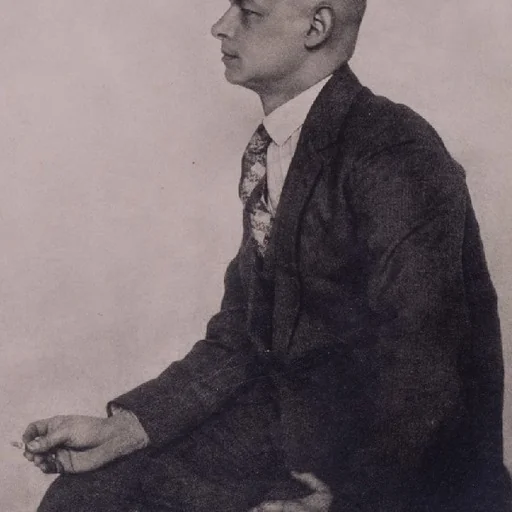
Artist
Oskar Schlemmer (German pronunciation: ; 4 September 1888 – 13 April 1943) was a German painter, sculptor, designer and choreographer associated with the Bauhaus school.