Artwork
Peasants Feasting at an Inn
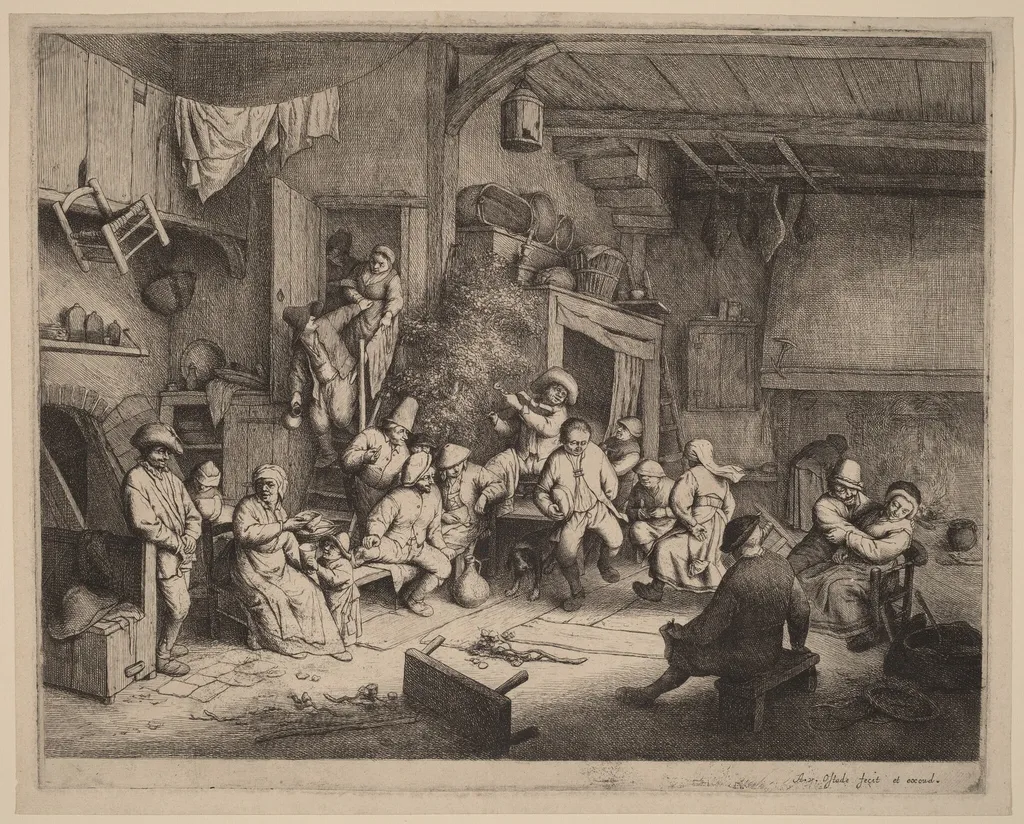
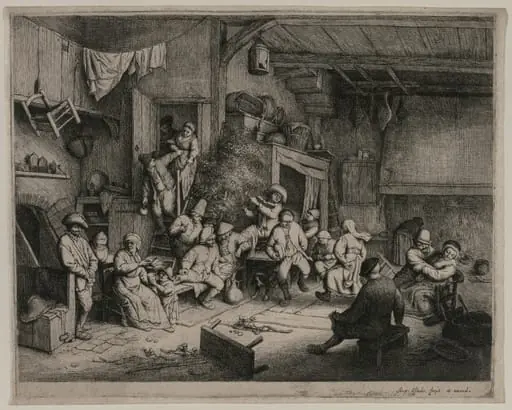
Peasants Feasting at an Inn is an ink print by the Baroque artist Adriaen van Ostade. It dates from 1652 and is held in the collection of the National Gallery of Art.
About this work
Overview
Created around 1652 by Adriaen van Ostade, this print captures a moment of communal life in a rural Dutch tavern.
Created around 1652 by Adriaen van Ostade, this print captures a moment of communal life in a rural Dutch tavern. Executed in etching with selective drypoint, it appears on laid paper, a common support for prints of the period. The scene is intimate and unidealized, focusing on the quiet energy of ordinary people rather than grand narratives, aligning with Ostade’s broader interest in the daily rhythms of peasant life.
Subject & Meaning
A group of laborers gathers in a modest interior, engaged in eating, conversation, and music-making. Their worn garments and the utilitarian surroundings—tools on the walls, rough timber—suggest a working-class setting. The absence of aristocratic or religious symbolism underscores a secular, grounded view of society. The scene conveys neither moral judgment nor idealization, but rather a quiet observation of shared human moments in a humble space.
Technique & Style
Ostade employed fine etched lines to render textures with precision: the weave of coarse fabric, the grain of wooden beams, and the folds of wrinkled skin. Drypoint was added selectively to deepen shadows and enhance contrast, particularly in the faces and clothing. The limited tonal range and meticulous line work reflect the discipline of printmaking, where each stroke must serve both form and atmosphere without the flexibility of paint.
History & Provenance
The print was produced during Ostade’s mature period, when his etchings gained wider circulation among collectors in the Netherlands and beyond. While no specific early ownership records are documented, similar works from this era were commonly traded through print dealers in Amsterdam and Haarlem. Its survival in multiple impressions suggests it was reproduced and distributed with some commercial success.
Context
In mid-17th century Holland, genre scenes flourished as urban prosperity expanded the market for art depicting everyday life. Unlike Italian or French traditions that favored myth or history, Dutch artists turned to the domestic and the mundane. Ostade’s prints contributed to this trend, offering accessible images that resonated with middle-class viewers who saw their own world reflected in the taverns and fields.
Legacy
Ostade’s etchings, including this one, helped define the visual language of Dutch peasant genre scenes. His attention to detail and unembellished realism influenced later printmakers and genre painters, both in the Netherlands and abroad. Though less celebrated than his oil paintings, his prints ensured broader dissemination of his vision, embedding his depictions of rural life into the visual culture of the era.
Artist & collection
Artist
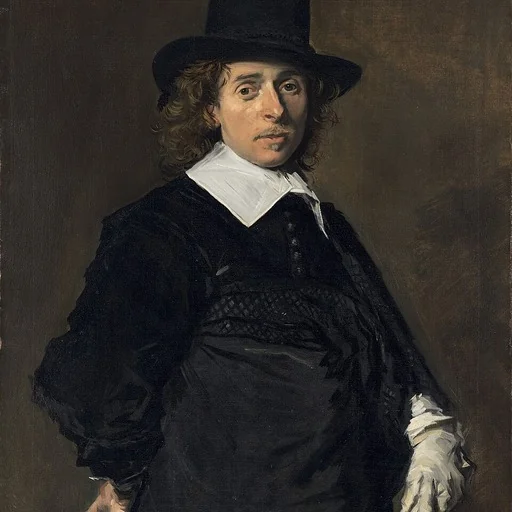
Adriaen van Ostade (baptized as Adriaen Jansz Hendricx 10 December 1610 – buried 2 May 1685) was a Dutch Golden Age painter of genre works, showing the everyday life of ordinary men and women.

 The Dance in the Inn
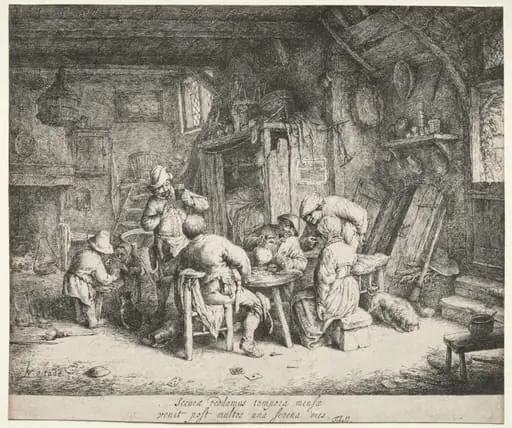 The Breakfast
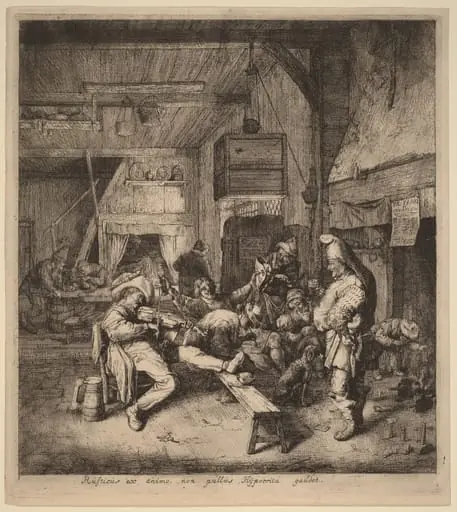 Violin Player Seated in a Tavern
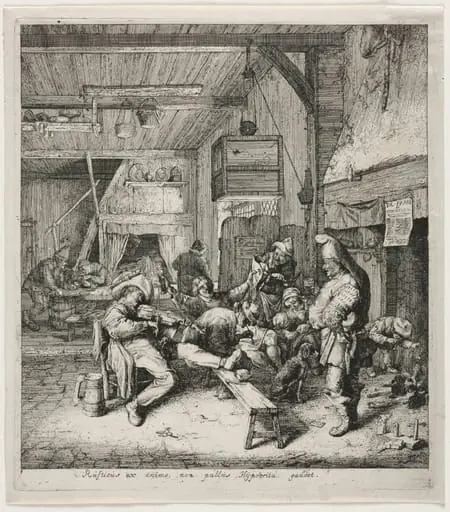 Violin Player Seated in the Inn
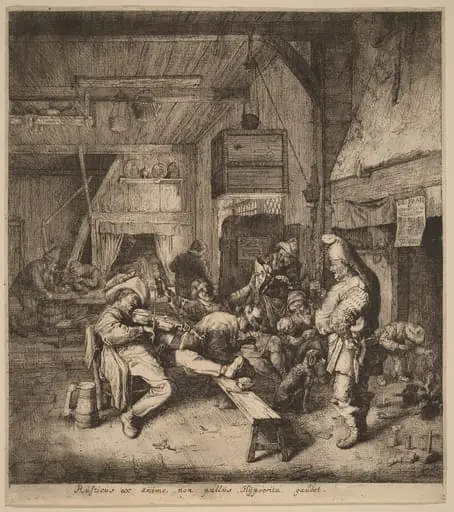 Violin Player Seated in a Tavern
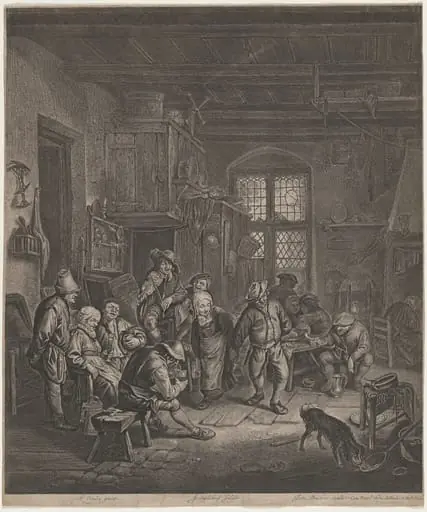 Peasant Interior with a Dancing Couple
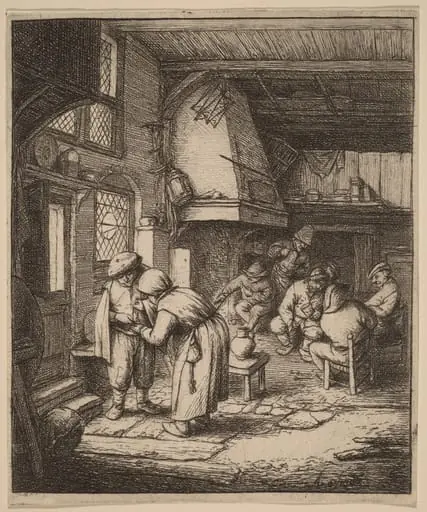 Man Paying the Landlady at an Inn
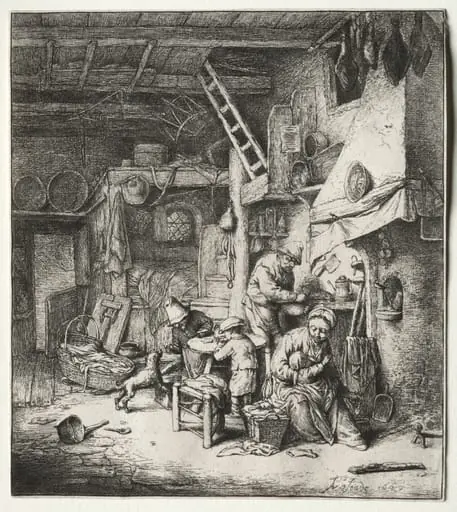 The Family
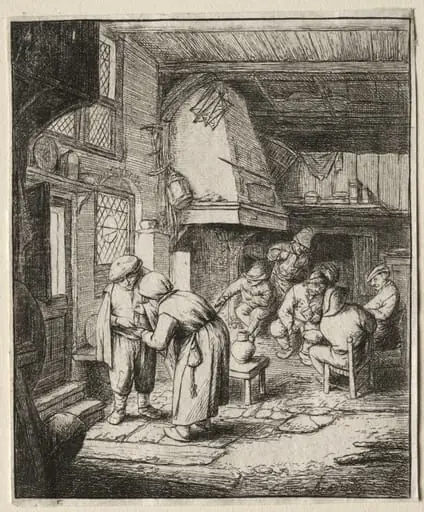 Peasant Settling his Debt
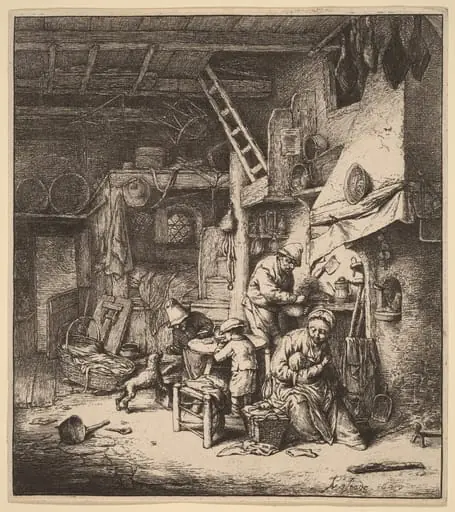 Peasant Family in an Interior with the Mother Feeding a Child
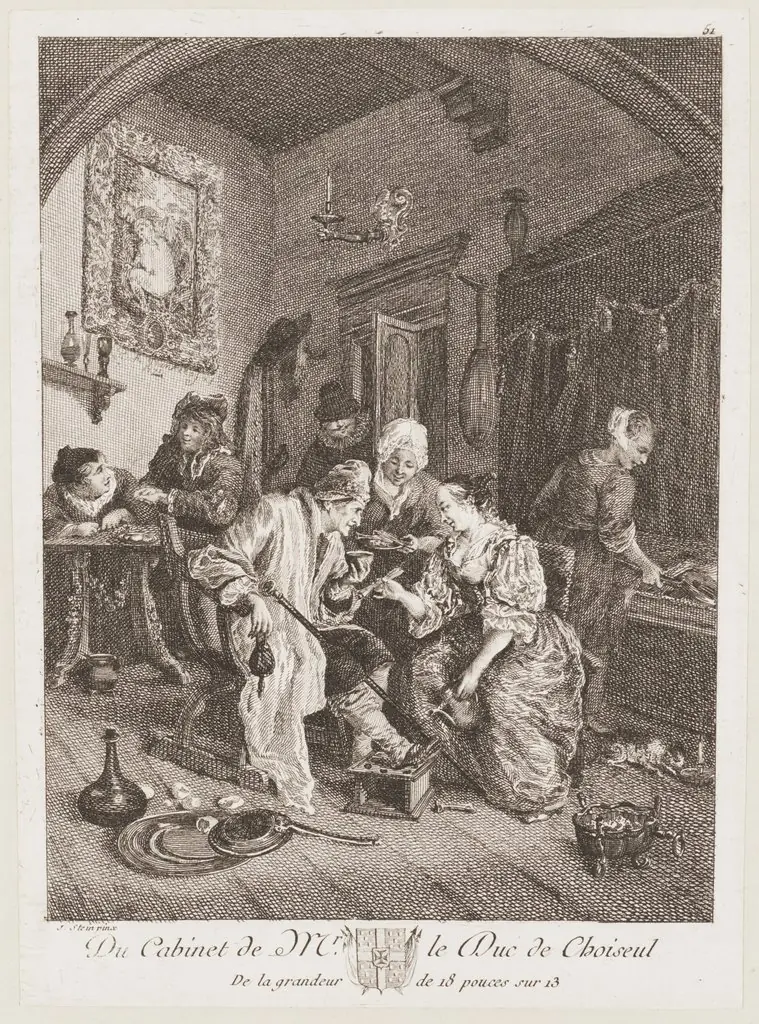 The Sick Greybeard (or, "January and May")
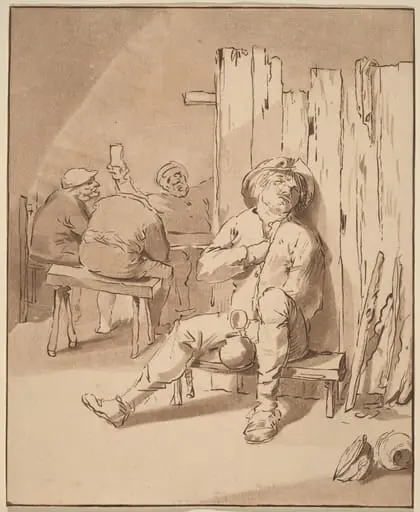 Drunken Peasant at an Inn