Artwork
Two Peasants Drinking
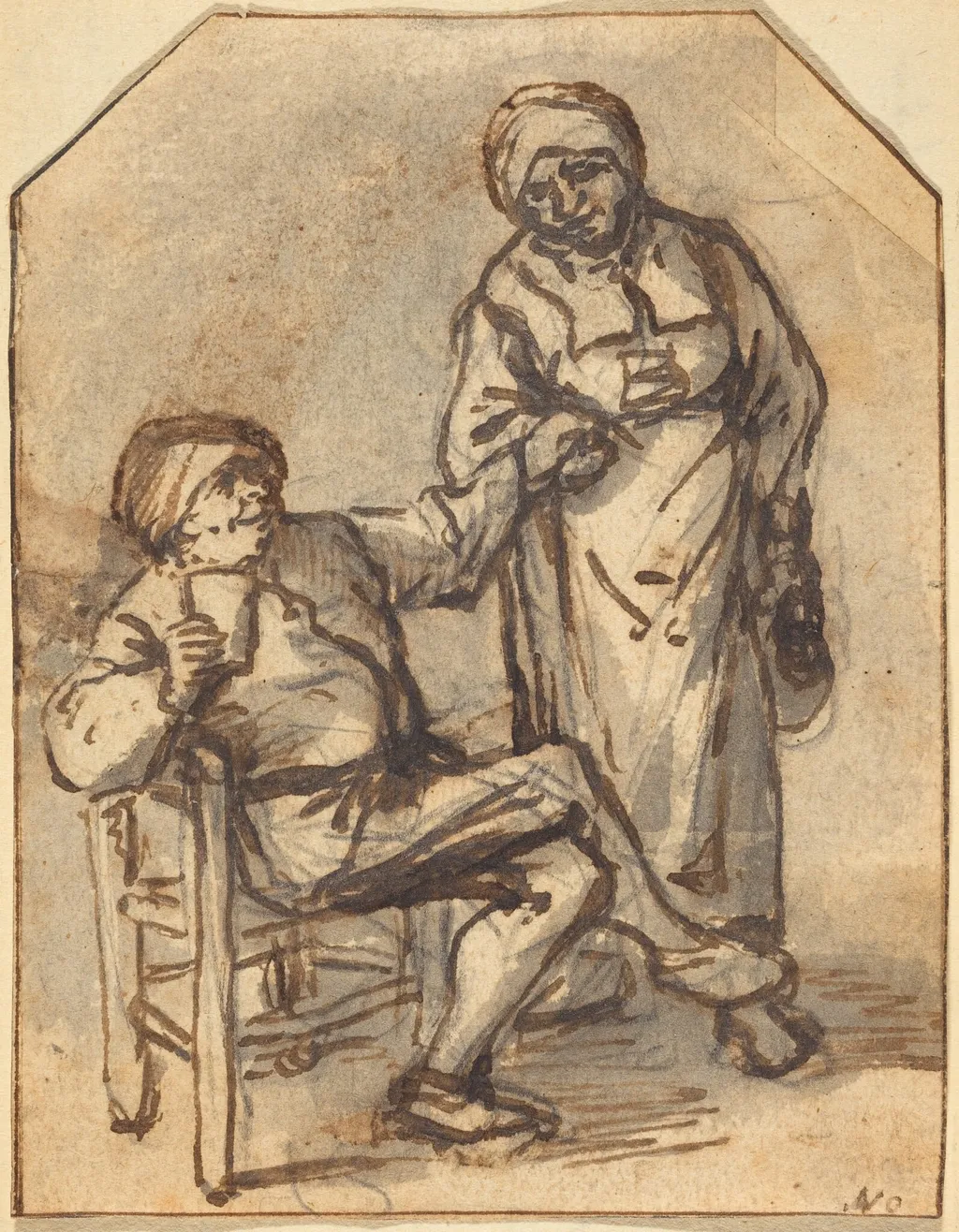
Two Peasants Drinking is an ink drawing by the Baroque artist Adriaen van Ostade. It dates from 1648 and is held in the collection of the National Gallery of Art.
About this work
Overview
Created in 1648, *Two Peasants Drinking* is a drawing by Dutch artist Adriaen van Ostade. Executed on laid paper, the work records a brief moment of rural life, showing two peasants sharing a drink. It exemplifies the artist’s sustained interest in the quotidian activities of lower‑class society during the mid‑seventeenth century.
Subject & Meaning
The composition presents a pair of country laborers seated together, each holding a vessel. The informal gesture suggests camaraderie and a pause from work, offering a glimpse into the social rituals of the Dutch peasantry. Van Ostade’s choice of a modest, everyday scene underscores his aim to document, rather than idealise, the lives of ordinary people.
Technique & Style
Van Ostade employed pen and brown ink, reinforced by a gray wash, over a graphite underdrawing on laid paper. The graphite sketch establishes the figures’ placement, while the ink and wash provide tonal depth and texture. The restrained palette and fine line work convey a sense of immediacy, characteristic of the artist’s drawing practice.
Context
Operating within the Dutch Golden Age, van Ostade specialised in genre scenes that highlighted the domestic and communal aspects of 17th‑century life. This drawing aligns with his broader oeuvre, which frequently portrayed tavern interiors, market stalls, and rural gatherings, reflecting contemporary interest in the moral and social dimensions of everyday existence.
Artist & collection
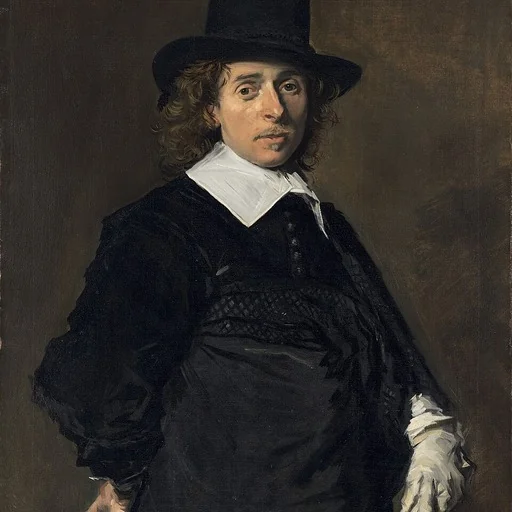
Artist
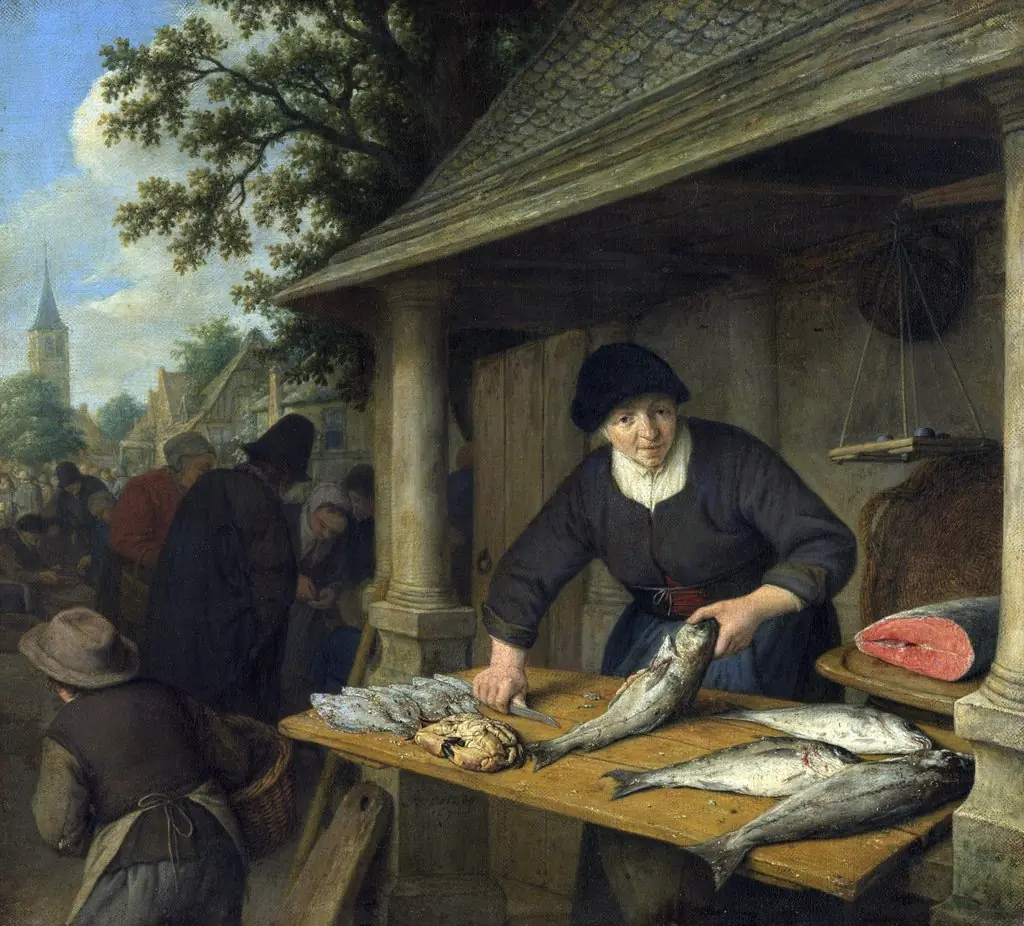
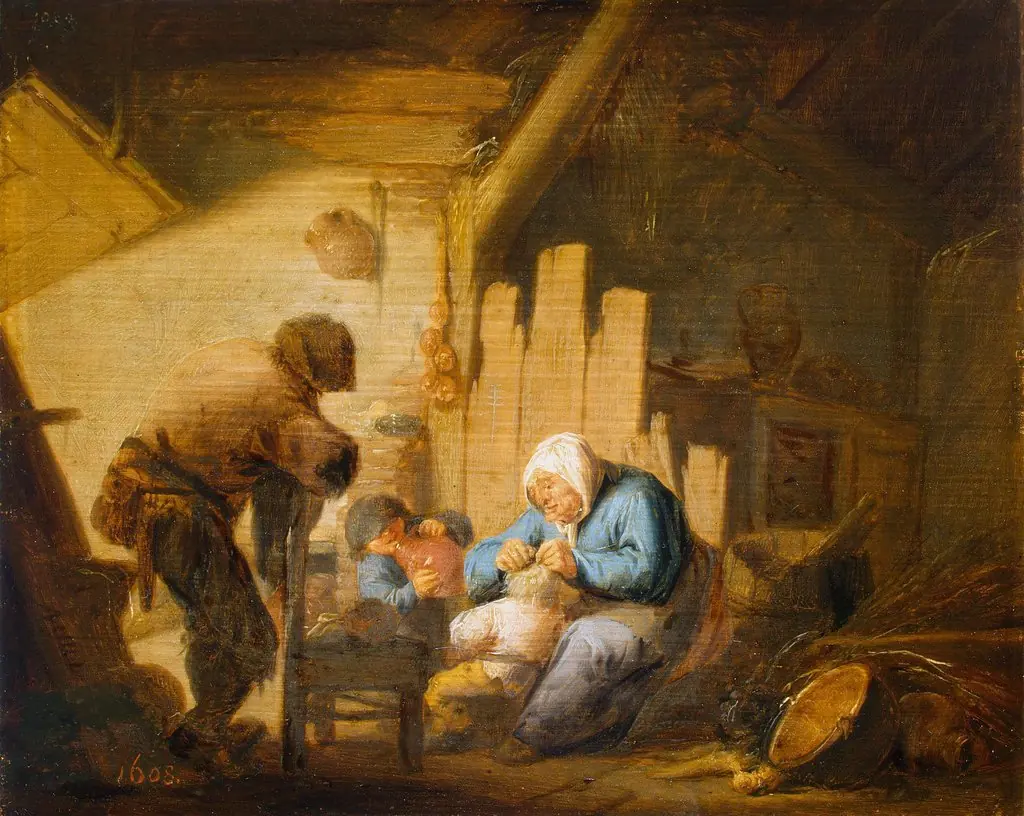
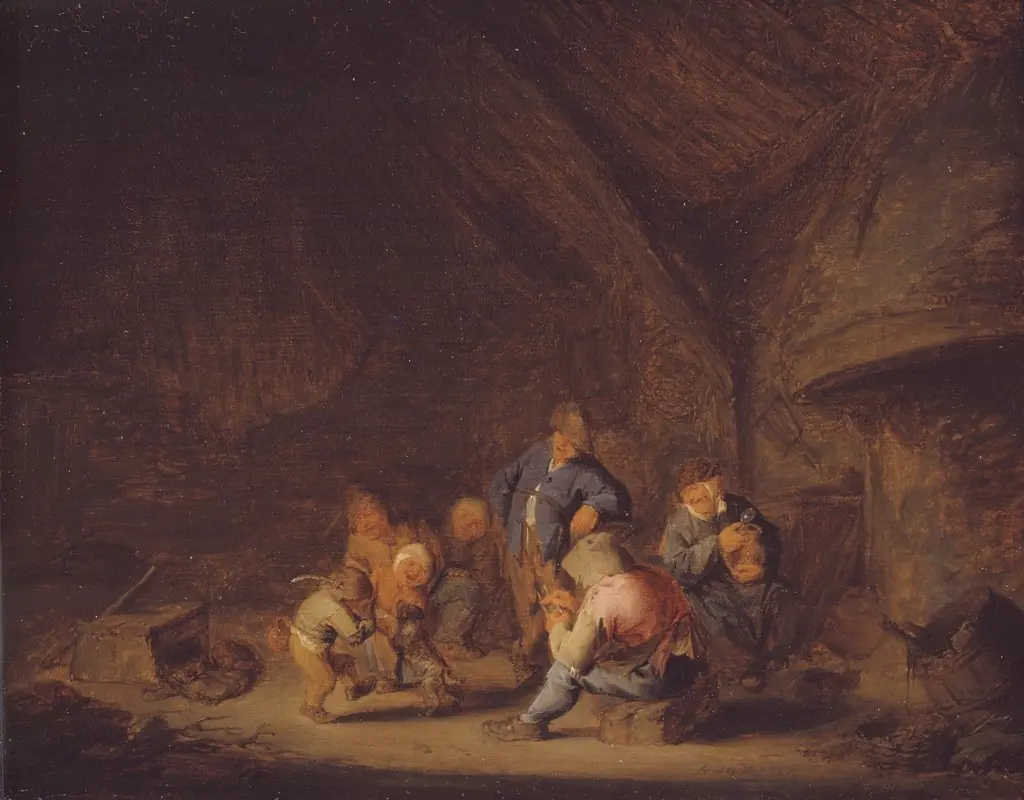
Adriaen van Ostade (baptized as Adriaen Jansz Hendricx 10 December 1610 – buried 2 May 1685) was a Dutch Golden Age painter of genre works, showing the everyday life of ordinary men and women.

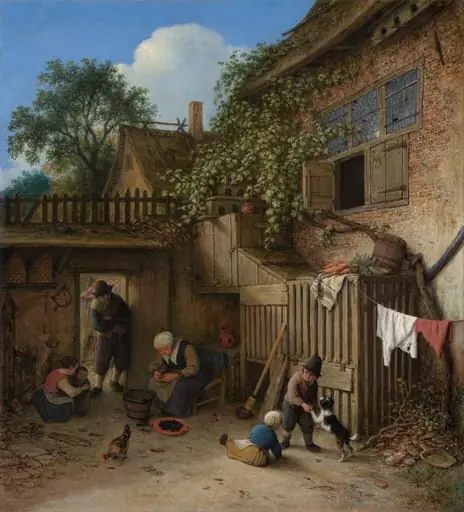
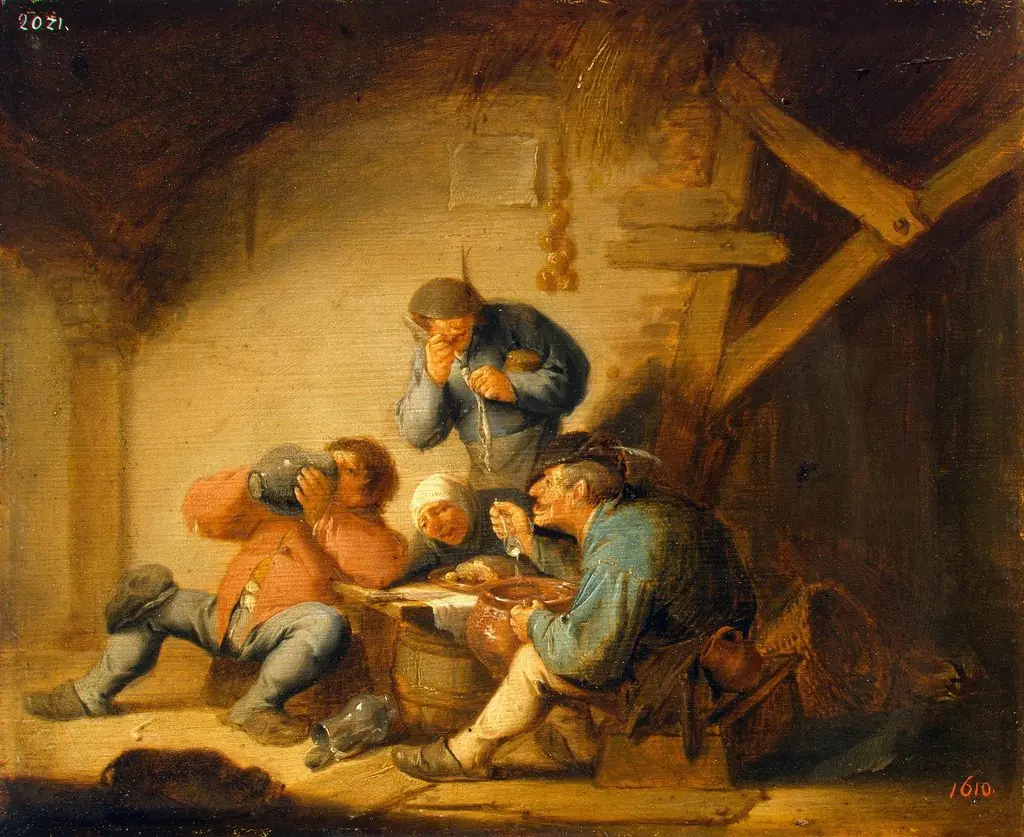
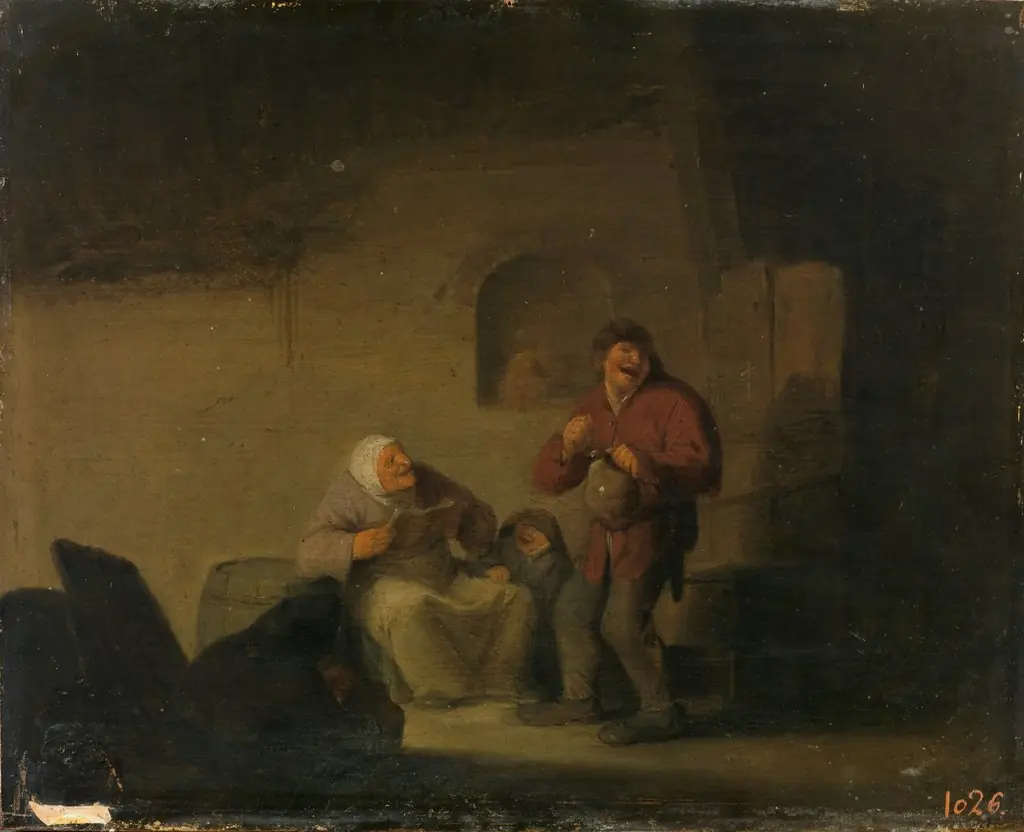
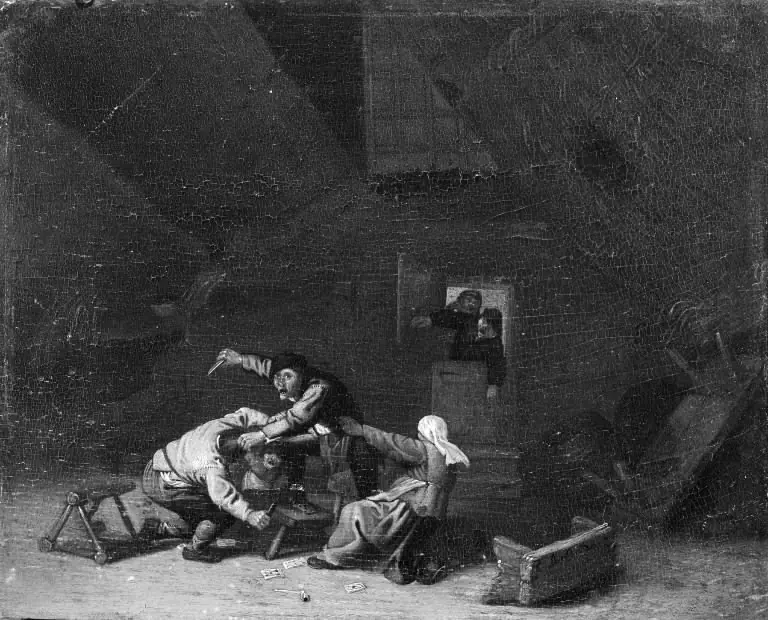
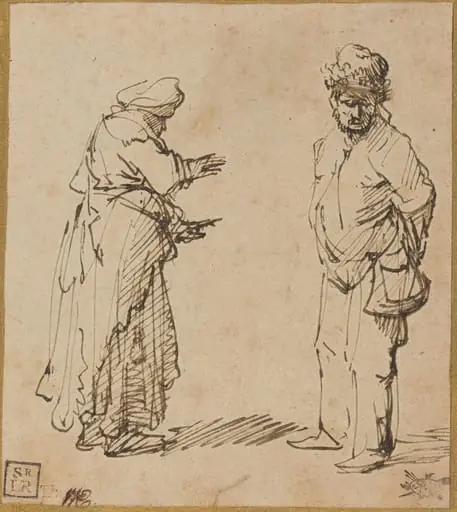 Beggar Man and Woman
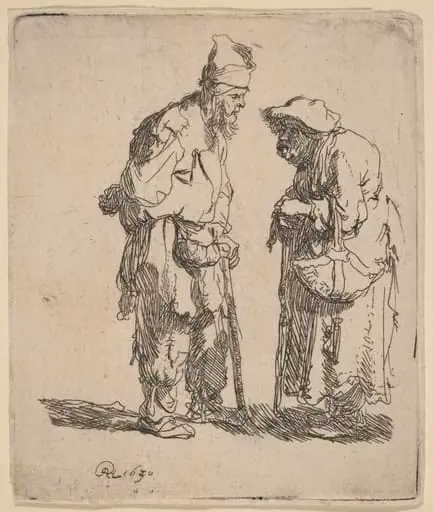 Beggar Man and Beggar Woman Conversing
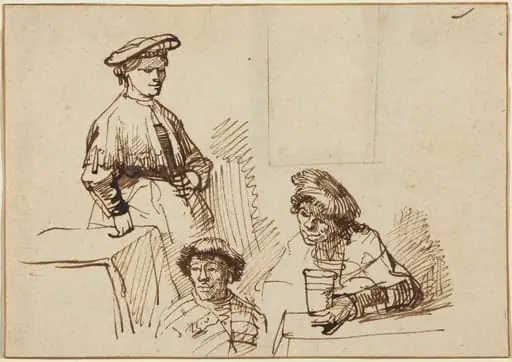 Sketches from a Tavern: Woman Standing and Two Men Seated
![An Artist Seated at His Easel [recto], by Andries Both](https://artifactworldgallery.com/img/andries-both--an-artist-seated-at-his-easel-recto--df4909554b40b442-w320.webp) An Artist Seated at His Easel [recto]
An Artist Seated at His Easel [recto]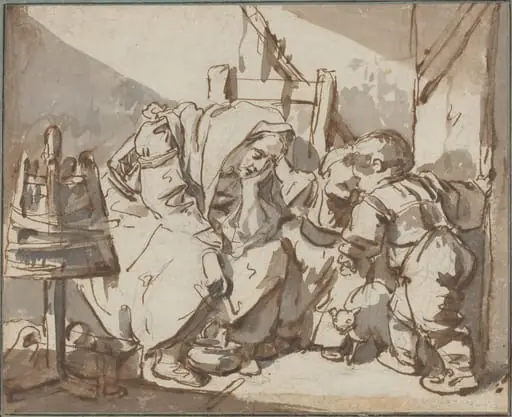 A Tired Woman with Two Children
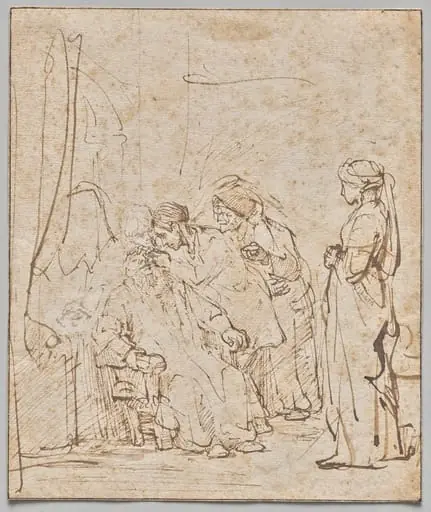 Tobias Healing His Father's Blindness
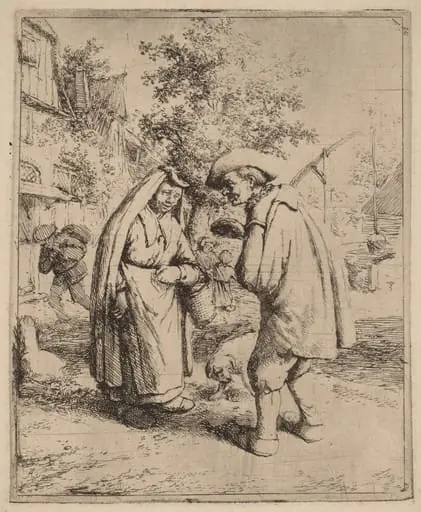 Man and Woman Conversing on a Busy Village Street
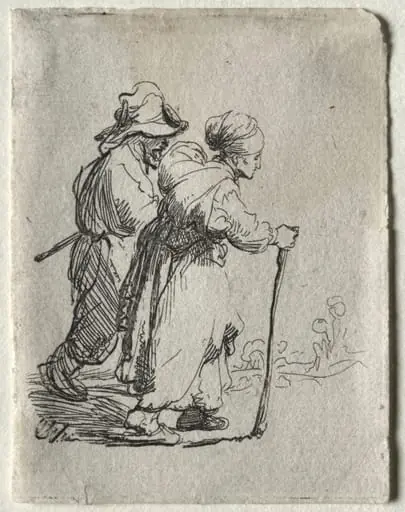 Two Tramps, a Man and a Woman
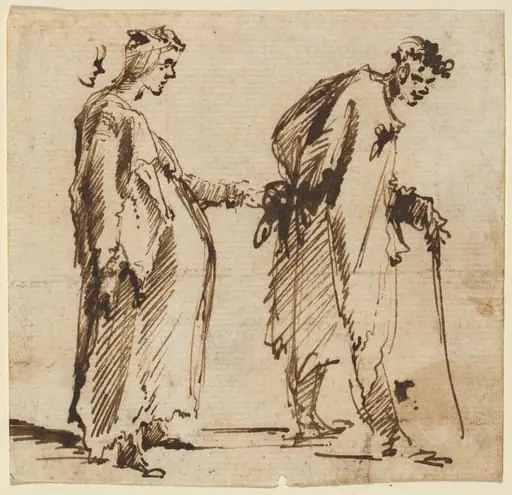 A Pregnant Young Woman and a Young Man with a Staff
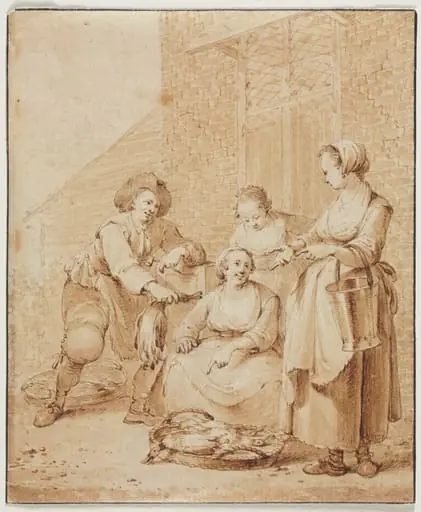 The Poultry Woman