Artwork
Flowers, insects and reptiles
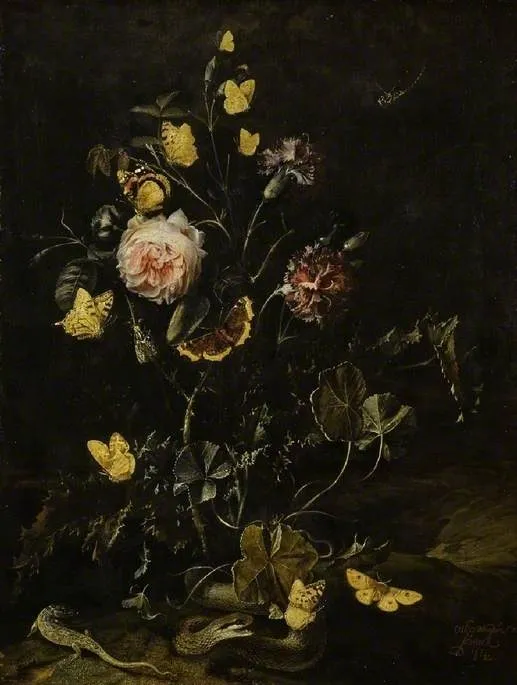
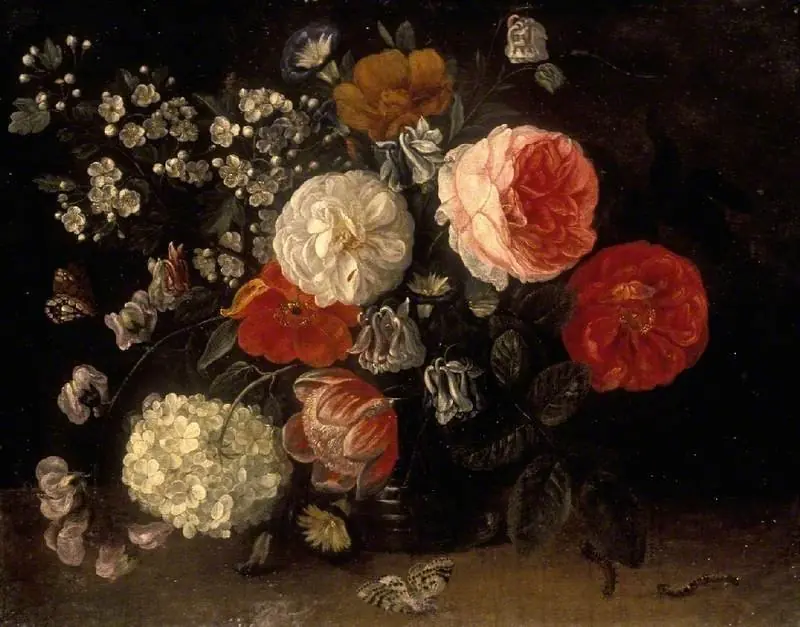
Flowers, insects and reptiles is an oil painting by Otto Marseus van Schrieck. It dates from 1673 and is held in the collection of the Fitzwilliam Museum.
About this work
Overview
Painted in 1673 by Otto Marseus van Schrieck, this oil-on-canvas work presents a forest-floor still life teeming with flora and fauna.
Painted in 1673 by Otto Marseus van Schrieck, this oil-on-canvas work presents a forest-floor still life teeming with flora and fauna. Unlike conventional floral arrangements, it avoids idealized beauty, instead capturing the quiet coexistence of blossoms, crawling insects, and small reptiles in a dim, earthy setting. The composition reflects the artist’s lifelong interest in the hidden ecosystems of woodland margins.
Subject & Meaning
The painting unites ornamental flowers—pink, white, and yellow—with predatory and scavenging creatures: butterflies, beetles, a lizard, and a snake. Rather than symbolizing transience alone, the scene suggests ecological interdependence, where life and decay unfold in close proximity. The presence of reptiles among blooms implies a natural order where beauty and danger are inseparable.
Technique & Style
Van Schrieck employed fine brushwork to render petal textures, leaf veins, and the scaled skin of the lizard with precision. The dark, near-black background isolates the subjects, heightening their three-dimensionality. Subtle chiaroscuro models each form, while muted tones unify the palette, avoiding theatrical contrast in favor of atmospheric realism.
History & Provenance
Created late in the artist’s career, the painting aligns with van Schrieck’s established reputation for forest still lifes, a niche he helped define in the Dutch Republic. It likely passed through private collections before entering public ownership, though its early provenance remains partially undocumented. Its survival reflects enduring interest in naturalist painting beyond religious or mythological themes.
Context
During the Dutch Golden Age, scientific curiosity about the natural world flourished alongside artistic practice. Van Schrieck’s work resonated with contemporary naturalists who documented flora and fauna through observation. His paintings offered visual equivalents to illustrated botanical and zoological studies, bridging art and emerging empirical science.
Legacy
Van Schrieck’s focus on the overlooked corners of nature influenced later naturalist painters and contributed to the development of ecological realism in art. His compositions, devoid of human presence, emphasized the autonomy of non-human life—a perspective that prefigured modern environmental observation in visual culture.
Artist & collection
Artist
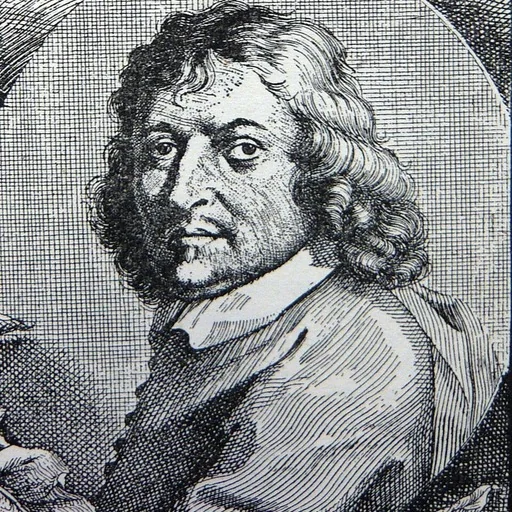
Otto Marseus van Schrieck (ca. 1613, in Nijmegen – buried 22 June 1678, in Amsterdam) was a painter in the Dutch Golden Age. He is best known for his paintings of forest flora and fauna.

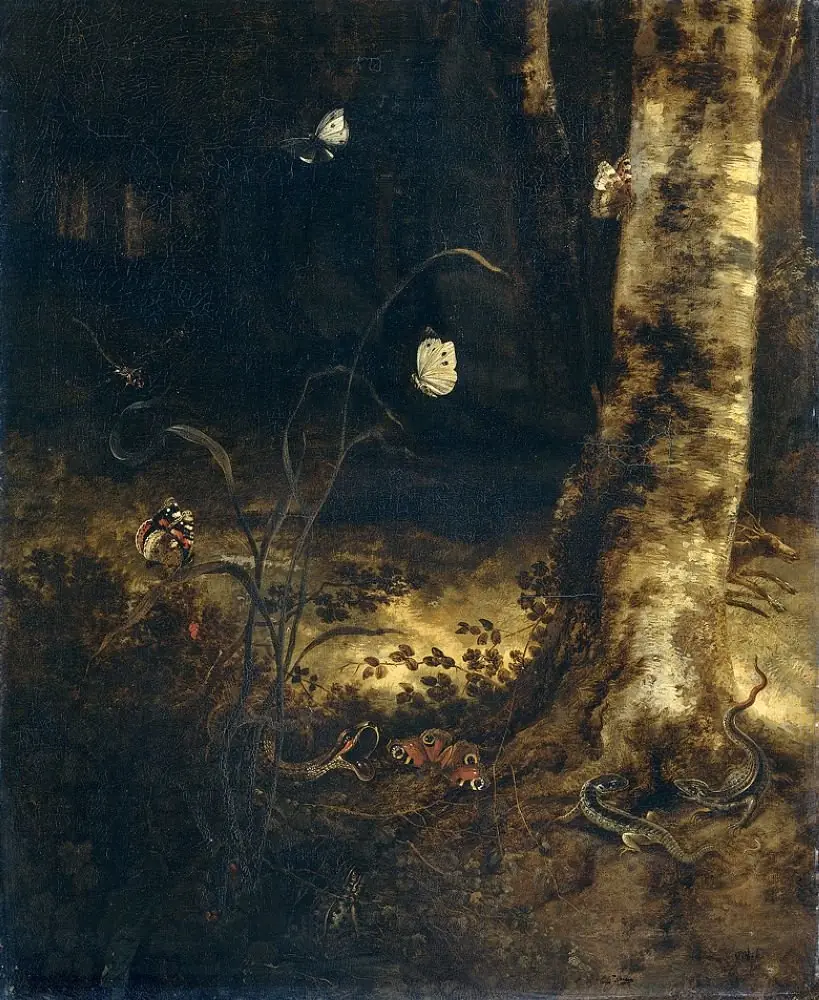 A forest floor with a snake, lizards, butterflies and other insects
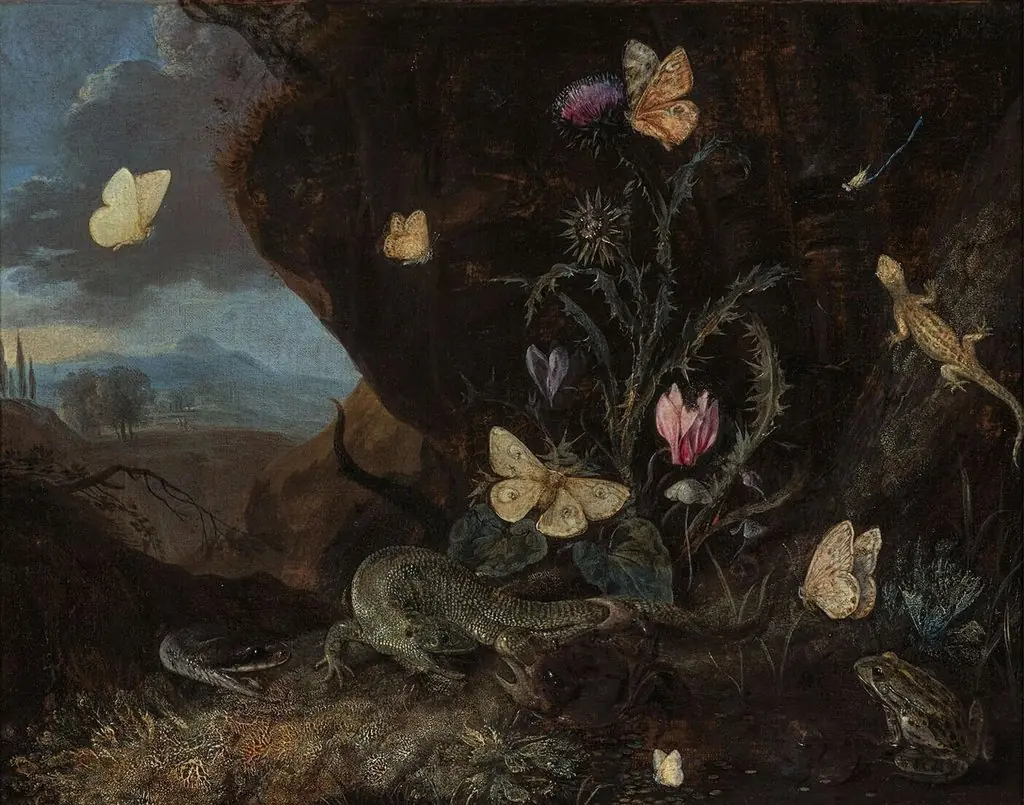 Landschap with insects, cyclamen and thistle
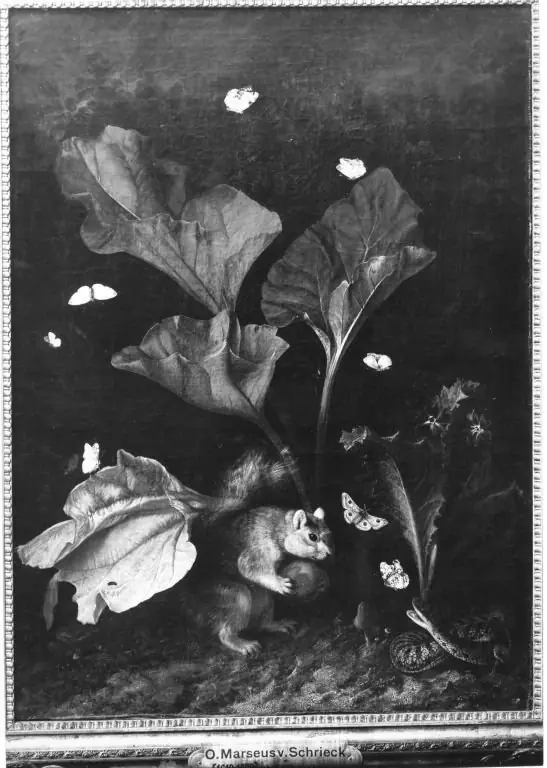 Forest floor still life with rodent
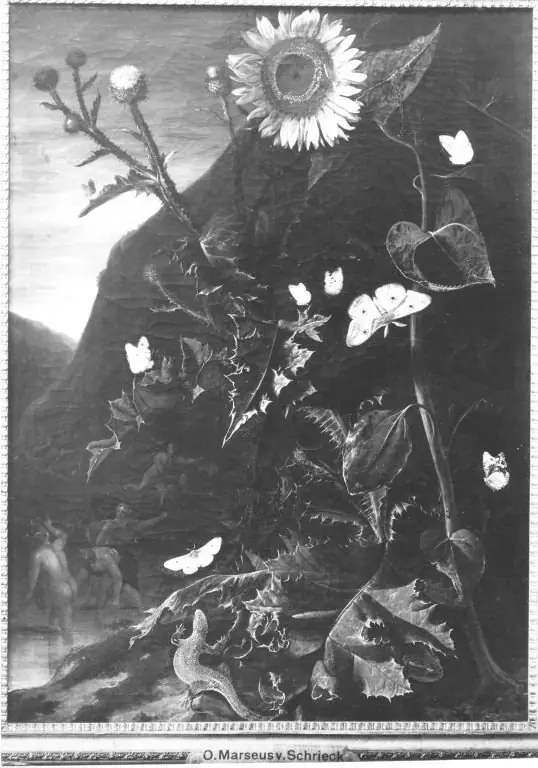 Forest floot still life with Diana and Actäon
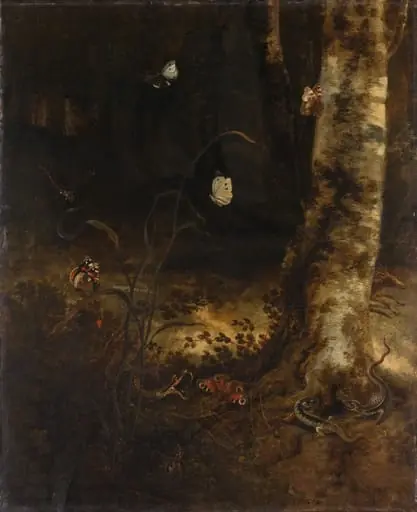 Forest Floor with a Snake, Lizards, Butterflies and other Insects
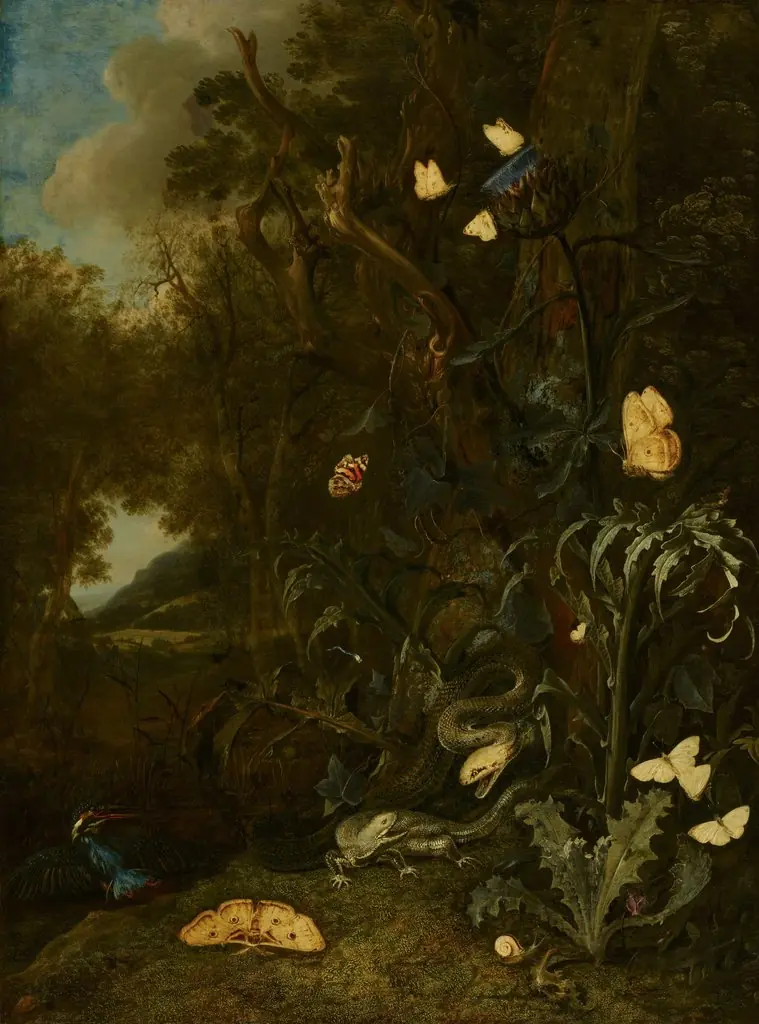 Plants and Insects
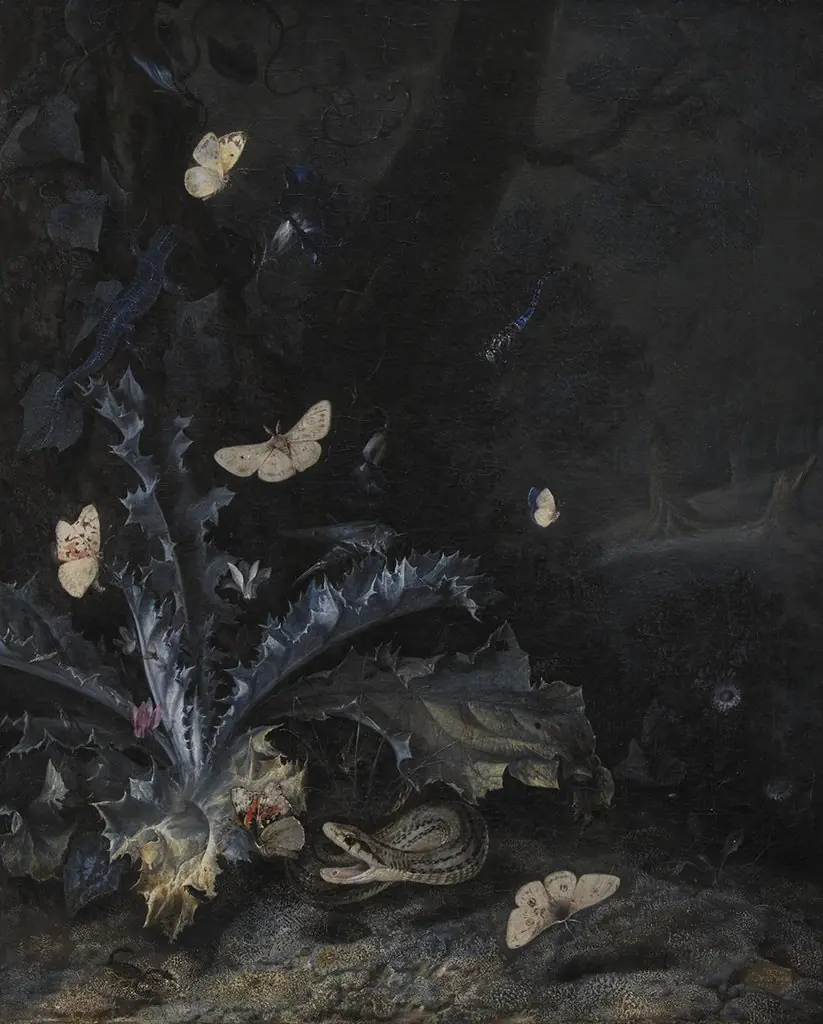 Still Life with Thistle and Snake
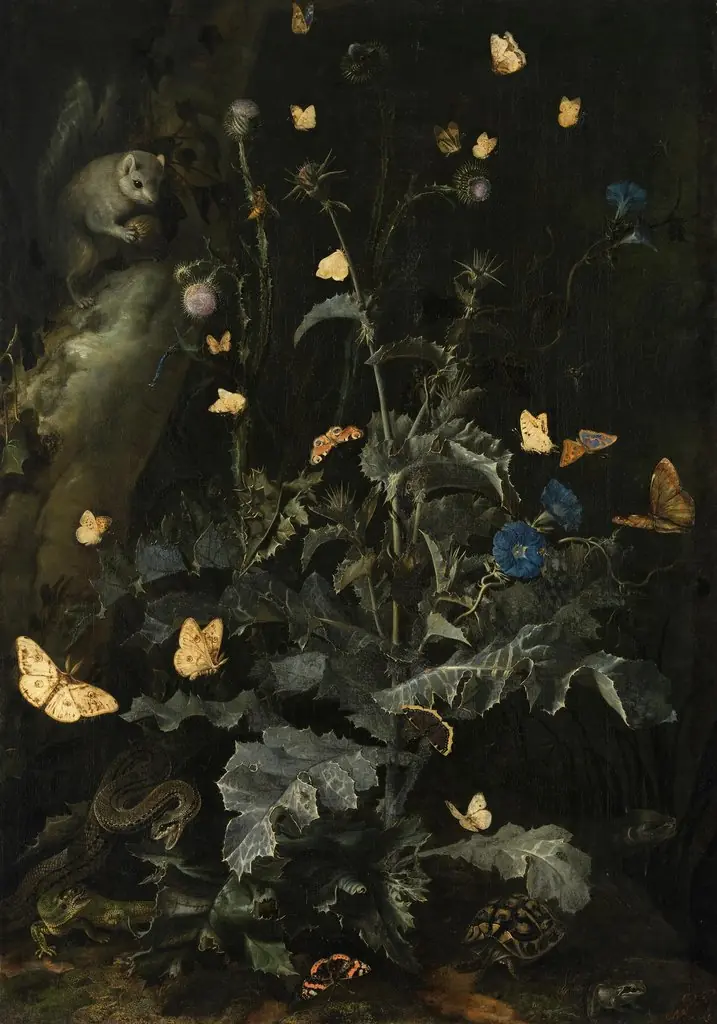 Forest floor still life with thistle and rodent