Artwork
Belpaese
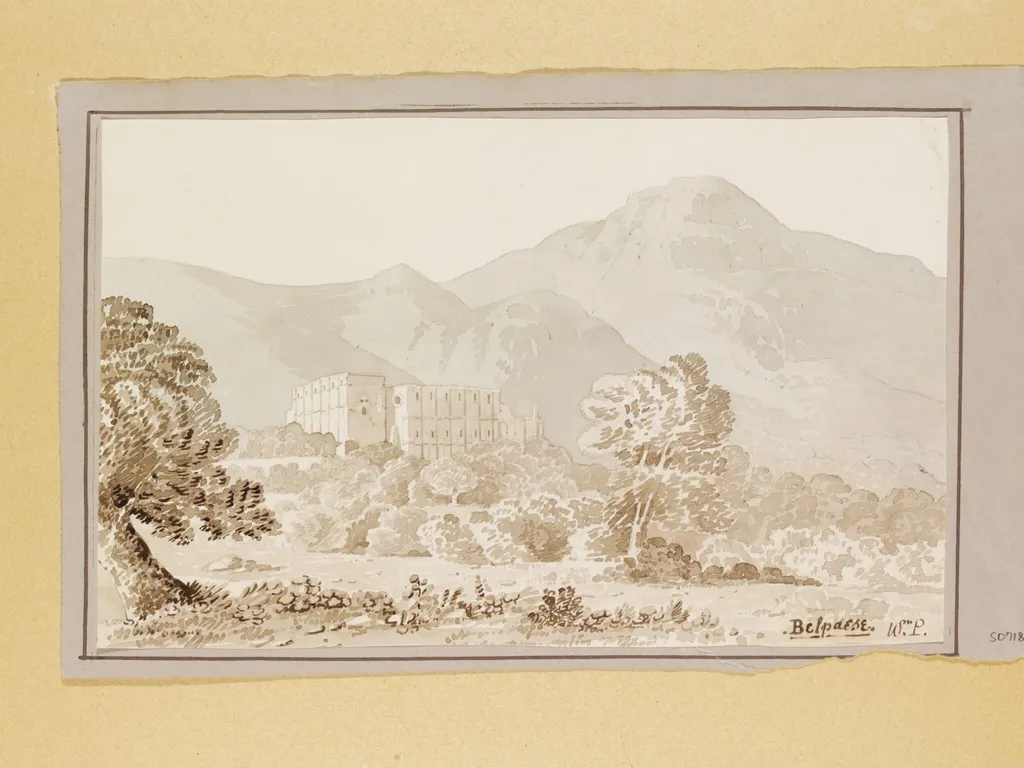
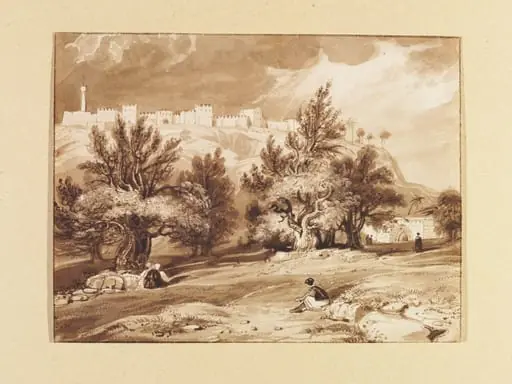
Belpaese is a watercolor work on paper by the Biedermeier artist William P.. It dates from 1830 and is held in the collection of the Victoria and Albert Museum.
About this work
Overview
The work was acquired by the Victoria and Albert Museum in February 1971 from James Mackinnon for £8, documented by Rodney Searight.
Created in 1830 by William P., this watercolour sketch is titled *Belpaese* and measures as a modest, intimate study. Executed in delicate washes of light brown and white, it captures a rural scene with minimal detail. The work was acquired by the Victoria and Albert Museum in February 1971 from James Mackinnon for £8, documented by Rodney Searight. Its unassuming scale and restrained palette suggest a personal or travel-related sketch rather than a commissioned piece.
Subject & Meaning
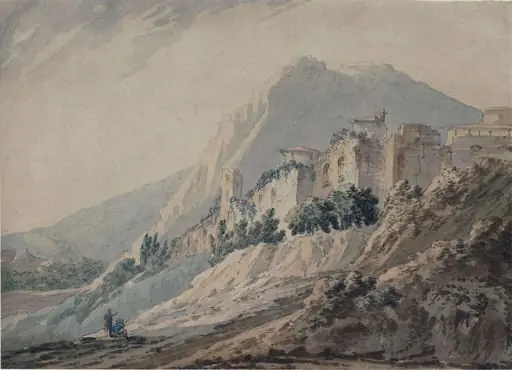
The scene depicts a solitary structure nestled among gentle hills, flanked by sparse trees and underbrush. The faint outlines of distant terrain dissolve into a pale, unmodulated sky, evoking a sense of quiet isolation. The title, signed in the corner, may refer to a real or imagined place—possibly a nickname or a local designation—though no definitive location has been identified. The work invites contemplation of place rather than narrative.
Technique & Style
The artist employed loose, fluid watercolour washes with minimal layering, allowing the paper’s texture to show through. Brushwork is swift and unrefined, suggesting an on-the-spot observation. Highlights are achieved by reserving the paper’s white surface, while shadows are suggested with diluted tones. The absence of fine detail and the soft focus of the background reinforce the impression of a spontaneous field study.
History & Provenance
The drawing entered the Victoria and Albert Museum’s collection in February 1971, acquired from the dealer James Mackinnon for £8. Its earlier history remains undocumented, and no exhibition or ownership records precede this purchase. The signature 'Belpaese' in the corner is the only direct link to the artist’s intent, though the identity of William P. has not been fully established in public archives.
Context
In the early 19th century, watercolour sketching was a common practice among amateur and professional artists for recording landscapes during travel. *Belpaese* aligns with this tradition, reflecting the period’s interest in quiet, unidealized natural scenes. Its modest execution contrasts with more polished watercolours of the time, offering insight into informal artistic habits rather than public display.
Legacy
Though not widely exhibited or reproduced, *Belpaese* contributes to the understanding of 19th-century British watercolour practices beyond major artistic figures. Its preservation in a major museum underscores the value placed on personal, unpolished works as historical documents. The sketch remains a quiet testament to the everyday act of observing and recording place.
Artist & collection
Artist
William P.’s delicate watercolours captured the Italian countryside around 1830 in soft glazes and gentle light.

 Bangor Cathedral : Penmaenmawr in the distance
 Villa Sevillana on the Road from Bona to Constantine
 Chigi Palace, near Albano
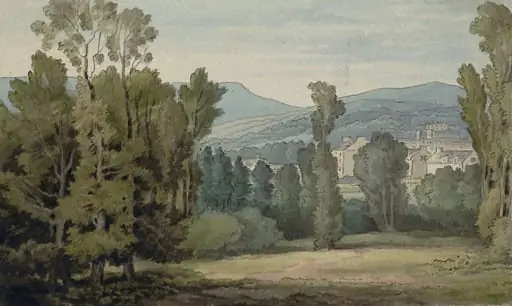 From the Bridewell Terrace, Exeter
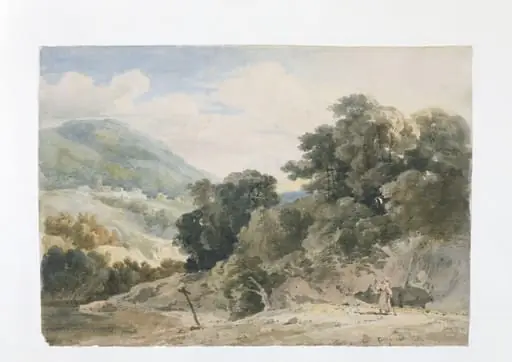 Landscape with hermit
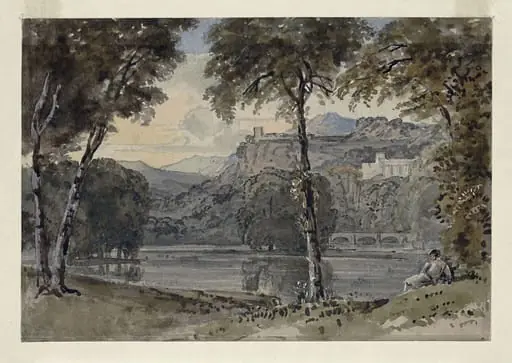 A classical composition
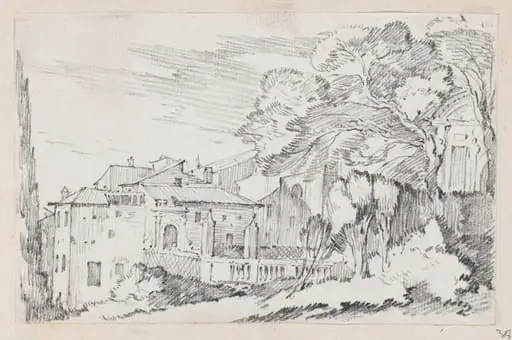 Houses and a Garden on a Hillside in Italy
 Mountainous landscape with ruined building
 Part of Macao Bay, looking west
 Philadelphia -
 Kilchurn Castle
 In the Garden of Gethsemane