Artwork
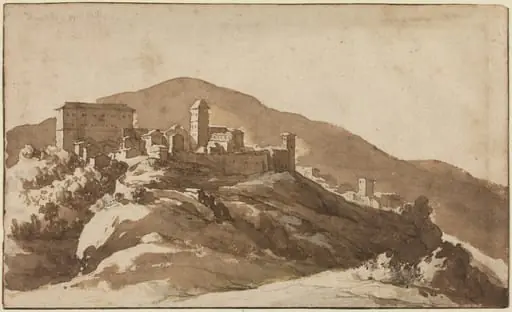
Mountainous landscape with ruined building
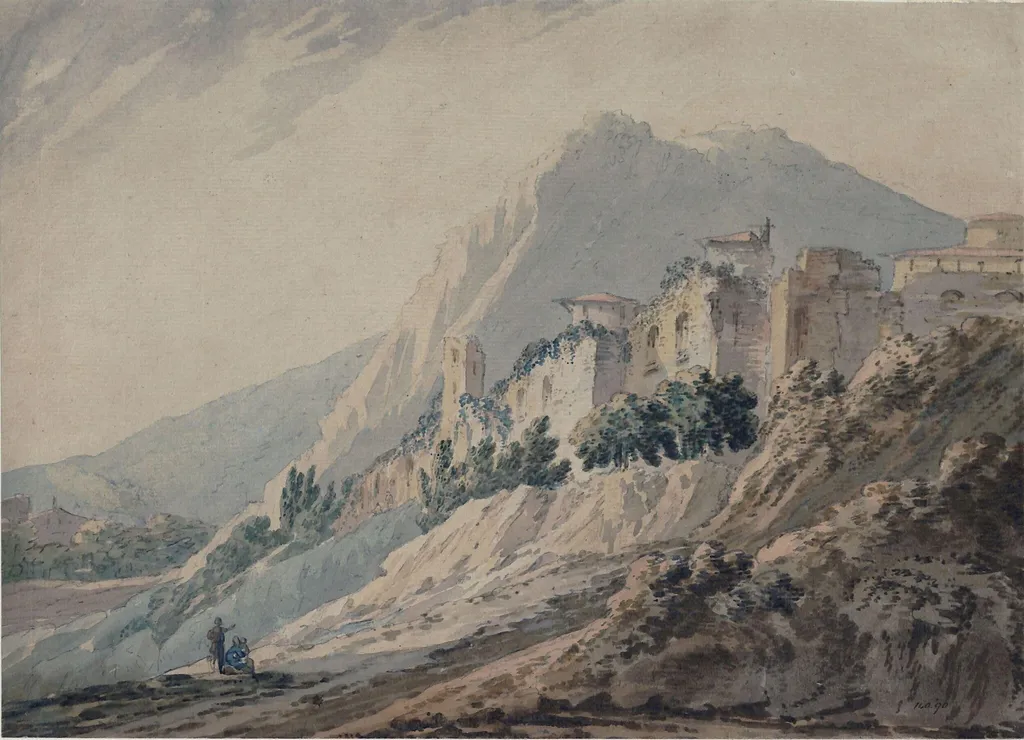
Mountainous landscape with ruined building is a watercolor work on paper by the Rococo painting artist Richard Cooper. It dates from 1760 and is held in the collection of the Victoria and Albert Museum. The work is a watercolour that presents a steep, rocky hillside dotted with the remnants of stone structures.
About this work
Overview
The work is a watercolour that presents a steep, rocky hillside dotted with the remnants of stone structures. A solitary figure traverses a narrow track near the base, while a distant mountain rises against a pale sky. The composition balances the human element with the expansive terrain, emphasizing the interaction between decay and the natural environment.
Subject & Meaning
The scene captures a ruined building clinging to the slope, suggesting abandonment and the passage of time. The lone wanderer adds a narrative of movement through a landscape marked by decay, inviting contemplation of humanity’s fleeting presence amid enduring geological forms.
Technique & Style
Executed with swift, translucent brushstrokes, the watercolour employs a muted palette of greens, greys and soft blues. Light and shadow are rendered to give the crumbling stones a subtle three‑dimensionality, a technique typical of the period that heightens the dramatic quality of the terrain while preserving an overall sense of atmospheric calm.
Context
Created during a time when artists often used chiaroscuro in landscape watercolours to convey power, the piece reflects contemporary interests in depicting the sublime qualities of nature. Its emphasis on ruins aligns with a broader 19th‑century fascination with the remnants of past civilizations within natural settings.
Own this work as a print
Artist & collection
Artist
Richard Cooper carried a tiny paintbox in his coat pocket everywhere he walked. He’d stop on any hillside, ruin wall or tavern step to dash off a scrap of sky, a crumbling arch, the way light turns wet stone silver.…

 Terracina
 A Sunlit Landscape with Hilltop Houses
 Lake and Town of Nemi
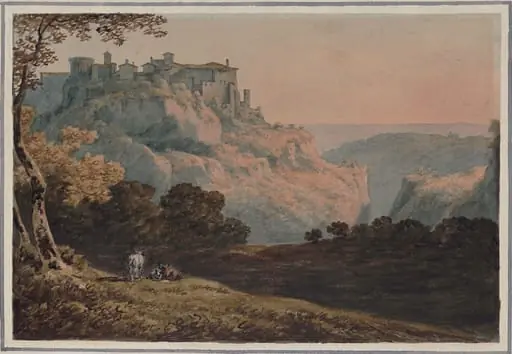 Tivoli
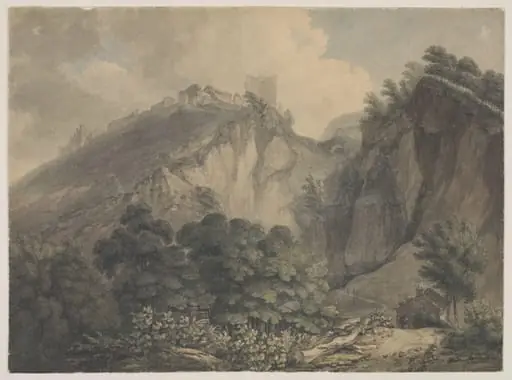 Study of Butterbur (Petasites vulgaris, Desf.) the largest leaf of any English plant
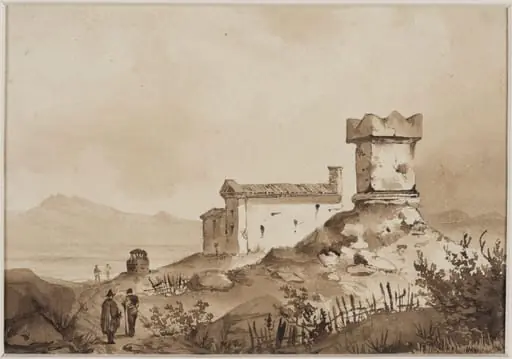 Italian landscape, with an ancient Roman sarcophagus
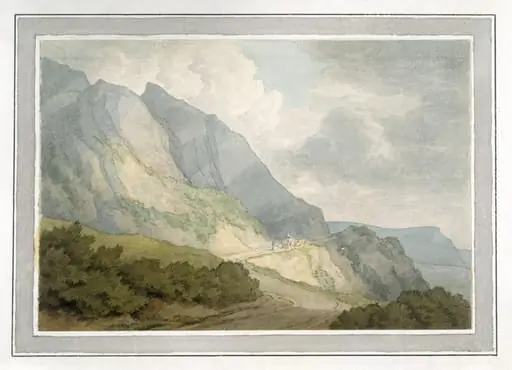 Between Lyme and Charmouth
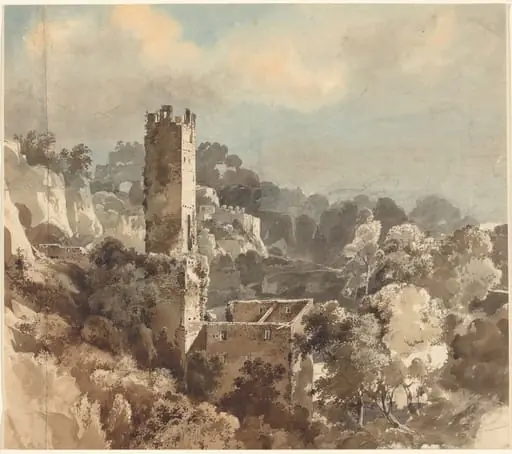 Ruins of a Fortified Tower among Wooded Hills
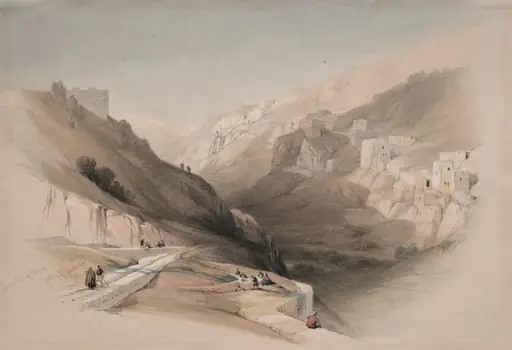 Lower Pool of Siloam, Valley of Jehoshaphat
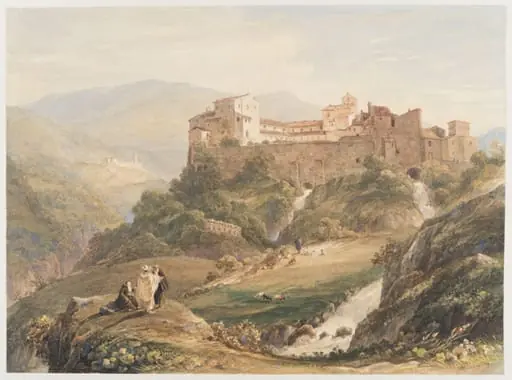 Italian landscape
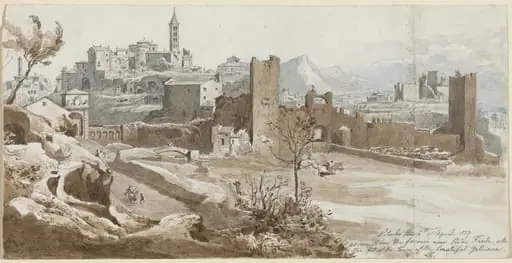 Viterbo
 A View of Savelli near Albano