Artwork
An Allegory of Wisdom and the Arts
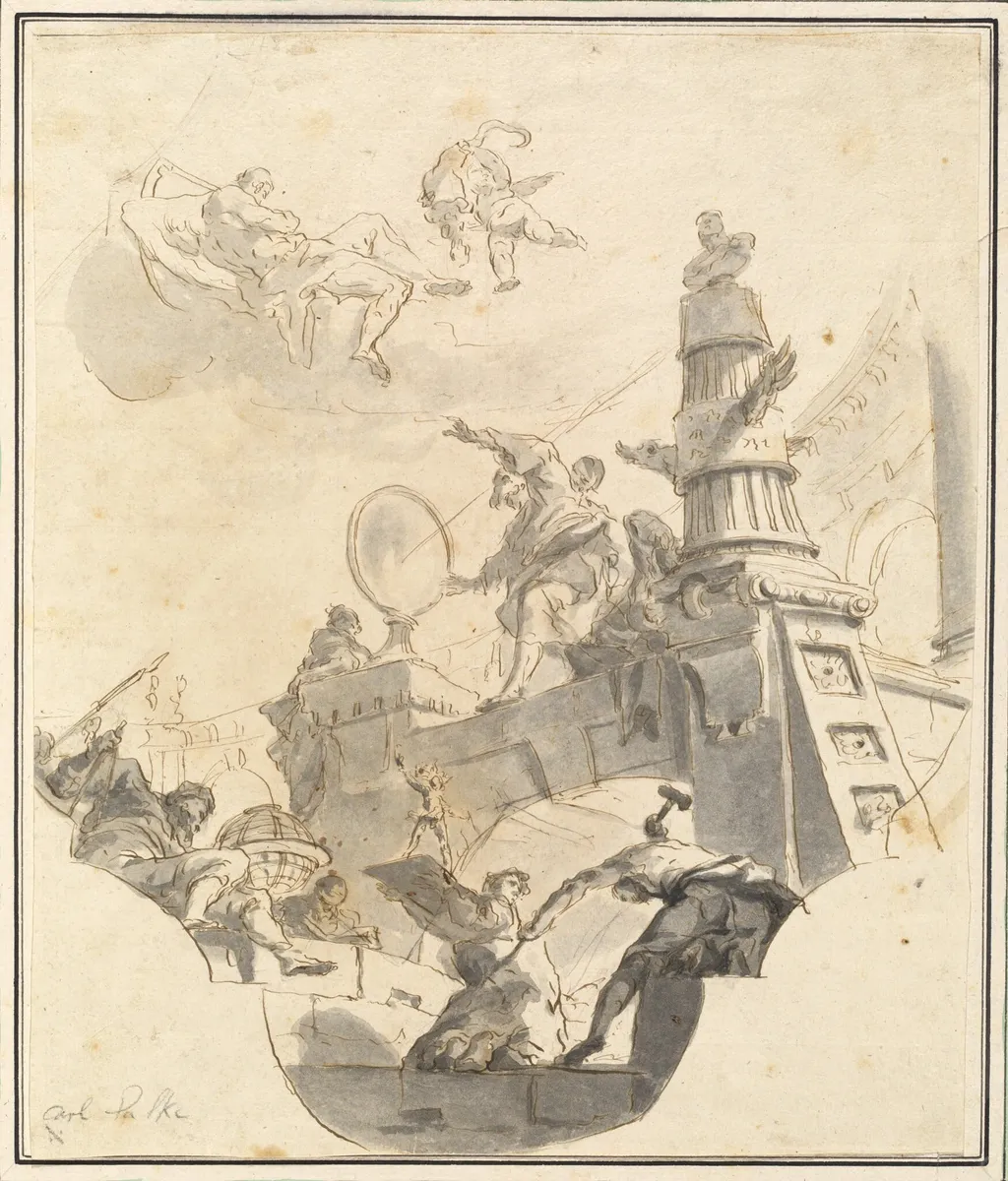
An Allegory of Wisdom and the Arts is a chalk drawing by the Romanticist artist Franz Karl Palko. It dates from 1752 and is held in the collection of the National Gallery of Art.
About this work
Overview
Created in 1752 by Franz Karl Palko, this drawing is a complex allegorical composition executed in pen and brown ink with gray wash and touches of black chalk. The work is mounted on an older backing, its paper bearing visible creases and signs of age. The sketch’s rapid, expressive lines suggest it was made as a preparatory study, capturing a dynamic vision rather than a polished final piece.
Subject & Meaning
The composition presents a layered allegory: a winged figure, likely representing Wisdom, hovers above a bustling scene below.
The composition presents a layered allegory: a winged figure, likely representing Wisdom, hovers above a bustling scene below. Beneath, a monumental columned structure dominates, surrounded by figures engaged in conflict, labor, and contemplation. The arrangement implies a hierarchy of knowledge and human activity, with wisdom overseeing the chaos and effort of earthly pursuits, possibly reflecting Enlightenment ideals of reason guiding civilization.
Technique & Style
Palko employed loose, energetic penwork to define forms, supplemented by diluted ink washes to model volume and shadow. Black chalk adds subtle tonal emphasis, while graphite underdrawing remains visible in places. The technique conveys immediacy and spontaneity, prioritizing compositional flow over finish. The paper’s texture and the wash’s fluidity enhance the sense of movement and atmospheric depth.
History & Provenance
The drawing has been preserved on its original historic mount, indicating early institutional or private ownership. Its survival with the mount suggests it was valued as a finished work rather than a discarded sketch. No detailed provenance beyond its creation date is documented, but its condition reflects careful handling over centuries.
Context
Palko worked in the mid-18th century, a period when allegorical imagery remained central to academic art, especially in Central Europe. His drawing aligns with traditions of Viennese draftsmanship that emphasized conceptual clarity through dynamic composition. The scene’s complexity reflects contemporary intellectual interests in the relationship between knowledge, society, and civic order.
Legacy
Though not widely reproduced, the drawing exemplifies the vitality of preparatory drawing in Enlightenment-era art academies. Its unpolished quality reveals the artist’s process and the role of sketching in developing symbolic narratives. It stands as a testament to the intellectual ambitions of draftsmen who translated abstract ideas into visual form.
Artist & collection


 Studies of Aurora and Apollo
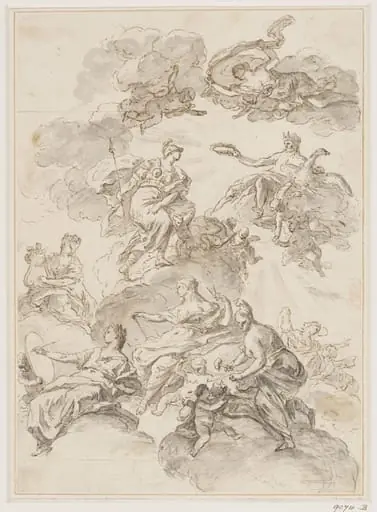 Minerva commending the arts of sculpture, architecture, painting and music to Jupiter
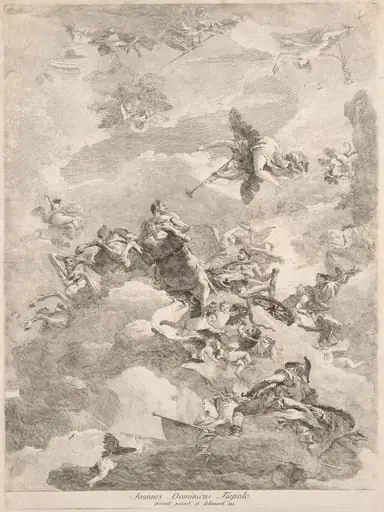 The Triumph of Hercules
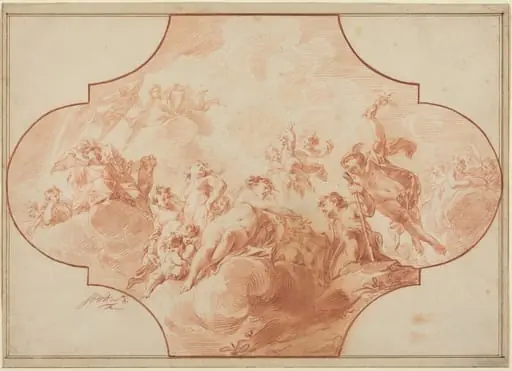 The Judgment of Paris
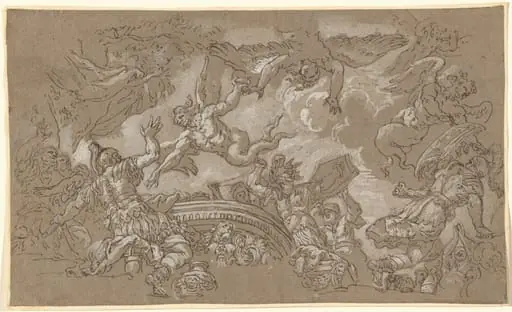 The Harpies Attacking Aeneas and His Companions
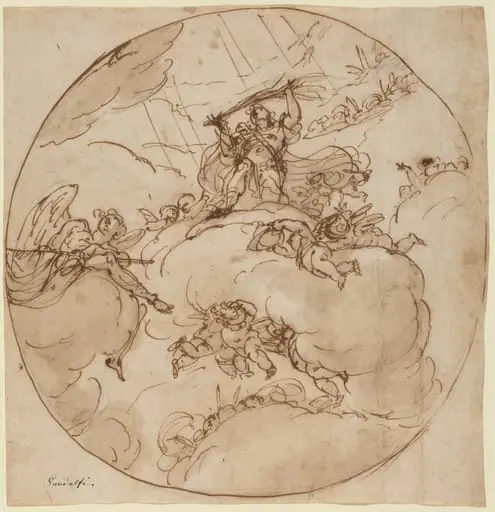 The Apotheosis of San Vitale
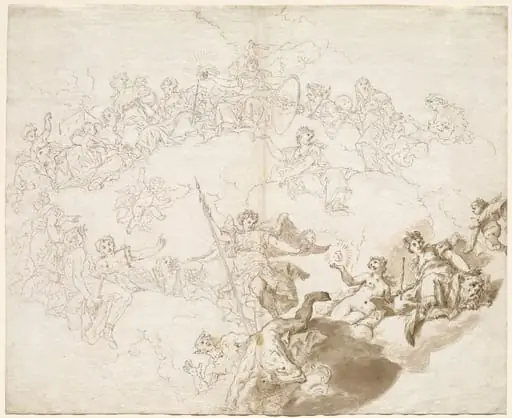 The Triumph of Virtue and Divine Wisdom
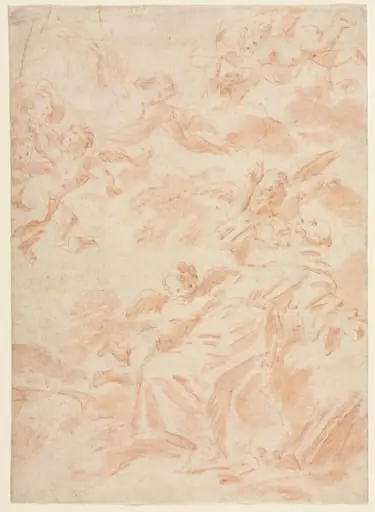 The Stigmatization of Saint Francis
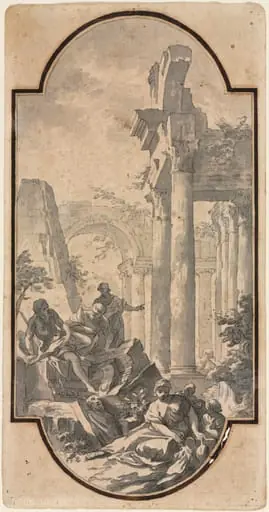 Figures Near the Ruins of a Corinthian Temple (recto)
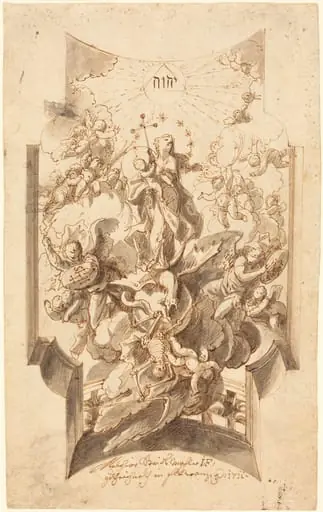 The Immaculate Conception
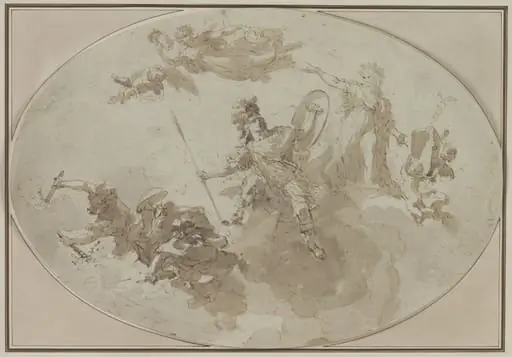 Ceiling Study: Allegory of Peace and War
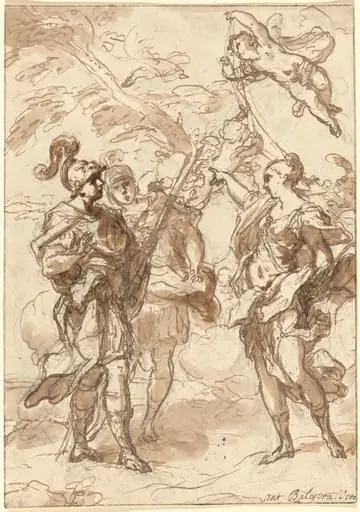 Venus as a Huntress Appearing to Aeneas and Achates