Artwork
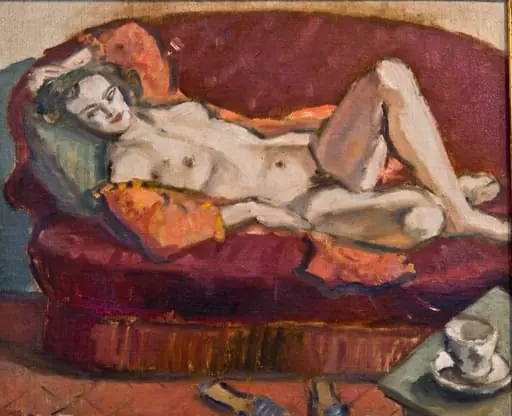
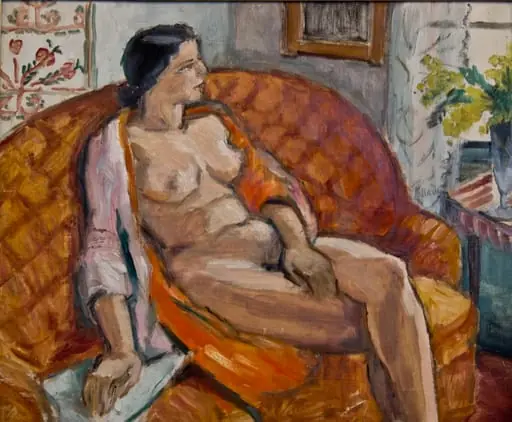
Nud pe canapea vișinie – Fată pe canapea
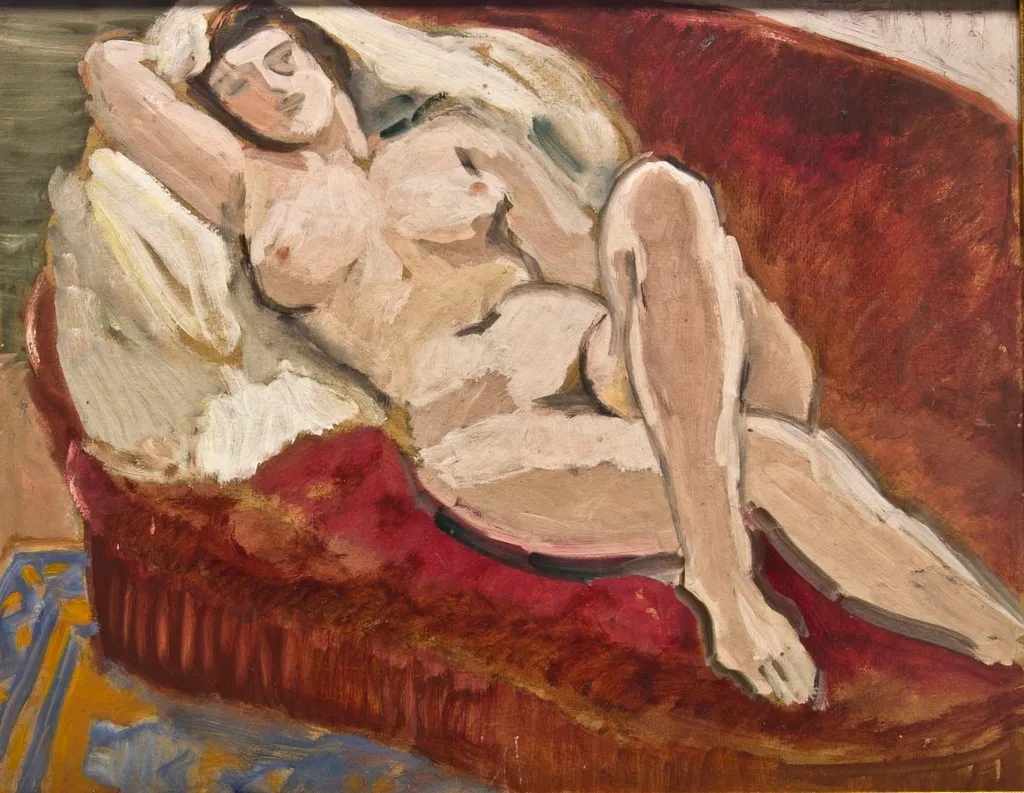
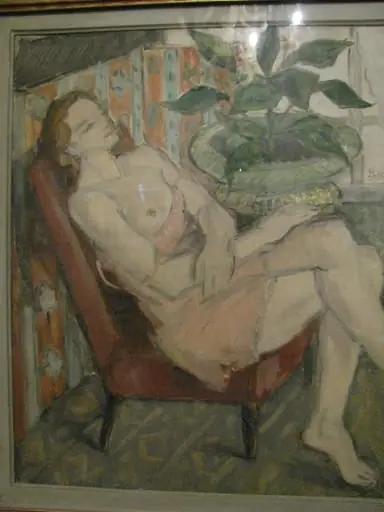
Nud pe canapea vișinie – Fată pe canapea is a print by Theodor Pallady. It dates from 1921 and is held in the collection of the National Museum of Art of Romania.
About this work
Overview
The palette is dominated by deep reds, contrasted with pale skin tones and subtle hints of blue and yellow in the background.
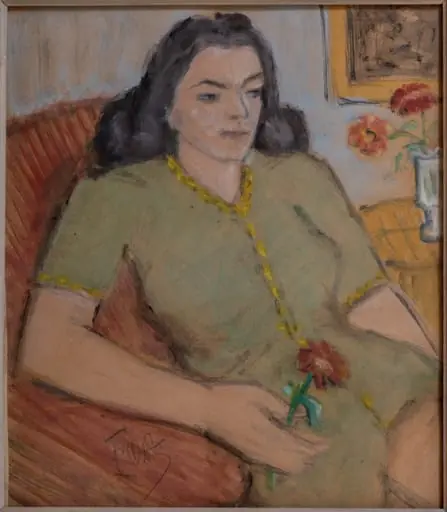
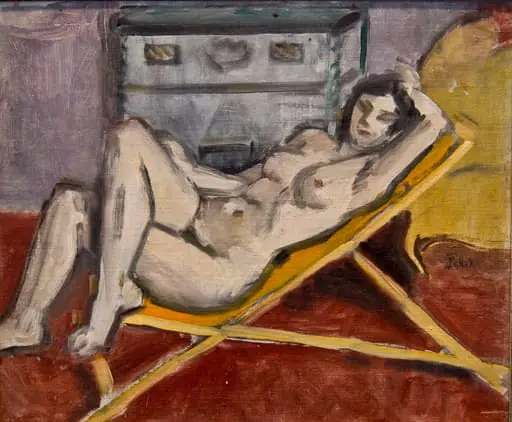
Painted around 1921 by Theodor Pallady, this work depicts a reclining figure on a crimson sofa. The composition is intimate and unadorned, focusing on the quiet stillness of the subject. The palette is dominated by deep reds, contrasted with pale skin tones and subtle hints of blue and yellow in the background. The brushwork is deliberately unrefined, rejecting smooth finishes in favor of tactile immediacy.
Subject & Meaning
The figure, likely female, lies in a natural, unposed posture, one arm curved behind the head. There is no narrative or symbolic element beyond the presence of the body in a private space. The absence of context or expression invites contemplation of vulnerability and rest. The work avoids idealization, presenting the figure with unembellished humanity rather than as an object of fantasy.
Technique & Style
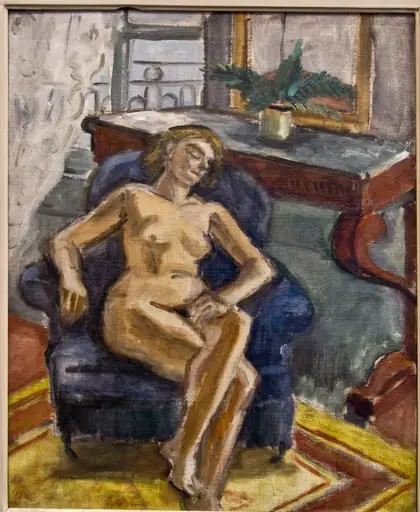
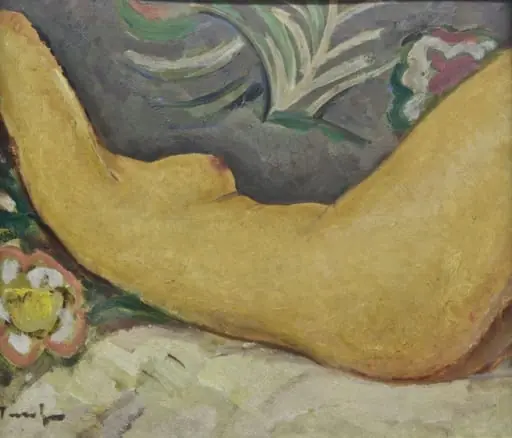
Pallady employed thick, uneven brushstrokes to build form and texture, particularly in the fabric of the sofa and the contours of the body. The impasto technique gives the surface a physical presence, with paint applied in visible, hurried layers. This method conveys a sense of spontaneity, as if the act of painting mirrored the immediacy of the moment observed.
History & Provenance
Created during Pallady’s mature period after years spent in Paris, the painting reflects his engagement with modern European trends while retaining a personal, introspective tone. It remained in Romanian collections after his return, and its preservation suggests it was valued by contemporaries for its emotional restraint rather than its novelty.
Context
In early 20th-century Romania, academic realism still dominated, yet Pallady’s work aligned with broader post-impressionist and expressionist currents emerging in Paris. This painting diverges from traditional nudes by rejecting classical harmony in favor of raw, sensory observation. It reflects a quiet rebellion against polished conventions in favor of personal expression.
Legacy
Though not widely exhibited outside Romania, the painting is recognized as a key example of Pallady’s shift toward expressive form. It influenced later Romanian modernists who sought to balance emotional truth with painterly freedom. Its unpolished aesthetic continues to resonate as a quiet counterpoint to more theatrical depictions of the human figure.
Artist & collection