Artwork
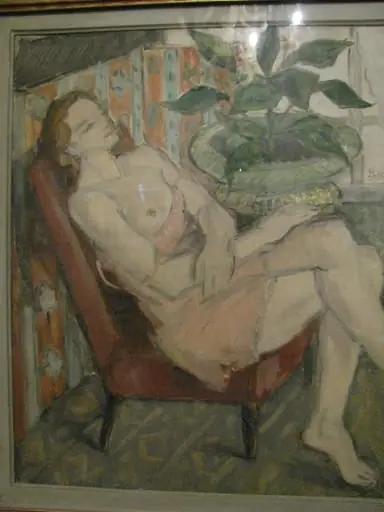
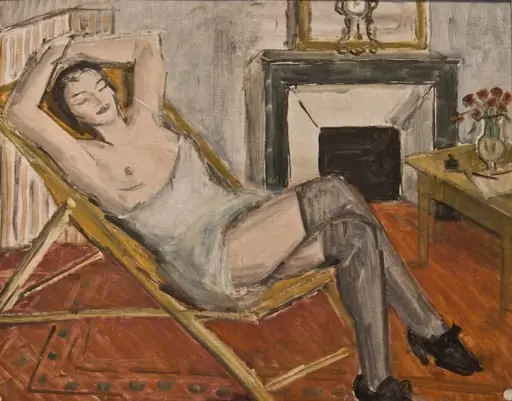
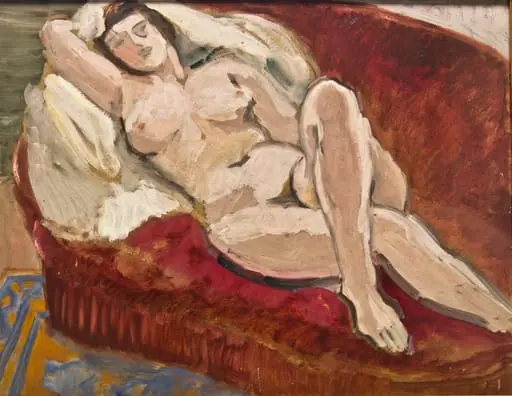
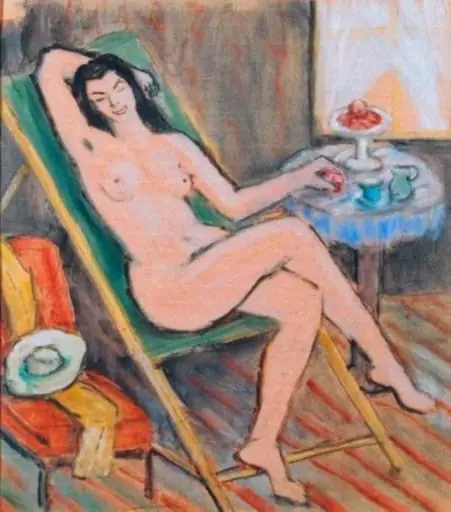
Nud pe chaise-longue
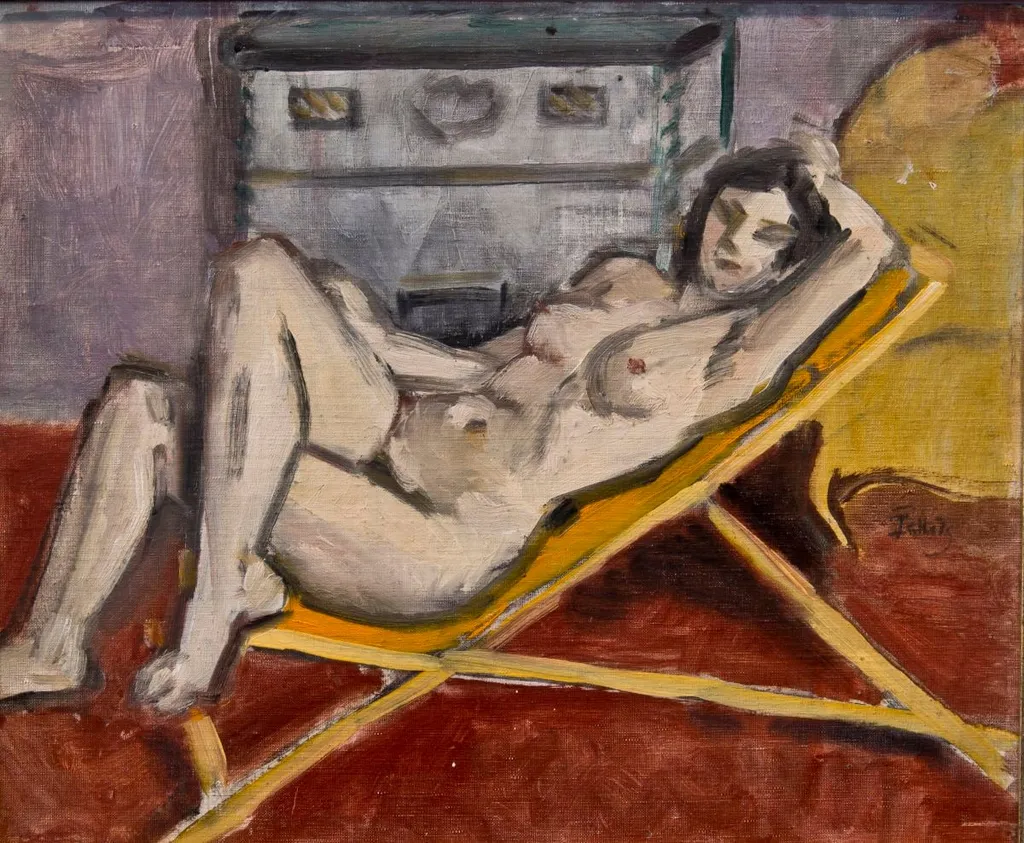
Nud pe chaise-longue is a print by Theodor Pallady. It dates from 1921 and is held in the collection of the National Museum of Art of Romania.
About this work
Overview
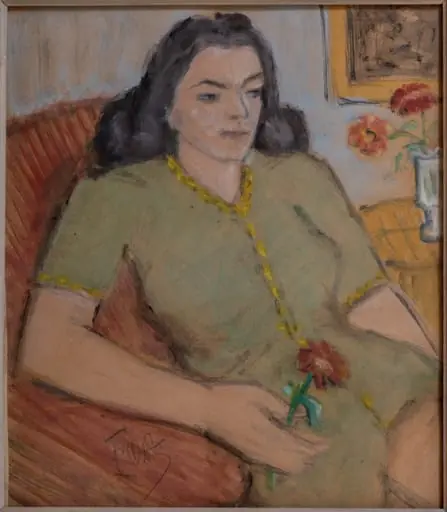
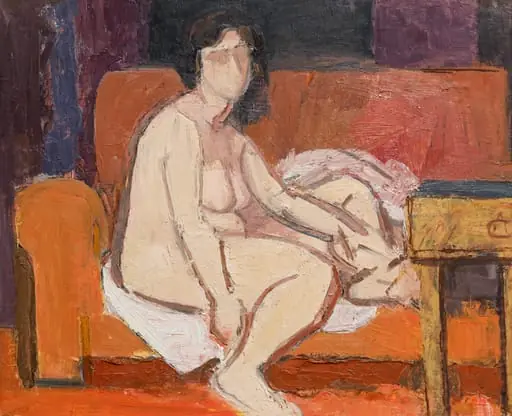
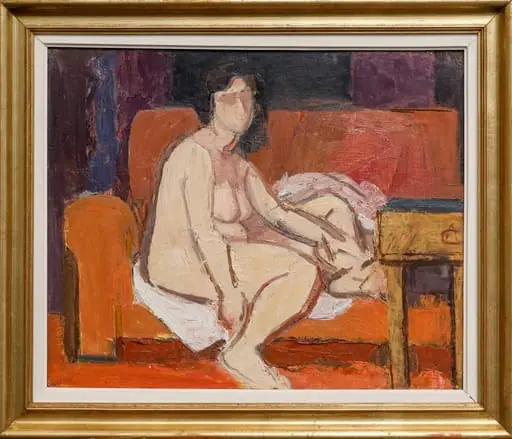
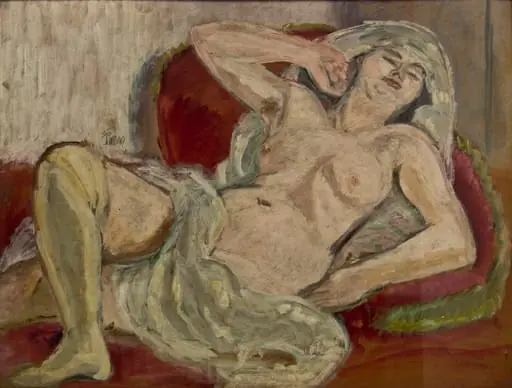
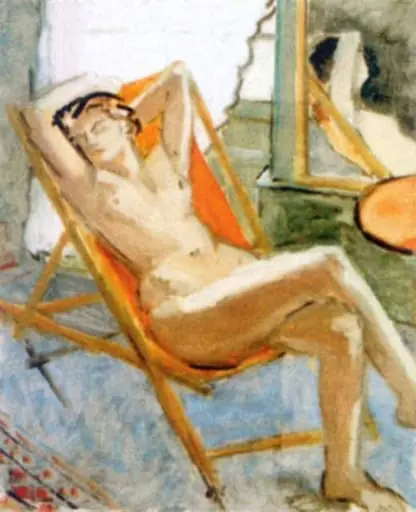
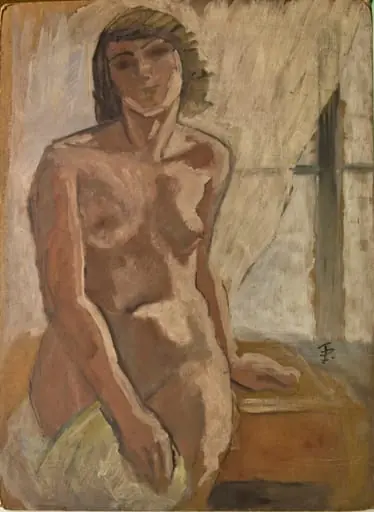
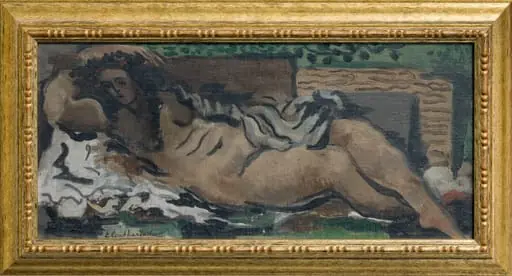
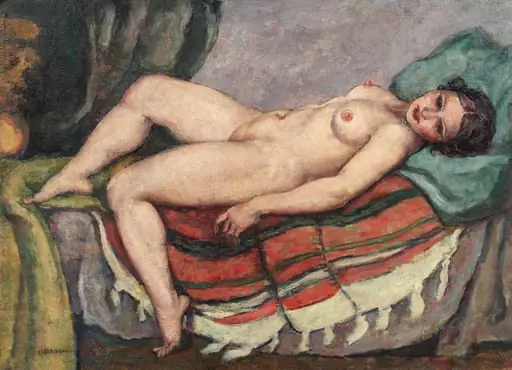
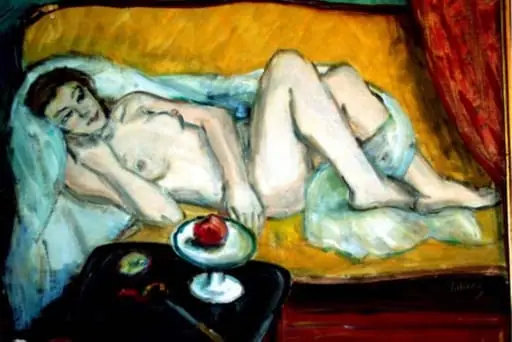
Painted around 1921 by Theodor Pallady, this work depicts a reclining nude figure on a yellow chaise-longue. The composition is spare, focusing on the human form against a minimal interior setting. The palette is subdued, dominated by muted reds, grays, and browns, with the chair serving as the sole vivid element. The brushwork is deliberate and unrefined, suggesting immediacy rather than finish.
Subject & Meaning
The nude figure, positioned in repose, evokes a quiet intimacy rather than idealized beauty. The absence of narrative or symbolic context directs attention to the body’s presence and the act of observation. The chair, a domestic object, grounds the figure in an ordinary space, reinforcing a sense of candid, unembellished reality.
Technique & Style
Pallady employs thick, uneven brushstrokes that convey texture and motion rather than precision. The surface is tactile, with paint applied in a manner that emphasizes materiality over smoothness. This approach aligns with impasto techniques, where pigment becomes a physical component of the image, enhancing the sense of spontaneity and directness.
History & Provenance
Created during Pallady’s mature period in Paris, the work reflects his engagement with modernist tendencies while retaining ties to Romanian artistic traditions. It was likely produced in his studio, among other intimate studies of the human form. Its provenance traces to private collections in Romania and France, though public documentation remains limited.
Context
In early 1920s Paris, artists were redefining the nude beyond academic conventions. Pallady’s approach, with its rough handling and restrained palette, contrasts with the polished nudes of earlier traditions. His work aligns with contemporaries exploring emotional authenticity over idealization, influenced by Post-Impressionism and early Expressionism.
Legacy
Though not widely exhibited, this painting exemplifies Pallady’s quieter contribution to modern Romanian art. Its unadorned treatment of the body and emphasis on material brushwork influenced later generations seeking alternatives to classical representation. It remains a personal, introspective chapter in his broader oeuvre.
Artist & collection