Artwork
Port Cros (Drumul către far)
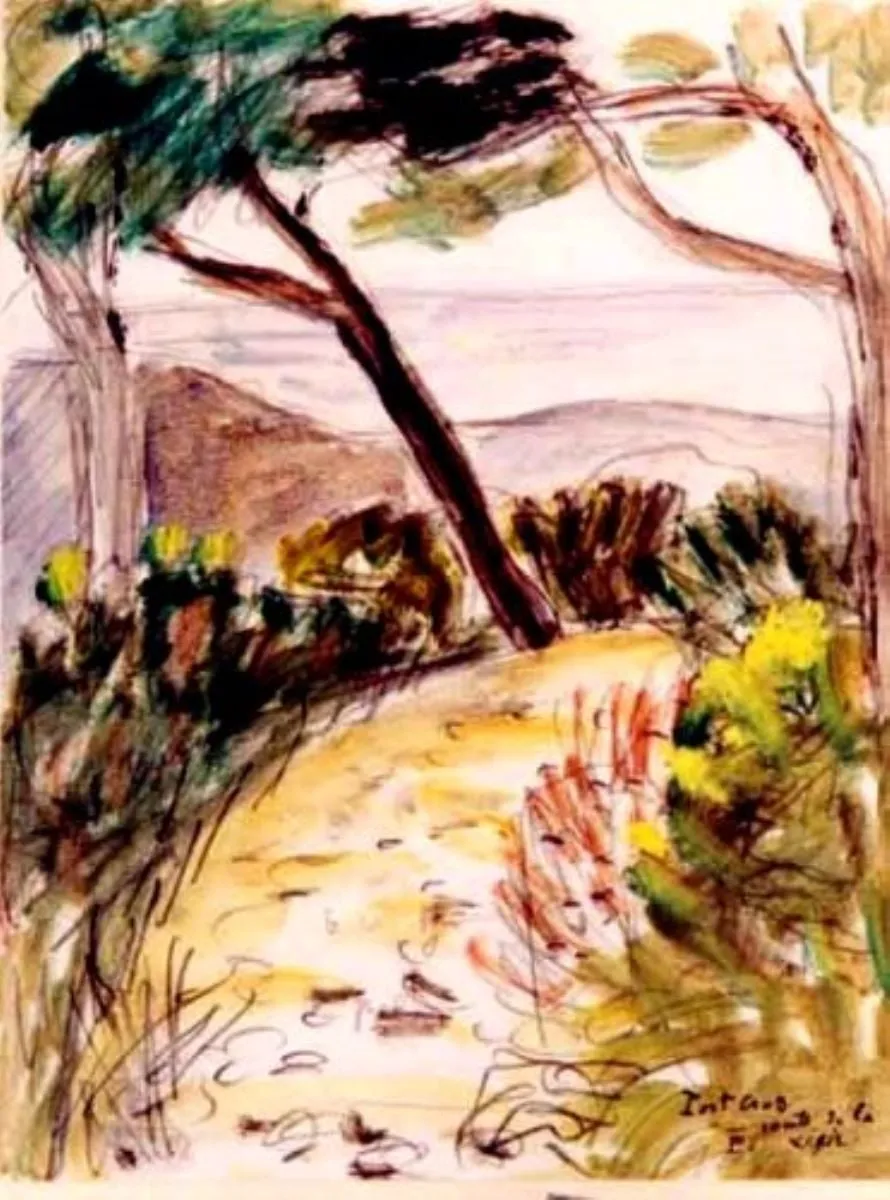
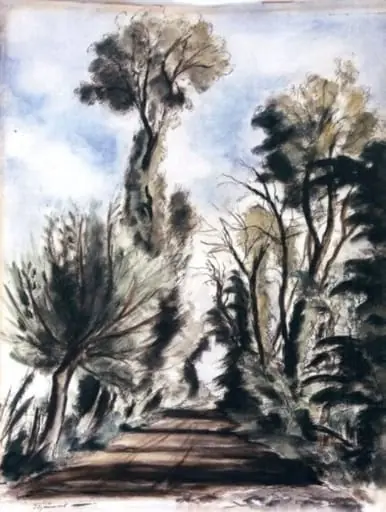
Port Cros (Drumul către far) is a print by Theodor Pallady. It dates from 1930 and is held in the collection of the National Museum of Art of Romania.
About this work
Overview
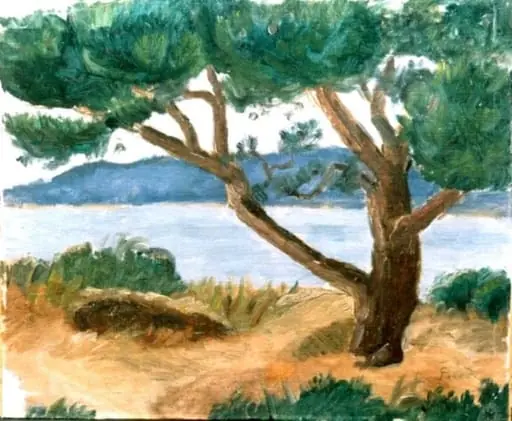
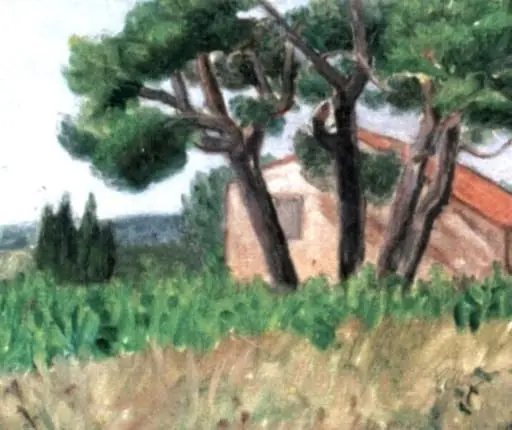
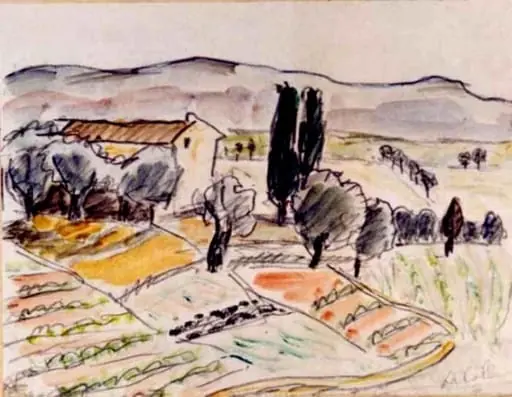
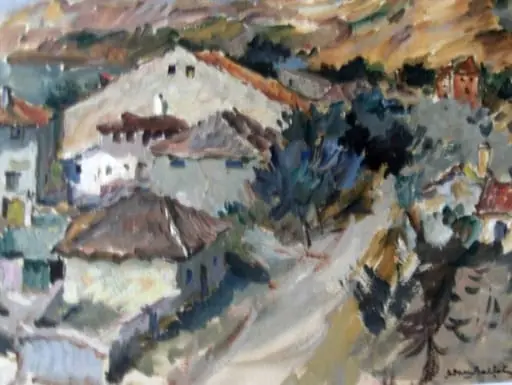
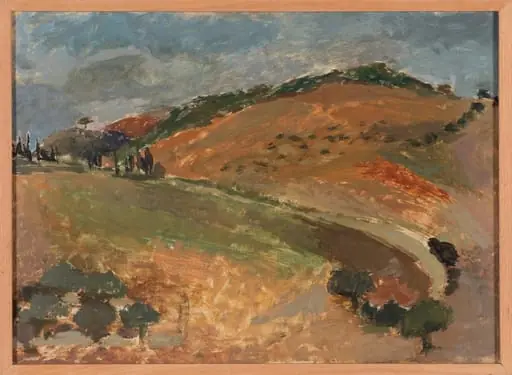
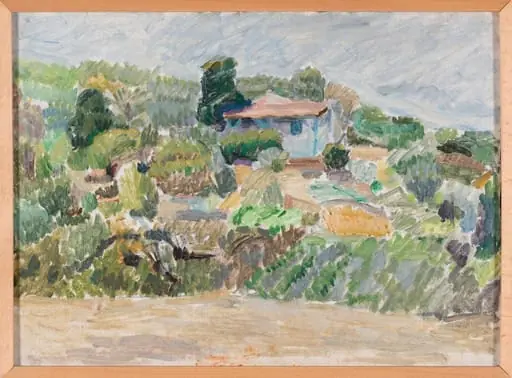
Painted in 1930, Port Cros (Drumul către far) is a landscape by Theodor Pallady that captures a coastal scene with minimal refinement. The composition emphasizes movement and atmosphere over detail, suggesting a momentary impression rather than a finished study. Its raw, unpolished appearance reflects the artist’s interest in immediacy, as if the painting were a visual journal entry made on site.
Subject & Meaning
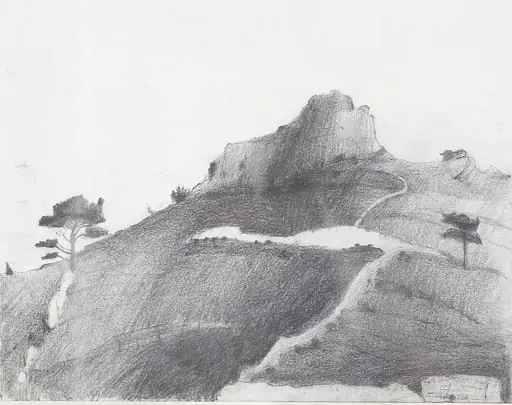
The scene depicts a rocky shoreline on the island of Port Cros, with a dominant, leaning tree framing the path toward a distant lighthouse. The subject is not idealized; instead, it conveys a sense of quiet solitude and natural erosion. The path, barely defined, implies passage without arrival, reinforcing a mood of transience and quiet observation rather than narrative closure.
Technique & Style
The absence of fine detail and the faint signature underscore a deliberate rejection of finish, favoring expressive gesture over precision.
Pallady employed loose, rapid brushwork and a restrained palette of earth tones—ochres, olives, and muted browns—to suggest form through texture rather than outline. Paint is applied thinly and unevenly, with visible strokes that blur boundaries between land, sea, and sky. The absence of fine detail and the faint signature underscore a deliberate rejection of finish, favoring expressive gesture over precision.
History & Provenance
Created during Pallady’s later years, this work emerged from his extended stays along the French Mediterranean coast. Though little is documented about its immediate reception, it aligns with his shift toward more spontaneous, plein-air studies after his academic training. The painting remained in private hands until entering a public collection in the late 20th century, where it is now preserved as part of his experimental phase.
Context
In the 1930s, Pallady distanced himself from the polished realism of his earlier career, embracing a more intuitive approach influenced by Post-Impressionism and early modernist tendencies. This work reflects broader European trends toward expressive brushwork and subjective perception, paralleling contemporaries like Cézanne and Bonnard, though without their formal structuring or color theory.
Legacy
Port Cros (Drumul către far) exemplifies Pallady’s late-period exploration of painterly economy. While not widely exhibited, it is recognized in scholarly circles as a key example of his transition from academic discipline to lyrical abstraction. Its unembellished quality has influenced Romanian modernists seeking to reconcile personal vision with natural observation, valuing process over perfection.
Artist & collection