Artwork
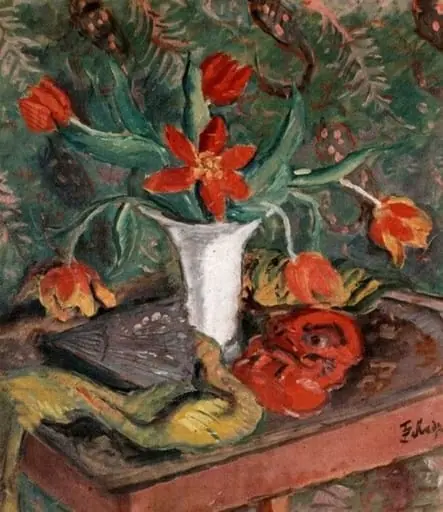
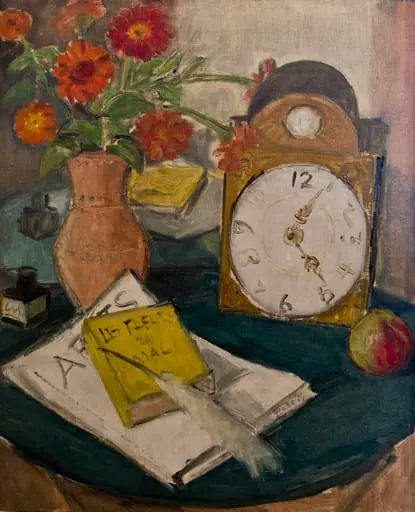
Vas cu flori de scaieți
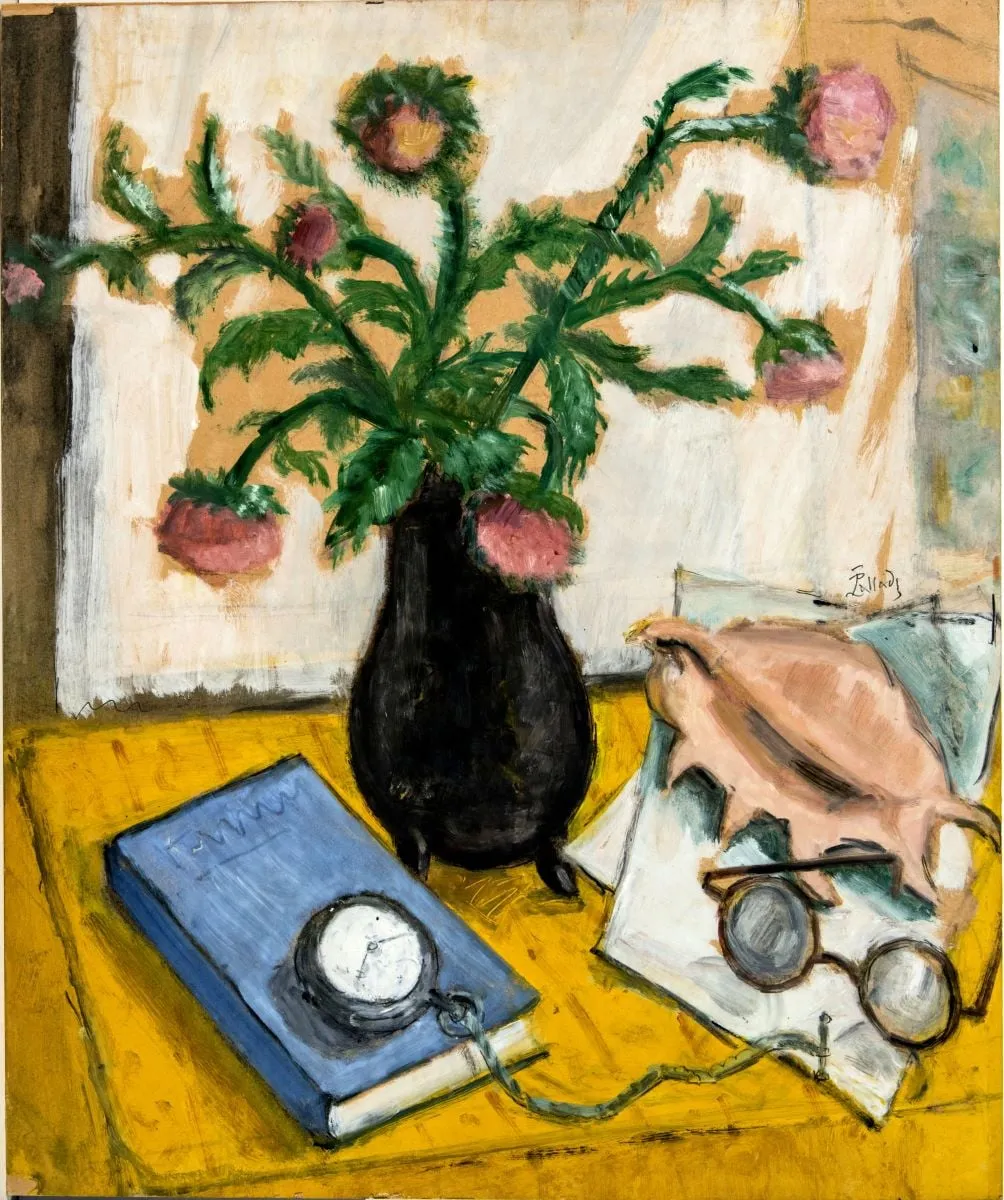
Vas cu flori de scaieți is a print by Theodor Pallady. It dates from 1921 and is held in the collection of the National Museum of Art of Romania.
About this work
Overview
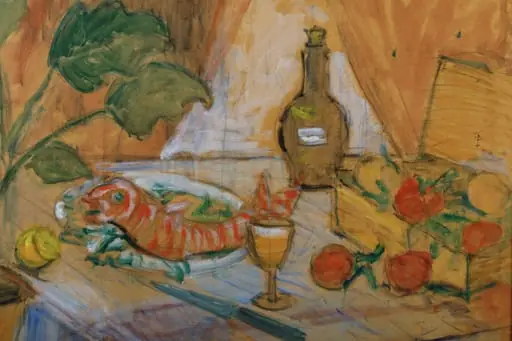
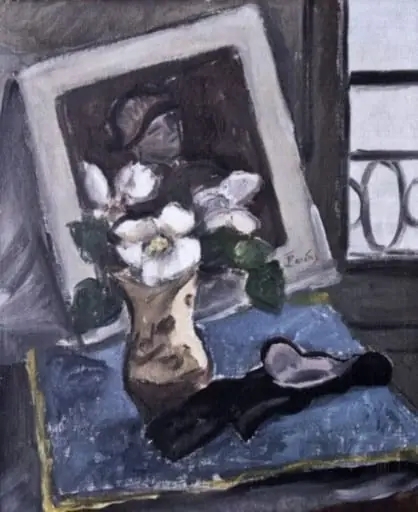
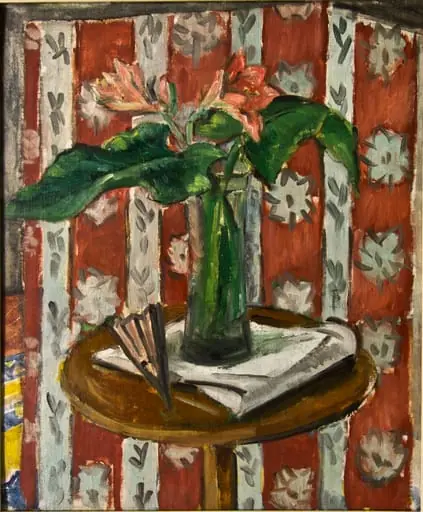
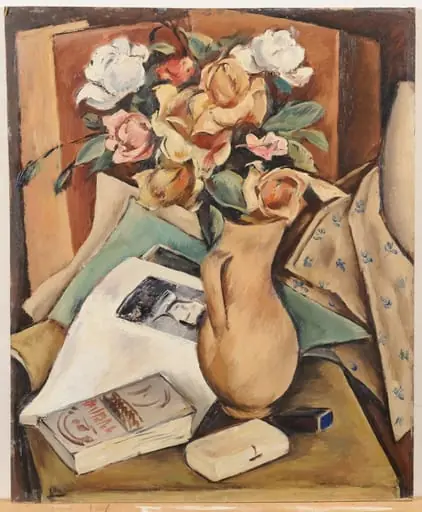
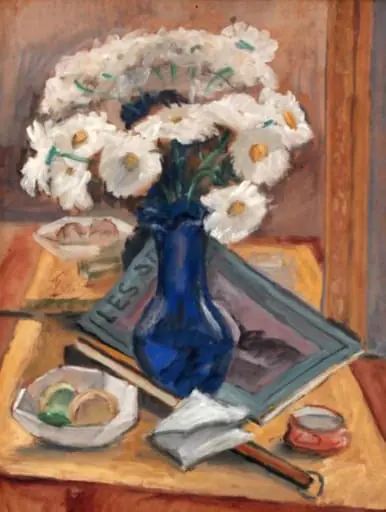
Painted around 1921 by Theodor Pallady, this still life presents a modest domestic arrangement: a dark vase holding flowers, a blue book, a clock, and a folded cloth on a yellow table. The composition is restrained, with no dramatic gestures or narrative cues. The scene unfolds in muted tones of white, brown, and soft pink, suggesting a quiet, contemplative moment rather than a staged display.
Subject & Meaning
The objects—flowers, a book, a timepiece, and fabric—form a quiet ensemble of everyday items, evoking introspection rather than symbolism. The wilting buds and folded cloth imply passage of time, while the book hints at private thought. Pallady avoids overt metaphor, instead inviting observation of ordinary presence, where stillness becomes the subject itself.
Technique & Style
Pallady employs soft, blended brushwork and a restrained palette to create subtle tonal transitions. The vase and book are rendered with quiet precision, while the background dissolves into hazy washes of white and brown. Light falls evenly, eliminating sharp shadows, and the surface texture is deliberately subdued, reinforcing the painting’s calm, meditative tone.
History & Provenance
Created during Pallady’s mature period in Romania, the work reflects his synthesis of French modernism and Romanian sensibility. Though its early ownership is undocumented, it aligns with his known interest in intimate interiors and domestic still lifes from the early 1920s. The painting remains within private collections, with no public exhibition history widely recorded.
Context
In post-WWI Romania, artists like Pallady turned inward, favoring quiet compositions over grand historical themes. This work reflects a broader European trend toward introspective still life, influenced by Cézanne and the Nabis. Pallady’s approach diverges from academic tradition, embracing tonal harmony and spatial ambiguity over detail or narrative.
Legacy
Though not widely reproduced, this painting exemplifies Pallady’s contribution to Romanian modernism through understated elegance. His still lifes, including this one, helped shift focus from national symbolism to personal, sensory experience. Later Romanian artists cite his restraint and sensitivity to light as formative influences on interwar domestic painting.
Artist & collection