Artwork
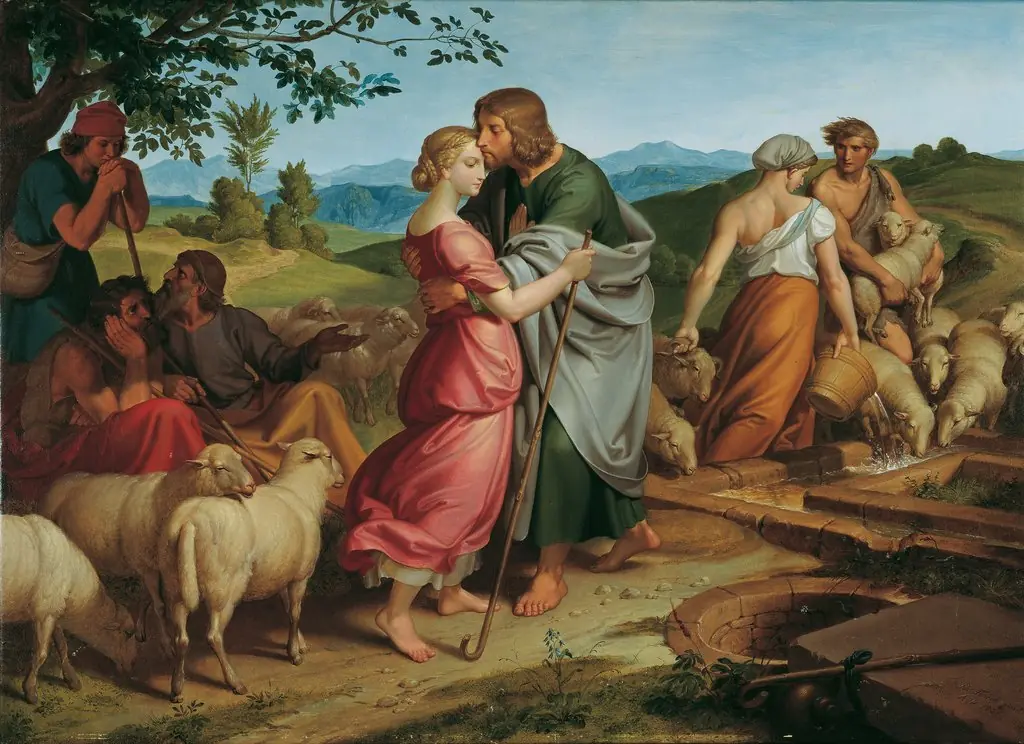
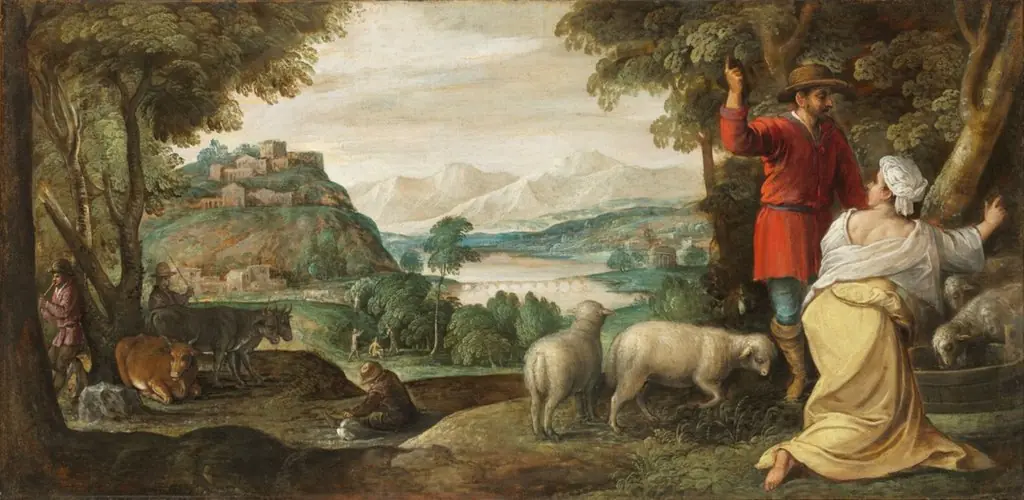
Jacob and Rachel
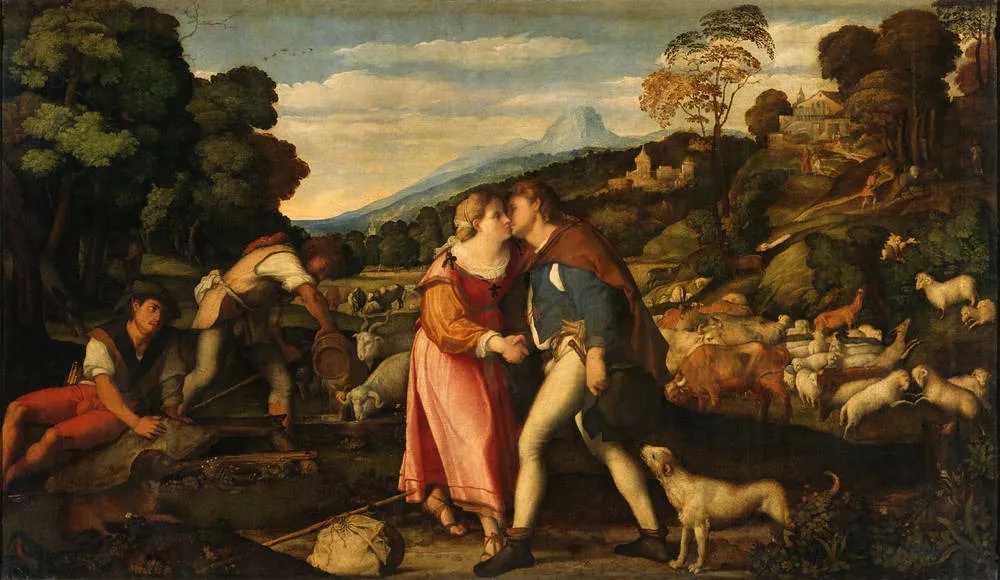
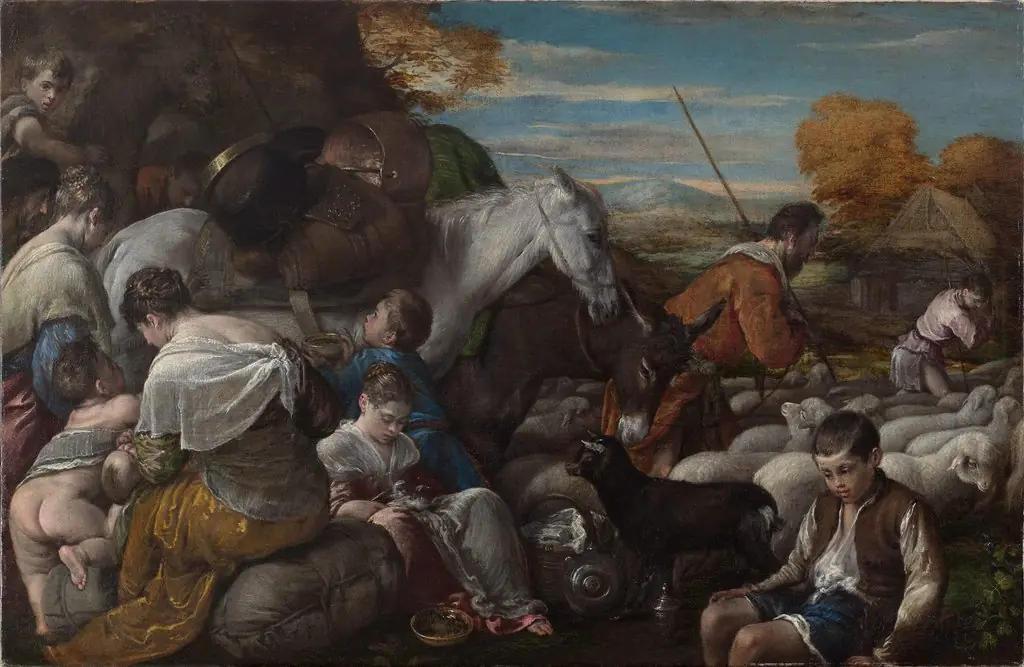
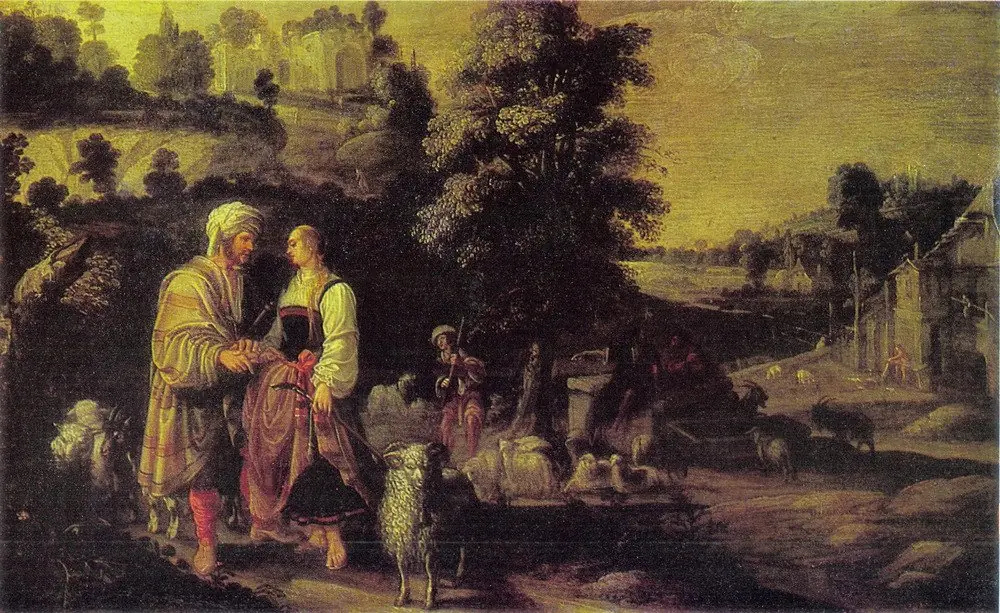
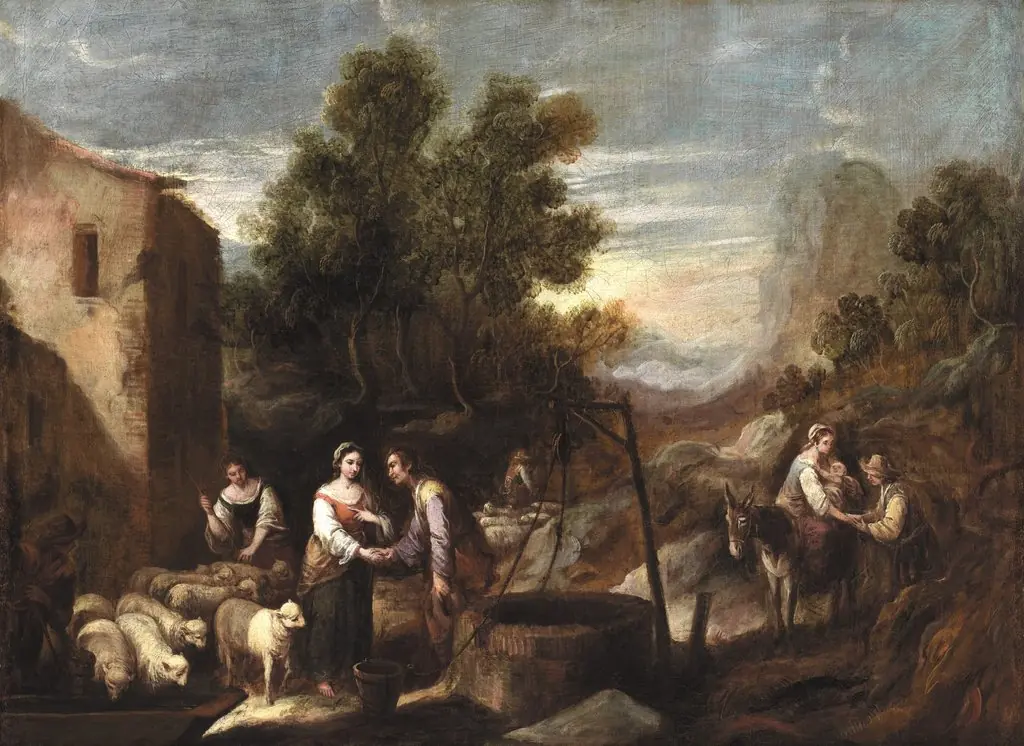
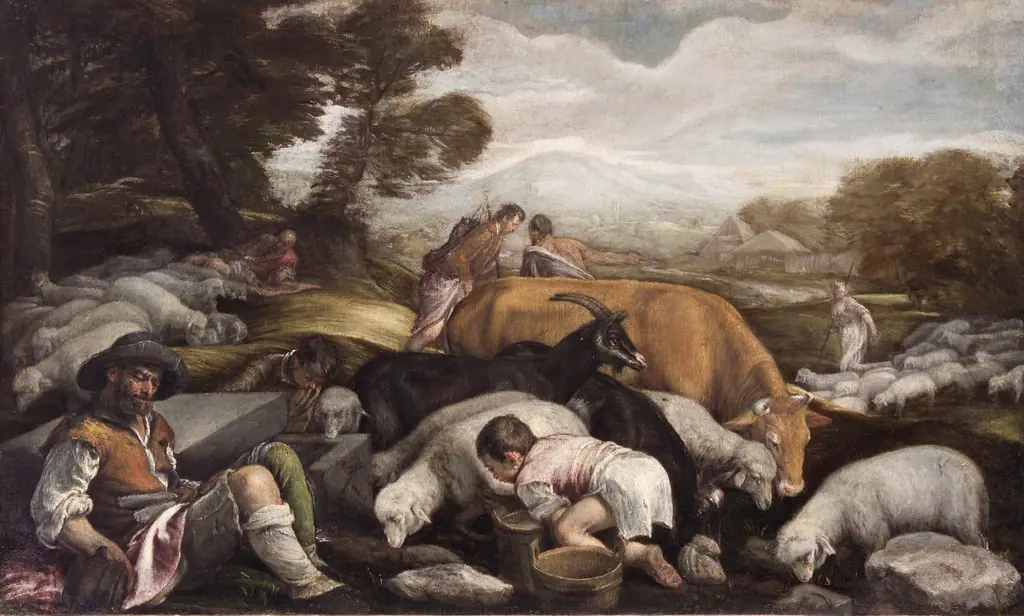
Jacob and Rachel is an oil painting by the High Renaissance artist Palma Vecchio. It dates from 1524 and is held in the collection of the Staatliche Kunstsammlungen Dresden.
About this work
Overview
Painted in 1524 by Palma Vecchio, this oil-on-canvas work illustrates a moment from the Book of Genesis. It portrays the meeting of Jacob and Rachel near a well, set within a tranquil rural landscape. The painting is part of the Gemäldegalerie Alte Meister’s collection in Dresden, representing Venetian High Renaissance ideals through its harmonious composition and naturalistic setting.
Subject & Meaning
The figures are placed within a peaceful countryside, suggesting divine providence unfolding in ordinary nature.
The scene captures Jacob’s first encounter with Rachel, a moment of destined connection in biblical tradition. Rather than emphasizing drama, the painting focuses on quiet recognition and calm interaction. The figures are placed within a peaceful countryside, suggesting divine providence unfolding in ordinary nature. The inclusion of sheep and dogs reinforces themes of pastoral life and stewardship.
Technique & Style
Palma Vecchio employs soft transitions between light and shadow, avoiding harsh contrasts in favor of gentle modeling. Colors are muted yet deliberate: warm earth tones for the figures contrast with cool blues and greens in the landscape. Brushwork is smooth, with attention to textile texture and atmospheric depth. The composition guides the eye from foreground figures to the distant village, enhancing spatial harmony.
History & Provenance
Created during Palma Vecchio’s mature period, the painting entered the Dresden collection in the 18th century, likely through royal acquisitions. Its attribution has remained consistent, with no significant alterations or reattributions recorded. The work has been exhibited in Dresden since the early 1700s, preserving its original condition and framing.
Context
In early 16th-century Venice, religious subjects were often rendered with lyrical grace rather than doctrinal intensity. Palma Vecchio’s approach aligned with Venetian preferences for color, landscape, and emotional subtlety. This painting reflects a broader trend of integrating biblical narratives into serene, earthly environments, distancing itself from the more dramatic styles of central Italian contemporaries.
Legacy
Though less widely known than Titian or Giorgione, Palma Vecchio’s quiet, atmospheric style influenced later Venetian painters who favored mood over narrative force. 'Jacob and Rachel' exemplifies a restrained, humanized approach to sacred stories, contributing to the evolution of religious painting in northern Italy. It remains a quiet reference point in studies of Renaissance landscape integration.
Artist & collection
Artist
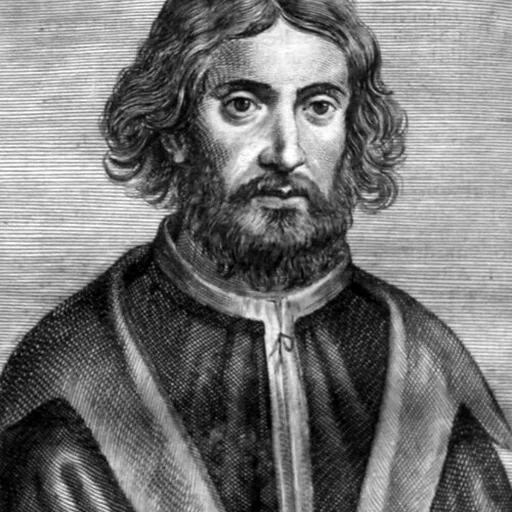
Palma Vecchio (c. 1480 – 30 July 1528), born Jacopo Palma, also known as Jacopo Negretti, was a Venetian painter of the Italian High Renaissance. He is called Palma Vecchio in English and Palma il Vecchio in Italian…